Can a Malunion Be Fixed Without Surgery: Procedure, Recovery and Results

A malunion occurs when a broken bone heals in an altered position, angle, rotation or length. Physical therapy, activity changes, bracing and pain management may help symptoms but generally do not correct a healed bone deformity.
Key Takeaways
- A malunion occurs when a broken bone heals in an altered position, angle, rotation or length.
- Physical therapy, activity changes, bracing and pain management may help symptoms but generally do not correct a healed bone deformity.
- Corrective osteotomy is a common surgical approach for a symptomatic malunion and involves cutting and realigning the bone.
- Treatment decisions depend on symptoms, function, bone location, imaging findings, overall health and personal goals.
- Persistent pain, worsening deformity, numbness or difficulty using a limb should be assessed by an orthopedic specialist.
Can a malunion be fixed without surgery? In some people, non-surgical care can reduce pain, improve strength and support daily function, especially when the deformity is mild. However, once a fracture has healed in a poor position, non-surgical treatment cannot usually straighten the bone; corrective surgery may be considered when symptoms or loss of function are significant.
Can a Malunion Be Fixed Without Surgery?
A malunion can sometimes be managed without surgery when it causes little pain, does not substantially limit movement, and is unlikely to create future problems. Physiotherapy, tailored exercises, splints or braces, activity modification and appropriate pain management may improve comfort and function.
However, these approaches do not usually change the position of a bone that has already healed incorrectly. If a malunion causes ongoing pain, reduced range of motion, weakness, joint instability, nerve symptoms or difficulty with work and everyday activities, an orthopedic surgeon may discuss corrective surgery. The aim is to make a decision based on the person’s symptoms and goals, rather than on an X-ray appearance alone.
A malunion may affect many bones, including the wrist, forearm, ankle, leg, collarbone and upper arm. The consequences vary widely: a small alignment change may be well tolerated in one area, while a similar change near a weight-bearing joint can alter movement and place extra stress on cartilage.
Understanding Malunion and Its Effects
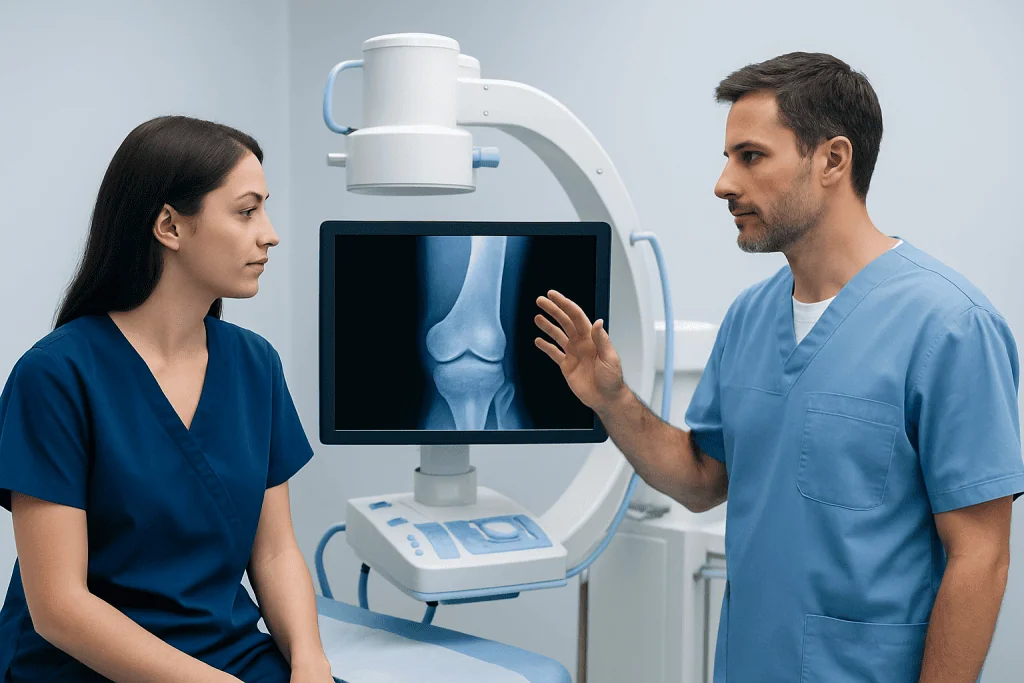
A fracture malunion means that a broken bone has united, or healed together, but in a position that differs from its original anatomy. The bone may be angled, shortened, rotated or shifted. A malunion is different from a nonunion, in which the fracture fails to heal fully, and from delayed union, in which healing takes longer than expected.
Not every malunion requires treatment. Some are found incidentally after the fracture has healed and do not cause discomfort or functional limitation. Others can change how forces travel through nearby joints and muscles. For example, a rotated finger fracture may affect grip, while a malunion near the ankle may affect walking and balance.
Assessment considers more than the scan. Clinicians ask about pain, movement, strength, hand or limb use, walking ability, numbness, occupational needs and recreational activities. They also consider whether symptoms are stable, improving or becoming more limiting over time.
People who have concerns after a fracture may benefit from assessment for related issues such as bone fractures and their healing pattern. Early follow-up can help identify alignment concerns before a fracture has fully consolidated.
Non-Surgical Management: How It Works and Who May Benefit
Non-surgical management focuses on helping the body and surrounding tissues adapt to the healed position. A clinician may recommend physiotherapy to restore joint mobility, improve muscle strength and address movement patterns that contribute to pain. Occupational therapy can be especially useful for hand, wrist and upper-limb malunions that interfere with dressing, writing, lifting or work tasks.
Some people benefit from a temporary brace, orthotic device or supportive footwear. These measures may improve comfort, protect a painful joint and improve alignment during activity, particularly for malunions involving the foot, ankle or lower limb. Pain management may include simple analgesics or other options selected by a clinician based on the individual’s health history.
Non-surgical care is most suitable when symptoms are mild, function is acceptable, the deformity is stable and there is no progressive joint damage or nerve compromise. It may also be preferred when surgery would carry substantial risk because of medical conditions or when an individual does not wish to have an operation.
Regular review is important. If pain continues despite rehabilitation, or if the person cannot return to essential activities, further imaging and a discussion with an orthopedic specialist can clarify whether realignment would be beneficial.
Corrective Surgery for Malunion: Procedure, Candidacy and Results
The most common treatment for a symptomatic malunion is corrective osteotomy. In this procedure, the surgeon carefully cuts the healed bone, restores a more functional alignment and stabilizes it while it heals. Plates and screws, rods, external fixation or other fixation methods may be used depending on the bone and deformity. A bone graft may occasionally be needed to fill a gap or support healing.
Candidacy is individualized. Surgery may be considered for persistent pain, meaningful loss of movement or strength, an obvious rotational deformity, altered gait, joint incongruity, nerve irritation or a deformity likely to contribute to joint wear. Imaging commonly includes X-rays, and CT scans may be useful for complex or rotational deformities. The clinician also reviews bone quality, smoking status, diabetes, circulation, medications and ability to participate in rehabilitation.
The broad steps include preoperative planning, anesthesia, an incision near the affected bone, controlled bone correction, fixation and wound closure. Modern planning may use detailed imaging or patient-specific guides in selected cases. The procedure varies considerably between a wrist, femur, tibia or ankle, so an individual surgical plan is essential.
Potential benefits include less pain, improved limb mechanics, better movement and easier performance of daily activities. Risks include infection, bleeding, nerve or blood-vessel injury, stiffness, blood clots, failure of the bone to heal, persistent symptoms and possible need for further treatment. Orthopedic surgery should be discussed carefully with a qualified specialist, including expected benefits, alternatives and recovery demands.
Recovery Timeline and Supporting Bone Healing
Recovery after malunion correction depends on the bone involved, the extent of correction, the fixation method and the person’s general health. Early recovery commonly focuses on wound care, swelling control, safe pain relief and protecting the repaired bone. Some people need a cast, splint, boot, crutches or limited weight-bearing for a period determined by their surgical team.
Follow-up X-rays are used to monitor alignment and bone healing. Rehabilitation often begins with guided movement at the time considered safe for the repair, then progresses toward strengthening, balance training and return to work or sport. Bone healing often takes weeks to months, while full functional recovery may take longer, especially when joints, tendons or nerves also need to adapt.
How long does it take for 70 year old bones to heal? Healing time varies more by fracture type, blood supply, treatment and overall health than by age alone. Older adults may take longer to heal because osteoporosis, reduced mobility, poor nutrition, smoking, diabetes and some medicines can affect bone repair. Many fractures show healing over several months, but the treating clinician is best placed to estimate a timeline from follow-up examinations and imaging.
How to stimulate bone growth after fracture? The safest approach is to follow the prescribed protection and rehabilitation plan, eat enough protein and consume adequate calcium and vitamin D as advised by a clinician. Avoiding smoking and nicotine, limiting excess alcohol, managing medical conditions and attending follow-up appointments can also support healing. Supplements or bone-stimulating devices should only be used when recommended for a specific clinical reason.
What Happens If a Malunion Goes Untreated?
If a malunion goes untreated, it may remain stable and cause no important problems. Many people live comfortably with a minor deformity, particularly when the bone is not close to a major joint and normal activity is preserved. Monitoring and self-management may be all that is needed.
In other cases, altered alignment can lead to persistent pain, stiffness, reduced strength, trouble walking or using the hand, and increased strain on tendons or nearby joints. A malunion involving a joint surface or a weight-bearing bone may contribute to earlier joint degeneration in some individuals. Rotational deformities can be particularly troublesome because they may interfere with grip, finger alignment or gait.
Symptoms that progress after a fracture should not simply be accepted as inevitable. An orthopedic assessment can determine whether discomfort comes from the malunion itself, stiffness, tendon irritation, arthritis, nerve compression or another treatable cause. This helps ensure that treatment matches the actual source of the problem.
When to Seek Medical Care
Medical review is appropriate when pain remains significant after a fracture is expected to have healed, when a limb appears increasingly crooked or rotated, or when movement and daily activities remain difficult. A person should also seek assessment if footwear no longer fits comfortably after a leg or foot fracture, if walking changes noticeably, or if hand alignment affects grip and coordination.
Urgent medical care is needed for new numbness, weakness, a pale or cold limb, severe swelling, fever with increasing redness or drainage from a surgical wound, or sudden severe pain. These symptoms may not always be caused by a malunion, but they require timely assessment.
Acibadem International’s multidisciplinary orthopedic specialists at JCI-accredited hospitals evaluate fracture-related deformities and coordinate imaging, rehabilitation and surgical care for international patients when appropriate.
Frequently asked questions
What is the most common treatment for malunion?
The most common treatment for a malunion that causes significant symptoms is corrective osteotomy. This surgery realigns the healed bone and holds it in the corrected position while it heals. Mild, symptom-free malunions may instead be observed or managed with rehabilitation and activity adjustments.
Can physical therapy straighten a malunion?
Physical therapy cannot usually straighten a bone after it has healed in an altered position. It can improve flexibility, muscle strength, balance and movement patterns, which may reduce symptoms and improve function. It is often used both as non-surgical management and as part of recovery after corrective surgery.
Is it too late to correct a malunion years after a fracture?
It is not necessarily too late. Some malunions can be evaluated and corrected years after the original fracture if they are causing pain, functional limitations or joint problems. The decision depends on the bone involved, the condition of nearby joints and tissues, overall health and the expected benefit of treatment.
How is a malunion diagnosed?
Diagnosis begins with a medical history and physical examination, including assessment of limb alignment, joint movement, strength and function. X-rays are usually used to show healed bone position, while CT scanning may help define complex deformities. The clinical symptoms are as important as the imaging findings when deciding on treatment.
Will a malunion get worse over time?
The bone deformity itself usually does not continue changing once healing is complete. However, symptoms can change over time if altered mechanics place strain on nearby joints, muscles, tendons or nerves. Follow-up is useful if pain, stiffness or loss of function increases.
Can an older adult have surgery for a malunion?
Age alone does not rule out malunion surgery. A specialist considers overall fitness for anesthesia, bone health, circulation, medical conditions, medication use, independence and rehabilitation needs. In some cases, non-surgical care may offer the best balance of safety and benefit; in others, surgery can be appropriate.
References
- American Academy of Orthopaedic Surgeons
- National Institute of Arthritis and Musculoskeletal and Skin Diseases
- OrthoInfo – American Academy of Orthopaedic Surgeons
- National Health Service
- International Osteoporosis Foundation
This article is for general information only and is not a substitute for professional medical advice. Please consult a qualified doctor about your individual situation.
Joint and spine care in Turkey — expert assessment & treatment
JCI-accredited · board-certified surgeons · reply within 24h
Add us as a Preferred Source to see more of our trusted health content across Google Search, AI Overviews and Discover.

More from the Health Library


Related Specialists

Prof. Dr. Güralp Onur Ceyhan
General Surgery
Dr. Öznur İşcan
Ophthalmology
Prof. Dr. Kerem Bilsel
Orthopedic Surgery & Traumatology
Dr. Macit Dokur
Inpatient Clinic Physicians Clinical Service