Can Dandruff Cause Hair Loss? A Doctor-Reviewed Answer

Dandruff itself rarely causes permanent hair loss. Inflammation, scratching, and buildup on the scalp can trigger temporary shedding.
Key Takeaways
- Dandruff itself rarely causes permanent hair loss.
- Inflammation, scratching, and buildup on the scalp can trigger temporary shedding.
- Conditions that resemble dandruff, such as seborrheic dermatitis, psoriasis, or fungal infection, may need medical treatment.
- A doctor can usually identify the cause with a scalp exam and a review of hair-loss patterns.
- Red flags include patchy bald spots, scalp pain, pus, bleeding, or sudden heavy shedding.
Dandruff usually does not directly cause permanent hair loss. However, scalp inflammation, heavy flaking, and repeated scratching can contribute to temporary shedding and may sometimes point to another scalp condition that needs treatment.
Overview: Can dandruff cause hair loss?
In most cases, the answer is no: dandruff does not directly destroy hair follicles or cause permanent baldness. For many people, dandruff is a common, manageable scalp problem that leads to visible flakes and itching but not lasting hair loss.
That said, dandruff can be linked with increased shedding in some people. The usual reason is indirect rather than direct. Ongoing inflammation on the scalp, frequent scratching, and irritation around hair roots may push more hairs into a shedding phase. This type of hair loss is often temporary and improves when the scalp condition is brought under control.
It is also important to remember that not every flaky scalp is simple dandruff. Sometimes symptoms that look similar are caused by seborrheic dermatitis, psoriasis, eczema, fungal infection, or another skin condition. In those situations, hair thinning may be more noticeable and treatment may need to address the underlying problem, not just the flakes.
How dandruff may be linked to shedding
Dandruff is commonly related to scalp irritation and increased turnover of skin cells. When the scalp becomes itchy, many people scratch repeatedly, often without realizing how often they do it. This mechanical stress can weaken hair shafts, dislodge hairs that were already near the end of their growth cycle, and make shedding more visible during washing or brushing.
Inflammation may also play a role. A persistently irritated scalp can create an unhealthy environment around the hair follicles. While this usually does not scar or permanently damage the follicles, it can temporarily disrupt normal hair growth. Once the inflammation settles, hair often returns to its usual cycle over time.
Another factor is product buildup. Oils, dead skin cells, and styling products can collect on the scalp, especially when dandruff is severe. This buildup does not “clog” follicles in a simple way, but it can worsen irritation and make the scalp feel uncomfortable. Gentle, regular cleansing and targeted treatment can help reduce this cycle.
People may also notice shedding simply because dandruff makes them pay closer attention to the scalp and hair. A few hairs on the pillow, in the shower, or on a dark shirt can suddenly seem more concerning when flakes are also present. A medical review helps separate normal daily shedding from true hair thinning.
Symptoms that suggest more than simple dandruff

Typical dandruff causes small white or yellowish flakes and a mildly itchy scalp. The scalp may feel oily or dry, and symptoms may come and go. Many cases improve with over-the-counter dandruff shampoos and gentle scalp care.
Some signs suggest that another condition may be present. These include thick scales, intense redness, burning, tenderness, crusting, or areas where hair seems to be thinning in patches rather than shedding evenly. If the scalp has pus-filled bumps, open sores, or bleeding from scratching, medical evaluation is important.
Several conditions can mimic dandruff. Seborrheic dermatitis is a common cause of greasy scales and redness and may overlap with dandruff symptoms. Psoriasis can cause thicker silvery plaques. Fungal infection of the scalp can lead to broken hairs and patchy hair loss. A dermatologist may also consider psoriasis, eczema, or forms of alopecia depending on the hair-loss pattern.
- Patchy bald spots
- Sudden or heavy shedding
- Scalp pain, swelling, or warmth
- Crusting, pus, or foul odor
- Loss of eyebrows or eyelashes
- Hair breakage with black dots or stubble
Common causes and risk factors
Dandruff is linked to several overlapping factors. These may include sensitivity to a yeast that normally lives on the scalp, excess oil production, irritation from hair products, and individual skin tendencies. Stress, weather changes, and infrequent shampooing can also make symptoms more noticeable in some people, though dandruff is not simply a sign of poor hygiene.
Hair shedding can happen at the same time for separate reasons. Hormonal changes, nutritional deficiencies, recent illness, major stress, and certain medications can all increase hair fall. This means a person may have dandruff and hair loss together without dandruff being the true cause of the thinning.
Doctors also consider family history and grooming habits. Tight hairstyles, chemical treatments, hot tools, and harsh scratching can all affect the hair shaft or scalp barrier. If itching leads to repeated trauma, breakage may occur in addition to normal shedding. In some people, an inflammatory scalp problem such as seborrheic dermatitis is the more accurate diagnosis.
How doctors diagnose dandruff-related hair loss
The first step is usually a careful history. A doctor may ask when the flakes began, how severe the itching is, whether there is redness or pain, and how long the hair shedding has been noticeable. They may also ask about recent stress, illness, new medications, diet changes, hair products, and family history of hair loss.
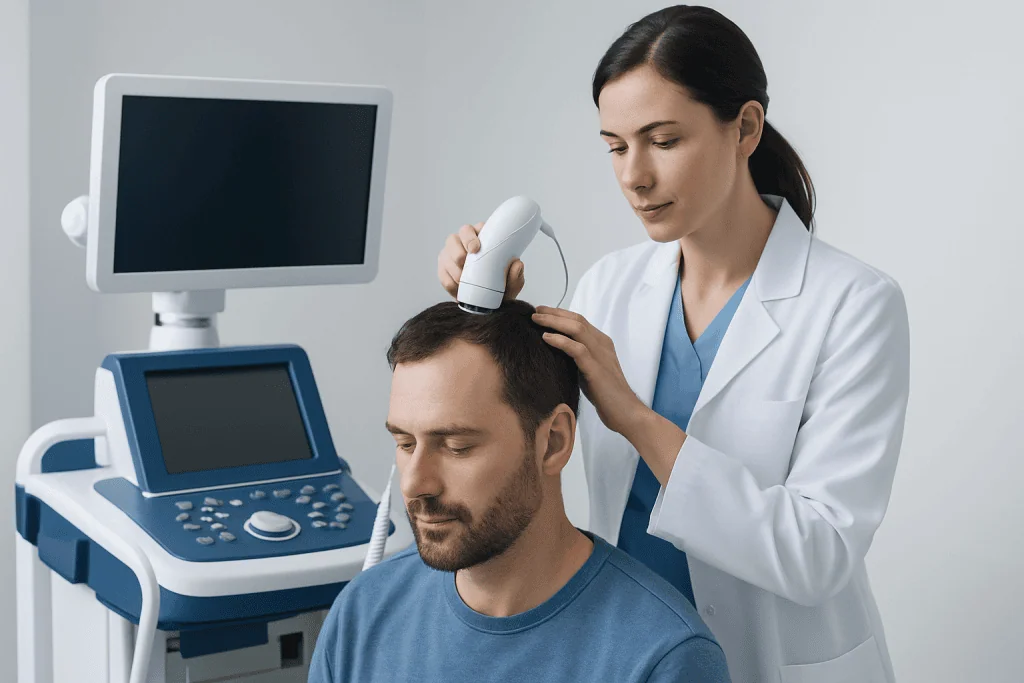
A scalp examination is often enough to narrow down the cause. The doctor looks at the pattern of scaling, the presence of inflammation, and whether the hair loss is diffuse, patchy, or mainly due to breakage. They may gently pull a small group of hairs to see how easily they come out and may use a dermatoscope to inspect the scalp more closely.
If needed, additional tests may be recommended. These can include a fungal test, blood tests for common causes of shedding such as iron deficiency or thyroid problems, or rarely a scalp biopsy if the diagnosis is unclear. The main goal is to determine whether the person has simple dandruff, an inflammatory scalp disease, or another cause of hair loss that needs different treatment.
Treatment options and what to expect
Treatment depends on the cause. For straightforward dandruff, medicated shampoos are often the first step. Doctors may recommend ingredients such as ketoconazole, selenium sulfide, zinc pyrithione, salicylic acid, or coal tar, depending on scalp type and symptoms. It usually takes regular use over several weeks to judge the full effect.
If inflammation is more pronounced, treatment may need to go beyond shampoo. A doctor may prescribe scalp lotions, foams, or other medicines to calm irritation and reduce scratching. When the diagnosis is not simple dandruff but a broader scalp condition, care may overlap with dermatology evaluation and treatment for skin and scalp disorders.
Hair usually recovers gradually when the scalp becomes healthier, though the timing varies. If hair loss is significant or another condition is contributing, a more focused hair assessment may be advised, including hair restoration evaluation in selected cases where long-term thinning is unrelated to dandruff itself.
People with stubborn symptoms may benefit from specialist review. In JCI-accredited hospitals, Acibadem International’s multidisciplinary specialists evaluate scalp disease and hair loss in international patients, especially when diagnosis is uncertain or more than one condition may be involved.
Self-care steps that can help protect the scalp and hair
Good scalp care can reduce symptoms and lower the chance that dandruff will lead to extra shedding. Gentle washing on a regular schedule helps remove flakes, oil, and product residue. It also supports the action of medicated shampoos, which need contact with the scalp to work well.
It is best to avoid vigorous scratching, even when the scalp is itchy. Fingernails can injure the skin, increase inflammation, and break hairs. Instead, people can try using treatment as directed, rinsing thoroughly, and choosing fragrance-free products if the scalp is sensitive.
Simple lifestyle measures may also support hair health overall. A balanced diet, stress management, careful handling of wet hair, and limiting tight hairstyles or harsh chemical treatments can all be helpful. If the scalp remains inflamed despite self-care, a doctor can rule out conditions that may need prescription treatment, including a specialist skin and scalp check-up.
- Wash the scalp regularly with a suitable shampoo
- Use medicated shampoo exactly as directed
- Avoid scratching or picking at scales
- Limit harsh dyes, bleaches, and excessive heat styling
- Seek advice if symptoms persist or shedding worsens
When to seek medical care
Medical review is a good idea if dandruff does not improve after several weeks of appropriate over-the-counter treatment, or if hair shedding is becoming more obvious. A doctor can help determine whether the problem is still simple dandruff or whether another scalp condition is involved.
Prompt assessment is especially important if there are patchy areas of hair loss, pain, swelling, thick crusts, pus, fever, or sores on the scalp. These features are not typical of routine dandruff and may suggest infection, autoimmune disease, or significant inflammation.
People should also seek care if they notice sudden diffuse shedding after illness, childbirth, major stress, or weight change, because dandruff may be present but not the real cause of the hair loss. In many cases, the outlook is reassuring once the underlying trigger is identified and treated properly.
Frequently asked questions
Can dandruff cause permanent hair loss?
Usually no. Dandruff itself does not typically damage hair follicles permanently. If shedding occurs, it is often related to inflammation or scratching and may improve once the scalp condition is treated.
Why does my hair seem to fall out more when my dandruff is worse?
Worse dandruff often means more itching and more scalp inflammation. Scratching and irritation can make normal shedding more noticeable or contribute to temporary hair fall. Sometimes another scalp condition is also present and needs treatment.
How can someone tell the difference between dandruff and a more serious scalp problem?
Simple dandruff usually causes flakes and mild itching without major redness or patchy hair loss. Warning signs include thick scales, pain, pus, sores, bleeding, and clearly defined bald patches. A doctor or dermatologist can usually tell the difference with a scalp examination.
Will hair grow back after dandruff is treated?
If the hair loss is due to scratching, inflammation, or temporary shedding, regrowth is often possible once the scalp improves. Hair may take weeks to months to look fuller again because the growth cycle is gradual. Regrowth depends on whether another condition is contributing.
What treatments are commonly used for dandruff-related shedding?
Treatment usually focuses on controlling the scalp problem first, often with medicated shampoos and gentle scalp care. If inflammation is more severe, a doctor may prescribe additional scalp treatments. The exact plan depends on whether the cause is dandruff, seborrheic dermatitis, fungal infection, or another condition.
When should someone see a doctor about dandruff and hair loss?
A medical review is sensible if symptoms do not improve after several weeks of treatment or if shedding becomes significant. Care is especially important if there are patchy bald spots, scalp pain, crusting, pus, or sudden heavy hair loss. These signs may point to a different diagnosis.
This article is for general information only and is not a substitute for professional medical advice. Please consult a qualified doctor about your individual situation.
Dandruff in Turkey — costs, top hospitals & a free quote
JCI-accredited · board-certified surgeons · reply within 24h
Add us as a Preferred Source to see more of our trusted health content across Google Search, AI Overviews and Discover.

More from the Health Library

Pain in Chest When Lying Flat: Common Causes, Related Conditions, and When to See a Doctor

Does Lemon Water Break a Fast? A Doctor-Reviewed Answer
Lamictal Rash Explained: Common Triggers and Red Flags

Does Apple Cider Vinegar Help with Bloating? A Doctor-Reviewed Answer

What Causes Brain Tumors? Causes, Explanations, and Next Steps