Can Diagnostic Tests Miss a Problem? Understanding False Negative and False Positive Results

A false negative means a test appears normal even though a condition is present. A false positive means a test suggests a condition is present when it is not.
Key Takeaways
- A false negative means a test appears normal even though a condition is present.
- A false positive means a test suggests a condition is present when it is not.
- No test is perfect; timing, sample quality, disease stage, and test design all affect accuracy.
- Doctors interpret test results together with symptoms, examination findings, and risk factors.
- Unexpected or unclear results may need repeat testing, monitoring, or a different type of test.
- Patients should ask what a result means, how reliable the test is, and whether follow-up is needed.
False negative and false positive results are a normal limitation of medical testing, not necessarily a sign that a test was done incorrectly. Understanding what these results mean can help patients know why doctors sometimes repeat tests, order different imaging, or interpret results alongside symptoms and medical history.
Overview: Can diagnostic tests miss a problem?
Yes. Diagnostic tests can sometimes miss a real problem or suggest a problem that is not actually there. These situations are called false negative and false positive results. They can happen with many kinds of medical tests, including blood work, swabs, screening exams, biopsies, and imaging studies such as X-rays, ultrasound, CT, or MRI.
A false negative result means the test looks normal or negative even though the person has the condition. A false positive result means the test looks abnormal or positive even though the person does not have the condition. Neither situation automatically means a mistake was made. In many cases, it reflects the natural limits of testing and the fact that medicine often relies on probability rather than certainty.
Doctors do not usually make decisions based on one number or one image alone. They consider symptoms, physical examination, medical history, family history, age, risk factors, and the type of test used. This is why a person may be told that a result is reassuring but not final, or that an abnormal result needs confirmation with another test.
What false negative and false positive results mean
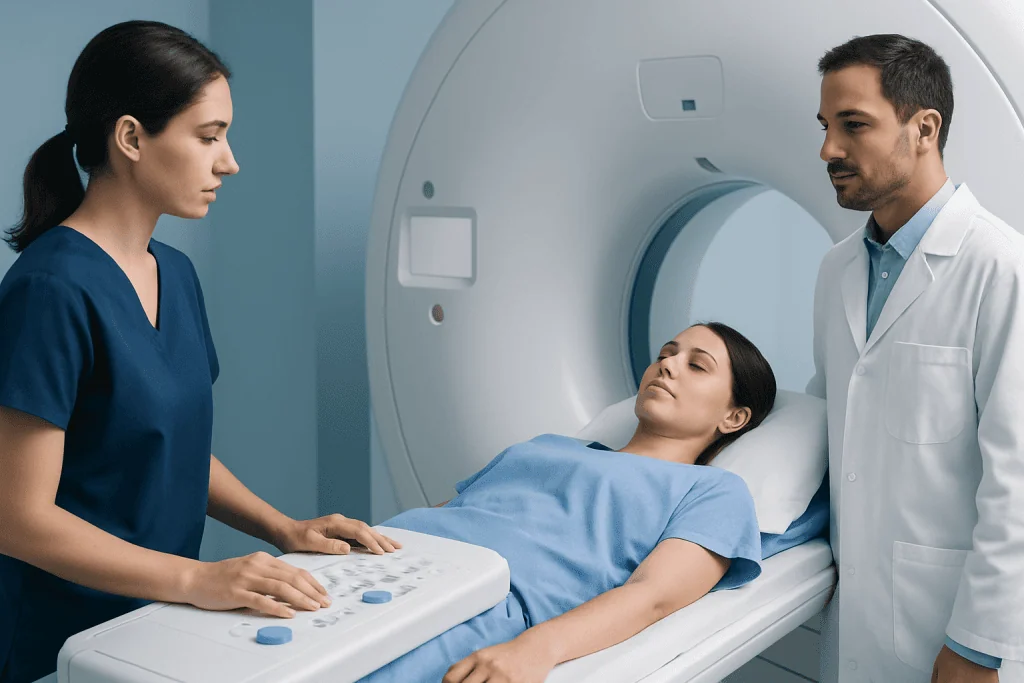
Understanding these terms can make medical reports less confusing. A false negative happens when a test fails to detect a condition that is present. For example, a person may have early disease that is too small to be seen on imaging, or a sample may be collected before the illness becomes detectable. The result may appear negative even though further testing later shows a problem.
A false positive happens when a test suggests disease, infection, or another abnormality that is not truly present. This may occur because a test reacts to something similar, because a harmless finding looks suspicious, or because a screening test is designed to be very sensitive and therefore sometimes flags people who turn out to be healthy.
In practice, some tests are better at ruling out a condition, while others are better at confirming it. Screening tests often aim to catch as many possible cases as they can, which may increase false positives. Confirmatory tests are then used to sort out which results reflect a true problem. This careful step-by-step approach helps balance early detection with avoiding unnecessary treatment.
Why test results are not always exact

Several factors can influence test accuracy. One important factor is timing. Some infections, hormone changes, and inflammatory conditions are easier to detect only after a certain point. If testing is done too early, the body may not yet show enough measurable changes. The same can happen if a disease is at a very early stage or produces symptoms only from time to time.
Sample quality also matters. Blood, urine, stool, tissue, or swab samples may be affected by collection technique, storage, transport, or contamination. Imaging tests depend on image quality, patient movement, body structure, and whether the target area can be clearly seen. A tiny lesion, hidden area, or overlapping tissue may make interpretation more difficult.
The test itself also has built-in strengths and limits. Some tests are highly sensitive and more likely to detect possible disease, but this can increase false positives. Others are highly specific and better at confirming disease, but they may miss some true cases. Laboratory cutoffs, normal ranges, and technical methods can also affect how a result is classified.
Finally, a person’s individual situation matters. Age, medications, pregnancy, chronic illness, immune status, recent procedures, and even hydration or fasting can affect results. For this reason, doctors often compare a test result with the person’s symptoms and risk profile instead of interpreting it in isolation.
Examples in screening, laboratory tests, and imaging
False negative and false positive results can occur in many settings. In infection testing, a swab or blood test may be negative early in the course of illness, before the virus or bacteria is present in enough quantity to detect. In hormone or blood sugar testing, values may fluctuate during the day, which can affect a single measurement. In cancer screening, a test may detect a suspicious change that later turns out to be benign, or it may miss a very small abnormality.
Imaging tests are especially useful, but they also have limitations. A chest X-ray may not show subtle early findings, while a CT scan may reveal an incidental spot that appears concerning but is not dangerous. Ultrasound quality may depend on body type, bowel gas, or the exact area being examined. MRI can provide very detailed images, yet even MRI findings must be interpreted in clinical context and may sometimes require follow-up or correlation with another study.
Screening tests deserve special mention because they are used in people who may feel completely well. Their job is often to identify people who need a closer look, not to provide a final diagnosis. This is why an abnormal screening result can be worrying but does not necessarily mean disease is present. It is also why a normal screening result can be reassuring without eliminating every possibility.
- A screening test may suggest the need for more targeted evaluation.
- A negative result may still need follow-up if symptoms strongly suggest a problem.
- An incidental finding on imaging may be harmless but still require expert review.
How doctors interpret results and make a diagnosis
Doctors use a process called clinical correlation, which means comparing test findings with the whole clinical picture. If symptoms, physical examination, and history strongly suggest a condition, a negative test may not be the end of the evaluation. Likewise, if a test is positive but the person has no symptoms and very low risk, the doctor may recommend confirmation before making a diagnosis.
This is where terms such as sensitivity, specificity, and predictive value become important, even if patients never need to memorize them. In simple terms, doctors want to know how good a test is at finding disease when it is present, how good it is at avoiding false alarms, and how likely a result is to be true in a person with a particular level of risk.
The prevalence of a condition also matters. When a disease is uncommon in the tested group, even a good screening test can produce more false positives. When suspicion is high, a negative result may be less reassuring than it first appears. Doctors may therefore recommend repeat testing, observation over time, a specialist opinion, or a different diagnostic method such as MRI imaging, CT scanning, or ultrasound to gather more complete information.
What happens after an unexpected result
If a result does not match the person’s symptoms or seems uncertain, the next step may be to repeat the same test or order a different one. Repeat testing can help when timing is the issue, especially if a condition evolves over hours, days, or weeks. A second sample may be clearer, or a new image may show changes that were not visible earlier.
Doctors may also use a more specific confirmatory test. For example, a broad screening test may be followed by targeted laboratory analysis, detailed imaging, or tissue sampling. In some situations, watching symptoms over time is the safest and most useful approach. This may feel frustrating, but careful follow-up can reduce unnecessary treatment and provide a more reliable diagnosis.
Patients can help by sharing all symptoms clearly, mentioning when they began, bringing previous results, and explaining any medicines or supplements they take. Questions such as “How certain is this result?” or “What would make you repeat the test?” are reasonable and often very helpful. If advanced evaluation is needed, technologies such as PET-CT may sometimes be used in selected cases, depending on the clinical question.
How patients can respond: self-care, follow-up, and peace of mind
A surprising test result can be stressful, but it is usually best not to assume the worst or dismiss symptoms too quickly. The safest approach is to discuss the result with a qualified doctor who can explain what the test can and cannot show. Patients should ask whether the result is considered screening, diagnostic, or confirmatory, and whether another test is recommended.
Keeping a record of symptoms can be useful, especially if they come and go. Notes about timing, severity, triggers, and associated changes can help a doctor decide whether a negative test is likely reliable or whether more investigation is needed. It is also important to follow any preparation instructions carefully before repeat testing, because fasting, hydration, medication timing, and other details can affect results.
General self-care still matters while answers are being clarified. Patients should continue prescribed treatment unless a doctor advises otherwise, attend follow-up appointments, and seek medical review if symptoms worsen or change. Near the end of a complex diagnostic journey, some people benefit from multidisciplinary assessment; Acibadem International’s specialists in JCI-accredited hospitals evaluate and treat international patients when further diagnostic review is needed.
When to see a doctor promptly
A person should contact a doctor if symptoms persist despite a normal test result, if a positive result is unclear and causing concern, or if there is uncertainty about what follow-up is needed. Ongoing pain, unexplained weight loss, fever, shortness of breath, persistent bleeding, new lumps, or neurological symptoms deserve medical attention even if an earlier test was negative.
Urgent care is important if symptoms are severe or sudden, such as chest pain, weakness on one side of the body, confusion, difficulty breathing, heavy bleeding, or signs of a severe allergic reaction. In these situations, immediate clinical assessment matters more than waiting for a previous test result to be revisited.
In short, tests are powerful tools, but they are only one part of diagnosis. A result should always be interpreted in context. When patients understand that false negative and false positive results are possible, they are better prepared to follow through with the right next steps and work with their doctor toward a clear answer.
Frequently asked questions
Can a normal test result still mean something is wrong?
Yes. A normal result can sometimes be a false negative, especially if testing was done very early, the sample was limited, or the condition is difficult to detect. If symptoms continue or worsen, a doctor may recommend repeating the test or using a different method.
Does a positive test result always mean a person has the disease?
No. A positive result can sometimes be a false positive, meaning the test suggests a problem that is not truly present. This is why doctors may order a confirmatory test before making a final diagnosis or treatment plan.
Why would a doctor repeat the same test?
Repeating a test can help when timing affects detectability or when there is concern about sample quality. It can also show whether a finding is stable, improving, or changing over time. Repeat testing is often a standard and sensible part of careful diagnosis.
Are screening tests less reliable than diagnostic tests?
Screening tests have a different purpose. They are often designed to find as many possible cases as they can, even if that means some false positives occur. Diagnostic or confirmatory tests are then used to clarify whether the screening result reflects a true condition.
What should patients ask after an unexpected result?
Helpful questions include what the result means, how accurate the test is, whether symptoms fit the result, and if follow-up is needed. Patients can also ask whether repeating the test or using another type of test would provide clearer information.
Can imaging tests like MRI or CT also have false results?
Yes. Imaging can miss very small, early, or hard-to-see abnormalities, and it can also show incidental findings that look concerning but turn out to be harmless. Radiology results are most useful when interpreted together with symptoms, examination findings, and other tests.
This article is for general information only and is not a substitute for professional medical advice. Please consult a qualified doctor about your individual situation.
Explore treatments in Turkey — costs, top hospitals & a free quote
JCI-accredited · board-certified surgeons · reply within 24h
Add us as a Preferred Source to see more of our trusted health content across Google Search, AI Overviews and Discover.

More from the Health Library

Cerebral Angiography vs MRI: Which Test Shows Brain Blood Vessels Better?

When Do You Need a Second Opinion on Imaging Results?

Labcorp Patient Portal: How to View Results and Track Your Tests

Diagnostic Ultrasound: How It Works and What It Can Detect

X-Ray Imaging: Common Uses, Radiation Safety, and Next Steps