Can Dogs Smell Cancer? What Research Shows
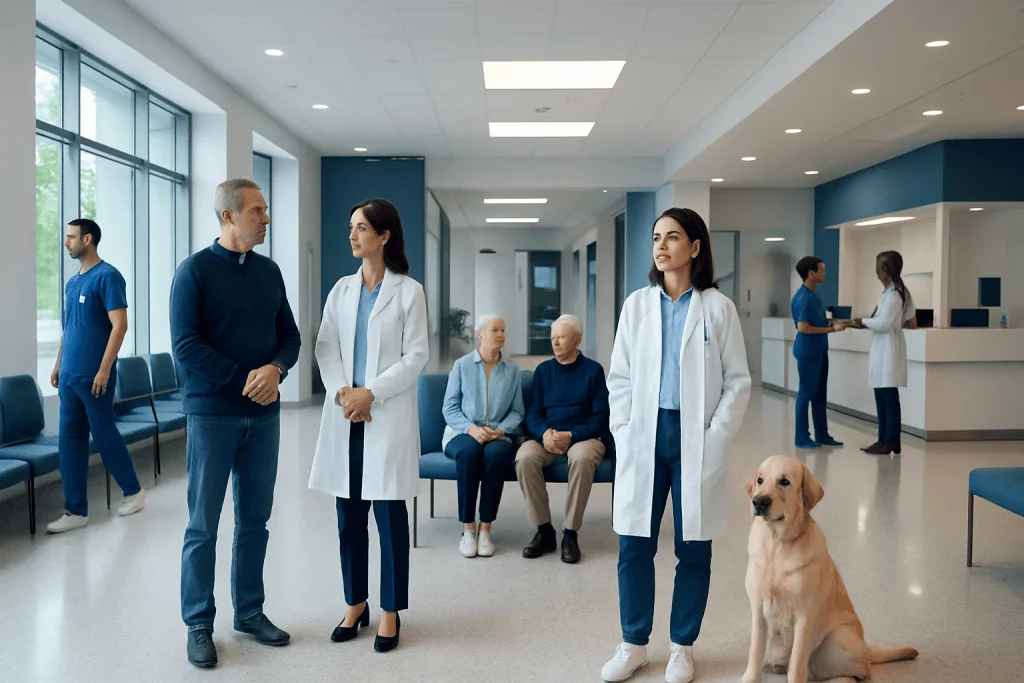
Some studies suggest dogs can detect cancer-related odors in breath, urine, skin, or sweat samples. Scientists believe tumors may produce volatile organic compounds that change a person’s scent.
Key Takeaways
- Some studies suggest dogs can detect cancer-related odors in breath, urine, skin, or sweat samples.
- Scientists believe tumors may produce volatile organic compounds that change a person’s scent.
- Results are promising but inconsistent, so dogs are not used as a standard cancer diagnostic tool.
- Screening tests, imaging, laboratory tests, and biopsies remain the most reliable ways to diagnose cancer.
- Anyone with concerning symptoms should seek medical evaluation rather than relying on animal behavior.
Research suggests that some dogs may be able to detect certain cancers by smelling changes in body odor linked to disease. However, dog scent detection is still experimental and does not replace standard cancer screening, diagnosis, or follow-up care.
Overview
The question “can dogs smell cancer” has received growing attention from researchers, patients, and the public. Dogs have an exceptional sense of smell, far more sensitive than that of humans. Because of this, scientists have explored whether dogs can detect subtle odor changes linked to illness, including cancer.
Early studies and anecdotal reports suggest that some trained dogs may identify certain cancers from breath, urine, stool, skin, or blood-related samples. These findings are intriguing because they raise the possibility that cancer may produce a unique chemical scent. In many cases, the scents are thought to come from volatile organic compounds, or VOCs, released as cancer changes metabolism in the body.
At the same time, it is important to keep expectations realistic. Research results vary from one study to another, and dog-based detection is not standardized in routine medical practice. A dog’s response can be influenced by training methods, the kind of sample used, the stage of disease, and other health conditions.
For patients, the most practical message is reassuring and simple: dog scent detection is an interesting area of science, but it is not a replacement for proven medical care. When cancer is suspected, doctors rely on established methods such as screening tests, physical examination, laboratory analysis, imaging, and biopsy procedures to make an accurate diagnosis.
How Dogs Might Detect Cancer
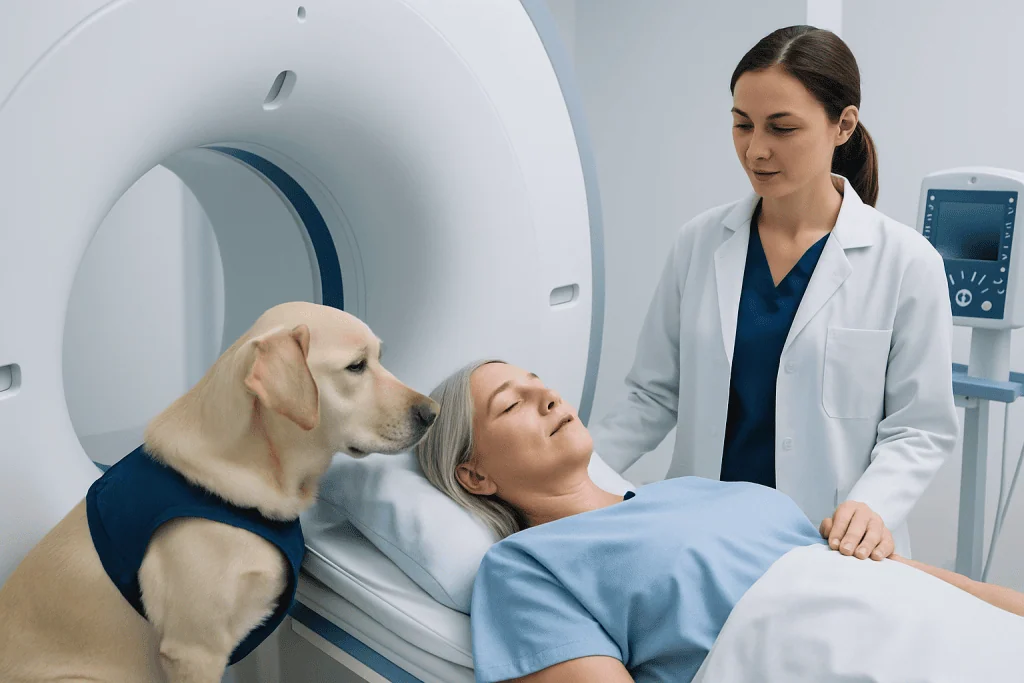
Dogs experience the world largely through scent. Their noses contain a very large number of smell receptors, and the parts of their brains that process odor are highly developed. This allows them to pick up tiny chemical differences that people cannot notice.
Researchers believe cancer may alter the body’s normal chemical profile. Tumors can affect metabolism, inflammation, cell breakdown, and interactions with bacteria, all of which may change the compounds released in breath, urine, sweat, or other body fluids. These compounds are sometimes called cancer-related scent signatures.
In studies, dogs are usually trained to distinguish samples from people with cancer from samples from people without cancer. The dog may be rewarded for identifying the target scent. Some studies have looked at lung cancer from breath samples, bladder or prostate cancer from urine, and skin cancers from direct scent exposure.
Scientists are especially interested in understanding exactly what the dogs may be detecting. If those odor patterns can be identified and measured consistently, they may help guide the development of electronic “noses” or laboratory tools in the future. In that sense, dog research may contribute more to innovation in diagnostics than to direct day-to-day patient testing.
What Research Shows So Far
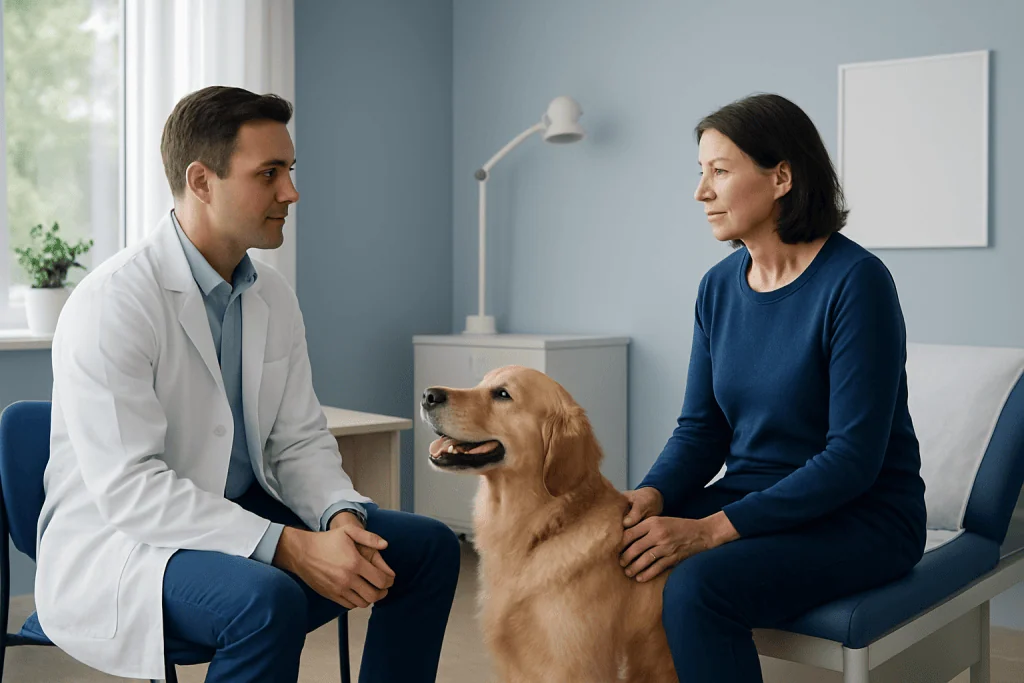
Research on dogs detecting cancer has produced promising but mixed results. Some studies report that specially trained dogs can identify certain cancers with fairly good accuracy under controlled conditions. Others find less reliable results, especially when study designs differ or when testing conditions are more complex.
One challenge is that studies are often small and use different methods. Researchers may train different dog breeds, collect samples in different ways, or compare patients with different cancer types and stages. Because of this, it can be difficult to compare findings directly or apply them widely in medical practice.
Another issue is reproducibility. A result seen in one research center may not be repeated exactly elsewhere. Dogs are living animals, not machines, so their performance may vary based on fatigue, distractions, handler cues, and training environment. This does not mean the science lacks value, but it does mean the field needs careful standardization.
Overall, the evidence suggests that dogs may detect odor changes associated with some cancers, but current research does not support using dogs as a standalone screening or diagnostic method. The strongest role for this research today is in improving understanding of disease-related scent patterns and inspiring new diagnostic technologies.
Which Cancers Have Been Studied?
Researchers have explored dog scent detection in several cancer types. These include lung cancer, breast cancer, prostate cancer, bladder cancer, colorectal cancer, ovarian cancer, and skin cancer. The kind of sample used depends on the type of cancer being studied, such as breath for lung cancer or urine for urinary tract cancers.
Some of the better-known work has focused on lung, prostate, bladder, and breast cancer because these conditions may produce measurable changes in breath or urine chemistry. In skin cancer studies, dogs have sometimes been trained to detect skin cancer directly from the skin or from collected scent materials. However, even when results are encouraging, they still need confirmation in larger and more consistent studies.
It is also important to understand that cancer is not one single disease. Different cancers behave differently, and even the same cancer can vary from person to person. A scent pattern linked to one tumor type may not apply to another, and early-stage disease may produce much subtler changes than advanced disease.
For this reason, standard medical pathways remain essential. Depending on the situation, doctors may recommend screening programs, laboratory tests, MRI or other imaging, endoscopic evaluation, or tissue sampling to clarify whether symptoms are related to cancer or another condition.
Why Dogs Are Not Used as a Standard Cancer Test
Although the idea is appealing, several practical reasons prevent dogs from being used as a routine cancer test. First, there is no universal training method. Dogs may be taught differently from one research group to another, making results harder to compare and standardize.
Second, accuracy can vary. A dog may perform well in one controlled setting but less well in another. Medical tests need to be consistent, reproducible, and validated across large populations before they can be used widely for screening or diagnosis.
Third, doctors must know exactly what a positive or negative result means. With established testing, clinicians can estimate how likely it is that a result reflects true disease. With dog detection, there are still unanswered questions about false positives, false negatives, and the effects of other illnesses, medications, diet, or infection on scent.
Finally, cancer diagnosis requires more than a signal that something might be wrong. Doctors need to know the tumor type, location, extent, and biological features to plan treatment. That information comes from medical evaluation, imaging, and pathology, not from scent detection alone.
How Cancer Is Actually Diagnosed
If cancer is suspected, doctors use a step-by-step approach. This usually starts with a medical history, symptom review, and physical examination. Depending on age, risk factors, and findings, a clinician may recommend screening or diagnostic tests.
Common tools include blood or urine tests, mammography, ultrasound, CT scans, PET-CT in selected cases, MRI, colonoscopy, and other specialized studies. The goal is to identify whether an abnormality is present and where it is located. If something suspicious is found, the next step often involves a biopsy so that cells can be examined under a microscope.
A pathology report is usually the key to confirming cancer. It can show whether a tumor is benign or malignant and may provide important details about aggressiveness and treatment options. This is why established diagnostics remain the gold standard, even when new technologies are being explored.
Patients who are worried because of symptoms, family history, or an unusual change should speak with a doctor rather than waiting. In some cases, symptoms may be due to non-cancer conditions such as infection, inflammation, or benign growths. In others, timely assessment may help detect breast cancer or another cancer earlier, when treatment planning can begin promptly.
What This Means for Patients
For most people, the main takeaway is that dog behavior should not be used to diagnose cancer. A pet that sniffs one area of the body more often, acts clingy, or behaves differently may be reacting to many everyday changes, including stress, routine shifts, scent products, skin conditions, or unrelated illness.
Still, unusual symptoms should never be ignored. Warning signs can include a new lump, unexplained weight loss, persistent cough, changes in bowel or bladder habits, abnormal bleeding, a sore that does not heal, or ongoing fatigue. These symptoms do not always mean cancer, but they deserve proper medical attention.
People can protect their health best by following recommended screening guidance for their age and risk profile. Examples include mammography, cervical screening, colorectal screening, skin checks, or prostate discussions when appropriate. A doctor can personalize these recommendations based on individual and family history.
If expert evaluation is needed, multidisciplinary cancer specialists can help guide diagnosis and treatment. Acibadem International’s JCI-accredited hospitals care for international patients with a team-based approach, from advanced diagnostics to oncology treatment planning, when cancer is suspected or confirmed.
When to See a Doctor
A person should arrange medical evaluation if they notice symptoms that are new, persistent, unexplained, or getting worse. This is especially important for a lump, unusual bleeding, ongoing pain, persistent cough, significant appetite change, or unintentional weight loss.
People with a strong family history of cancer, inherited cancer syndromes, or previous cancer may also need closer follow-up. In these situations, a doctor can advise on screening schedules, genetic counseling, and whether any symptoms need further testing.
It is also wise to seek care if routine screening is overdue. Many cancers are found through organized screening before symptoms develop, which can improve treatment planning and options. Keeping up with preventive care remains one of the most effective steps a person can take.
While research into dog scent detection is fascinating, the safest course is always evidence-based medical assessment. Anyone concerned about possible cancer should consult a qualified healthcare professional for personalized advice, appropriate testing, and reassurance when needed.
Frequently asked questions
Can dogs really smell cancer?
Some research suggests that trained dogs can detect odor changes linked to certain cancers in samples such as breath, urine, or skin. However, results are not consistent enough for dogs to be used as a standard medical test.
How would a dog detect cancer?
Scientists think dogs may detect volatile organic compounds produced when cancer changes the body’s metabolism. These compounds can affect scent in breath, sweat, urine, or other body materials.
Should someone worry if their dog keeps sniffing one part of their body?
Not necessarily. Dogs may focus on an area for many reasons, including normal scent changes, skin irritation, infection, or everyday products. Any persistent symptom or visible body change should be checked by a doctor, regardless of a pet’s behavior.
Can dogs replace cancer screening tests?
No. Dogs cannot replace recommended screening methods such as mammography, colonoscopy, cervical screening, or medical imaging. Standard tests are validated, reproducible, and able to guide diagnosis and treatment planning.
Which cancers have been studied in dog scent research?
Studies have looked at several cancers, including lung, breast, prostate, bladder, colorectal, ovarian, and skin cancers. Even so, no cancer type is currently diagnosed in routine care by dog scent detection alone.
What should a person do if they are worried about cancer?
They should speak with a qualified doctor and describe any symptoms, family history, or screening concerns. A clinician can recommend the right tests, explain results clearly, and decide whether referral to a specialist is needed.
References
- World Health Organization
- National Cancer Institute
- American Cancer Society
- U.S. National Library of Medicine
- European Society for Medical Oncology
This article is for general information only and is not a substitute for professional medical advice. Please consult a qualified doctor about your individual situation.
Oncology care in Turkey — second opinion and treatment plan
JCI-accredited · board-certified surgeons · reply within 24h
Add us as a Preferred Source to see more of our trusted health content across Google Search, AI Overviews and Discover.