Can Migraine Cause Temporary Vision Loss?

Migraine may cause temporary visual symptoms such as flashing lights, blind spots, blurred vision, or short-lived vision loss. Visual aura usually affects both eyes, while retinal migraine typically affects one eye.
Key Takeaways
- Migraine may cause temporary visual symptoms such as flashing lights, blind spots, blurred vision, or short-lived vision loss.
- Visual aura usually affects both eyes, while retinal migraine typically affects one eye.
- Sudden vision loss is not always caused by migraine and can signal an urgent eye or neurological problem.
- Diagnosis focuses on symptom pattern, eye examination, and ruling out other causes.
- Treatment may include avoiding triggers, acute migraine care, and preventive medicines when attacks are frequent.
Migraine can sometimes cause temporary vision loss, most often as part of a visual aura and less commonly as retinal migraine. Because other eye, nerve, or blood flow problems can look similar, any new, sudden, or one-sided vision loss should be assessed by a doctor promptly.
Overview
Migraine is a neurological condition that can cause much more than head pain. In some people, it also affects vision. Temporary vision loss may occur before or during a migraine attack, often as part of a visual aura. This can be frightening, but in many cases the symptoms are short-lived and improve completely.
Visual symptoms related to migraine can include flashing lights, zigzag lines, shimmering areas, blurred vision, blind spots, or the feeling that part of the visual field is missing. Some people have migraine aura without much headache at all. Others experience these symptoms followed by a typical migraine headache, nausea, or sensitivity to light and sound.
It is important to know that not every episode of temporary vision loss is caused by migraine. Conditions affecting the eye, retina, optic nerve, or blood vessels can produce similar symptoms. For that reason, a new or unusual episode should not be self-diagnosed, especially if vision loss is sudden, affects one eye only, or lasts longer than expected.
How Migraine Can Affect Vision
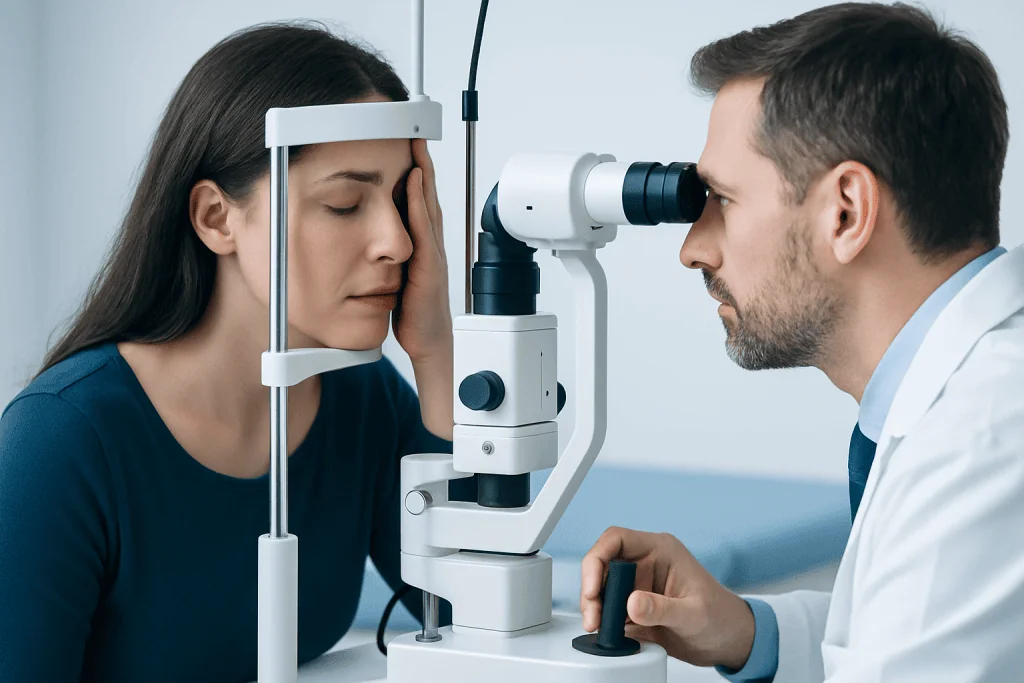
The most common migraine-related visual problem is visual aura. Aura is thought to result from a temporary wave of altered nerve activity in the brain, often involving the visual cortex. Because the visual cortex processes information from both eyes, aura usually affects the visual field in both eyes, even if the person first feels it more strongly on one side.
Visual aura often begins gradually over several minutes. A blind spot may expand, shimmering lines may spread, or vision may seem distorted. These symptoms typically last from about 5 to 60 minutes and then resolve. Some people then develop a headache, while others do not. This pattern helps doctors distinguish migraine aura from some other causes of vision loss.
A less common condition is retinal migraine. In retinal migraine, symptoms arise from changes involving the eye or retinal blood flow and usually affect one eye only. A person may notice dimming, a curtain-like effect, a blind spot, or temporary complete vision loss in that eye. Because one-eye vision loss can also signal serious retinal or vascular disease, retinal migraine is a diagnosis that should only be made after careful evaluation.
People who have repeated migraine attacks may also have other visual discomforts such as light sensitivity, trouble focusing during an attack, or lingering visual unease afterward. These symptoms are different from permanent eye damage. Migraine-related visual changes are usually temporary, but they still deserve medical review when new, severe, or changing.
Symptoms and Warning Signs
Temporary vision loss linked to migraine can appear in different ways. Some people describe sparkling lights or zigzags. Others notice blurred vision, patches of missing vision, tunnel vision, or difficulty reading because letters seem to disappear. The pattern may move or spread before fading away.
Migraine-related visual symptoms are often accompanied by other features such as throbbing head pain, nausea, vomiting, sensitivity to light, sensitivity to sound, dizziness, or tingling. In classic visual aura, symptoms tend to develop gradually and clear within an hour. This timing can help separate migraine from more urgent causes, although it is not enough to rely on timing alone.
Certain warning signs should prompt urgent assessment rather than watchful waiting. These include sudden complete loss of vision, loss of vision in only one eye, weakness, trouble speaking, confusion, new double vision, severe eye pain, or symptoms that last longer than usual. Sudden vision changes can occasionally relate to conditions such as stroke or a retinal problem, and these need rapid care.
- Common migraine visual symptoms: flashing lights, shimmering patterns, blind spots, blurred vision
- Symptoms that suggest urgent review: one-eye vision loss, sudden darkness, weakness, speech difficulty, severe pain
- Important clues: whether symptoms affect one eye or both, how quickly they start, and how long they last
Causes and Risk Factors
The exact reason migraine causes visual symptoms is still being studied, but experts believe temporary changes in brain signaling and blood vessel function play a role. In visual aura, altered electrical activity in the brain moves across the area that processes vision. In retinal migraine, there may be temporary reduced blood flow affecting the retina or related structures, though this diagnosis is uncommon.
Many people with migraine notice triggers that make attacks more likely. These vary from person to person and may include emotional stress, missed meals, dehydration, poor sleep, hormonal changes, bright light, strong odors, certain foods, alcohol, or excess caffeine. Identifying personal patterns can be useful, especially when visual symptoms occur repeatedly.
Some risk factors make migraine more likely overall, including a family history of migraine and a personal history of migraine with aura. Women may be more affected because of hormonal influences. However, having a history of migraine does not mean every vision episode is harmless. A familiar diagnosis should not prevent a person from seeking care when symptoms change.
Doctors also consider other medical issues that can mimic or worsen temporary vision loss. These may include retinal disease, optic nerve inflammation, transient ischemic attack, uncontrolled high blood pressure, and circulation problems. Depending on the symptom pattern, specialists may also evaluate for related conditions such as multiple sclerosis if there are signs pointing to optic nerve involvement.
Diagnosis
Diagnosis begins with a detailed history. The doctor will ask whether the symptoms affected one eye or both, how they started, how long they lasted, whether a headache followed, and whether there were other neurological symptoms. Because patients sometimes are not sure if one eye or both were involved, the clinician may ask them to describe exactly what they saw and whether the pattern stayed the same with each eye covered.
An eye examination is often important, especially for first-time events or one-eye symptoms. This may include checking visual acuity, eye pressure, pupils, eye movements, and the retina. Depending on the situation, evaluation by an eye specialist may be recommended. In some patients, tests are done to rule out retinal tears, vascular events, inflammation, or optic nerve disease.
If symptoms are atypical or concerning, brain or blood vessel imaging may be needed. A doctor may consider MRI or other studies when there are unusual neurological features, prolonged symptoms, or concern about another diagnosis. Blood tests or cardiovascular assessment may also be advised in selected cases, particularly in older adults or people with vascular risk factors.
There is no single test that proves migraine temporary vision loss by itself. Instead, the diagnosis is based on the pattern of symptoms and the exclusion of other causes. This is why accurate assessment matters so much, especially when symptoms are new, more severe than before, or clearly limited to one eye.
Treatment Options
Treatment depends on how often symptoms occur, how disabling they are, and whether the diagnosis is migraine aura, retinal migraine, or another condition. For many people, management includes identifying triggers, resting in a dark and quiet room during attacks, staying hydrated, and using doctor-recommended migraine medicines. The same general strategies used for migraine headache may help when visual symptoms are part of the attack.
When migraine attacks are frequent or disruptive, preventive treatment may be considered. Preventive medicines are chosen individually based on symptom pattern, age, other medical conditions, and how often attacks happen. A neurologist or neuro-ophthalmology specialist can help decide whether prevention is appropriate and monitor the response over time.
If another eye or neurological cause is suspected, treatment focuses on that condition rather than migraine alone. For example, retinal problems may need urgent ophthalmic care, while vascular causes may require emergency assessment. In some situations, the diagnostic process may include neurological rehabilitation planning if a separate neurological disorder has affected vision or function, though this is not typical for routine migraine aura.
People with complex or recurring symptoms may benefit from coordinated care. At the end of the evaluation, some patients are referred for specialized headache treatment or advanced eye and nerve assessment. Acibadem International’s multidisciplinary specialists in JCI-accredited hospitals diagnose and treat migraine-related visual symptoms and other neuro-ophthalmic conditions for international patients.
Prevention and Self-care
Preventing migraine-related vision episodes often starts with understanding personal triggers. Keeping a symptom diary can help track food intake, sleep, menstrual cycle, stress levels, screen use, travel, and weather changes. Over time, this may reveal patterns that guide practical changes.
Healthy routines can reduce the likelihood of attacks for some people. Regular sleep, steady meals, good hydration, moderate caffeine intake, and stress management are common foundations of migraine self-care. Gentle exercise may also help overall migraine control when introduced gradually and done consistently.
People who experience visual aura should take safety precautions during an episode. Driving, cycling, climbing stairs, operating machinery, or crossing busy roads may be unsafe until vision returns to normal. It may help to stop the activity, sit or lie down, and wait in a calm environment.
Self-care should not replace medical review. Repeated temporary vision loss, changing symptoms, or one-eye visual episodes warrant professional advice even if migraine seems likely. If a doctor has already diagnosed migraine, follow-up is still important when attacks become more frequent or less predictable.
When to See a Doctor
A doctor should evaluate temporary vision loss if it is happening for the first time, if the pattern has changed, or if it is difficult to tell whether one eye or both eyes were affected. Medical review is also wise when episodes occur often, interfere with daily life, or happen without a known history of migraine. Clear diagnosis can provide reassurance and help prevent missing another condition.
Urgent care is especially important for sudden or severe symptoms. Immediate assessment is recommended for complete vision loss, one-eye blindness or dimming, symptoms with weakness or speech trouble, new severe headache, eye pain, or episodes lasting longer than an hour. These may point to a problem that needs treatment without delay.
Children, older adults, pregnant people, and anyone with high blood pressure, diabetes, smoking history, or vascular disease may need particularly careful evaluation. In these groups, doctors may be more cautious about assuming migraine is the cause. Prompt assessment helps protect both eye health and overall neurological health.
Frequently asked questions
Can migraine really cause temporary vision loss?
Yes. Migraine can cause temporary visual symptoms, including blind spots, shimmering patterns, blurred vision, and sometimes short-lived vision loss. This most often happens as part of visual aura, and less commonly as retinal migraine.
Is migraine vision loss usually in one eye or both eyes?
Typical visual aura usually affects both eyes because it comes from the visual processing areas of the brain. Retinal migraine usually affects one eye only. Because one-eye vision loss can also be caused by more serious eye or blood flow problems, it should be assessed by a doctor.
How long does migraine-related vision loss last?
Migraine aura symptoms commonly last between 5 and 60 minutes and then improve fully. Retinal migraine episodes are also temporary, but any prolonged, repeated, or unusual symptom needs evaluation. If symptoms last longer than expected, urgent medical advice is recommended.
How can someone tell the difference between migraine aura and a stroke?
Migraine aura often builds gradually and may include flashing lights or shimmering shapes that spread over minutes. Stroke symptoms often begin suddenly and may include weakness, numbness, facial drooping, or trouble speaking. Because the difference is not always obvious, sudden visual loss or neurological symptoms should be treated as urgent until a doctor says otherwise.
Does temporary vision loss from migraine damage the eyes?
Most migraine aura symptoms do not cause permanent eye damage and resolve completely. However, repeated or one-eye visual episodes should not be ignored, because the underlying cause may be something other than migraine. A medical exam helps confirm that the eyes and optic nerve are healthy.
What should someone do during an episode?
It is usually best to stop what they are doing, move to a safe place, and avoid driving or using machinery until vision returns to normal. Resting in a quiet, dim environment and following a doctor's migraine plan may help. If the episode is new, severe, one-sided, or accompanied by other neurological symptoms, urgent care is important.
References
- American Migraine Foundation
- National Eye Institute
- American Academy of Ophthalmology
- National Institute of Neurological Disorders and Stroke
- Mayo Clinic
This article is for general information only and is not a substitute for professional medical advice. Please consult a qualified doctor about your individual situation.
Migraine in Turkey — costs, top hospitals & a free quote
JCI-accredited · board-certified surgeons · reply within 24h
Add us as a Preferred Source to see more of our trusted health content across Google Search, AI Overviews and Discover.