Can Moles Fall Off After Irritation or Injury?

Most moles remain stable throughout life, although some may gradually fade or become flatter with age. A raised mole may be injured by friction or shaving and can appear to fall off, but the skin should still be monitored as it heals.
Key Takeaways
- Most moles remain stable throughout life, although some may gradually fade or become flatter with age.
- A raised mole may be injured by friction or shaving and can appear to fall off, but the skin should still be monitored as it heals.
- New, changing, irregular, itchy, painful, crusted, or spontaneously bleeding spots need medical review.
- A clinician can examine the area with dermoscopy and may recommend removal and laboratory testing if a lesion is suspicious.
- Do not try to cut, burn, tie off, or use home mole-removal products on a mole.
Can moles fall off? A raised mole can occasionally partially or fully detach after repeated rubbing, shaving, scratching, or twisting, and this is often not serious. However, any mole that changes quickly, bleeds without a clear injury, forms a sore, or seems to disappear should be assessed by a qualified clinician.
Can moles fall off naturally?
Yes, a mole can sometimes seem to fall off, especially if it is raised above the surrounding skin and has been repeatedly irritated. Friction from clothing, jewelry, towels, shaving, or scratching can injure a mole. A small skin growth may then become scabbed, partly detach, or come away altogether. In many cases, this reflects local trauma rather than a serious condition.
Still, most ordinary moles do not simply fall off without a reason. Moles, also called melanocytic nevi, are clusters of pigment-producing cells in the skin. They may change gradually over years: some become lighter, flatter, or less noticeable with age. A sudden change, unexplained bleeding, persistent crusting, or a lesion that disappears after changing should not be assumed to be harmless.
A useful first step is to think about what happened before the change. A mole that was nicked while shaving or caught on a strap is different from a spot that began changing, bleeding, or ulcerating on its own. Even after an obvious injury, it is sensible to have the area checked if it does not heal as expected or if pigment, a lump, or a recurrent sore remains.
What may cause a mole to detach or disappear?
Repeated physical irritation is a common explanation for a raised mole becoming damaged. Areas exposed to rubbing include the neck, bra line, waistband, underarms, groin, scalp, and beard area. A mole may tear, bleed, develop a scab, and later detach. This can be uncomfortable, but it does not automatically mean cancer.
Some moles also undergo gradual natural change. The immune system may occasionally cause a mole to fade, sometimes leaving a pale halo around it. This is known as a halo nevus and is often benign, particularly in children and younger adults. However, a new halo or pigment loss around a changing lesion in adulthood deserves professional assessment.
Not every growth called a “mole” is actually a mole. Skin tags, seborrheic keratoses, warts, and other benign lesions can be mistaken for moles and may become inflamed or detach. Because different skin lesions can look similar without close examination, it is best not to diagnose the cause based on appearance alone.
Rarely, a skin cancer can crust, break down, bleed, or appear to regress. This is why a disappearing or damaged pigmented lesion should be reviewed when there is no clear explanation, particularly if it had been enlarging, changing color, or looking unlike a person’s other spots.
Changes that should not be ignored
Many skin changes are benign, but certain features are important warning signs. The commonly used ABCDE guide can help people notice a lesion that needs evaluation: Asymmetry, irregular Borders, varied Color, a Diameter that is increasing or larger than many other moles, and Evolution, meaning any meaningful change over time. Evolution is especially important because melanoma and other skin cancers may not always fit every other rule.
Other reasons to arrange an appointment include a mole that bleeds without being cut or rubbed, repeatedly scabs or crusts, becomes persistently itchy or painful, develops an open sore, grows quickly, or returns after falling off. A spot that looks noticeably different from the person’s other moles—sometimes called the “ugly duckling” sign—also deserves attention.
- Rapid enlargement or a newly raised area within a previously flat spot
- Uneven shades of brown, black, blue, red, white, or pink
- Blurred, notched, or spreading edges
- Bleeding, oozing, or ulceration without a clear injury
- A wound that does not heal within a few weeks
These signs do not diagnose skin cancer by themselves. They indicate that a trained clinician should examine the lesion promptly. Early assessment provides clarity and allows treatment, if needed, to be planned appropriately.
What to do if a mole falls off or is injured
If a mole is cut, torn, or falls off, gently clean the area with mild soap and water. Apply light pressure with a clean cloth or gauze if there is bleeding, then cover the area with a simple non-stick dressing if it may rub against clothing. Avoid picking at a scab, as this can prolong healing and increase the chance of infection or scarring.
It can be helpful to take a clear photograph of the area and note when the change occurred. If the detached tissue is available, it may be placed in a clean container and brought to the appointment if a clinician advises this; however, people should not delay care or attempt to preserve tissue in a special solution without instruction. The remaining skin and the history of the lesion are often valuable for assessment.
Do not use over-the-counter acids, freezing kits, cutting tools, or methods that claim to remove moles at home. These approaches may cause burns, infection, scarring, and incomplete removal. They can also make it harder for a clinician to evaluate a potentially important lesion later.
Seek timely medical advice if bleeding does not stop after sustained direct pressure, if there are signs of infection such as increasing redness, warmth, swelling, pus, or fever, or if the area does not steadily improve. A doctor can also advise whether the site needs further examination after an apparently minor injury.
How a doctor evaluates a changing mole
A doctor will usually begin by asking when the lesion appeared, how it has changed, whether it was injured, and whether there is a personal or family history of skin cancer. They will examine the affected area and may inspect the rest of the skin, since comparison with other moles can be informative. Good lighting and a full-skin review can help identify lesions that a person may not have noticed.
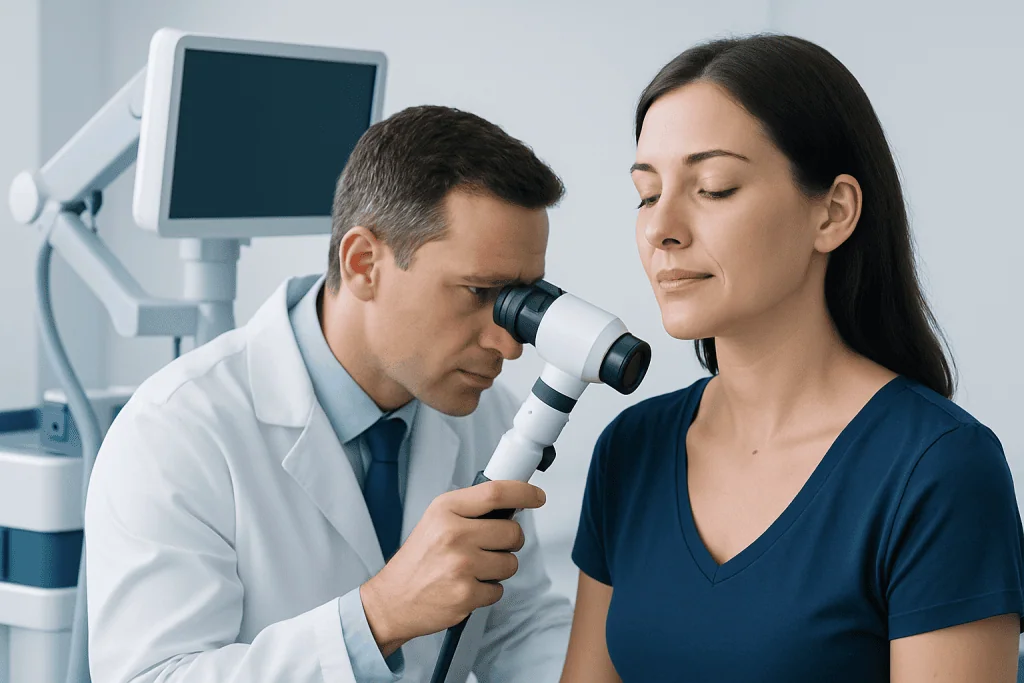
Dermatologists and other trained clinicians may use dermoscopy, a handheld magnifying device with light that shows patterns beneath the surface of the skin. Dermoscopy is painless and can help distinguish benign features from changes that require closer investigation. Photographs or digital monitoring may be used for selected lesions that need follow-up over time.
If a lesion is suspicious or cannot be confidently identified, the doctor may recommend a biopsy or complete surgical removal under local anesthetic. The tissue is then examined in a laboratory. This is the most reliable way to determine whether a lesion is benign, atypical, or cancerous and to guide any further care.
For concerns related to suspicious pigmented lesions and skin cancer assessment, skin cancer evaluation may include dermoscopic examination and biopsy when appropriate. A biopsy recommendation does not mean a person has cancer; it is a diagnostic step used to obtain an accurate answer.
When to seek medical care
Arrange a medical appointment soon if a mole falls off without a clear injury, or if it had changed in size, shape, color, or sensation beforehand. The same applies when a spot bleeds spontaneously, repeatedly forms a crust, remains sore, or does not heal normally. People with many moles, a previous skin cancer, significant sun exposure, a weakened immune system, or a close relative with melanoma may benefit from a lower threshold for review.
Urgent medical advice is appropriate for bleeding that cannot be controlled with firm direct pressure, a rapidly spreading skin infection, or severe pain and swelling after an injury. In other situations, a routine but timely skin appointment is usually suitable. A clinician can determine how quickly the area needs to be assessed.
It is particularly important not to wait for a lesion to “grow back” before seeking advice if it looks unusual. Some harmless lesions can recur after partial injury, but recurrence can also occur when cells remain in the skin. Examination while the area is healing or soon after the change may provide the clearest information.
Skin monitoring and prevention
Regular self-awareness is more useful than frequent anxious checking. Once a month, people can look over their skin in good light, including the scalp, back, soles of the feet, nails, and areas usually covered by clothing. A partner, family member, or mirror may help with hard-to-see areas. Comparing a mole with previous photographs can make meaningful changes easier to notice.
Sun protection supports overall skin health and may reduce the risk of sun-related skin damage. Practical measures include seeking shade during strong sunlight, wearing protective clothing and a broad-brimmed hat, using broad-spectrum sunscreen as directed, and avoiding tanning beds. Sunscreen is important, but it should not be used to extend time in intense sun.
Any mole that catches frequently on clothing or causes repeated shaving injuries can be discussed with a dermatologist. If removal is appropriate, professional mole removal allows the lesion to be treated safely and, when indicated, sent for laboratory analysis. Acibadem International’s multidisciplinary specialists and JCI-accredited hospitals also evaluate and treat skin concerns for international patients.
Frequently asked questions
Is it normal for a mole to fall off?
A raised mole may detach after being rubbed, scratched, shaved, or caught on clothing, and this is often benign. However, most moles do not fall off without a reason. If there was no clear injury or the mole had changed beforehand, a clinician should assess the area.
Can a mole fall off and grow back?
A lesion may appear to grow back if only its surface was injured and cells remain deeper in the skin. Recurrent pigment, a new bump, ongoing crusting, or a sore at the same site should be examined. A doctor can determine whether monitoring, biopsy, or removal is appropriate.
Does a bleeding mole mean cancer?
No. A mole can bleed after trauma, such as shaving or scratching. Bleeding without an obvious injury, repeated bleeding, or bleeding together with changes in shape, color, size, or healing should be checked promptly.
Should a detached mole be saved for testing?
If it is easy to do so, the tissue can be kept in a clean container and brought to a medical appointment, but it may not always be suitable for analysis. The doctor can assess the remaining skin and decide whether further testing is needed. Do not delay arranging care while trying to preserve the tissue.
Can I remove a mole at home?
Home removal is not recommended. Cutting, burning, tying off, or applying chemical products can lead to infection, scarring, and incomplete removal, and may delay diagnosis of a suspicious lesion. A healthcare professional can assess whether removal is needed and perform it safely.
What does melanoma look like?
Melanoma can appear as a new or changing spot with asymmetry, irregular borders, several colors, increasing size, or a different appearance from other moles. It may also itch, bleed, crust, or form a non-healing sore. Not every melanoma follows the same pattern, so any evolving lesion should be reviewed by a qualified clinician.
This article is for general information only and is not a substitute for professional medical advice. Please consult a qualified doctor about your individual situation.
Explore treatments in Turkey — costs, top hospitals & a free quote
JCI-accredited · board-certified surgeons · reply within 24h
Add us as a Preferred Source to see more of our trusted health content across Google Search, AI Overviews and Discover.

More from the Health Library

What to Avoid Eating After Surgery? Causes, Explanations, and Next Steps

Does Breast Milk Have Lactose? Causes, Explanations, and Next Steps

Quinoa vs Rice: Key Differences and How Doctors Tell Them Apart
Cavity vs. Stain: How to Tell the Difference

How Long Does It Take for Antibiotics to Work? Here Is What the Evidence Says