Cancer Genetic Screening Tests: How It Works, Results and What to Expect

Cancer genetic testing looks for inherited variants that may increase cancer risk, not cancer cells or tumors. Testing is most useful when personal or family history suggests a hereditary cancer syndrome.
Key Takeaways
- Cancer genetic testing looks for inherited variants that may increase cancer risk, not cancer cells or tumors.
- Testing is most useful when personal or family history suggests a hereditary cancer syndrome.
- Results may be positive, negative or uncertain, and genetic counseling helps explain what each result means.
- A positive result indicates increased risk, not certainty that cancer will develop.
- Most people can return to normal activities immediately after providing a blood or saliva sample.
Cancer genetic screening tests usually involve a blood or saliva sample that is analyzed for inherited gene changes linked with a higher chance of certain cancers. They do not diagnose cancer itself, but they can help a person and their care team make informed choices about screening, prevention and family testing.
Overview: what cancer genetic screening tests can show
Cancer genetic screening tests, also called hereditary cancer genetic tests, examine certain genes for inherited changes that can increase a person’s likelihood of developing particular cancers. These changes are present from birth and may be passed through families. A test is typically performed using blood, saliva or a cheek-swab sample and is often considered alongside a detailed personal and family health history.
These tests do not show whether a person currently has cancer. Instead, they identify whether an inherited genetic variant may be associated with a higher lifetime risk of cancers such as breast, ovarian, colorectal, prostate, pancreatic, thyroid or melanoma, depending on the gene involved. Results can support a tailored plan for screening, risk reduction and, when appropriate, testing for relatives.
Genetic testing is different from tumor testing. Tumor testing analyzes cancer cells from a known tumor to help guide treatment choices, whereas inherited genetic testing looks for variants a person was born with. Both can be important parts of modern cancer care, but they answer different clinical questions.
Who may benefit from hereditary cancer testing
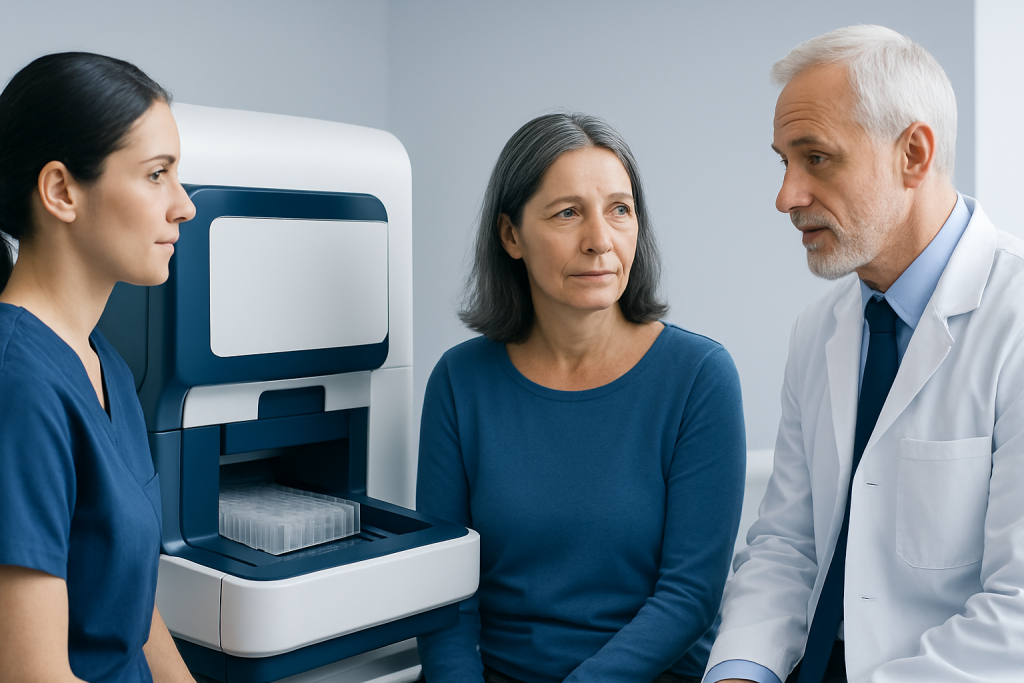
Not everyone needs genetic testing for cancer. It is generally most informative when a person’s own medical history or family history suggests that an inherited cancer predisposition may be present. A clinician or genetic counselor can assess whether testing is likely to provide useful information and which genes should be included in a test panel.
Testing may be considered for people with cancer diagnosed at a younger-than-usual age, more than one primary cancer, a rare cancer, or a cancer pattern associated with inherited conditions. It may also be appropriate when several close relatives have had related cancers, when cancer has occurred across multiple generations, or when a known familial genetic variant has been identified.
- Breast, ovarian, pancreatic or prostate cancer occurring in a family pattern may prompt assessment for genes such as BRCA1 and BRCA2.
- Multiple relatives with colorectal, uterine or certain other digestive cancers may raise concern for Lynch syndrome.
- A relative’s confirmed inherited cancer-related variant can make targeted testing particularly helpful for family members.
Family history is important, but its absence does not always exclude inherited risk. Small families, limited knowledge of relatives’ health and inheritance through either parent can make patterns less visible. A qualified professional can help place an individual’s history in context.
How the testing process works and what to expect

The process commonly begins with pre-test counseling or a clinical consultation. The clinician reviews personal health information, cancer diagnoses in relatives and the potential value and limits of testing. This discussion should include how results could affect screening decisions, family members and emotional wellbeing, as well as privacy and insurance considerations relevant to the person’s country of residence.
After informed consent, the sample is collected. A blood draw is common, although some laboratories use saliva or a cheek swab. The laboratory extracts DNA and looks for selected genetic variants. In many cases, a multigene panel is used because different inherited conditions can produce overlapping family cancer patterns.
Collection is straightforward. A blood sample may cause brief discomfort, a small bruise or lightheadedness in some people. Saliva and cheek-swab collection are painless. No anesthesia, hospital stay, fasting or physical recovery period is usually required, and daily activities can generally resume immediately.
Once the laboratory report is available, the ordering clinician or genetic counselor explains the finding and its practical implications. The report should not be interpreted in isolation, since the meaning of a variant depends on the gene, the person’s history and the evidence supporting that specific change.
How long does it take to get results back from genetic testing for cancer?
Results often take several weeks, although the exact timeframe varies by laboratory, the number of genes analyzed, the type of sample and whether additional review is needed. Targeted testing for a known family variant may sometimes be completed sooner than a broad multigene panel.
It is reasonable to ask the ordering clinician when results are expected and how they will be communicated. If a result needs further laboratory review or if a variant has uncertain significance, the process can take longer. A follow-up appointment is valuable because it provides time to discuss the result carefully and plan next steps.
For a person already diagnosed with cancer, the healthcare team may prioritize testing when a result could influence near-term treatment or surgery decisions. Even then, the team will explain whether it is appropriate to wait for the result or proceed with recommended care.
Understanding results: positive, negative and uncertain findings
A positive result means the test found an inherited variant known to be associated with increased risk for one or more cancers. It does not mean cancer is present or that cancer will definitely develop. Depending on the gene and the individual’s circumstances, a care team may recommend earlier or more frequent screening, preventive medication or surgery for selected people, and discussion of testing for close relatives.
A negative result means no relevant variant was identified in the genes tested. This can be reassuring, but it does not always mean cancer risk is average. A person may still have risk related to age, lifestyle, family history, genes not included in the test or genetic changes that science cannot yet interpret. Routine age- and risk-appropriate cancer screening remains important.
A variant of uncertain significance, often called a VUS, is a genetic change for which there is not enough evidence to determine whether it affects cancer risk. This is not treated as a positive result. Medical decisions should generally be based on personal and family history until more evidence becomes available; laboratories may later reclassify some variants as knowledge advances.
Is it worth getting genetic testing for cancer?
Genetic testing for cancer can be worthwhile when it is likely to answer a meaningful clinical question. For someone with a suggestive personal or family history, a result may help refine screening plans, identify options to lower risk, support treatment planning after a cancer diagnosis and give relatives an opportunity to understand their own inherited risk.
The value is individual. Testing may be less informative when there is no personal or family pattern suggesting hereditary cancer, although eligibility is evolving as professional recommendations and evidence develop. A genetic counselor, oncologist or other qualified clinician can help a person weigh the likely benefits against the limitations before testing.
For people diagnosed with cancer, inherited genetic information can sometimes complement broader cancer evaluation and cancer treatment planning. Family history involving digestive cancers may also lead clinicians to consider assessment for related conditions such as colorectal cancer.
What is the downside to genetic testing?
The physical risks of sample collection are minimal, but genetic testing can have practical and emotional downsides. Learning about increased risk may cause worry, uncertainty or concern for children and other relatives. A negative result may also be misunderstood as complete protection, while an uncertain result can be frustrating because it may not change care.
Results can have implications beyond the person tested. A positive finding may suggest that biological relatives could carry the same variant, which can create difficult conversations or differing views about whether relatives want testing. Genetic counseling can help people prepare for these issues and decide how, or whether, to share information.
Testing also has limits. Not every inherited cancer risk gene is known, and a test may not explain a strong family history. Before testing, patients should ask about laboratory quality, what genes are included, possible out-of-pocket costs and legal protections or insurance implications that apply where they live.
Does genetic testing for cancer show if you have cancer?
No. Genetic testing for inherited cancer risk does not diagnose whether someone currently has cancer. It looks for inherited variants that may increase susceptibility to cancer during life. A person with a positive result may never develop cancer, while someone with a negative inherited-risk test can still develop cancer for non-inherited reasons.
Diagnosing cancer usually requires an evaluation based on symptoms, examination, imaging, laboratory tests and, in many cases, a biopsy. Appropriate screening tests, such as mammography, colonoscopy or other examinations recommended for a person’s age and risk profile, are used to look for cancer or precancerous changes before symptoms develop.
Anyone with a new lump, unexplained bleeding, persistent change in bowel or bladder habits, unexplained weight loss, ongoing pain or another concerning symptom should seek medical assessment rather than relying on a genetic test. Prompt evaluation often helps clarify the cause and identify the right next steps.
When to seek medical care
A person should discuss genetic counseling with a doctor if they have been diagnosed with cancer at a young age, have had more than one cancer, have a close relative with a known cancer-related genetic variant, or notice a pattern of breast, ovarian, colorectal, uterine, pancreatic, prostate or other related cancers in the family. Bringing information about relatives’ cancer types and approximate ages at diagnosis can make the consultation more useful.
Medical care should also be sought promptly for symptoms that could need assessment, regardless of genetic risk. Genetic test results should not delay diagnostic evaluation or recommended screening. A doctor can coordinate referral to oncology, surgery, gastroenterology, gynecology or other relevant specialists when needed.
Acibadem International’s multidisciplinary specialists and JCI-accredited hospitals support international patients with cancer risk assessment, genetic counseling and coordinated care. Screening and prevention recommendations may be integrated with oncology care and individualized follow-up when appropriate.
Frequently asked questions
Who should consider cancer genetic screening tests?
People with an early cancer diagnosis, multiple primary cancers, a rare cancer, a known familial variant or a strong pattern of related cancers in close relatives may benefit. A genetic counselor or doctor can review the family history and determine whether testing is appropriate.
Can cancer genetic testing be done with saliva?
Yes. Many hereditary cancer tests can use saliva or a cheek-swab sample, while others use blood. The laboratory or clinician will advise which sample type is suitable for the chosen test.
If a parent has a cancer gene variant, will their child have it?
Many hereditary cancer variants have a 50% chance of being passed to each child, but inheritance depends on the specific condition. A genetic counselor can explain the pattern for the identified gene and discuss who in the family may wish to consider testing.
What happens after a positive genetic test result?
The care team reviews the specific gene and the person’s medical and family history to create an individualized plan. This may include enhanced screening, risk-reducing options, referrals to specialists and discussion of testing for relatives.
What does a variant of uncertain significance mean?
It means a genetic change was found, but current evidence cannot determine whether it affects cancer risk. It is not considered proof of inherited cancer risk, and care is usually based on personal and family history while the variant is monitored for possible future reclassification.
Do relatives need testing if one family member has a positive result?
Close biological relatives may have a chance of carrying the same inherited variant and can discuss targeted testing with a clinician or genetic counselor. Testing is a personal decision, and counseling can help each relative understand potential benefits and limits.
References
- National Cancer Institute
- American Cancer Society
- Centers for Disease Control and Prevention
- National Society of Genetic Counselors
- World Health Organization
This article is for general information only and is not a substitute for professional medical advice. Please consult a qualified doctor about your individual situation.
Oncology care in Turkey — second opinion and treatment plan
JCI-accredited · board-certified surgeons · reply within 24h
Add us as a Preferred Source to see more of our trusted health content across Google Search, AI Overviews and Discover.