

Cellulitis Symptoms: Possible Causes and When to Seek Care

Cellulitis symptoms often start with redness, warmth, swelling, and tenderness in one area of skin. The infection commonly affects the legs but can also occur on the face, arms, hands, or around a wound.
Key Takeaways
- Cellulitis symptoms often start with redness, warmth, swelling, and tenderness in one area of skin.
- The infection commonly affects the legs but can also occur on the face, arms, hands, or around a wound.
- People should seek medical care promptly because cellulitis can spread and may need antibiotics.
- Fever, rapidly expanding redness, severe pain, facial involvement, or symptoms in someone with diabetes or a weak immune system need urgent attention.
- Good skin care, wound cleaning, and managing underlying swelling or fungal infections can help lower the risk of cellulitis.
Cellulitis symptoms typically include a warm, red, swollen, and tender area of skin that may spread over hours to days. Because cellulitis is a bacterial skin infection that can worsen without treatment, prompt medical assessment is important, especially if fever, severe pain, or rapid progression develops.
Overview: what cellulitis symptoms usually look and feel like
Cellulitis symptoms usually begin with a patch of skin that becomes red, warm, swollen, and painful or tender to the touch. The area often enlarges gradually and may feel tight, firm, or more sensitive than the surrounding skin. Many people notice that the affected skin looks different from a simple rash because it is deeper, more swollen, and increasingly sore.
Cellulitis is most often caused by bacteria entering through a break in the skin, even a small cut, scratch, insect bite, blister, cracked skin, or surgical wound. It commonly affects one leg, but it can also involve the foot, arm, hand, face, or another area. Symptoms are usually on one side rather than appearing evenly on both sides of the body.
Some people also develop general symptoms such as fever, chills, tiredness, or feeling unwell. These can suggest that the body is reacting to the infection, not just irritation on the skin surface. Because cellulitis can sometimes resemble other skin problems while needing different treatment, it is best assessed by a qualified clinician.
Common cellulitis symptoms and how they can progress
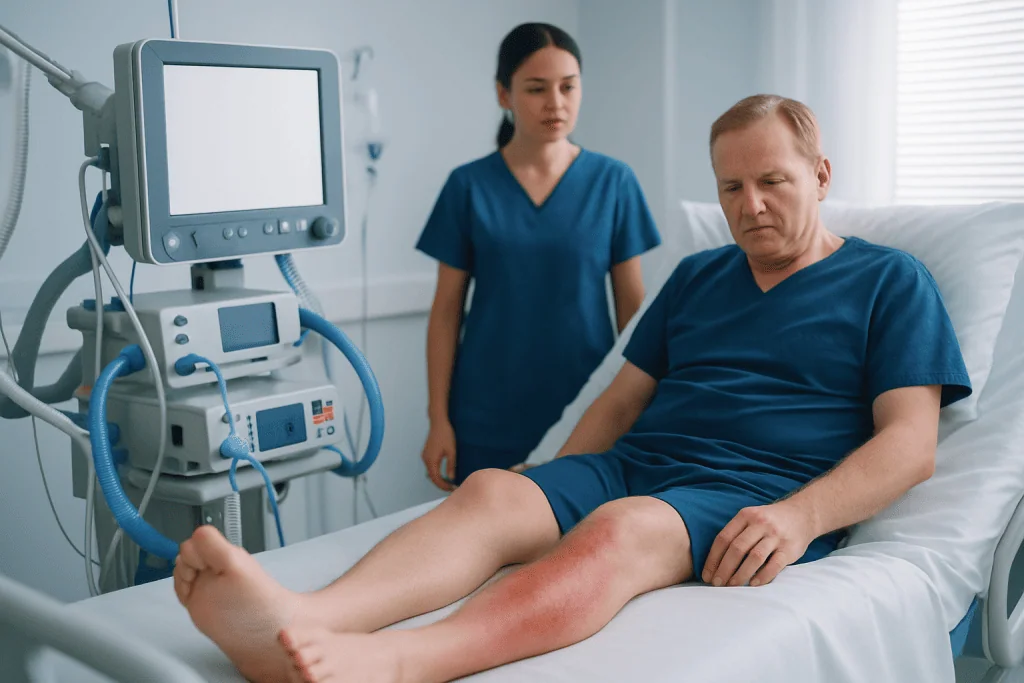
The most recognizable cellulitis symptoms are spreading redness, warmth, swelling, and tenderness. The skin may appear shiny, stretched, or slightly pitted from swelling. In lighter skin tones, redness may be easier to see, while in darker skin tones the area may look darker than usual, violaceous, or simply feel warmer and more swollen than the surrounding skin.
As the infection progresses, the borders may become less distinct and the involved area can extend over a wider region. Pain may increase with touch or walking if the leg or foot is affected. Nearby lymph nodes can become swollen, and red streaks traveling away from the infected area may occur in some cases, suggesting that the infection is spreading through the lymphatic system.
Less common but important symptoms include blisters, pus, skin breakdown, or numbness. These do not always occur, but they can indicate more severe inflammation or an associated wound problem. A person with recurrent leg swelling or skin conditions may also notice that cellulitis develops on top of long-standing discoloration or irritation.
- Red or darkened area of skin that spreads
- Warmth compared with nearby skin
- Swelling or tightness
- Pain or tenderness
- Fever, chills, or fatigue
- Swollen lymph nodes or red streaking
Possible causes and risk factors

Cellulitis usually develops when common bacteria, often streptococci or staphylococci, enter through a disruption in the skin barrier. The opening may be obvious, such as a cut or burn, but it can also be subtle, such as dry cracked heels, athlete’s foot between the toes, eczema, or a small shaving nick. This is one reason cellulitis can sometimes seem to appear suddenly.
Several factors raise the risk of cellulitis. These include chronic swelling in the legs, poor circulation, obesity, diabetes, a weakened immune system, previous cellulitis, skin ulcers, and fungal infections of the feet. People recovering from surgery or injury may also be more vulnerable if the skin has not healed fully. Ongoing skin conditions may need separate assessment, such as eczema or athlete’s foot, because treating the underlying problem can help prevent recurrence.
Cellulitis can overlap with or be mistaken for other conditions. For example, redness and swelling in the leg may sometimes be linked to vein or clot-related problems, while a painful, swollen area around a wound may suggest an abscess. If symptoms are recurrent, unusual, or severe, doctors may evaluate for related conditions such as deep vein thrombosis or deeper skin and soft tissue infection.
How doctors diagnose cellulitis
Cellulitis is usually diagnosed clinically, meaning the doctor relies mainly on the history and physical examination. They will ask when the redness started, how quickly it spread, whether there has been fever, injury, insect bite, surgery, or drainage, and whether the person has conditions such as diabetes or poor circulation. The appearance, warmth, tenderness, and distribution of the skin changes often provide the key clues.
Tests are not always needed for mild cases, but they can be helpful in some situations. Blood tests may be ordered if the person is very unwell, has fever, or the doctor is concerned about a more significant infection. Imaging such as ultrasound can help if there is concern about an abscess that may need drainage or if another diagnosis is possible.
Diagnosis also involves ruling out conditions that can look similar, including contact dermatitis, venous stasis changes, gout, shingles, insect reactions, or blood clots. This matters because the treatment can differ greatly. Prompt evaluation helps avoid delays, especially when symptoms are rapidly changing or occurring on the face, around the eyes, or near a surgical wound.
Treatment options and what recovery may involve
Cellulitis treatment usually involves antibiotics, and the choice depends on how severe the infection is, where it is located, and whether there are risk factors for resistant bacteria or deeper infection. Mild cases are often treated with oral medication and careful follow-up, while severe cases may require hospital treatment and intravenous antibiotics. Doctors may also outline the border of redness or photograph the area to track whether it is improving.
Supportive care is also important. Resting the affected area and elevating a swollen leg or arm can reduce discomfort and swelling. A simple pain reliever may be recommended if appropriate for the individual. If there is an abscess or a collection of pus, treatment may include abscess drainage in addition to antibiotics, because medication alone may not fully treat a pocket of infection.
Recovery is often gradual rather than immediate. The skin may remain discolored, tender, or slightly swollen for some time even after treatment has started. Follow-up is important if redness continues to spread, fever develops, or symptoms do not begin to improve as expected. In more complex cases, evaluation by specialists in infectious diseases care or dermatology assessment may help confirm the diagnosis and guide treatment.
Prevention and self-care
Preventing cellulitis focuses on protecting the skin barrier and treating small problems early. Cuts, scrapes, and bites should be washed gently with soap and water, then kept clean and covered as needed. Moisturizing dry skin can reduce cracking, especially on the hands and feet, and properly fitting footwear can help prevent blisters.
Managing underlying conditions is equally important. Swollen legs, fungal infections between the toes, eczema, and chronic wounds can all create an entry point for bacteria. Treating athlete’s foot, using prescribed creams for inflammatory skin conditions, and following foot-care advice for diabetes can all lower the risk of recurrent infection.
Self-care can support recovery, but it should not replace medical advice when cellulitis is suspected. People should avoid squeezing, puncturing, or aggressively massaging the area, as this may worsen irritation or spread infection. Recurrent episodes may prompt doctors to look for risk factors such as edema, skin disease, or circulation problems that can be addressed over the long term.
When to seek medical care
Cellulitis symptoms should generally be assessed promptly because early treatment can help limit spread and reduce the chance of complications. A person should arrange medical care if they notice a warm, painful, spreading area of redness or swelling, especially after a cut, bite, blister, or other break in the skin. This is particularly important for people with diabetes, poor circulation, chronic swelling, or a weakened immune system.
Urgent medical attention is needed if there is fever, chills, rapid expansion of the rash, severe pain, facial involvement, confusion, faintness, or red streaking up a limb. Symptoms around the eye, after surgery, or in an infant or frail older adult also deserve quick assessment. If the skin becomes purple, numb, blistered, or starts breaking down, emergency evaluation is appropriate.
For international patients who need evaluation, Acibadem International’s multidisciplinary specialists and JCI-accredited hospitals diagnose and treat skin and soft tissue infections with coordinated care. The most important step, however, is timely review by a qualified doctor who can confirm whether the symptoms are cellulitis and start the right treatment.
Frequently asked questions
What are the first signs of cellulitis?
Early cellulitis symptoms often include a tender area of skin that becomes warm, red or darker than usual, and mildly swollen. The area may gradually spread and become more painful over hours or days.
Can cellulitis go away on its own?
Cellulitis should not be assumed to go away on its own. Because it is usually a bacterial infection, medical assessment is important to decide whether antibiotics or other treatment are needed.
How can someone tell cellulitis from a simple rash?
Cellulitis usually feels warm, swollen, and tender, and it tends to affect one area that enlarges over time. A simple rash may itch more than it hurts and may not cause the same deep tenderness, swelling, or general illness, but a doctor may still be needed to tell the difference.
Is cellulitis contagious?
Cellulitis itself is generally not considered contagious through casual contact. However, the bacteria that can cause skin infections may spread in some settings, so good hand hygiene and proper wound care remain important.
When is cellulitis an emergency?
Cellulitis can be an emergency if there is high fever, rapidly spreading redness, severe pain, confusion, faintness, red streaking, or involvement of the face or area around the eye. Emergency care is also important if the skin turns purple, develops blisters, or becomes numb.
Who is more likely to get cellulitis?
People with diabetes, poor circulation, chronic leg swelling, skin ulcers, eczema, athlete's foot, obesity, or weakened immunity have a higher risk. A previous episode of cellulitis also increases the chance of it happening again.
References
- Centers for Disease Control and Prevention
- American Academy of Dermatology
- National Health Service
- Infectious Diseases Society of America
This article is for general information only and is not a substitute for professional medical advice. Please consult a qualified doctor about your individual situation.
Cellulitis in Turkey — costs, top hospitals & a free quote
JCI-accredited · board-certified surgeons · reply within 24h
Add us as a Preferred Source to see more of our trusted health content across Google Search, AI Overviews and Discover.

More from the Health Library



Related Specialists

Assoc. Prof. Dr. Serap Şahin Önder
Otorhinolaryngology
Assoc. Prof. Dr. Gökşen Gökşenoğlu
Physical Medicine & Rehabilitation
Dr. Nezail Demircler
Aesthetic Plastic & Reconstructive Surgery
Dr. Nebi Burak Ün
Emergency Service