Cervical cancer Stages Explained: What Each Stage Means

Cervical cancer is commonly staged from stage I to stage IV using the FIGO staging system. Earlier-stage cervical cancer is limited to the cervix or nearby tissues and may often be treated with surgery or radiotherapy.
Key Takeaways
- Cervical cancer is commonly staged from stage I to stage IV using the FIGO staging system.
- Earlier-stage cervical cancer is limited to the cervix or nearby tissues and may often be treated with surgery or radiotherapy.
- More advanced stages may involve lymph nodes, the pelvic wall, nearby organs, or distant parts of the body.
- Imaging, biopsies, examination findings, and sometimes surgery are used together to determine the stage.
- A stage guides treatment planning but cannot predict an individual outcome with certainty.
Cervical cancer stages describe the size and location of the cancer and whether it has spread beyond the cervix. Staging helps the care team recommend treatment, but every person’s outlook also depends on cancer type, overall health, treatment response, and other individual factors.
Overview: What Cervical Cancer Stages Mean
Cervical cancer stages explain where the cancer is located, how deeply it has grown, and whether it has spread to nearby lymph nodes, organs, or more distant areas. The cervix is the lower part of the uterus that connects to the vagina. Knowing the stage gives the medical team a shared way to describe the disease and choose the most appropriate treatment plan.
Doctors generally use the International Federation of Gynecology and Obstetrics (FIGO) system for cervical cancer staging. The broad stages range from stage I, when cancer is limited to the cervix, to stage IV, when it has spread to organs farther away or beyond the pelvis. Stages may also have letter and number subgroups, such as IB or IIIC, which provide more detail.
Staging can feel like a great deal of information to absorb after a diagnosis. It is important to remember that a stage is not a personal forecast. Treatment options and outcomes vary according to factors including the exact cell type, tumour features, lymph node findings, general health, and how well cancer responds to treatment.
How Cervical Cancer Is Staged
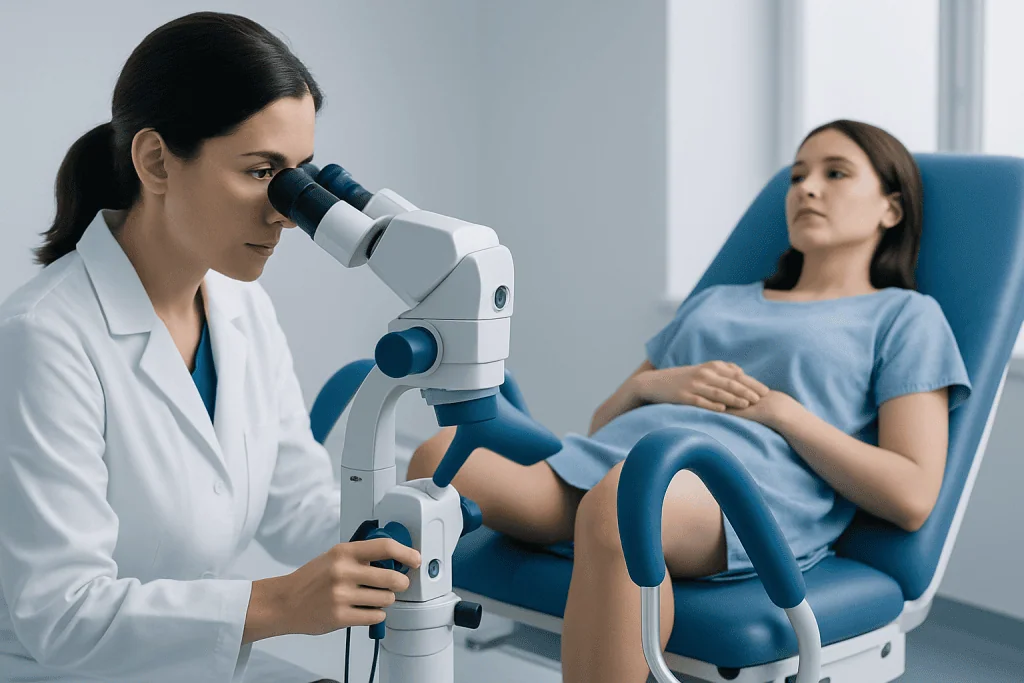
Staging begins with a careful review of symptoms, medical history, pelvic examination, and biopsy results. A biopsy confirms whether cancer is present and identifies the type of cervical cancer. The most common types are squamous cell carcinoma and adenocarcinoma, which can differ in their location and clinical features.
Further tests may be needed to assess the extent of disease. These can include magnetic resonance imaging (MRI) of the pelvis, computed tomography (CT), positron emission tomography combined with CT (PET-CT), chest imaging, and blood tests. These tests help identify the size of the tumour and look for signs of spread to lymph nodes or other organs.
In selected situations, doctors may use procedures such as cystoscopy to look inside the bladder or proctoscopy to assess the rectum. Surgery may also provide staging information for some people with early disease. The final stage is based on all relevant clinical, imaging, pathology, and surgical findings rather than on one test alone.
- Tumour extent: How far cancer has grown within or beyond the cervix.
- Lymph nodes: Whether cancer is found in pelvic or para-aortic lymph nodes.
- Distant spread: Whether cancer has reached organs or tissues outside the pelvis.
Stage I: Cancer Limited to the Cervix

In stage I cervical cancer, the disease is confined to the cervix. This stage includes very small cancers found only under a microscope as well as larger tumours that remain within the cervix. Stage IA describes microscopic invasive cancer, while stage IB includes tumours that are visible or larger on measurement but have not grown outside the cervix.
For some people with very early disease, treatment may involve a cone biopsy or another fertility-preserving procedure. A cone biopsy removes a cone-shaped portion of cervical tissue and may be suitable only when the cancer is small and specific clinical criteria are met. People who wish to preserve fertility should discuss this early with a gynecologic oncology team.
For many stage I cancers, treatment may include surgery to remove the cervix and uterus, sometimes along with nearby tissues and lymph nodes. Depending on the tumour size, pathology findings, and personal circumstances, radiotherapy with or without chemotherapy may be recommended instead of surgery or after surgery. A detailed discussion of cervical cancer treatment options can help patients understand the role of each approach.
Stages II and III: Cancer Beyond the Cervix
Stage II cervical cancer has grown beyond the cervix and uterus but has not reached the pelvic wall or the lower third of the vagina. Stage IIA generally involves the upper part of the vagina without extension into tissue beside the cervix. Stage IIB means cancer has extended into the tissues around the cervix, called the parametria.
Stage III indicates more extensive local or regional spread. It may involve the lower third of the vagina, reach the pelvic wall, affect the kidneys by blocking the ureters, or involve lymph nodes. Stage IIIC specifically refers to cancer found in pelvic lymph nodes or para-aortic lymph nodes, which are higher in the abdomen.
For many stage II and stage III cancers, the main treatment is external-beam radiotherapy combined with chemotherapy, followed by internal radiotherapy called brachytherapy. Chemotherapy is commonly used during radiotherapy to help make cancer cells more sensitive to radiation. Treatment is planned carefully to target the cancer while protecting nearby organs as much as possible.
Brachytherapy places a radiation source close to the cervix or tumour area for a planned period. It is an important part of curative-intent treatment for many locally advanced cervical cancers. The exact approach is individualized by radiation oncology and gynecologic oncology specialists.
Stage IV: Cancer Involving Nearby Organs or Distant Sites
Stage IV cervical cancer is divided into two main groups. Stage IVA means the cancer has spread to nearby organs, such as the bladder or rectum. Stage IVB means it has spread to more distant areas of the body, such as distant lymph nodes, lungs, liver, bones, or other organs.
Treatment at this stage is personalized and may include systemic therapy, radiotherapy, surgery in selected circumstances, and supportive care for symptoms. Systemic treatments travel through the bloodstream and can include chemotherapy, targeted therapy, immunotherapy, or combinations of these options, depending on the cancer’s features and prior treatments.
Even when cancer has spread, care remains active and focused on the person’s goals, symptoms, daily function, and quality of life. Radiotherapy may help control bleeding, pain, or other local symptoms. Palliative care can be provided alongside cancer treatment and offers support with symptom management, emotional wellbeing, and practical concerns.
How Stage Guides Treatment Planning
The stage is one of the most important tools for planning treatment, but it is not the only one. Doctors also consider tumour size, histology, lymphovascular invasion, lymph node involvement, kidney function, previous treatments, fertility wishes, age, and overall health. Care is often planned through a multidisciplinary team that may include gynecologic oncologists, medical oncologists, radiation oncologists, radiologists, pathologists, nurses, and supportive-care professionals.
For early-stage cancer, surgery may be considered when the tumour can be removed safely and the person is well enough for an operation. Surgery can range from fertility-sparing procedures to hysterectomy with assessment of pelvic lymph nodes. The best candidates are identified after imaging, pathology review, and discussion of personal priorities.
When radiotherapy and chemotherapy are recommended, treatment typically starts with planning scans and measurements to map the treatment area. External-beam radiotherapy is usually delivered in short weekday appointments over several weeks. Brachytherapy is then performed using a carefully designed plan, sometimes with anesthesia or sedation depending on the technique and individual needs.
Recovery differs by treatment. After surgery, recovery may take several weeks, with temporary limits on strenuous activity and vaginal intercourse. During chemoradiotherapy, tiredness, bowel changes, bladder irritation, skin sensitivity, and vaginal symptoms can occur. The care team monitors side effects throughout treatment and provides guidance for recovery, follow-up, sexual health, and emotional support.
Benefits, Risks, and Follow-Up After Treatment
The potential benefit of staging is that it supports a treatment plan matched to the known extent of cancer. For earlier stages, treatment may aim to remove or destroy all detectable cancer while preserving function when safely possible. For more advanced disease, treatment can still offer meaningful cancer control, symptom relief, and support tailored to the individual situation.
All cancer treatments can have risks and side effects. Surgery may involve bleeding, infection, blood clots, urinary or bowel changes, and effects on fertility or sexual function. Radiotherapy can cause fatigue, bowel or bladder symptoms, vaginal dryness or narrowing, and menopause if the ovaries are affected. Chemotherapy, targeted therapies, and immunotherapies have their own possible side effects, which should be discussed before treatment begins.
Follow-up appointments are important after treatment, regardless of stage. They may include symptom review, pelvic examination, cervical or vaginal testing when appropriate, and imaging if there are concerns about recurrence. Patients should tell their healthcare team about new bleeding, persistent pelvic pain, unexplained weight loss, worsening fatigue, leg swelling, changes in bladder or bowel habits, or other symptoms that do not settle.
Acibadem International’s multidisciplinary specialists and JCI-accredited hospitals provide diagnosis and treatment planning for international patients with cervical cancer. A second opinion may also help clarify the stage, pathology findings, and available treatment approaches before a major treatment decision.
When to Seek Medical Care
Anyone with symptoms that could be related to cervical cancer should arrange a medical assessment rather than waiting for symptoms to become severe. Possible symptoms include vaginal bleeding after sex, bleeding between periods, bleeding after menopause, persistent watery or blood-stained vaginal discharge, pelvic pain, or pain during sex. These symptoms are common and can have non-cancer causes, but they should be checked.
People who have been told they have an abnormal cervical screening test, a positive high-risk human papillomavirus (HPV) test, or an abnormal biopsy result should follow the recommended referral and follow-up plan. Prompt assessment helps clarify the cause and, if treatment is needed, allows care to begin without unnecessary delay.
Urgent medical advice is appropriate for heavy vaginal bleeding, severe or worsening pelvic pain, fainting, shortness of breath, fever during cancer treatment, or symptoms of dehydration. A person already receiving treatment should contact their oncology team for guidance, particularly if symptoms are new, intense, or rapidly worsening.
Frequently asked questions
What are the main cervical cancer stages?
Cervical cancer is broadly classified as stage I, II, III, or IV. Stage I is limited to the cervix, while higher stages describe increasing spread into nearby tissues, lymph nodes, organs, or distant parts of the body.
Does stage II cervical cancer mean it has spread throughout the body?
No. Stage II means the cancer has grown beyond the cervix and uterus but has not spread to distant organs. It may involve the upper vagina or tissues beside the cervix, and treatment is often planned with curative intent.
Can cervical cancer stage change after diagnosis?
The formal stage is generally assigned at diagnosis using available examination, imaging, pathology, and surgical information. Additional test results can provide more detail and may refine the initial assessment, but clinicians usually continue to refer to the original stage when discussing the cancer.
How do doctors know whether lymph nodes are involved?
Doctors may assess lymph nodes using imaging such as MRI, CT, or PET-CT, and sometimes by removing or sampling nodes during surgery. A pathologist examines sampled lymph nodes under a microscope to look for cancer cells.
Is cervical cancer curable at every stage?
Many early and locally advanced cervical cancers can be treated with the aim of cure. In stage IV disease, treatment options may still control cancer and relieve symptoms, but the goals of care depend on the location and extent of spread and the individual’s circumstances.
Will treatment affect fertility or menopause?
It can. Some early-stage treatments may preserve fertility in carefully selected patients, while hysterectomy and pelvic radiotherapy generally affect the ability to carry a pregnancy. Radiotherapy may also affect ovarian function and lead to menopause, so fertility and menopause concerns should be discussed before treatment starts.
References
- International Federation of Gynecology and Obstetrics
- World Health Organization
- National Cancer Institute
- American Cancer Society
- European Society for Medical Oncology
This article is for general information only and is not a substitute for professional medical advice. Please consult a qualified doctor about your individual situation.
Cervical Cancer in Turkey — costs, top hospitals & a free quote
JCI-accredited · board-certified surgeons · reply within 24h
Add us as a Preferred Source to see more of our trusted health content across Google Search, AI Overviews and Discover.

Medical Oncology Department
Medical treatment of cancer with chemotherapy, immunotherapy and targeted therapies under a multidisciplinary tumor board.
60 specialists in this unitMore from the Health Library



Related Specialists

Dt. Aslı Yetgin Yazar
Oral & Dental Health
Prof. Dr. Ethem Tankurt
Gastroenterology
Asst. Prof. Dr. Deniz Demircioğlu
Dermatology
Prof. Dr. Ahmet Karabulut
Cardiology