Cervicalgia Explained: Causes, Management, and When to See a Doctor

Cervicalgia means neck pain and can be short-term or persistent. Common causes include muscle strain, poor posture, repetitive activity, and degenerative changes in the cervical spine.
Key Takeaways
- Cervicalgia means neck pain and can be short-term or persistent.
- Common causes include muscle strain, poor posture, repetitive activity, and degenerative changes in the cervical spine.
- Many cases improve with activity modification, gentle movement, physical therapy, and other conservative treatments.
- Urgent evaluation is important if neck pain follows trauma or occurs with weakness, numbness, fever, severe headache, or bowel or bladder symptoms.
- Diagnosis is based on symptoms, physical examination, and imaging only when clinically needed.
Cervicalgia is the medical term for neck pain. It is a symptom rather than a single disease, and it may result from muscle strain, posture-related stress, age-related changes in the cervical spine, or less commonly nerve compression or other underlying conditions.
Overview: what cervicalgia means
Cervicalgia is the medical term for pain felt in the neck, especially in the area of the cervical spine. It describes a symptom, not a single diagnosis. In everyday terms, a person with cervicalgia may feel stiffness, soreness, aching, or discomfort that can stay in the neck or spread to the shoulders, upper back, or head.
The neck is a complex structure made of vertebrae, discs, muscles, ligaments, joints, and nerves. Because it supports the head and allows a wide range of motion, it is vulnerable to strain and overuse. Pain can come from muscles and soft tissues, from the small joints of the spine, or from irritation of nearby nerves.
Cervicalgia is very common and often linked to posture, prolonged screen use, stress, sleep position, or minor strain. In many people it improves with time and conservative care. However, persistent or severe symptoms can point to conditions such as disc problems, arthritis, or nerve compression, which may need more targeted assessment.
Symptoms and how cervicalgia can feel
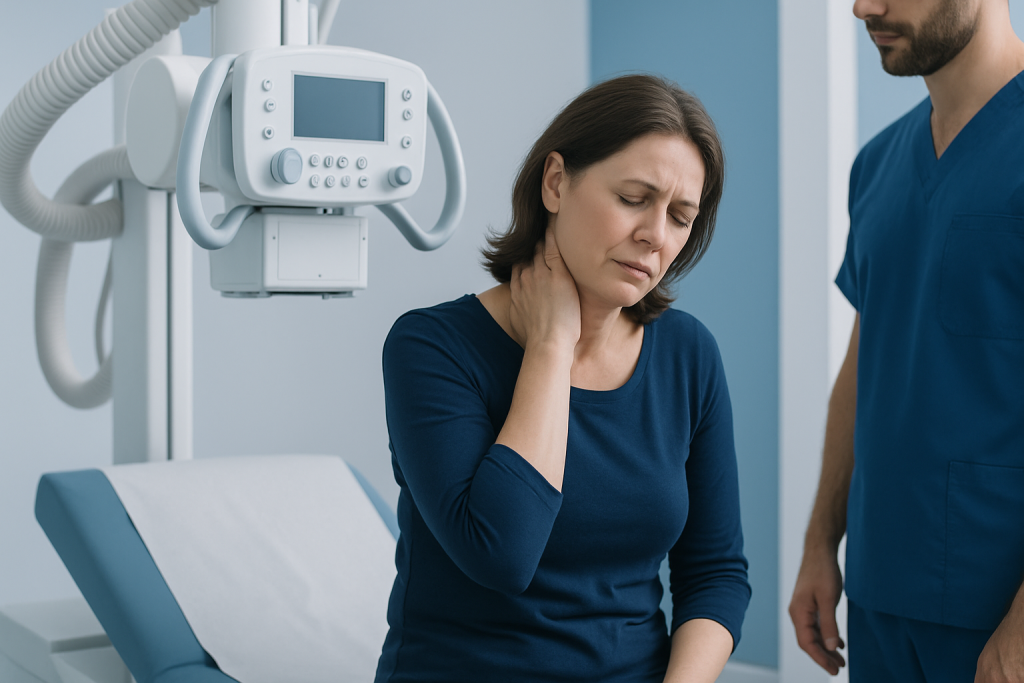
Cervicalgia can feel different from one person to another. Some people notice a dull ache or tightness, while others describe sharp pain when turning the head. Symptoms may begin suddenly after sleeping awkwardly or lifting something, or they may build gradually over days to weeks.
Common symptoms include neck stiffness, reduced range of motion, soreness in the shoulders or upper back, and pain that worsens after sitting for a long time. Some people also develop headaches that start in the neck and move toward the back of the head. Muscle spasm and tenderness to touch are also frequent.
If a nerve is irritated, symptoms can extend beyond the neck. A person may feel tingling, numbness, burning pain, or weakness in the shoulder, arm, or hand. This pattern may suggest a herniated disc or another condition affecting the cervical nerve roots. Symptoms that spread down the arm deserve medical attention, especially if they are new or worsening.
- Aching, tight, or sharp neck pain
- Stiffness and trouble turning the head
- Shoulder or upper back discomfort
- Headaches linked to neck tension
- Numbness, tingling, or weakness in an arm or hand
Common causes and risk factors

The most common causes of cervicalgia are mechanical, meaning they involve the muscles, joints, or other structures of the neck. Muscle strain from poor posture, prolonged computer or phone use, carrying heavy bags, sports, or repetitive work is a frequent reason. Sleeping position and stress can also contribute by increasing muscle tension.
Age-related wear in the cervical spine can lead to ongoing or recurrent symptoms. This may include degeneration of the discs, stiffness of the facet joints, and bone spur formation. In some cases, these changes narrow the spaces where nerves travel and can trigger radiating arm pain. A doctor may also consider cervical hernia when symptoms suggest disc-related pressure on a nerve.
Less commonly, cervicalgia can be related to inflammatory conditions, infection, fracture, or disease affecting the spinal cord. Neck pain after a vehicle collision or other injury should be assessed carefully. Risk factors for cervicalgia include long periods of sitting, limited physical conditioning, previous neck injury, repetitive occupational strain, and emotional stress, which can increase muscle tightness and pain sensitivity.
How doctors diagnose cervicalgia
Diagnosis begins with a medical history and physical examination. A doctor usually asks when the pain started, what makes it better or worse, whether it spreads into the arm, and whether there are symptoms such as numbness, weakness, headache, fever, or recent trauma. The pattern of symptoms often gives important clues about the underlying cause.
During the examination, the doctor checks neck movement, muscle tenderness, posture, and neurological function. This may include testing strength, reflexes, and sensation in the arms and hands. In many uncomplicated cases, this assessment is enough to guide early management without immediate imaging.
X-rays, MRI, or CT scans may be recommended when pain is severe, follows injury, lasts longer than expected, or is associated with neurological symptoms or red flags. MRI is especially helpful when doctors suspect disc disease, nerve compression, or spinal cord involvement. If a person needs a more detailed structural assessment, imaging may be part of evaluating options such as spine surgery, although surgery is not necessary for most people with cervicalgia.
Treatment options: from self-care to specialist care
Treatment depends on the cause, severity, and duration of symptoms. For many people, the first step is conservative care: relative rest, gentle activity, posture correction, and short-term symptom relief measures. Staying lightly active is often more helpful than prolonged bed rest, which can increase stiffness and delay recovery.
Doctors may recommend nonprescription or prescription pain-relieving medicines, depending on the situation, along with physical therapy. A physical therapist can guide stretching, strengthening, and mobility exercises that improve support for the neck and upper back. Manual therapy, ergonomic advice, and a structured home exercise plan are often part of treatment.
When symptoms are persistent or involve nerve irritation, additional options may be considered. These can include specialist rehabilitation, targeted injections in selected cases, or evaluation by a spine team. If there is significant nerve compression, progressive weakness, or spinal cord involvement, procedures such as microdiscectomy or spinal fusion may be discussed, depending on the exact diagnosis and imaging findings.
The goal of treatment is not only to reduce pain but also to restore movement, improve daily function, and lower the chance of recurrence. Most people do well with non-surgical care, especially when treatment starts early and is paired with good movement habits.
Prevention and self-care for everyday neck pain
Good self-care can make a meaningful difference in both recovery and prevention. Many cases of cervicalgia improve when a person adjusts daily habits that overload the neck. This includes setting up screens at eye level, taking regular breaks from sitting, avoiding cradling the phone between the ear and shoulder, and using supportive sleep positioning.
Gentle stretching and strengthening of the neck, shoulders, and upper back can improve posture and reduce strain over time. Activities such as walking, light mobility work, and guided exercise often help maintain circulation and flexibility. Sudden, forceful neck movements should be avoided when pain is active.
Helpful self-care measures may include:
- Applying heat or cold based on comfort
- Taking regular movement breaks during desk work
- Using an ergonomic chair and monitor setup
- Sleeping with the neck in a neutral position
- Managing stress, which can worsen muscle tension
If pain keeps returning, it is worth reviewing workstation habits, exercise technique, and sleep setup with a healthcare professional. In some cases, recurring symptoms reflect an underlying spine condition rather than simple strain.
When to seek medical care
Many episodes of cervicalgia settle within days to a few weeks, but some situations call for prompt medical review. A person should seek care if neck pain is severe, keeps getting worse, lasts longer than expected, or repeatedly interferes with sleep, work, or daily activities. Medical advice is also important when self-care does not bring steady improvement.
Urgent evaluation is needed if neck pain starts after a fall, sports injury, or traffic accident. Red-flag symptoms include fever, unexplained weight loss, severe headache, confusion, difficulty walking, loss of balance, arm or hand weakness, or numbness that is spreading. Problems with bowel or bladder control are especially important because they can suggest spinal cord involvement.
People with a history of cancer, immune suppression, osteoporosis, or inflammatory disease should not ignore persistent neck pain. Early assessment helps doctors rule out uncommon but important causes and guide safe treatment. Near the end of the care pathway, if advanced evaluation or multidisciplinary treatment is needed, Acibadem International’s specialists at JCI-accredited hospitals diagnose and treat spine and nerve-related neck conditions for international patients.
Frequently asked questions
Is cervicalgia the same as neck pain?
Yes. Cervicalgia is the medical term for neck pain. It describes the symptom itself rather than a single specific disease.
How long does cervicalgia usually last?
Short-term cervicalgia often improves within a few days to a few weeks, especially when it is related to muscle strain or posture. If pain lasts longer, returns often, or gets worse, a doctor may look for an underlying spine or nerve problem.
Can cervicalgia cause headaches?
Yes, it can. Tension and irritation in the muscles and joints of the neck may trigger headaches, often felt at the back of the head or upper neck.
What is the best sleeping position for cervicalgia?
A neutral neck position is usually most comfortable. Many people do well sleeping on the back or side with a pillow that keeps the head aligned with the spine rather than bent too far forward or sideways.
Does cervicalgia always mean a disc problem?
No. Many cases are caused by muscle strain, posture-related stress, or age-related joint changes rather than a disc injury. Disc problems are more likely when pain travels into the arm or is associated with numbness, tingling, or weakness.
When is cervicalgia considered serious?
It is considered more concerning when it follows trauma or occurs with fever, severe headache, balance problems, arm weakness, worsening numbness, or bowel or bladder symptoms. These signs should be assessed by a qualified doctor as soon as possible.
References
- American Academy of Orthopaedic Surgeons
- National Institute of Neurological Disorders and Stroke
- National Health Service
- Mayo Clinic
- American Association of Neurological Surgeons
This article is for general information only and is not a substitute for professional medical advice. Please consult a qualified doctor about your individual situation.
Joint and spine care in Turkey — expert assessment & treatment
JCI-accredited · board-certified surgeons · reply within 24h
Add us as a Preferred Source to see more of our trusted health content across Google Search, AI Overviews and Discover.