Cervix — Explained by Medical Evidence, Not Myths

The cervix connects the uterus to the vagina and changes naturally during the menstrual cycle, pregnancy, and childbirth. Many cervical conditions cause no symptoms at first, which is why regular screening is important.
Key Takeaways
- The cervix connects the uterus to the vagina and changes naturally during the menstrual cycle, pregnancy, and childbirth.
- Many cervical conditions cause no symptoms at first, which is why regular screening is important.
- Human papillomavirus (HPV) is a major cause of cervical cell changes, but vaccination and screening help reduce risk.
- Abnormal bleeding, bleeding after sex, unusual discharge, or pelvic pain should be assessed by a doctor.
- Most cervical problems are treatable, especially when they are found early.
The cervix is the lower, narrow part of the uterus that opens into the vagina. It helps regulate menstrual flow, supports fertility and pregnancy, and is an important focus of preventive care because cervical cell changes can often be found early through screening.
Overview: what the cervix is and why it matters
The cervix is the lower part of the uterus. It forms a small canal between the uterus and the vagina, acting as a gateway between the inside of the womb and the outside of the body. Although it is small, it has several important functions in reproductive health.
The cervix helps menstrual blood flow out of the uterus. It also produces mucus that changes through the menstrual cycle, which can either help or limit the movement of sperm. During pregnancy, the cervix usually stays closed and firm to help support the growing baby. During labor, it softens, shortens, and opens to allow birth.
Medical evidence shows that the cervix is also central to prevention. Certain infections, especially persistent infection with some types of human papillomavirus (HPV), can cause changes in cervical cells over time. These changes often do not cause symptoms early on, which is why cervical screening is recommended even when a person feels well.
Understanding the cervix without myths can make gynecologic care less confusing. The cervix is not a separate organ from the uterus, and having a cervical condition does not automatically mean cancer. Many cervical changes are benign, manageable, or preventable with routine follow-up.
Where the cervix is located and how it works
The uterus has two main parts: the upper body of the uterus and the lower cervix. The cervix sits at the top of the vagina and contains a narrow passage called the cervical canal. The opening toward the vagina is sometimes called the external os, and the opening toward the uterus is the internal os.
The surface of the cervix contains different types of cells. One cell type lines the outer part of the cervix, while another lines the canal inside it. The area where these cells meet is clinically important because this is where many cervical cell changes begin. This is one reason screening tests focus on collecting cells from this region.
Cervical mucus also plays a practical role. Around ovulation, it may become clearer, thinner, and more stretchy, which can help sperm move more easily. At other times in the cycle, it often becomes thicker, creating more of a barrier. In pregnancy, mucus in the cervix forms a protective plug.
The cervix is dynamic rather than fixed. It may change slightly in position and firmness across the cycle. These normal changes are different from disease, and they usually do not need treatment unless they are linked with symptoms or abnormal test results.
Normal changes and common symptoms linked to the cervix

Many changes involving the cervix are part of normal life. The cervix may produce more discharge at certain times of the month, and it naturally softens and opens during labor. Mild spotting can also happen after some gynecologic procedures or after a screening test, especially if the cervix is sensitive.
At the same time, some symptoms deserve attention because they can be related to cervical inflammation, infection, polyps, precancerous changes, or other gynecologic conditions. A person should not assume that symptoms are serious, but they should not ignore them either.
- Bleeding between periods
- Bleeding after sex
- Bleeding after menopause
- Unusual vaginal discharge, especially if it is persistent, foul-smelling, or blood-streaked
- Pelvic pain or pain during sex
- A feeling of pressure or discomfort in the lower pelvis
Symptoms do not always point directly to the cervix. For example, discharge or pelvic pain can also come from the vagina, uterus, ovaries, or infections that affect more than one area. That is why evaluation usually considers the whole reproductive system rather than the cervix alone.
Conditions that can affect the cervix
Several different conditions can affect the cervix. Some are temporary and easy to treat, while others need closer follow-up. A common example is cervicitis, which means inflammation of the cervix. It may be caused by infections, irritation, or changes in the natural balance of the vaginal environment.
Benign growths such as cervical polyps can also develop. These are often noncancerous and may be found during a routine pelvic exam. Some people have no symptoms, while others notice spotting or bleeding after sex. In addition, so-called cervical ectropion, where glandular cells extend onto the outer cervix, can cause discharge or light bleeding and is often harmless.
The cervix is also the site where screening looks for precancerous cell changes. Persistent HPV infection is the main reason these changes develop. Many HPV infections clear on their own, but some high-risk types can lead to abnormal cells over time. If needed, a doctor may evaluate concerns related to cervical cancer or its precancerous stages.
Other related issues can include narrowing of the cervical canal, changes after childbirth or procedures, and infection spreading upward into the reproductive tract. When symptoms suggest a wider pelvic infection, doctors may also assess for conditions such as pelvic inflammatory disease.
Causes and risk factors for cervical problems
Cervical problems can arise from infections, hormonal influences, physical irritation, immune factors, and age-related changes. HPV is the best-known risk factor for cervical precancer and cancer, but it is not the only cause of cervical symptoms. Bacterial infections, sexually transmitted infections, and noninfectious inflammation can also affect the cervix.
Risk varies by condition. For example, cervical inflammation may be linked to infections or chemical irritation from products used in or around the vagina. Cervical cell changes are more strongly linked to persistent high-risk HPV infection, smoking, immune suppression, and lack of regular screening. Not everyone with a risk factor will develop disease, and some people with cervical conditions have no obvious risk factors at all.
Pregnancy, childbirth, and hormonal fluctuations can also influence the cervix. These changes may make the cervix appear different during examination or increase sensitivity and discharge. In many cases, that is a normal physiologic response rather than a sign of disease.
Because myths around cervical health are common, it helps to be clear: a cervical problem is not proof of poor hygiene, infertility, or cancer. Most cervical issues have medical explanations and can be assessed systematically with standard gynecologic care.
How doctors diagnose cervical conditions
Diagnosis begins with a medical history and pelvic examination. A doctor may ask about bleeding patterns, discharge, pain, sexual health, past screening results, pregnancies, and any previous cervical procedures. During the pelvic exam, the cervix can be seen directly with a speculum, allowing the doctor to check for inflammation, polyps, discharge, or visible lesions.
Screening and diagnostic tests are chosen according to age, symptoms, and clinical findings. Cervical screening may include an HPV test, a Pap test, or both depending on local guidelines. These tests do not diagnose every condition, but they help identify abnormal cells or HPV types that may need closer evaluation.
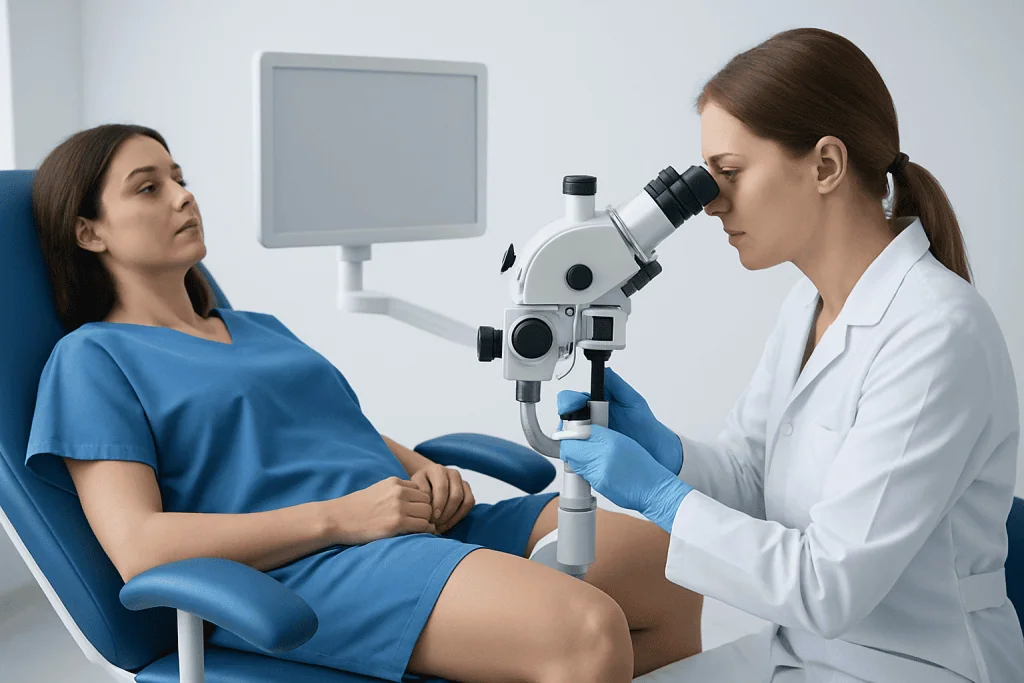
If screening is abnormal or the cervix looks unusual, a doctor may recommend colposcopy. This is a closer examination of the cervix using magnification, sometimes with a small biopsy if an area needs laboratory analysis. In people with symptoms such as pain, heavy bleeding, or suspected spread beyond the cervix, imaging such as MRI or ultrasound may also be useful to assess nearby structures.
Not every abnormal test result means cancer. In fact, many results show mild changes that can be monitored or treated before they become serious. Clear communication with a gynecologist helps patients understand whether the plan is watchful follow-up, further testing, or treatment.
Treatment, screening, and protecting cervical health
Treatment depends on the underlying problem. Infections and cervicitis may be treated with medicines directed at the cause, while benign polyps can often be removed simply if they cause bleeding or need confirmation in the laboratory. If abnormal cervical cells are found, management may range from repeat testing to procedures that remove or destroy the affected area.
Common procedures for cervical abnormalities include colposcopy-guided biopsy and, in selected cases, treatment to remove abnormal tissue. If cancer is diagnosed, care may involve gynecologic oncology, surgery, and sometimes additional therapies. Depending on the situation, this may include treatment for cervical cancer as part of a personalized plan.
Prevention is a major part of cervical health. HPV vaccination helps protect against the virus types most often linked with cervical cancer and genital warts. Regular cervical screening remains important because vaccination does not prevent every case, and screening can detect changes before symptoms begin.
Self-care supports but does not replace medical care. Helpful steps include attending screening appointments, avoiding smoking, using barrier protection when appropriate, and seeking advice for abnormal bleeding or persistent discharge. Near the end of the care pathway, some international patients may choose centers such as Acibadem International, where multidisciplinary specialists in JCI-accredited hospitals diagnose and treat cervical conditions.
When to seek medical care
A person should arrange medical evaluation if they have bleeding after sex, bleeding between periods, bleeding after menopause, unusual persistent discharge, pelvic pain, or pain during sex. These symptoms often have treatable causes, but they should be assessed rather than self-diagnosed.
Prompt care is especially important if symptoms are severe, if there is fever, if pelvic pain is worsening, or if heavy bleeding causes dizziness or weakness. A doctor can determine whether the problem involves the cervix or another part of the reproductive system.
It is also important to seek follow-up after an abnormal HPV or Pap test, even when there are no symptoms. Early cervical cell changes may be silent, and timely review helps prevent progression. When questions arise, a gynecologist can explain the meaning of test results and the safest next steps.
Frequently asked questions
What is the cervix?
The cervix is the lower part of the uterus that connects the uterus to the vagina. It helps menstrual blood leave the body, produces mucus that changes during the cycle, and opens during childbirth.
Can cervical problems happen without symptoms?
Yes. Many cervical cell changes, including early precancerous changes, do not cause symptoms. That is why regular cervical screening is important even when a person feels well.
Does HPV always mean cervical cancer?
No. HPV infection is common, and many infections clear on their own without causing lasting problems. Some high-risk HPV types can lead to cervical cell changes over time, which is why follow-up and screening matter.
What symptoms should not be ignored?
Bleeding after sex, bleeding between periods, bleeding after menopause, persistent unusual discharge, and pelvic pain should be checked by a doctor. These symptoms may have many causes, but they deserve proper evaluation.
How is the cervix checked?
Doctors usually start with a medical history and pelvic exam. Depending on age, symptoms, and screening history, they may also use HPV testing, a Pap test, colposcopy, biopsy, or imaging.
Can cervical conditions be treated?
Yes. Treatment depends on the cause and may include medicines for infection, removal of benign polyps, or procedures for abnormal cells. Outcomes are generally better when problems are identified early and monitored appropriately.
References
- World Health Organization
- American College of Obstetricians and Gynecologists
- Centers for Disease Control and Prevention
- National Cancer Institute
- American Cancer Society
This article is for general information only and is not a substitute for professional medical advice. Please consult a qualified doctor about your individual situation.
IVF & fertility treatment in Turkey — success rates and costs
JCI-accredited · board-certified surgeons · reply within 24h
Add us as a Preferred Source to see more of our trusted health content across Google Search, AI Overviews and Discover.
Check your numbers in seconds
BMI, calories, due date, blood pressure and 30+ more clinical calculators — free, instant, doctor-reviewed ranges.

More from the Health Library



Related Specialists

Prof. Dr. Alev Gürgün
Pulmonary Medicine
Prof. Dr. Faik Acar Koç
Perinatology & High Risk Pregnancies
Dr. Rafıga Gasımova
Gynecology & Obstetrics
Prof. Dr. Meral Bayramoğlu
Physical Medicine & Rehabilitation