Chalazion vs Stye: How to Tell the Difference and When Treatment Is Needed

A stye is usually a painful, tender eyelid bump linked to an infection, while a chalazion is often painless and caused by a blocked oil gland. Warm compresses are often the first step for both conditions and may help the eyelid drain naturally.
Key Takeaways
- A stye is usually a painful, tender eyelid bump linked to an infection, while a chalazion is often painless and caused by a blocked oil gland.
- Warm compresses are often the first step for both conditions and may help the eyelid drain naturally.
- Medical assessment is important if the lump lasts, grows, affects vision, or keeps returning.
- Good eyelid hygiene and avoiding eye makeup or contact lenses during active irritation may support recovery.
- Persistent or unusual eyelid lumps should be checked to rule out other eye conditions.
A chalazion and a stye can both cause a lump on the eyelid, but they are not the same condition. Knowing the differences in pain, location, and how the lump develops can help a person understand when home care may be enough and when an eye doctor should evaluate it.
Overview: What Is the Difference Between a Chalazion and a Stye?
A chalazion and a stye are both common causes of a bump on the eyelid. Because they can look similar at first, many people use the terms interchangeably. In practice, however, they have different causes and often feel different. A stye usually develops when a gland or eyelash follicle becomes infected, leading to a red, painful, tender swelling. A chalazion forms when an oil-producing gland in the eyelid becomes blocked, often creating a firmer lump that is less painful or not painful at all.
The location can also offer a clue. A stye often appears near the edge of the eyelid, close to the eyelashes. A chalazion more commonly forms deeper within the eyelid and may be slightly farther from the lash line. Over time, a chalazion may become a round, localized bump that lingers even after redness has improved.
Although these conditions are usually not serious, they can be uncomfortable and frustrating. Many improve with simple home care, especially warm compresses. Still, an eye specialist should assess symptoms that do not settle, repeatedly return, or interfere with daily life. In some cases, a persistent eyelid lump may be linked to another issue that needs proper diagnosis.
Symptoms: How Each Eyelid Lump Usually Feels and Looks
A stye often starts suddenly. The eyelid may become sore, swollen, and red over a short period of time. Many people notice tenderness when blinking or touching the area. It may resemble a small pimple on the eyelid margin, and sometimes a tiny yellow point appears as pus collects. The eye can water more than usual, and the eyelid may feel irritated or heavy.
A chalazion usually develops more gradually. It may begin as mild swelling and then become a small, firm nodule within the eyelid. Pain is often absent or much less intense than with a stye, especially after the early swelling has passed. If the chalazion becomes larger, it may press on the eye and create blurry vision or a sensation of pressure.
Common features can overlap, which is why self-diagnosis is not always straightforward. Both may cause swelling, a visible lump, discomfort, and cosmetic concern. The following general patterns can help:
- More suggestive of a stye: pain, tenderness, redness, swelling near the lash line, and a more sudden onset
- More suggestive of a chalazion: a firmer lump, less pain, slower development, and swelling deeper in the eyelid
- Needs prompt assessment: vision changes, marked swelling of the whole eyelid, fever, severe pain, or symptoms spreading around the eye
Even when symptoms seem typical, the eyelid should be examined if the problem keeps recurring. Repeated styes or chalazia can sometimes be associated with chronic eyelid inflammation, skin conditions, or other eye surface disorders.
Causes and Risk Factors

A stye usually results from a bacterial infection involving an eyelash follicle or an oil gland of the eyelid. Bacteria that normally live on the skin can enter the gland opening and trigger a localized infection. This leads to inflammation, tenderness, and the classic red bump. Poor eyelid hygiene is not the only cause, but touching the eyes with unclean hands, old makeup, and inflamed eyelid margins can increase the chance of developing one.
A chalazion is different because it is generally caused by blockage rather than active infection. The eyelids contain tiny meibomian glands that produce an oily layer for the tear film. When one of these glands becomes clogged, the trapped material can trigger inflammation and form a lump. A chalazion can sometimes follow a stye, especially if the gland remains blocked after the infection settles.
Several factors may raise the risk of both conditions:
- Blepharitis, or chronic inflammation of the eyelid margins
- Rosacea or certain skin conditions that affect the eyes and eyelids
- Previous chalazia or recurrent styes
- Using eye makeup for long periods or not removing it fully
- Contact lens handling without careful hygiene
- Oily skin or gland dysfunction
Some people have repeated problems because the eyelid glands do not drain well. In these cases, treatment may focus not only on the bump itself but also on improving long-term eyelid health and tear film quality. If the eye surface is frequently irritated, a doctor may also look for related conditions such as dry eye.
Diagnosis: When an Eye Exam Is Important
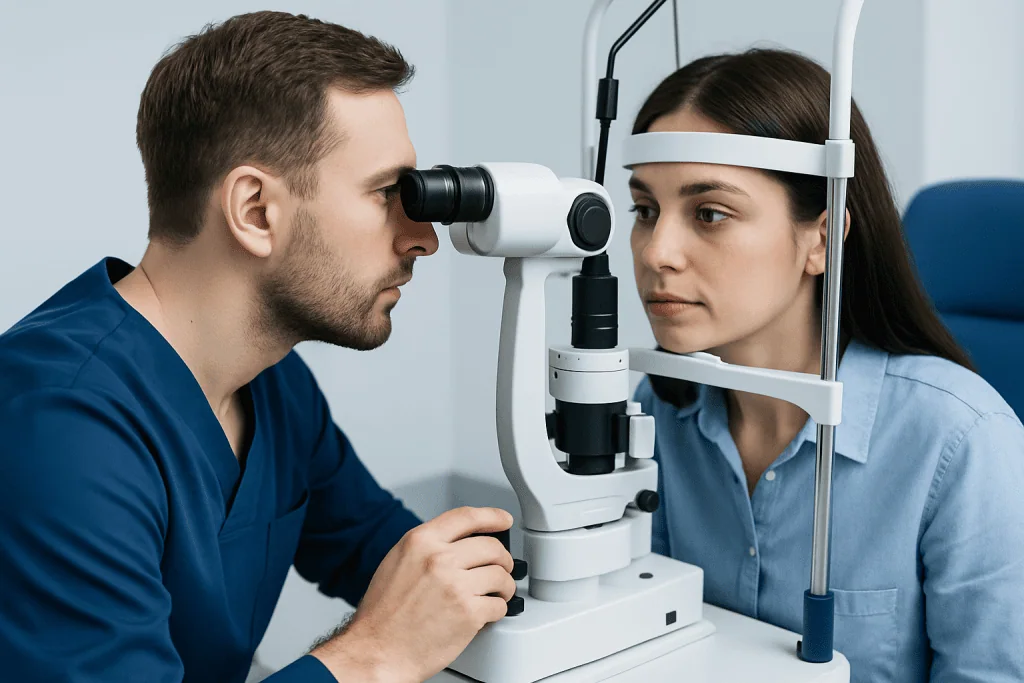
Doctors usually diagnose a chalazion or stye by examining the eyelid and asking about symptoms. The pattern of pain, the location of the lump, and how long it has been present are often enough to guide diagnosis. No special test is needed in many routine cases. The doctor may gently inspect the inner and outer eyelid and check whether the eye itself is affected.
An eye exam becomes especially important when the diagnosis is unclear or the condition is not improving. A lump that persists for weeks, keeps recurring in the same location, or has an unusual appearance may need closer assessment. This helps rule out less common but important causes of eyelid swelling, including chronic inflammatory conditions or, rarely, eyelid tumors.
Medical review is also useful if the person has significant eyelid swelling, eye pain beyond the lump itself, or changes in vision. Infections around the eye can occasionally become more widespread and need prompt treatment. If there is concern about the health of the eyelid glands, a specialist may recommend a fuller evaluation by an ophthalmologist in an eye care setting.
Treatment Options for Chalazion and Stye
Warm compresses are the main first step for both chalazion and stye. Applying a clean, warm cloth to the closed eyelid for several minutes, several times a day, may help soften trapped oils, encourage natural drainage, and reduce discomfort. The compress should feel comfortably warm, not hot. Gentle eyelid cleansing may also be recommended, especially when eyelid margin inflammation is present.
A stye may improve on its own, but if infection is more pronounced, a doctor may consider prescription treatment. This may include antibiotic ointment or, in selected cases, other medication based on the examination. A chalazion often takes longer to settle because it involves blocked material and inflammation rather than an active infection. Antibiotics do not usually help a simple chalazion unless there is a clear sign of associated infection.
If a chalazion is large, persistent, or affecting vision, minor procedures may be considered. These can include drainage or removal by an eye specialist, and in some cases an anti-inflammatory injection may be discussed. When another eyelid condition contributes to repeated lumps, managing the underlying problem is an important part of care. For persistent gland blockage or related eyelid disease, a person may need assessment through ophthalmology services.
People should avoid squeezing or popping the lump. This can worsen irritation, spread infection, or damage delicate eyelid tissue. During active symptoms, it is also wise to pause eye makeup and contact lens use until the eyelid has healed and a clinician says it is safe to resume.
Prevention and Self-Care
Not every chalazion or stye can be prevented, but simple habits can lower the risk. Regular eyelid hygiene is especially helpful for people with oily lids, blepharitis, or frequent recurrences. This may include gentle cleansing of the eyelid margins as advised by a clinician and careful removal of eye makeup before sleep.
Hand hygiene matters because the eyes are easily irritated by rubbing. People who wear contact lenses should wash their hands before handling lenses and follow replacement and cleaning instructions carefully. Makeup products should be replaced regularly, and shared cosmetics should be avoided.
Self-care measures that may help reduce recurrence include:
- Using warm compresses at the first sign of eyelid tenderness or blockage
- Keeping eyelids clean if crusting or blepharitis is present
- Avoiding rubbing the eyes
- Stopping use of old or irritating eye makeup
- Seeking treatment for related eyelid or skin problems
When underlying eyelid inflammation is persistent, long-term management may be needed. This can overlap with treatment plans used for blepharitis, where improving gland function and eyelid cleanliness helps reduce repeated flare-ups.
When to See a Doctor
Many small styes and chalazia improve with home care, but certain symptoms should prompt medical review. A doctor should assess a lump that lasts more than a few weeks, grows larger, or comes back repeatedly. Evaluation is also important if the swelling presses on the eye, changes vision, or makes it hard to fully open the eyelid.
Urgent care is needed if there is severe pain, spreading redness, fever, marked swelling around the eye, or reduced vision. These signs may suggest a more significant infection or another eye problem that should not be managed at home. Young children, older adults, and people with reduced immunity may need earlier assessment.
It is also sensible to seek advice if the diagnosis is uncertain. Conditions that look like a stye or chalazion are not always simple gland problems. A proper eye examination helps ensure the right treatment and avoids delays in identifying other causes of eyelid lumps.
For people seeking specialist evaluation, Acibadem International’s multidisciplinary specialists and JCI-accredited hospitals provide diagnosis and treatment for eye conditions affecting international patients. If a persistent lesion needs procedural care, management may be arranged through eye surgery services when appropriate.
Frequently asked questions
How can a person tell if it is a chalazion or a stye?
A stye is more likely to be painful, red, and tender, often near the eyelash line. A chalazion is usually firmer, develops more slowly, and may be painless or only mildly uncomfortable. If the lump is unclear or does not improve, an eye doctor should examine it.
Do chalazion and stye go away on their own?
Many do improve without invasive treatment, especially with warm compresses and good eyelid care. A stye often settles sooner, while a chalazion can take longer because it is caused by a blocked gland. Persistent lumps should be checked by a clinician.
Is a stye contagious?
A stye itself is not usually considered highly contagious, but the bacteria involved can spread through shared towels, makeup, or touching the eyes. Good hand hygiene and avoiding shared eye products help reduce the risk. It is best not to squeeze or touch the area unnecessarily.
Should a chalazion be treated with antibiotics?
Not usually. A chalazion is commonly caused by a blocked oil gland rather than an active infection, so antibiotics often do not help unless there are signs of infection as well. A doctor can decide whether medication is needed based on the eyelid exam.
Can makeup or contact lenses make the problem worse?
Yes, they can irritate the eyelid or introduce more bacteria while the area is inflamed. It is generally wise to avoid eye makeup and contact lenses until the eyelid has healed. A doctor can advise when it is safe to restart them.
When does an eyelid lump need urgent medical attention?
Urgent assessment is needed if there is severe pain, reduced vision, fever, spreading redness, or major swelling around the eye. These symptoms can suggest a more serious infection or another condition requiring prompt treatment. Any rapidly worsening eye symptoms should be evaluated quickly.
References
- American Academy of Ophthalmology
- National Eye Institute
- NHS
- Mayo Clinic
- Merck Manual
This article is for general information only and is not a substitute for professional medical advice. Please consult a qualified doctor about your individual situation.
Chalazion in Turkey — costs, top hospitals & a free quote
JCI-accredited · board-certified surgeons · reply within 24h
Add us as a Preferred Source to see more of our trusted health content across Google Search, AI Overviews and Discover.

Ophthalmology
Comprehensive eye care from laser vision correction to retina, cornea and cataract surgery.
75 specialists in this unit