Chiari Malformation in Children: Symptoms, MRI, and Neuropediatric Assessment

Chiari malformation in children may cause headaches, neck pain, balance problems, swallowing issues, or no symptoms at all. MRI is the main test used to confirm the diagnosis and look for related findings such as syringomyelia.
Key Takeaways
- Chiari malformation in children may cause headaches, neck pain, balance problems, swallowing issues, or no symptoms at all.
- MRI is the main test used to confirm the diagnosis and look for related findings such as syringomyelia.
- A neuropediatric assessment helps connect MRI results with the child’s symptoms, development, and neurological examination.
- Treatment depends on symptom severity and may include observation, symptom management, or neurosurgery in selected cases.
- Children with worsening headaches, weakness, walking changes, or swallowing and breathing concerns should be reviewed promptly by a doctor.
Chiari malformation in children is a structural condition in which part of the lower brain extends downward toward the spinal canal. Many children are monitored carefully, while others may need treatment based on symptoms, MRI findings, and a detailed neuropediatric assessment.
Overview
Chiari malformation in children is a condition that affects the area where the brain meets the upper spinal canal. In the most common form, called Chiari I malformation, the lower part of the cerebellum extends downward through the opening at the base of the skull. This can affect the normal flow of cerebrospinal fluid and, in some children, place pressure on nearby brain and spinal structures.
Some children have clear symptoms, while others are diagnosed incidentally after imaging for headaches, injury, or another reason. The condition can vary widely from child to child. A child with a small downward displacement may have significant symptoms, while another with more noticeable MRI findings may feel well.
Because symptoms may overlap with more common childhood problems, assessment is usually individualized. A neuropediatric team looks not only at the MRI, but also at the child’s headaches, balance, school functioning, sleep, growth, and neurological examination. This helps avoid over-treatment and ensures that children who need closer monitoring or intervention are identified appropriately.
Symptoms of Chiari Malformation in Children
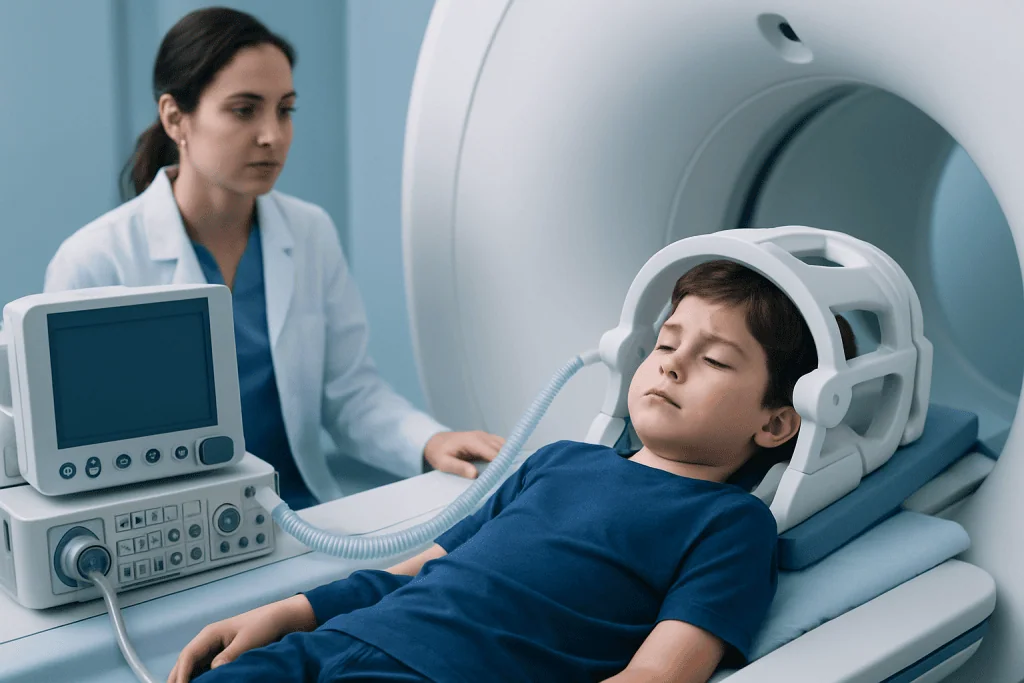
Symptoms depend on the child’s age, the degree of crowding at the base of the skull, and whether there are related changes in the spinal cord. Headache is one of the best-known symptoms, especially pain at the back of the head or upper neck. These headaches may worsen with coughing, sneezing, straining, laughing, or sudden exertion.
Children may also report neck pain, dizziness, poor balance, clumsiness, numbness or tingling in the arms, or weakness. Some have problems with coordination, hand skills, or gait. In school-age children, these issues may be noticed as more frequent falls, difficulty with sports, or fatigue during daily activities.
In infants and younger children, symptoms can be less specific. Irritability, feeding difficulty, swallowing problems, poor weight gain, unusual head position, breathing irregularities, or developmental concerns may prompt evaluation. Sleep-related symptoms such as snoring or pauses in breathing can also occur in some cases.
- Back-of-head headaches, often triggered by coughing or straining
- Neck pain or stiffness
- Dizziness, imbalance, or frequent falls
- Numbness, tingling, or weakness in the arms or legs
- Swallowing difficulty, gagging, or hoarseness
- Sleep-disordered breathing or pauses in breathing
- Fine motor or coordination problems
Causes and Risk Factors
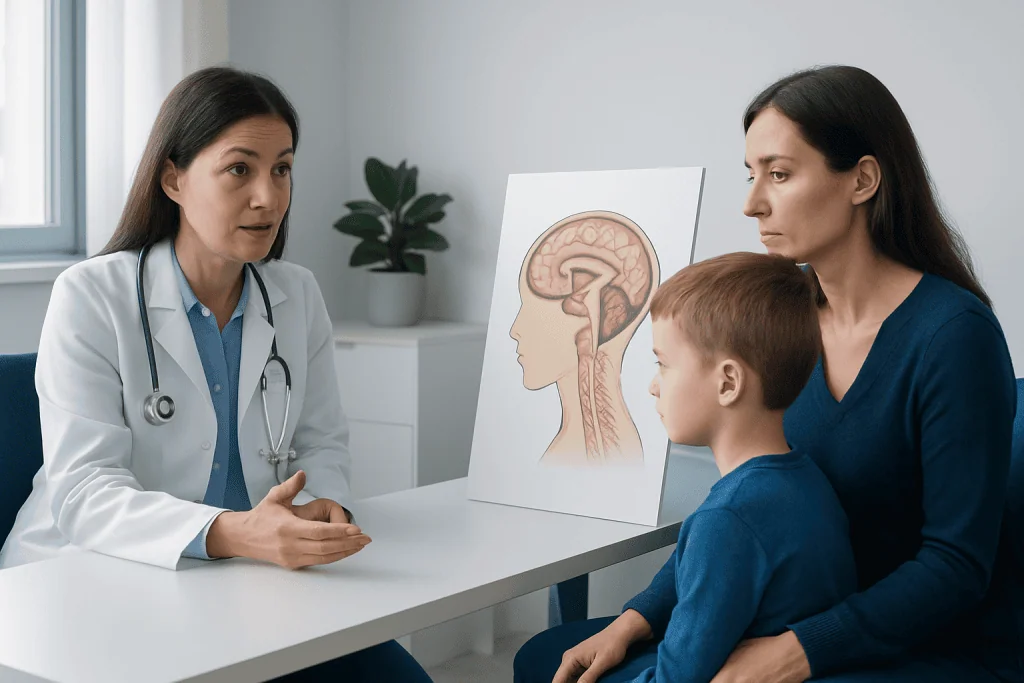
Chiari malformation is usually considered a structural condition present from early development. In many children, the space in the back part of the skull is relatively small, which can crowd the cerebellum downward. The exact reason this happens is not always known, and in most families there is no single clear cause.
Some cases are found together with other conditions involving the brain, spine, or connective tissues. Related findings can include scoliosis, a fluid-filled cavity in the spinal cord called syringomyelia, or spinal abnormalities. When present, these associated conditions may influence symptoms and treatment planning. If a child has scoliosis or unexplained neurological symptoms, doctors may consider evaluation for syringomyelia.
Less commonly, a Chiari-type appearance can develop later due to other problems that affect cerebrospinal fluid pressure or spinal fluid leakage. In children, however, the more typical situation is Chiari I malformation identified during childhood or adolescence. A family history of Chiari malformation or certain structural conditions may increase clinical suspicion, but it does not mean another child in the family will necessarily be affected.
How MRI and Neuropediatric Assessment Help Diagnose It
MRI is the key imaging test for Chiari malformation in children. It provides detailed views of the brain, cerebellum, brainstem, and upper spinal canal without using ionizing radiation. MRI helps confirm whether the cerebellar tonsils extend downward and whether there is crowding at the base of the skull or interruption of cerebrospinal fluid flow.
Doctors often request imaging of both the brain and the spine. This is important because MRI can also detect related findings such as syringomyelia, hydrocephalus, or spinal curvature issues that may change management. In some cases, specialized sequences may be used to assess cerebrospinal fluid movement more closely, especially when symptoms and standard MRI findings do not fully match.
A neuropediatric assessment is just as important as the scan itself. The specialist reviews the pattern of headaches, limb symptoms, swallowing and breathing concerns, growth, sleep, developmental milestones, and school functioning. A detailed neurological examination looks at strength, reflexes, coordination, eye movements, sensation, and walking pattern. This helps determine whether MRI findings are likely to be clinically significant or whether careful observation is the best approach.
Depending on the child’s symptoms, other tests may also be useful. These can include a sleep study for breathing concerns, swallow assessment for feeding problems, or review by pediatric neurosurgery, orthopedics, ENT, or rehabilitation specialists. Imaging such as MRI may be repeated over time to monitor symptoms or associated spinal cord changes when clinically needed.
Treatment Options
Treatment for Chiari malformation in children depends on how the child feels, what the neurological examination shows, and whether MRI reveals associated problems such as a syrinx. Children with mild symptoms or incidental findings may not need immediate intervention. Instead, they may be followed with regular clinical review and, in some cases, repeat imaging.
When symptoms are more troublesome, treatment first focuses on understanding which complaints are truly related to Chiari malformation. Headaches, for example, can have several causes in children, including migraine and tension-type headache. A neuropediatric team may recommend symptom management, headache strategies, physical support, sleep evaluation, or referral to other specialists before considering surgery.
If there is clear evidence of neurological decline, significant cerebrospinal fluid blockage, progressive syringomyelia, or disabling Chiari-related symptoms, surgery may be advised. The standard operation is posterior fossa decompression, which creates more space at the skull base and may improve fluid flow. Depending on the child’s anatomy, surgeons may use different techniques, and the decision is individualized after careful review by pediatric neurosurgery. Families discussing surgical care may also hear this described as neurosurgical treatment for Chiari malformation.
Follow-up remains important whether or not surgery is performed. The team tracks symptom changes, neurological function, school participation, sleep, and MRI findings over time. In selected children with associated complications, support from pediatric rehabilitation services can help improve balance, strength, function, and confidence in daily activities.
Prevention, Monitoring, and Daily Self-care
There is no known way to prevent most cases of Chiari malformation in children because it is usually related to early structural development. However, early recognition and appropriate follow-up can reduce the risk of prolonged symptoms or delayed care. Families benefit from understanding the child’s symptom pattern and knowing when to seek reassessment.
Daily self-care often focuses on symptom tracking and reducing triggers. Keeping a simple headache diary can help identify whether pain is linked to coughing, exertion, poor sleep, dehydration, or another cause. Good sleep habits, regular hydration, balanced meals, and age-appropriate activity may help overall well-being, even though they do not change the underlying anatomy.
Parents should follow the medical team’s advice about physical activity. Many children can remain active, but those with significant symptoms may need temporary limits while they are being assessed. If a child has weakness, balance difficulties, or frequent falls, the home and school environment may need practical adjustments to improve safety and participation.
When longer-term follow-up is needed, coordinated care can be reassuring. Near the end of the diagnostic pathway or treatment planning, some families choose evaluation at centers with pediatric neurology, neuroradiology, and neurosurgery in one setting. Acibadem International’s multidisciplinary specialists in JCI-accredited hospitals diagnose and treat Chiari-related conditions for international patients when advanced assessment is needed.
When to See a Doctor
A child should be assessed by a doctor if headaches are recurring, especially if they worsen with coughing, sneezing, or straining, or if they are accompanied by neck pain, dizziness, weakness, numbness, or balance problems. Medical review is also important when teachers or parents notice changes in coordination, hand use, walking, or school function without an obvious explanation.
Prompt evaluation is especially important if there are swallowing difficulties, choking, hoarseness, sleep-related breathing concerns, episodes of faintness, or signs of progressive weakness. Infants and very young children may need urgent review for poor feeding, breathing irregularities, or developmental regression.
If a child already has a diagnosis of Chiari malformation, follow-up should not be delayed when symptoms change. Increasing headache severity, new limb symptoms, bladder or bowel concerns, or worsening scoliosis can all be important clues that further assessment is needed. In these situations, doctors may recommend updated neurological examination and repeat brain MRI or spinal imaging.
Frequently asked questions
What is Chiari malformation in children?
Chiari malformation in children is a structural condition in which part of the cerebellum extends downward toward the spinal canal. The most common type in childhood is Chiari I malformation. It may cause symptoms by crowding the area at the base of the skull or affecting cerebrospinal fluid flow.
Can a child have Chiari malformation without symptoms?
Yes. Some children are diagnosed incidentally when an MRI is done for another reason, and they may have no symptoms at all. In these situations, doctors usually decide on follow-up based on the neurological examination, the MRI findings, and whether symptoms develop over time.
Why is MRI important for Chiari malformation?
MRI is the main test used to confirm the diagnosis because it shows the brain, skull base, and spinal canal in detail. It can also identify related problems such as syringomyelia or hydrocephalus. MRI findings help guide whether a child needs monitoring, more testing, or treatment.
Does every child with Chiari malformation need surgery?
No. Many children do not need surgery, especially if symptoms are mild or the finding is incidental. Surgery is usually considered when there are significant Chiari-related symptoms, neurological changes, or important MRI findings such as a progressive syrinx.
What type of doctor assesses Chiari malformation in children?
A neuropediatric specialist often coordinates the evaluation, especially when symptoms involve headaches, balance, development, or neurological function. Pediatric neuroradiologists and pediatric neurosurgeons may also be involved. Some children benefit from additional review by sleep, ENT, rehabilitation, or orthopedic specialists.
Can Chiari malformation affect school and daily activities?
It can, depending on symptoms. Headaches, fatigue, balance issues, hand coordination problems, or sleep disturbance may affect concentration, sports, and classroom participation. With proper assessment and support, many children continue their daily activities with suitable adjustments when needed.
References
- National Institute of Neurological Disorders and Stroke
- American Association of Neurological Surgeons
- American Academy of Pediatrics
- National Health Service
- Radiological Society of North America
This article is for general information only and is not a substitute for professional medical advice. Please consult a qualified doctor about your individual situation.
Joint and spine care in Turkey — expert assessment & treatment
JCI-accredited · board-certified surgeons · reply within 24h
Add us as a Preferred Source to see more of our trusted health content across Google Search, AI Overviews and Discover.