Chickenpox Symptoms: Common Causes, Related Conditions, and When to See a Doctor

Chickenpox symptoms usually begin 1 to 2 days before the rash with fever, tiredness, and feeling unwell. The rash typically appears in crops, so red spots, blisters, and crusted scabs may be present at the same time.
Key Takeaways
- Chickenpox symptoms usually begin 1 to 2 days before the rash with fever, tiredness, and feeling unwell.
- The rash typically appears in crops, so red spots, blisters, and crusted scabs may be present at the same time.
- Chickenpox is caused by the varicella-zoster virus and spreads easily through respiratory droplets and direct contact with blister fluid.
- Most cases improve with supportive care, but some people may need antiviral treatment or closer medical supervision.
- Medical care is important if breathing problems, dehydration, confusion, severe skin infection, or high-risk pregnancy is involved.
Chickenpox symptoms most often start with mild fever, fatigue, headache, and reduced appetite, then progress to an itchy rash that turns into fluid-filled blisters and crusts over. Although chickenpox is often mild in children, symptoms can be more severe in adults, infants, pregnant people, and anyone with a weakened immune system.
Overview of Chickenpox Symptoms
Chickenpox symptoms are usually easy to recognize once the rash appears. In many people, the illness starts with a short phase of general symptoms such as fever, tiredness, headache, and poor appetite. Within a day or two, an itchy rash develops and then changes over time from small red spots to fluid-filled blisters and finally to scabs.
The infection is caused by the varicella-zoster virus. It is highly contagious and spreads before the rash is fully obvious, which means a person can pass it on before realizing they have chickenpox. This is one reason why outbreaks can occur in homes, schools, and other shared environments.
Chickenpox is often mild in healthy children, but symptoms vary from person to person. Older children, adults, pregnant people, newborns, and people with weakened immune systems may experience more intense symptoms or a higher chance of complications.
Because the rash can resemble other skin conditions, it helps to look at the full pattern of symptoms rather than the spots alone. Understanding how chickenpox usually begins and progresses can help patients and families know when home care is appropriate and when medical advice is needed.
What the Rash and Early Symptoms Usually Look Like
The earliest chickenpox symptoms may seem similar to a mild viral illness. A person may develop a low-grade fever, feel unusually tired, have body aches, or lose their appetite. In children, these early signs may be subtle, while adults often feel more noticeably unwell before the rash appears.
The chickenpox rash commonly starts on the chest, back, face, or scalp and then spreads to other parts of the body. It usually appears in waves over several days. This means new spots can continue to form while older ones are already blistering or crusting, creating a mixed appearance on the skin.
The rash changes in a fairly typical sequence:
- Small red spots or bumps appear first
- These develop into clear, fluid-filled blisters
- The blisters may break or dry out
- Scabs then form as the skin heals
Itching is one of the most bothersome symptoms. Some people have only a limited number of spots, while others have many lesions across the body, including the mouth, eyelids, or genital area. Lesions inside the mouth can make eating or drinking uncomfortable, and scratching the skin can increase the risk of infection and scarring.
Causes, Spread, and Related Conditions
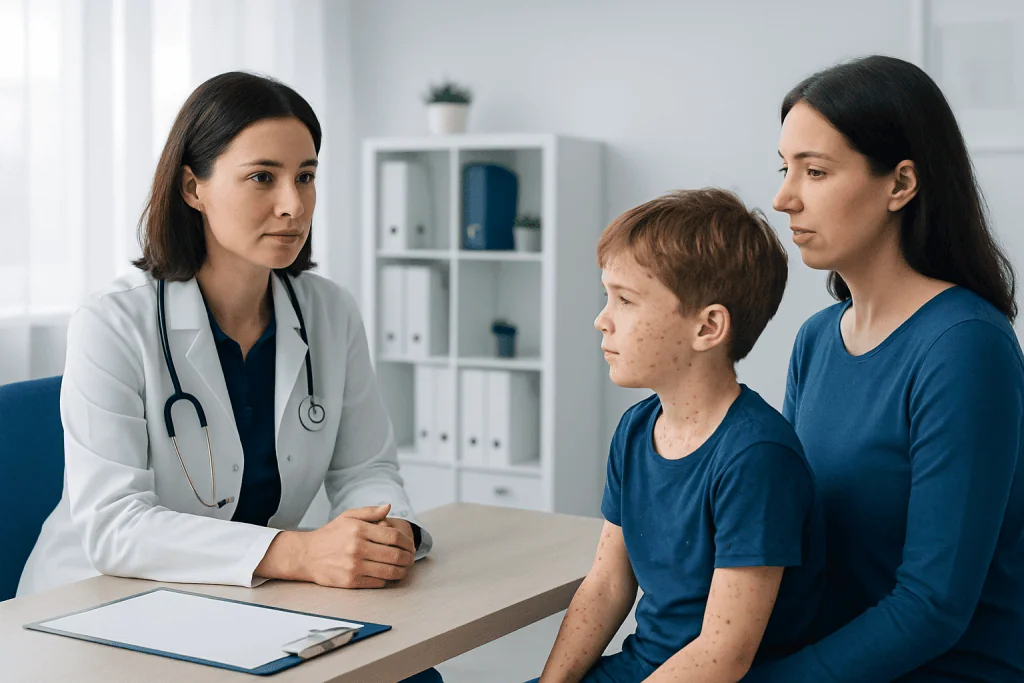
Chickenpox is caused by the varicella-zoster virus, a member of the herpes virus family. It spreads through respiratory droplets released when an infected person coughs or sneezes, and through direct contact with fluid from the blisters. A person is usually contagious from about 1 to 2 days before the rash starts until all lesions have crusted over.
Many people think of chickenpox as a childhood infection, but anyone who has not had the disease or vaccination can become infected. After recovery, the virus remains inactive in the body and can reactivate years later as shingles. Chickenpox and shingles are different clinical conditions, but they are caused by the same virus.
Several illnesses can resemble chickenpox, especially early on. Other viral rashes, insect bites, eczema flare-ups, and some drug reactions may cause itching and scattered spots. In some cases, clinicians may also consider measles or other infectious rashes when evaluating fever with skin changes, especially if the pattern is not typical.
Because the symptoms can overlap with other conditions, a doctor may assess the appearance of the rash, the timing of exposure, vaccination history, and whether the patient belongs to a higher-risk group. This broader view helps distinguish straightforward chickenpox from another diagnosis that needs different care.
Who May Have More Severe Chickenpox Symptoms
Although many children recover without difficulty, some groups are more likely to have stronger symptoms or complications. Adults often have higher fever, more extensive rash, and a longer recovery period than children. Infants and newborns may also need careful assessment because infection at a very young age can be more serious.
Pregnant people deserve special attention because chickenpox can affect both the parent and the developing baby. Anyone who is pregnant and has been exposed to chickenpox or develops symptoms should contact a doctor promptly, especially if they are unsure of their immune status or vaccination history.
People with weakened immune systems are also at higher risk. This includes those receiving chemotherapy, long-term immune-suppressing medicines, organ transplant recipients, and some people with blood cancers or advanced chronic illness. In these cases, what begins as a common rash can become more widespread or involve the lungs, brain, or skin more severely.
Signs of possible complications include high or persistent fever, severe cough, breathing difficulty, increasing redness or tenderness around the blisters, unusual sleepiness, confusion, trouble walking, repeated vomiting, or poor fluid intake. When these symptoms occur, professional medical evaluation is important.
How Chickenpox Is Diagnosed
Chickenpox is often diagnosed clinically, meaning a doctor can identify it based on the pattern of symptoms and the appearance of the rash. The combination of fever, itching, and lesions at different stages of development is strongly suggestive. Doctors may also ask whether there was recent exposure to someone with chickenpox or shingles.
Laboratory testing is not necessary in every case, but it can be helpful when the diagnosis is uncertain or when the patient is at higher risk for complications. Tests may be used in adults with atypical rash, hospitalized patients, pregnant patients, or people with weakened immune systems.
If a person develops shortness of breath, persistent headache, signs of dehydration, or neurologic symptoms, further assessment may be needed to check for complications. This can include blood tests or imaging depending on the clinical situation. In selected cases, doctors may also evaluate whether a more advanced infection or another condition is responsible for the symptoms.
When respiratory symptoms are significant, clinicians may look more closely for conditions such as pneumonia, which can occasionally occur as a complication of varicella, especially in adults. Careful diagnosis helps guide the right level of treatment and monitoring.
Treatment Options and Symptom Relief
For many healthy children, chickenpox treatment focuses on comfort and preventing skin complications while the body clears the virus. Rest, adequate fluids, gentle skin care, and measures to reduce itching are commonly recommended. Keeping fingernails short and discouraging scratching can help lower the risk of bacterial skin infection and scarring.
Doctors may suggest supportive treatments for fever or itching based on the person’s age, medical history, and overall condition. Families should use medicines only as advised by a qualified healthcare professional, because not all over-the-counter products are appropriate for every child or adult.
Some patients benefit from antiviral treatment, especially if they are adults, pregnant, immunocompromised, or seen early in the illness. In more complex cases, treatment may involve specialist care, observation, or hospital-based support. This may be coordinated alongside infectious diseases care and, when needed, pediatric evaluation.
If complications affect breathing, hydration, or the nervous system, treatment becomes more individualized. In that setting, patients may require closer monitoring, intravenous medicines or fluids, or imaging and supportive therapies tailored to the organs involved.
Prevention, Home Care, and Reducing Spread
Vaccination is the most effective way to prevent chickenpox and reduce the risk of severe disease. People who are not immune can discuss vaccination with their doctor, including catch-up vaccination when appropriate. Vaccination also helps limit community spread and protect people who are more vulnerable to complications.
At home, supportive care centers on hydration, rest, and keeping the skin clean and comfortable. Loose clothing, lukewarm baths, and soothing skin measures may help with itching. It is also helpful to monitor for signs that the illness is becoming more severe, such as persistent fever, worsening cough, or poor oral intake.
To reduce transmission, the infected person should avoid close contact with others until all lesions have crusted over. This is especially important around newborns, pregnant people without known immunity, and anyone with a weakened immune system. Good hand hygiene and avoiding direct contact with blister fluid also help reduce spread.
When symptoms are not improving as expected, or if the person has underlying health conditions, medical advice can guide the safest next steps. In international care settings, Acibadem International’s multidisciplinary specialists at JCI-accredited hospitals diagnose and treat infectious diseases for patients who need coordinated evaluation and follow-up.
When to Seek Medical Care
Most cases of chickenpox can be managed with routine medical guidance and home care, but certain symptoms call for prompt assessment. A doctor should be contacted if the patient is an infant, an adult with new chickenpox symptoms, pregnant, or has a weakened immune system. These groups may need earlier treatment or closer follow-up.
Medical care is also important if there are signs of complications. These include difficulty breathing, chest pain, severe or persistent fever, dehydration, repeated vomiting, severe headache, unusual drowsiness, confusion, trouble walking, or seizures. Skin that becomes very red, warm, swollen, or painful may suggest a secondary bacterial infection.
Even when symptoms seem mild at first, they can occasionally change over a few days as new rash crops appear. If the diagnosis is unclear, or if the rash looks unusual, a clinician may recommend an in-person assessment or additional testing. In more complex situations, support from dermatology or other specialty teams may help clarify the diagnosis.
Seeking timely care does not always mean the illness is serious. It is a practical way to make sure symptoms are managed safely, complications are recognized early, and vulnerable patients receive the treatment they need.
Frequently asked questions
What are the first chickenpox symptoms?
The first chickenpox symptoms are often fever, tiredness, headache, and reduced appetite. The itchy rash usually begins 1 to 2 days later, although in some people the rash is the first obvious sign.
How can someone tell if a rash is chickenpox?
Chickenpox usually causes an itchy rash that starts as red spots, becomes fluid-filled blisters, and then crusts over. A key feature is that spots at different stages often appear on the body at the same time.
How long do chickenpox symptoms last?
Symptoms often develop over about 5 to 10 days, though the exact timeline varies. New lesions may appear for several days, and the person is generally considered contagious until all blisters have crusted.
Are chickenpox symptoms worse in adults?
They can be. Adults often have more fever, more discomfort, and a higher risk of complications than children, so medical advice is especially important when an adult develops suspected chickenpox.
When should someone see a doctor for chickenpox symptoms?
A doctor should be contacted if the patient is pregnant, very young, immunocompromised, or develops trouble breathing, dehydration, confusion, severe headache, or signs of skin infection. Medical review is also sensible if the diagnosis is uncertain or symptoms are worsening.
Can chickenpox happen after vaccination?
Yes, but it is usually milder. Breakthrough infection after vaccination may cause fewer spots, less fever, and a shorter illness, though a doctor may still need to confirm the diagnosis.
References
- Centers for Disease Control and Prevention
- World Health Organization
- American Academy of Pediatrics
- National Health Service
- Mayo Clinic
This article is for general information only and is not a substitute for professional medical advice. Please consult a qualified doctor about your individual situation.
Chickenpox in Turkey — costs, top hospitals & a free quote
JCI-accredited · board-certified surgeons · reply within 24h
Add us as a Preferred Source to see more of our trusted health content across Google Search, AI Overviews and Discover.