Cogwheeling: A Complete Medical Overview

Cogwheeling is detected by a clinician while passively moving a relaxed arm, wrist, leg, or neck. It combines muscle stiffness with a rhythmic, ratchet-like interruption of movement.
Key Takeaways
- Cogwheeling is detected by a clinician while passively moving a relaxed arm, wrist, leg, or neck.
- It combines muscle stiffness with a rhythmic, ratchet-like interruption of movement.
- Parkinson’s disease is a common cause, although medicines and other neurological conditions can also contribute.
- Diagnosis depends on the full medical history and neurological examination, not cogwheeling alone.
- New or worsening stiffness, slowness, tremor, balance changes, or falls should be assessed by a healthcare professional.
Cogwheeling, also called cogwheel rigidity, is a finding during a neurological examination in which a limb moves with small, repeated catches rather than smoothly. It may occur in Parkinson’s disease and other forms of parkinsonism, but it is not a diagnosis on its own.
What Is Cogwheeling?
Cogwheeling is a type of abnormal muscle resistance that a healthcare professional may feel during a neurological examination. When the clinician gently moves a person’s relaxed limb, the movement may feel uneven, with brief repeated stops or catches. This has been compared with turning a gear or ratchet, which is why it is called cogwheel rigidity.
Cogwheeling is most often checked at the wrist, elbow, shoulder, ankle, or knee. It is not usually something a person can reliably identify alone, although they may notice stiffness, reduced arm swing, slower movement, or difficulty with everyday tasks. Cogwheeling is a physical sign rather than a disease, and its meaning depends on the person’s other symptoms, medicines, and examination findings.
It is commonly associated with conditions that affect movement control, particularly Parkinson’s disease and related disorders. However, a careful assessment is important because stiffness can also arise from joint disease, muscle problems, anxiety-related tension, or other neurological causes that feel different on examination.
How Cogwheel Rigidity Differs From Other Stiffness
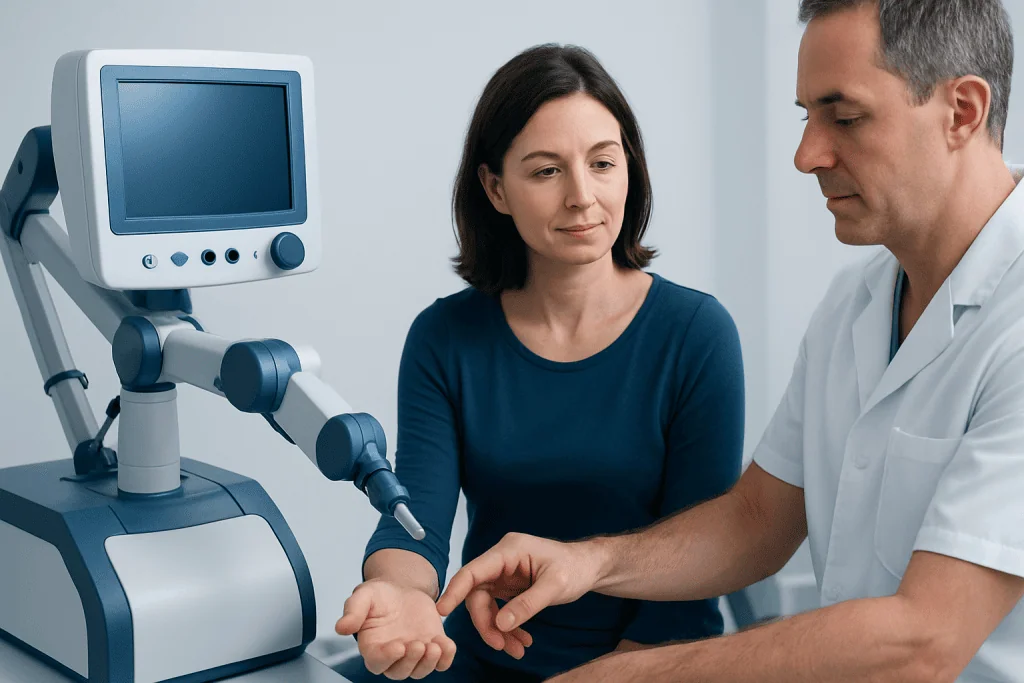
Rigidity means increased resistance when a clinician moves a relaxed joint. Unlike spasticity, which typically becomes more noticeable when a limb is moved quickly and may affect certain directions of movement more than others, rigidity tends to be present throughout the movement. Rigidity may feel smooth, sometimes described as “lead-pipe” rigidity, or interrupted and ratchet-like, which is cogwheeling.
Cogwheeling can become more apparent when a subtle tremor is present, even if the tremor is not easily visible. The rhythmic tremor can create the repeated catches felt during passive movement. A clinician may ask the person to perform a task with the opposite hand, such as tapping fingers, because this can make mild rigidity easier to detect.
Ordinary stiffness is not necessarily rigidity. For example, arthritis often causes pain, limited range of motion, swelling, or joint-specific stiffness. Muscle tightness after exercise may improve with rest and gentle movement. Neurological rigidity is assessed in the context of whether the muscles can relax and how resistance behaves during passive movement.
Symptoms That May Occur Alongside Cogwheeling

Cogwheeling itself is an examination finding, but it may occur with symptoms affecting movement. These can develop gradually and may initially affect one side of the body more than the other. The pattern and pace of symptoms help a clinician consider the possible cause.
- Slowness of movement, such as taking longer to dress, write, or complete routine tasks
- A resting tremor, often beginning in one hand, though not everyone has tremor
- Reduced arm swing while walking, shorter steps, shuffling, or difficulty turning
- Changes in handwriting, facial expression, voice volume, or hand dexterity
- Postural instability, imbalance, or falls, especially as symptoms progress
Some people with parkinsonism also experience non-movement symptoms, including constipation, sleep changes, low mood, urinary symptoms, fatigue, and changes in thinking. These symptoms are common in many health conditions and do not confirm a specific diagnosis. A clinician considers them together with the neurological examination.
Causes and Risk Factors
The best-known cause of cogwheeling is Parkinson’s disease, a progressive neurological condition involving changes in brain pathways that help control smooth, automatic movement. In Parkinson’s disease, rigidity and slowness of movement are core motor features. Parkinson’s disease is only one possible explanation, however, and diagnosis should not be based on a single sign.
Other forms of parkinsonism can also cause rigidity and cogwheeling. These include atypical parkinsonian disorders and vascular parkinsonism, in which blood vessel-related brain changes contribute to movement symptoms. Some medicines, especially drugs that block dopamine signaling, may lead to drug-induced parkinsonism. A doctor will review current and previous prescription medicines, over-the-counter products, and supplements before drawing conclusions.
Age is a risk factor for Parkinson’s disease and some other neurological disorders, but younger adults can also develop movement symptoms. Family history may matter for a minority of people. Head injury, stroke, exposure history, and coexisting medical conditions may be relevant in selected cases, although most people with stiffness do not have a single identifiable risk factor.
How Clinicians Diagnose the Cause
There is no single blood test that diagnoses cogwheeling or confirms Parkinson’s disease in every person. Diagnosis begins with a detailed history of symptoms, their onset and progression, daily function, falls, sleep, mood, and medication use. The clinician then performs a neurological examination, checking tone, tremor, coordination, reflexes, walking, balance, eye movements, strength, and sensation.
During the examination, the person is asked to relax while the clinician moves the limbs. Cogwheeling may be recorded as mild or marked and may be more noticeable on one side. The clinician also looks for bradykinesia, meaning slowness and reduced amplitude of repeated movements, because it is an important feature when evaluating possible parkinsonism.
Tests may be used to investigate alternative explanations or clarify an uncertain presentation. Depending on the situation, these may include blood tests, brain imaging, or referral to a neurologist, particularly a movement-disorder specialist. Imaging does not diagnose typical Parkinson’s disease by itself, but it can help identify structural changes, stroke, or other conditions that may resemble it.
Treatment Options and Day-to-Day Support
Treatment focuses on the underlying cause, the person’s symptoms, and their goals for daily life. If a medicine is contributing to parkinsonism, a doctor may consider whether the treatment can be adjusted or changed safely. People should not stop prescribed medicines suddenly without medical advice, since this can cause withdrawal effects or allow the original health problem to worsen.
For Parkinson’s disease and some other movement disorders, treatment may include medicines that improve dopamine-related movement control or reduce specific symptoms. The choice depends on age, symptom pattern, work and home activities, other medical conditions, and possible side effects. Medication plans often need review over time as symptoms and treatment needs change.
Physical therapy can help maintain mobility, posture, strength, balance, and confidence with walking. Occupational therapy may provide practical strategies for dressing, writing, eating, and adapting the home environment. Speech and language therapy may be useful for changes in voice, swallowing, or communication. For selected people with Parkinson’s disease whose symptoms are not adequately controlled with medicines, deep brain stimulation may be considered after specialist evaluation.
Regular activity, adequate sleep, hydration, balanced nutrition, and fall-prevention measures can support overall wellbeing. An individualized rehabilitation plan is often more useful than a one-size-fits-all exercise routine, particularly for people with balance concerns or other health conditions.
When to Seek Medical Care
A person should arrange a medical assessment if they develop persistent stiffness, shaking at rest, slowed movement, changes in walking, reduced dexterity, or repeated unexplained falls. Early evaluation does not mean that a serious condition is present; it helps identify potentially treatable causes and provides a clear baseline for follow-up.
More urgent assessment is appropriate if new movement problems appear suddenly, especially with facial drooping, weakness or numbness on one side, trouble speaking, severe headache, confusion, or sudden loss of balance. These symptoms can indicate a stroke or another urgent neurological problem and need emergency care.
People already diagnosed with a movement disorder should contact their clinical team if symptoms change quickly, falls increase, swallowing becomes difficult, or treatment side effects interfere with daily life. Acibadem International’s multidisciplinary specialists and JCI-accredited hospitals assess and treat movement disorders for international patients, with care plans tailored to the individual’s diagnosis and needs.
Frequently asked questions
Is cogwheeling always a sign of Parkinson’s disease?
No. Cogwheeling is commonly associated with Parkinson’s disease, but it can occur in other forms of parkinsonism and may be influenced by certain medicines. A clinician needs to assess the full symptom pattern and medical history before determining the cause.
Can a person feel cogwheeling themselves?
Most people do not directly feel cogwheeling in the same way a clinician detects it during passive movement of a relaxed limb. They may instead notice stiffness, slowed movements, a tremor, or difficulty with tasks requiring hand coordination.
What is the difference between cogwheeling and tremor?
Tremor is an involuntary rhythmic shaking movement. Cogwheeling is a ratchet-like resistance felt when a clinician moves a limb, and it may be more noticeable when tremor is present.
Can medication cause cogwheel rigidity?
Yes. Some medicines that affect dopamine signaling can cause drug-induced parkinsonism, which may include rigidity and cogwheeling. A doctor should review all medicines, but prescribed treatment should not be stopped or changed without professional guidance.
Does cogwheeling get worse over time?
Its course depends on the underlying cause. In progressive neurological conditions, rigidity may change over time, while medication-related symptoms may improve after carefully supervised treatment adjustments. Regular follow-up helps clinicians monitor changes and adjust care.
How is cogwheeling treated?
Cogwheeling is managed by treating or addressing its underlying cause rather than treating the sign alone. Options may include medication review, neurological medicines when appropriate, physical therapy, occupational therapy, and safety strategies to maintain independence.
This article is for general information only and is not a substitute for professional medical advice. Please consult a qualified doctor about your individual situation.
Explore treatments in Turkey — costs, top hospitals & a free quote
JCI-accredited · board-certified surgeons · reply within 24h
Add us as a Preferred Source to see more of our trusted health content across Google Search, AI Overviews and Discover.

More from the Health Library

Tegretol: What Patients Need to Know

C Yan: A Complete Medical Overview

Cardiorespiratory Endurance — Explained by Medical Evidence, Not Myths

Natto: A Complete Medical Overview

Peanut Butter Effect on Cholesterol: A Complete Medical Overview