Contacts and Red Eyes: A Complete Medical Overview

Red eyes while wearing contact lenses are commonly linked to dryness, irritation, allergies, overwear, or hygiene issues. Contact lens users should remove lenses promptly if redness develops and avoid wearing them again until the eyes are comfortable or a clinician advises it is safe.
Key Takeaways
- Red eyes while wearing contact lenses are commonly linked to dryness, irritation, allergies, overwear, or hygiene issues.
- Contact lens users should remove lenses promptly if redness develops and avoid wearing them again until the eyes are comfortable or a clinician advises it is safe.
- Pain, reduced vision, marked light sensitivity, or discharge may suggest infection or corneal injury and need urgent medical evaluation.
- Good lens hygiene, proper replacement schedules, and regular eye checks lower the risk of complications.
- Not every red eye is an infection, but contact lens wearers should be cautious because infections can worsen quickly.
Contacts and red eyes are common, and the cause is often something treatable such as dryness, lens irritation, allergy, or poor lens hygiene. However, redness with pain, light sensitivity, discharge, or blurred vision can signal a more serious problem and should be assessed by an eye doctor promptly.
Overview: Why contacts can make the eyes look red
Contacts and red eyes often go together because contact lenses sit directly on the tear film and the front surface of the eye. Even when lenses are fitted correctly, they can sometimes reduce oxygen reaching the cornea, disturb the natural tear layer, or trap small amounts of debris, allergens, or microbes. This can make the blood vessels on the white part of the eye appear larger and more noticeable.
In many people, the cause is relatively minor. Common examples include dry eye, lens overwear, sensitivity to cleaning solutions, seasonal allergies, or a lens that has become dirty or damaged. These problems may improve once the lenses are removed and the eye is allowed to rest.
At the same time, contact lens wear raises the stakes when redness appears. A red eye in a contact lens user can sometimes be the first sign of corneal inflammation, a scratch on the eye, or an infection. Because the cornea is essential for clear vision, it is important to take symptoms seriously, especially if redness is accompanied by pain, discharge, or blurred sight.
Common symptoms that may happen with red eyes
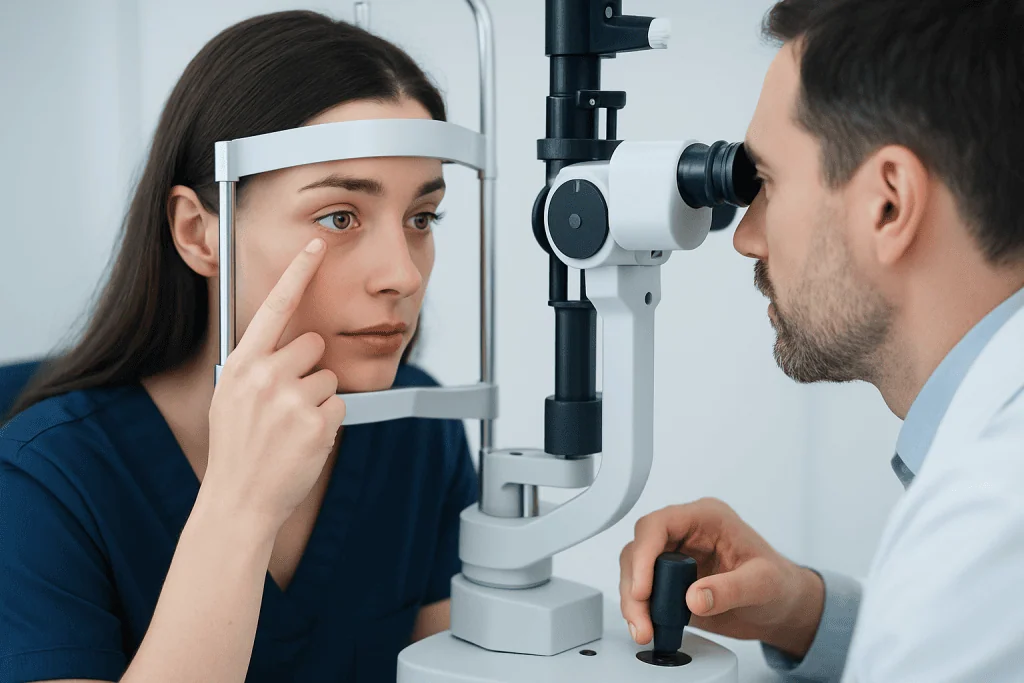
Redness may affect one eye or both eyes, and it can be mild or very noticeable. Some people describe a pink appearance, while others notice a more intense red color around the iris or across the whole white of the eye. The timing matters too: redness that starts late in the day may suggest dryness or overwear, while sudden redness after lens insertion may point to a damaged lens, trapped debris, or solution sensitivity.
Other symptoms can help narrow down the cause. People may feel dryness, grittiness, burning, mild discomfort, itching, or the sense that something is in the eye. Watering, stringy mucus, and fluctuating vision can occur when the tear film becomes unstable. Lenses may also start to feel uncomfortable sooner than usual.
Some symptoms need more caution because they may indicate a more serious condition. These include moderate to severe pain, increasing light sensitivity, blurred or reduced vision, swelling, thick discharge, or a white spot on the cornea. These features may overlap with conditions such as conjunctivitis or keratitis, but only an eye examination can confirm the cause.
What causes contacts and red eyes?

Dryness is one of the most frequent reasons. Contact lenses can speed evaporation of tears or interfere with how tears spread across the eye. This is more likely in air-conditioned rooms, windy weather, long screen time, dehydration, certain medications, or if the person already has dry eye. As the eye surface dries, blood vessels may dilate and the lens can begin to rub more.
Irritation and mechanical problems are also common. A lens that is inside out, torn, poorly fitted, or worn longer than intended can irritate the eye surface. Debris, makeup, lotion, or dust trapped beneath the lens may cause immediate discomfort and redness. Some users also react to preservatives in contact lens solutions, especially if lenses are not rinsed or stored as directed.
Inflammation related to allergies may make lenses harder to tolerate. Pollen, pet dander, dust mites, and giant papillary conjunctivitis linked to repeated lens wear can all trigger red, itchy, watery eyes. Contact lens wear can also contribute to small corneal surface injuries, which can make the eye painful and sensitive to light.
Infections are less common than dryness or irritation, but they are the most important not to miss. Bacteria, viruses, fungi, and parasites can infect the cornea or surrounding tissues, particularly when lenses are slept in, exposed to water, reused too long, or cleaned poorly. This is why contacts and red eyes should never be ignored if symptoms are worsening rather than improving.
Risk factors that increase the chance of redness and complications
Certain habits make red eyes more likely in contact lens wearers. Sleeping in lenses is a major risk because it reduces oxygen to the cornea and increases the opportunity for microbes to grow. Wearing lenses beyond the recommended replacement schedule, topping off old solution, or using tap water on lenses or cases also raises the risk of irritation and infection.
Environment and health conditions can contribute as well. Dry climates, smoke exposure, long hours at digital screens, poor indoor humidity, and allergy seasons often worsen symptoms. People with eyelid inflammation, autoimmune conditions, or existing ocular surface disease may notice redness more easily and may need a more individualized lens plan.
Lens type and fit also matter. Some people tolerate daily disposable lenses better than reusable lenses, while others need a different material that allows more oxygen through to the cornea. An eye care professional may recommend changing the lens design or considering alternatives if recurring redness continues despite good hygiene.
Children and adults alike should be reminded that cosmetic colored lenses carry the same risks as prescription lenses. Any lens worn directly on the eye should be fitted properly and cared for exactly as advised by a qualified clinician.
What to do right away and how doctors diagnose the cause
The first step is usually simple: remove the contact lenses. They should not be worn again until the eye feels normal or a clinician confirms that it is safe to restart. If the lens is damaged, dirty, or difficult to remove, it should not be forced. Rubbing the eye should be avoided because this can worsen irritation or create tiny surface injuries.
Artificial tears that are compatible with contact lens users may help if dryness is the likely cause, but drops should not be used to mask significant pain or vision changes. It is helpful to keep the lenses, case, and solution available in case an eye doctor wants to review them. Reusing the same lenses after an episode of redness is often not advised unless they were specifically judged to be safe.
Diagnosis typically begins with a discussion of symptoms, lens type, wearing schedule, hygiene routine, and exposure to water, sleep in lenses, or recent illness. During the exam, the clinician looks at the eye surface, eyelids, tear film, and cornea, often using magnification and special dyes to detect scratches, inflammation, or infection. Vision is checked, and the inside of the eyelid may be examined for allergy-related changes.
If infection is suspected, especially when the cornea is involved, urgent specialist assessment may be needed. In selected cases, the doctor may take samples from the eye surface. More detailed testing may be arranged through an eye examination or, when the cornea is affected, cornea-focused treatment planning.
Treatment options depend on the underlying cause
Treatment for contacts and red eyes depends on why the redness occurred. For dryness or mild irritation, the main approach is stopping lens wear for a period, lubricating the eyes, reviewing screen habits, and improving lens care. Sometimes the solution is as practical as changing to preservative-free products, shortening wearing time, or switching to daily disposable lenses.
When allergies are contributing, reducing allergen exposure and using clinician-recommended allergy eye drops may improve comfort and reduce redness. If giant papillary conjunctivitis or repeated irritation from the lens itself is present, the eye doctor may advise a break from contacts, a different lens material, or a different replacement schedule.
If a scratch, corneal inflammation, or infection is found, treatment may include prescription eye drops and close follow-up. The exact medicine depends on the cause, so self-treating with leftover antibiotic drops is not recommended. Steroid eye drops should never be started without medical guidance because they can worsen some infections.
For people with recurring symptoms, longer-term management may include treating the eye surface and lids, addressing underlying dry eye treatment, and reassessing whether contact lenses remain the best option. In more complex cases, multidisciplinary eye specialists at Acibadem International and its JCI-accredited hospitals evaluate international patients and tailor treatment to the individual cause.
Prevention and self-care for safer contact lens wear
Prevention begins with consistent hygiene. Hands should be washed and dried before touching lenses, and lenses should be cleaned, disinfected, and replaced exactly as instructed. Storage cases need regular cleaning and air-drying, then routine replacement. Water exposure should be avoided, including showering or swimming while wearing lenses unless a clinician has advised a safe protective approach.
Wearing habits are just as important as cleaning habits. Lenses should not be worn longer than recommended and should not be slept in unless they were specifically prescribed for overnight wear. Even then, overnight use can still increase risk in some people. Taking breaks from lenses during long screen sessions and using appropriate lubricating drops can support the tear film.
It also helps to keep the eye environment comfortable. Using a humidifier, reducing direct airflow from fans or vents, staying hydrated, and blinking regularly during screen work may lower dryness-related redness. Makeup should be removed carefully, and products should be kept away from the inner eyelid margins where they can contaminate the tear film.
Regular follow-up matters even when the eyes feel fine. Contact lenses are medical devices, and fit can change over time. If redness happens repeatedly, a clinician may suggest a different lens design or discuss whether laser eye surgery is an appropriate alternative for selected patients.
When to seek medical care
Medical care should be sought promptly if a contact lens wearer develops eye pain, worsening redness, blurred vision, marked light sensitivity, thick discharge, swelling, or the feeling that the eye cannot be kept open. These features can suggest a corneal problem or infection that needs timely treatment. The same applies if one eye becomes significantly red very suddenly or if there is a visible white or cloudy spot on the cornea.
Evaluation is also advisable when symptoms do not improve after removing the lenses, or if redness keeps coming back. Even mild redness deserves attention if it is associated with a recent episode of sleeping in lenses, swimming or showering with lenses, eye trauma, or using old or contaminated lens supplies.
Until seen by a clinician, lenses should remain out, and contact lens cases or current lenses may be brought to the appointment. Over-the-counter “redness relief” drops are usually best avoided unless a doctor recommends them, because they may temporarily whiten the eye without addressing the cause and can irritate some people further.
Frequently asked questions
Should contact lenses be removed if the eyes turn red?
Yes. In most cases, the safest first step is to remove the lenses as soon as redness begins. They should not be worn again until the eyes feel normal or an eye care professional confirms that it is safe.
Are contacts and red eyes always a sign of infection?
No. Dryness, allergy, overwear, poor lens fit, and solution sensitivity are all common noninfectious causes. However, contact lens users can develop serious infections, so redness with pain, light sensitivity, discharge, or vision changes should be assessed promptly.
Can artificial tears help with red eyes from contacts?
They can help when dryness or mild irritation is the cause. It is best to choose drops recommended for contact lens users or to use them while lenses are out, depending on the product instructions. If symptoms are significant or do not improve, medical evaluation is important.
Why do my eyes get red at the end of the day with contact lenses?
This pattern often suggests dryness, lens overwear, reduced blinking during screen use, or irritation from environmental factors such as air conditioning. The tear film becomes less stable over time, making the eyes feel tired and look redder. A lens review may help if this happens often.
Is it safe to sleep in contact lenses sometimes?
In general, sleeping in contact lenses increases the risk of redness, corneal inflammation, and infection. Even lenses approved for overnight wear may not be suitable for every person. It is best to follow the prescribing clinician's instructions closely.
When is a red eye an emergency for a contact lens wearer?
Urgent care is needed if redness comes with pain, reduced vision, strong light sensitivity, heavy discharge, swelling, or a white spot on the eye. These signs may indicate corneal involvement or infection, which can worsen quickly without treatment.
References
- American Academy of Ophthalmology
- American Optometric Association
- Centers for Disease Control and Prevention
- National Eye Institute
- Mayo Clinic
This article is for general information only and is not a substitute for professional medical advice. Please consult a qualified doctor about your individual situation.
Explore treatments in Turkey — costs, top hospitals & a free quote
JCI-accredited · board-certified surgeons · reply within 24h
Add us as a Preferred Source to see more of our trusted health content across Google Search, AI Overviews and Discover.

More from the Health Library



Related Specialists

Assoc. Prof. Dr. Sabri Berkem Ökten
Gynecology & Obstetrics
Dt. Cem Şarkan
Oral & Dental Health
Dr. Mehmed Fatih Yumrutaş
Inpatient Clinic Physicians Clinical Service
Assoc. Prof. Dr. Yasemin Koyuncu
Dermatology