Corona Radiata — Explained by Medical Evidence, Not Myths

The corona radiata is normal brain anatomy made of white matter nerve fibers. Symptoms appear only when this area is affected by a condition such as stroke or other brain injury.
Key Takeaways
- The corona radiata is normal brain anatomy made of white matter nerve fibers.
- Symptoms appear only when this area is affected by a condition such as stroke or other brain injury.
- Common problems linked to the corona radiata include weakness, numbness, speech difficulty, or changes in thinking, depending on the exact location.
- Brain MRI or CT helps doctors identify whether the corona radiata has been affected and why.
- Urgent care is needed for sudden neurologic symptoms, especially one-sided weakness, facial droop, or trouble speaking.
The corona radiata is a fan-shaped bundle of nerve fibers deep in the brain that helps carry messages between the brain’s cortex, brainstem, and spinal cord. It is not a disease itself, but it becomes important when imaging shows injury there, such as from stroke, reduced blood flow, inflammation, or other white matter disorders.
What the corona radiata is
The corona radiata is a normal part of the brain, not a diagnosis on its own. It is a broad, fan-shaped sheet of white matter fibers that carries signals between the cerebral cortex and deeper brain structures. These fibers help connect areas involved in movement, sensation, language, attention, and other higher functions.
White matter is made largely of nerve fibers covered by myelin, an insulating layer that helps electrical messages travel quickly and efficiently. In the corona radiata, many pathways run close together before converging into a tighter structure called the internal capsule. Because so many important pathways pass through this region, even a small injury can sometimes cause noticeable symptoms.
People often encounter this term after a brain scan report mentions a “lesion,” “infarct,” or “white matter change” in the corona radiata. In that context, the report is describing where a problem is located, not naming a separate illness. The medical question then becomes what caused the change and whether it explains the person’s symptoms.
Why this brain region matters
The corona radiata acts like a major communication highway. Fibers traveling through it include motor pathways that help control voluntary movement, sensory pathways that carry information from the body, and connections that support coordination between different brain regions.
Its importance comes from function rather than size alone. A disruption in this area may affect strength, coordination, sensation, speech, or thinking, depending on which fibers are involved. For example, injury on one side of the brain may produce weakness or numbness on the opposite side of the body.
Doctors pay close attention to this region in conditions such as stroke, small vessel disease, demyelinating disorders, traumatic injury, or less commonly tumors and infections. The exact clinical effect depends on the cause, the size of the affected area, and whether nearby structures are also involved.
Symptoms when the corona radiata is affected

There are no symptoms from simply having a corona radiata, because it is part of healthy brain anatomy. Symptoms occur only if disease or injury affects the fibers running through this region. The signs can be sudden, as in stroke, or gradual, as in some chronic white matter conditions.
Possible symptoms include weakness of the face, arm, or leg; numbness or altered sensation; clumsiness; trouble walking; slurred speech; difficulty finding words; and problems with attention or processing speed. In some cases, especially when the affected area is small, symptoms may be subtle or improve quickly.
Symptoms vary because the corona radiata contains many different nerve pathways. A person may have mainly motor symptoms, mainly sensory symptoms, or a combination. Emergency evaluation is especially important if symptoms start suddenly, because a time-sensitive condition such as stroke may be the cause.
- One-sided weakness or facial droop
- Numbness or tingling on one side of the body
- Sudden trouble speaking or understanding speech
- Loss of coordination or unsteady walking
- Changes in attention, planning, or mental speed
Common causes and risk factors
The most common clinically important problem involving the corona radiata is reduced blood flow, including small deep brain infarcts and other forms of ischemic injury. This may happen when small blood vessels narrow or become blocked. High blood pressure, diabetes, smoking, high cholesterol, older age, and cardiovascular disease can increase this risk.
Other causes include chronic small vessel white matter disease, inflammatory or demyelinating disorders such as multiple sclerosis, traumatic brain injury, infections, and less commonly masses that affect nearby tissue. Sometimes an MRI shows age-related or vascular white matter changes in the corona radiata that are mild and not clearly linked to a person’s current symptoms.
Doctors interpret imaging findings in the full clinical context. A scan abnormality in the corona radiata may be new or old, significant or incidental. That is why factors such as symptom timing, neurologic examination, vascular risk profile, and the appearance of the lesion on MRI all matter when deciding what it means.
How doctors diagnose a corona radiata problem
Diagnosis begins with the person’s symptoms, medical history, and neurologic examination. Doctors want to know whether symptoms started suddenly or gradually, whether they affect one side of the body, and whether there are associated warning signs such as severe headache, confusion, or visual changes.
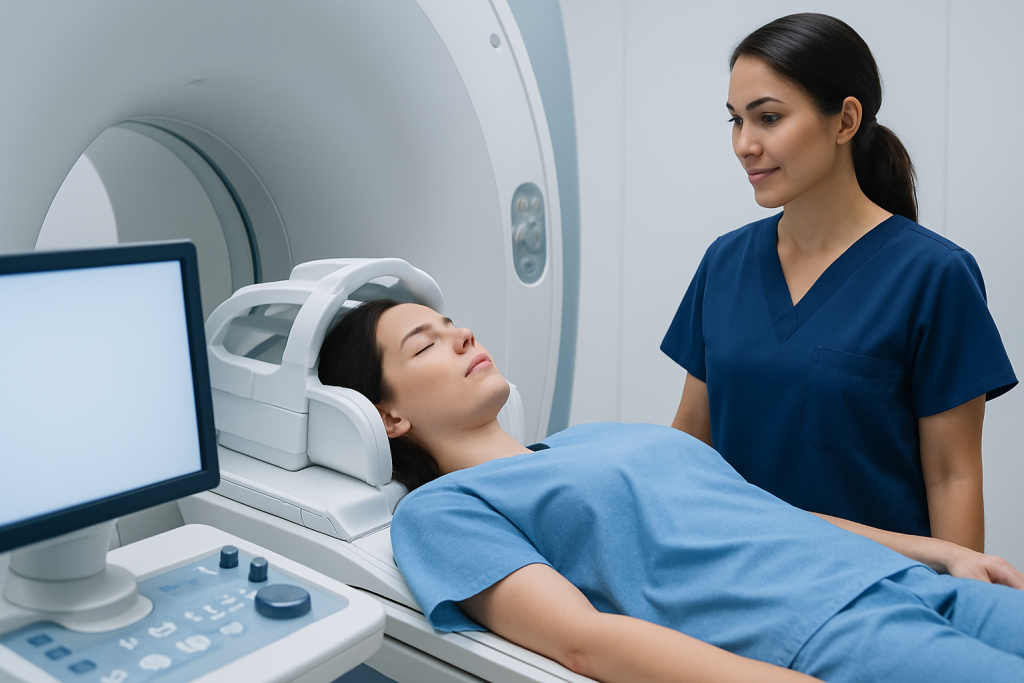
Brain imaging is central to diagnosis. CT can quickly identify bleeding and may detect larger infarcts, while MRI is often more sensitive for small or early white matter lesions in the corona radiata. Diffusion-weighted MRI is especially useful when a recent ischemic stroke is suspected. Depending on the case, doctors may also order blood tests, heart rhythm monitoring, or vascular imaging.
If the concern is a cerebrovascular event, evaluation may overlap with stroke treatment planning. In more complex cases, a neurologist may recommend further testing to look for inflammatory, autoimmune, infectious, or demyelinating causes. The imaging result is only one piece of the diagnosis; the goal is to identify the underlying condition accurately and guide treatment safely.
Treatment and recovery
Treatment depends on the cause rather than the location name alone. If the corona radiata has been affected by an acute ischemic stroke, emergency care focuses on restoring or supporting blood flow when appropriate and preventing further injury. Long-term treatment then aims to reduce the risk of another event by addressing blood pressure, cholesterol, diabetes, smoking, and other vascular factors.
If the problem is due to demyelination, inflammation, infection, or another neurologic disorder, treatment targets that specific condition. Some people also benefit from rehabilitation to improve strength, balance, language, or daily function. This may include physical therapy and rehabilitation and, when needed, speech or occupational therapy.
Recovery varies widely. Some small lesions cause mild deficits that improve over weeks, while larger or strategically placed injuries can lead to longer-lasting symptoms. The brain can often adapt to some degree, especially with early treatment and structured rehabilitation. A neurologist may also investigate related findings such as brain tumor only when imaging or symptoms suggest that possibility; many corona radiata findings are vascular rather than tumoral.
Prevention and self-care
Because many important corona radiata problems are vascular, prevention often centers on brain and heart health. Keeping blood pressure in a healthy range, managing diabetes, controlling cholesterol, avoiding smoking, staying physically active, and following a balanced diet can all help lower the risk of white matter injury and stroke.
People who already have a history of stroke, transient ischemic attack, or small vessel disease should follow their clinician’s treatment plan carefully. This may include prescribed medicines, regular follow-up, and attention to sleep, hydration, and exercise as advised by a doctor. Self-care does not replace medical treatment, but it supports long-term brain health.
It is also helpful not to overinterpret scan wording without expert advice. Terms such as “chronic white matter changes” or “old lacunar infarct in the corona radiata” may sound alarming, yet their significance depends on symptoms, age, and overall health. A clinician can explain whether a finding is likely incidental, age-related, or something that needs further evaluation.
When to seek medical care
Urgent medical care is needed for sudden neurologic symptoms, even if they improve quickly. Warning signs include facial droop, one-sided weakness or numbness, trouble speaking, severe imbalance, sudden confusion, or a sudden change in vision. These symptoms may signal a stroke or another acute brain problem and should be treated as an emergency.
Non-urgent follow-up is appropriate if a scan report mentions the corona radiata but there are no emergency symptoms. A doctor or neurologist can review the images, explain the finding, and decide whether further testing is needed. People with repeated falls, persistent numbness, cognitive changes, or gradually worsening balance should also arrange medical assessment.
For patients who need specialist evaluation, Acibadem International’s multidisciplinary teams in JCI-accredited hospitals assess neurologic symptoms with advanced imaging and tailored treatment plans for international patients. In selected cases, evaluation may include MRI or broader neurologic care pathways depending on the suspected cause.
Frequently asked questions
Is the corona radiata a disease?
No. The corona radiata is a normal anatomical part of the brain made of white matter nerve fibers. It becomes medically important only when a scan shows that this area has been affected by a condition such as stroke, small vessel disease, inflammation, or injury.
What does it mean if an MRI mentions the corona radiata?
Usually it means the radiologist is describing the location of a finding, such as a small infarct, white matter change, or lesion. The wording does not by itself explain the cause or seriousness. A doctor interprets it together with symptoms, examination findings, and the full imaging pattern.
Can a corona radiata lesion cause weakness?
Yes. Because this region carries important motor pathways, an injury there can cause weakness, clumsiness, or changes in movement control. Symptoms often affect the opposite side of the body from the brain lesion.
Is a corona radiata infarct the same as a stroke?
A corona radiata infarct is a type of stroke if it represents loss of blood flow to that area of the brain. Some are small deep infarcts related to small vessel disease, while others may occur for different vascular reasons. The exact type matters because it helps guide treatment and prevention.
Can people recover from corona radiata injury?
Many people do improve, especially when the affected area is small and treatment starts promptly. Recovery depends on the cause, location, size of the injury, overall health, and access to rehabilitation. Some symptoms resolve substantially, while others may require longer-term support.
When is a corona radiata finding an emergency?
It is an emergency when symptoms begin suddenly, especially one-sided weakness, facial droop, numbness, trouble speaking, severe imbalance, or confusion. These may indicate an acute stroke or another urgent neurologic condition. Immediate medical attention is important even if symptoms seem to improve.
References
- National Institute of Neurological Disorders and Stroke
- American Stroke Association
- National Institute on Aging
- Radiological Society of North America
- World Health Organization
This article is for general information only and is not a substitute for professional medical advice. Please consult a qualified doctor about your individual situation.
Joint and spine care in Turkey — expert assessment & treatment
JCI-accredited · board-certified surgeons · reply within 24h
Add us as a Preferred Source to see more of our trusted health content across Google Search, AI Overviews and Discover.
Check your numbers in seconds
BMI, calories, due date, blood pressure and 30+ more clinical calculators — free, instant, doctor-reviewed ranges.

More from the Health Library

Transverse Abdominis: An Evidence-Based Guide for Patients

Pine Nuts Benefits: What Patients Need to Know

Sorbitol — Explained by Medical Evidence, Not Myths

Fibroids: What Patients Need to Know
Head Cold Stiff Neck: A Complete Medical Overview