Cranial Nerves: A Complete Medical Overview
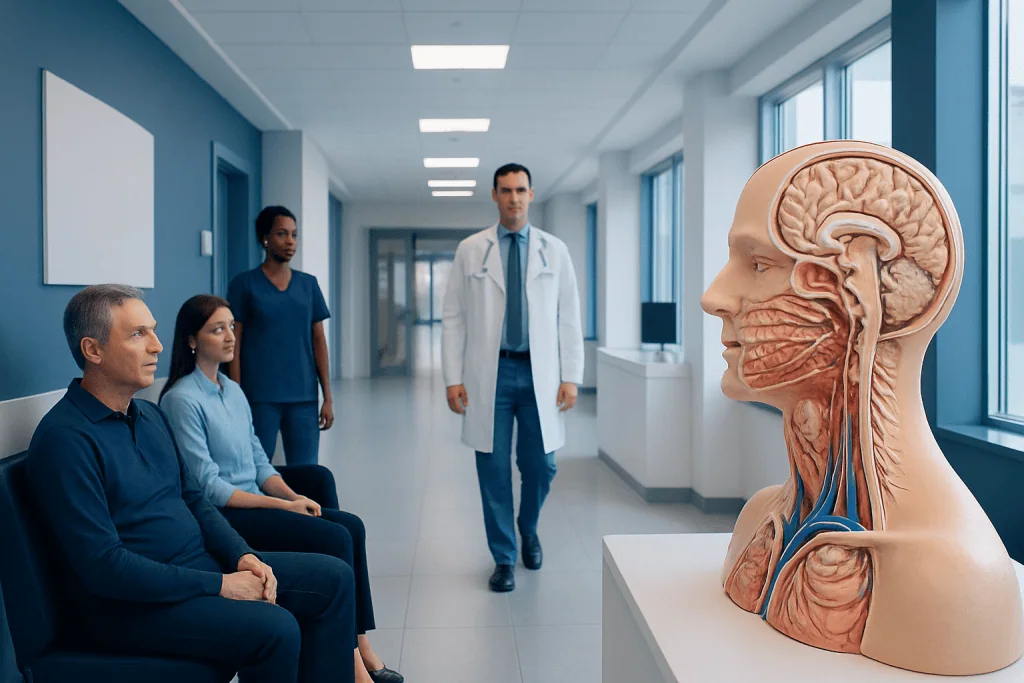
There are 12 pairs of cranial nerves, each with specific sensory, motor, or mixed functions. Problems affecting cranial nerves can cause symptoms such as double vision, facial weakness, hearing loss, dizziness, trouble swallowing, or changes in smell and taste.
Key Takeaways
- There are 12 pairs of cranial nerves, each with specific sensory, motor, or mixed functions.
- Problems affecting cranial nerves can cause symptoms such as double vision, facial weakness, hearing loss, dizziness, trouble swallowing, or changes in smell and taste.
- Cranial nerve symptoms may result from infections, inflammation, diabetes, trauma, tumors, stroke, or other neurological conditions.
- Diagnosis usually involves a neurological examination and may include imaging, hearing or balance tests, and blood tests depending on the symptoms.
- Treatment depends on the cause and may include medication, rehabilitation, surgery, or monitoring.
- New or sudden cranial nerve symptoms should be assessed by a qualified doctor promptly.
Cranial nerves are 12 pairs of nerves that connect the brain to the eyes, ears, face, tongue, throat, and some internal organs. They help control key functions such as smell, vision, eye movements, facial sensation, hearing, balance, swallowing, speech, and shoulder or tongue movement.
Overview: what cranial nerves are and why they matter
Cranial nerves are 12 pairs of nerves that arise from the brain and brainstem rather than the spinal cord. They carry signals that allow a person to smell, see, move the eyes, feel the face, chew, hear, keep balance, swallow, speak, and move parts of the neck and tongue. Because these nerves support many daily functions, even a small problem can be noticeable.
Each cranial nerve has a name, a number from I to XII, and a specialized role. Some are mainly sensory, meaning they carry information such as smell, vision, hearing, or facial sensation to the brain. Others are mainly motor, meaning they help muscles move. Several are mixed nerves and do both.
A simple way to understand the cranial nerves is to think of them as communication lines between the brain and important structures in the head and neck. Although they are small, they are clinically important. Symptoms involving one cranial nerve, or several at once, can help doctors narrow down where a problem may be located.
Cranial nerves are also relevant in many neurological and ENT conditions. For example, facial weakness may suggest a problem involving the seventh cranial nerve, while swallowing difficulty may involve nerves in the lower brainstem. Careful evaluation helps distinguish temporary, treatable problems from conditions that need urgent attention.
The 12 cranial nerves and their main functions
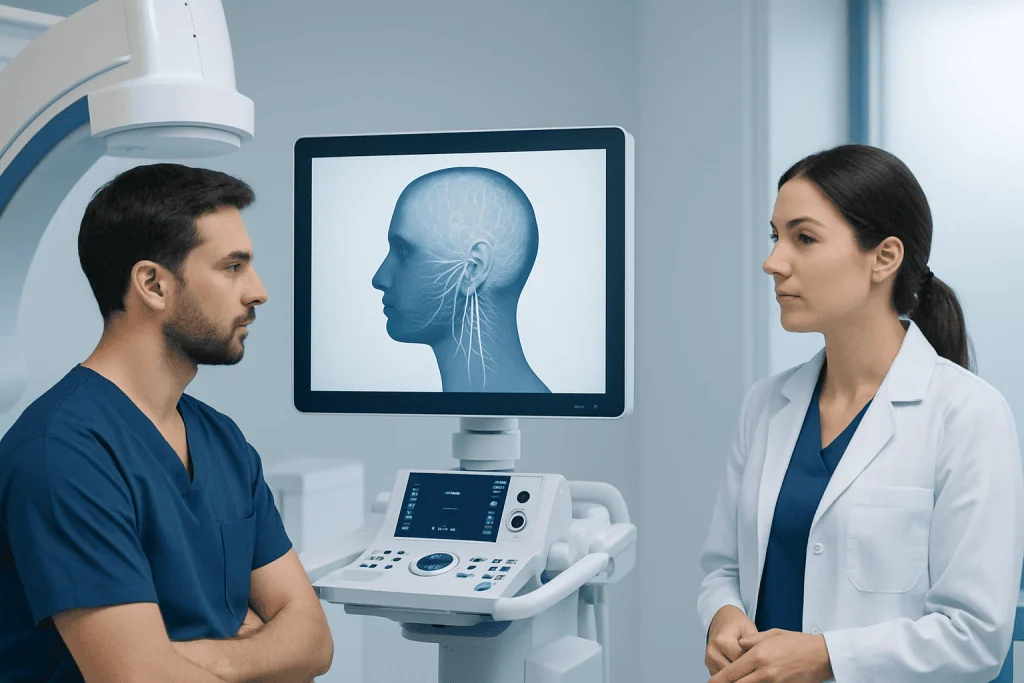
The 12 cranial nerves are traditionally listed in order from front to back. Cranial nerve I is the olfactory nerve, which carries smell. Cranial nerve II is the optic nerve, which carries visual information from the eyes to the brain. Cranial nerves III, IV, and VI help control eye movements, eyelid position, and pupil responses.
Cranial nerve V, the trigeminal nerve, provides sensation to the face and helps with chewing. Cranial nerve VII, the facial nerve, controls facial expression and also contributes to taste on part of the tongue, tear production, and saliva. Cranial nerve VIII, the vestibulocochlear nerve, is responsible for hearing and balance. When symptoms involve hearing loss, ringing in the ear, or dizziness, doctors may consider vestibular or auditory causes such as acoustic neuroma.
Cranial nerves IX and X, the glossopharyngeal and vagus nerves, help with swallowing, voice, taste, and automatic body functions including some heart and digestive signals. Cranial nerve XI, the accessory nerve, helps move the shoulders and neck. Cranial nerve XII, the hypoglossal nerve, controls tongue movement, which is important for speech and swallowing.
Doctors often group these nerves by function during examination. Vision-related nerves are assessed differently from those involved in facial movement or swallowing. This functional approach helps make the examination more practical and can guide decisions about imaging, laboratory tests, or referral to a specialist.
Symptoms of cranial nerve problems

Symptoms vary depending on which cranial nerve is affected. Changes in smell can point to the olfactory nerve. Blurred vision, vision loss, double vision, a drooping eyelid, or unequal pupils may involve the optic nerve or the nerves that move the eyes. Facial numbness, jaw weakness, or pain can suggest trigeminal nerve involvement, while facial drooping may involve the facial nerve.
Hearing changes, ringing in the ears, vertigo, and imbalance may indicate a problem with the vestibulocochlear nerve. Hoarseness, choking, coughing during swallowing, or a weak gag reflex can occur when the glossopharyngeal or vagus nerves are affected. Difficulty turning the head, shoulder weakness, or slurred speech caused by poor tongue control may reflect issues with the accessory or hypoglossal nerves.
Some symptoms appear suddenly, while others develop gradually. Sudden onset can occur with stroke, infection, inflammation, or trauma. More gradual symptoms may be seen with nerve compression, chronic metabolic conditions, or certain growths affecting the brain, skull base, or nerve pathways.
Because cranial nerve symptoms may overlap with other conditions, self-diagnosis is not reliable. For instance, facial weakness may result from Bell’s palsy, but it can also occur in stroke or other neurological disorders. A careful medical assessment is the safest way to determine the cause.
Causes and risk factors
Cranial nerve disorders can arise from many different causes. Infections may inflame a nerve directly or affect surrounding tissues. Viral illnesses, sinus or ear infections, meningitis, and other inflammatory conditions are examples. In some cases, the body’s immune system can mistakenly attack nerve tissue, leading to temporary or persistent dysfunction.
Vascular problems are another important cause. Reduced blood flow from diabetes or small vessel disease can injure a cranial nerve, especially those that control eye movements. Stroke can also affect the brain areas where cranial nerves begin. Conditions such as brain tumor may compress a nerve or the brainstem and cause progressive symptoms over time.
Trauma to the head or face may damage a cranial nerve directly or indirectly through swelling, bleeding, or fractures near the skull base. Surgery in the head and neck region can sometimes affect nearby nerves as well. Less commonly, congenital conditions or inherited neurological disorders may play a role.
Risk factors depend on the underlying condition rather than the nerves themselves. These may include older age, diabetes, high blood pressure, smoking, autoimmune disease, recent infection, cancer, or head injury. Not every cranial nerve problem can be prevented, but understanding these factors helps doctors interpret symptoms in context.
How doctors diagnose cranial nerve disorders
Diagnosis begins with a detailed history and physical examination. The doctor asks when symptoms started, whether they came on suddenly or gradually, and whether there are related issues such as headache, fever, hearing changes, facial pain, numbness, weakness, or swallowing difficulty. This timeline can provide important clues.
A cranial nerve examination is a focused part of the neurological exam. It may include checking smell, testing vision and eye movements, shining a light into the eyes, examining facial sensation and muscle strength, assessing hearing, and looking at the palate, voice, shoulder movement, and tongue position. Even subtle findings can help localize the problem.
Additional tests depend on the suspected cause. Brain imaging, especially MRI, is often used to assess the brainstem, skull base, and nerve pathways. CT scans may help if trauma or bone involvement is suspected. Some patients need hearing tests, balance tests, swallow studies, blood tests, or lumbar puncture. In selected cases, MRI imaging or CT scanning helps identify inflammation, compression, bleeding, or structural abnormalities.
Specialist evaluation may be needed from neurology, ophthalmology, ENT, neurosurgery, or speech and swallowing teams. The goal is not only to name the affected nerve but also to identify the exact cause, because treatment and prognosis depend on the underlying condition.
Treatment options and recovery
Treatment for cranial nerve problems is guided by the cause. Infections may require antimicrobial treatment, while inflammatory or autoimmune causes may be managed with anti-inflammatory medicines. Blood sugar control and vascular risk reduction are important when nerve damage is related to diabetes or circulation problems. Some mild cases improve over time with observation and supportive care.
When symptoms interfere with daily function, rehabilitation can play an important role. Eye patches or prism strategies may help some patients with double vision. Hearing rehabilitation, balance therapy, facial exercises, speech therapy, or swallowing therapy may be recommended depending on the nerve involved. These approaches can improve safety, comfort, and recovery.
If a structural lesion is compressing a cranial nerve, procedures may be considered. Examples include treatment for tumors, vascular compression, or severe trigeminal pain. In selected cases, options such as neurosurgical treatment or Gamma Knife radiosurgery may be part of care planning, depending on the diagnosis and the advice of the treating team.
Recovery varies widely. Some cranial nerve palsies resolve within weeks or months, while others improve more slowly or may leave lasting deficits. Early evaluation can improve the chance of appropriate treatment and may reduce complications such as aspiration, corneal injury from incomplete eye closure, or falls related to imbalance.
Prevention and self-care
Not all cranial nerve disorders can be prevented, but general health measures can lower the risk of some causes. Managing diabetes, blood pressure, and cholesterol supports the small blood vessels that nourish nerves. Wearing seat belts, using helmets when appropriate, and reducing fall risk can help prevent head injuries that may affect cranial nerves.
Prompt treatment of ear, sinus, dental, and other head and neck infections may reduce the chance of complications. Regular eye care and hearing evaluation are also helpful, especially for people who already notice changes in vision, balance, or hearing. People with new swallowing difficulty should avoid ignoring the symptom, since choking and poor nutrition can develop gradually.
At home, self-care depends on the symptom pattern. A person with facial weakness may need to protect the eye if it does not close fully. Someone with swallowing problems may benefit from softer foods until a doctor advises otherwise. Sudden worsening, new weakness, severe headache, or confusion should never be managed only with home remedies.
Near the end of the care journey, some patients benefit from multidisciplinary evaluation. Acibadem International’s multidisciplinary specialists and JCI-accredited hospitals diagnose and treat cranial nerve-related conditions for international patients when advanced neurological, imaging, or surgical assessment is needed.
When to seek medical care
Medical assessment is important for any persistent cranial nerve symptom, especially if it affects vision, hearing, balance, swallowing, speech, or facial movement. Symptoms that develop over days or weeks still deserve evaluation because they may reflect infection, inflammation, nerve compression, or another condition that benefits from early treatment.
Urgent care is needed for sudden facial drooping, sudden double vision, sudden vision loss, severe dizziness with other neurological symptoms, choking, new trouble speaking, or weakness in the face or body. These can sometimes occur with stroke or other emergencies and should not be delayed.
Care should also be sought if there is severe facial pain, persistent hoarseness, unexplained hearing loss, recurrent aspiration, or a drooping eyelid with pupil changes. Even when the cause is not dangerous, these symptoms can affect safety, nutrition, communication, and quality of life.
A qualified doctor can decide whether observation, testing, referral, or urgent treatment is most appropriate. Early attention is especially valuable when symptoms are rapidly changing or involve more than one cranial nerve.
Frequently asked questions
How many cranial nerves are there?
There are 12 pairs of cranial nerves. They arise from the brain and brainstem and mainly serve the head and neck, although the vagus nerve also extends to parts of the chest and abdomen.
What do cranial nerves do?
Cranial nerves carry signals for smell, vision, eye movement, facial sensation, chewing, facial expression, hearing, balance, swallowing, voice, shoulder movement, and tongue movement. Some are sensory, some are motor, and some do both.
What are common signs of a cranial nerve problem?
Common signs include double vision, facial numbness, facial drooping, hearing loss, vertigo, hoarseness, trouble swallowing, and tongue weakness. The exact symptoms depend on which nerve is affected and what is causing the problem.
Can cranial nerve damage heal?
Some cranial nerve problems improve fully, especially when the cause is temporary, such as inflammation or a mild circulation-related palsy. Others recover only partly or need long-term management, particularly if there is significant compression, trauma, or underlying neurological disease.
How are cranial nerves tested?
Doctors test cranial nerves through a neurological examination that checks smell, vision, eye movements, pupils, facial sensation, facial strength, hearing, swallowing, shoulder movement, and tongue motion. Depending on the findings, imaging or other tests may be added.
When is a cranial nerve symptom an emergency?
A cranial nerve symptom may be an emergency if it starts suddenly or comes with stroke-like warning signs, severe headache, confusion, new weakness, or trouble swallowing or breathing. Immediate medical attention is especially important for sudden vision loss, sudden facial drooping, or new speech difficulty.
References
- National Institute of Neurological Disorders and Stroke
- American Academy of Neurology
- Merck Manual Professional Edition
- Mayo Clinic
- Cleveland Clinic
This article is for general information only and is not a substitute for professional medical advice. Please consult a qualified doctor about your individual situation.
Joint and spine care in Turkey — expert assessment & treatment
JCI-accredited · board-certified surgeons · reply within 24h
Add us as a Preferred Source to see more of our trusted health content across Google Search, AI Overviews and Discover.