Cte: What Patients Need to Know

CTE stands for chronic traumatic encephalopathy, a brain disease linked to repeated head impacts. Symptoms may involve thinking, mood, behavior, and movement, but these symptoms can also have many other causes.
Key Takeaways
- CTE stands for chronic traumatic encephalopathy, a brain disease linked to repeated head impacts.
- Symptoms may involve thinking, mood, behavior, and movement, but these symptoms can also have many other causes.
- There is no single definitive test for CTE in a living person; doctors assess history and exclude other conditions.
- Prevention centers on reducing head-impact exposure, recognizing concussion symptoms, and following safe return-to-play or return-to-work guidance.
- Medical care is important for persistent memory changes, mood changes, headaches, balance problems, or concerning behavior after repeated head injuries.
CTE meaning refers to chronic traumatic encephalopathy, a progressive brain condition associated with repeated blows to the head or repeated head-impact exposure over time. It is a complex diagnosis that cannot currently be confirmed with a routine scan or blood test in a living person, so evaluation focuses on symptoms, history, and ruling out other causes.
Overview: What does CTE mean?
CTE meaning is chronic traumatic encephalopathy. It is a brain condition associated with repeated head impacts over time, including concussions and also smaller blows that may not cause obvious symptoms at the time. CTE has been discussed most often in contact sports, military service, and other settings where repeated impacts may occur.
CTE is not the same as a single concussion. A concussion is an acute brain injury, while CTE refers to long-term changes in brain tissue that researchers believe may develop after repeated trauma or repeated head-impact exposure. Not everyone with a history of concussion or contact sports develops CTE, and risk varies from person to person.
Another important point is that CTE cannot currently be diagnosed with certainty in a living person using one standard scan, blood test, or office exam. At present, a definitive diagnosis is made by examining brain tissue after death. During life, doctors may evaluate symptoms, review injury history, and look for other explanations such as depression, sleep disorders, medication effects, substance use, or other neurological conditions.
How CTE may affect the brain and daily life
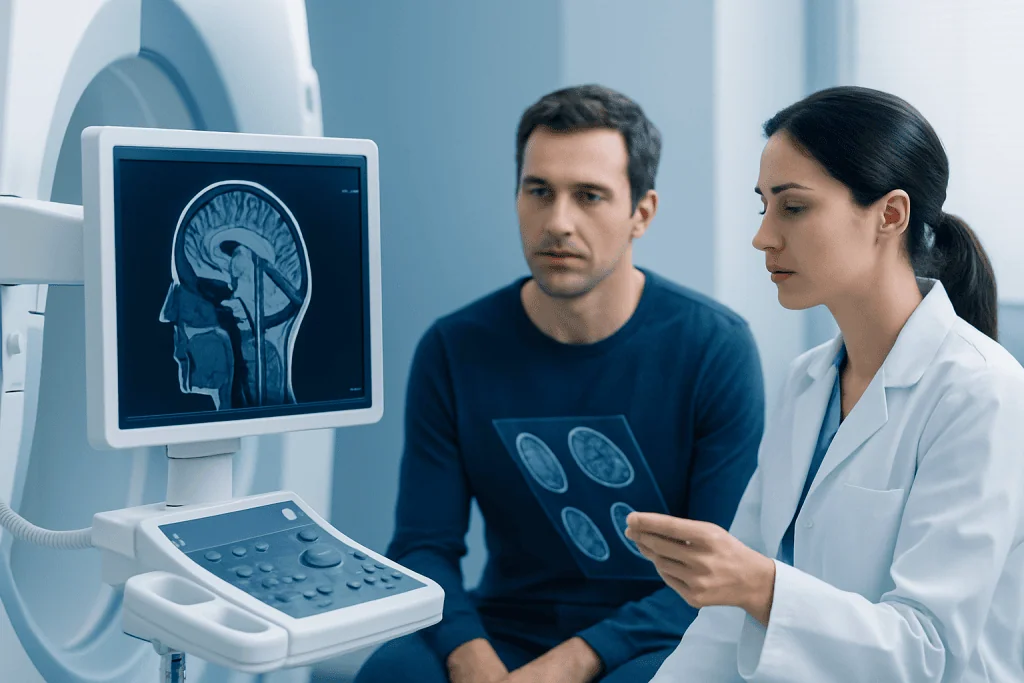
Researchers understand CTE as a neurodegenerative process, meaning it may involve gradual changes in nerve cells and supporting brain tissue over time. These changes are associated with abnormal protein buildup in certain parts of the brain. The pattern is different from many other brain disorders, which is why CTE is considered a distinct condition.
For patients and families, the practical concern is how symptoms can affect work, relationships, judgment, and independence. Some people report difficulties with attention, planning, memory, or emotional control. Others may notice changes in personality, sleep, or everyday decision-making before they think of the problem as neurological.
Because these changes can overlap with more common conditions, CTE is often part of a broader medical conversation rather than an immediate conclusion. Doctors may consider whether symptoms could relate to Parkinson’s disease, Alzheimer’s disease, depression, anxiety, or another brain or mental health condition. A careful, step-by-step assessment helps build the clearest picture.
Possible symptoms of CTE

Symptoms linked with CTE are often grouped into changes in thinking, mood, behavior, and movement. They may appear years after repeated head impacts, and they do not follow the same timeline in every person. Some people first notice subtle concentration problems, while others have more prominent irritability or impulsive behavior.
Examples of symptoms that may raise concern include:
- Memory problems or increasing forgetfulness
- Difficulty concentrating, organizing, or making decisions
- Mood changes such as depression, anxiety, or hopelessness
- Irritability, aggression, or unusual impulsiveness
- Sleep disturbances
- Headaches or sensitivity after prior head injuries
- Balance problems, slowed movement, or tremor in some cases
These symptoms do not automatically mean a person has CTE. They can also occur with stress, post-concussion symptoms, medication side effects, alcohol or drug use, sleep apnea, thyroid disease, vitamin deficiencies, and other neurological disorders. This is why self-diagnosis is not reliable and professional evaluation matters.
Families are often the first to notice that a person seems different from their usual self. A loved one may observe increased frustration, poor judgment, or social withdrawal before the person fully recognizes those changes. Sharing those observations with a clinician can be very helpful during assessment.
Causes and risk factors
The main risk factor associated with CTE is repeated head-impact exposure over time. This can include contact sports such as American football, boxing, soccer, hockey, rugby, and wrestling, as well as military blast exposure or occupations with repeated risk of head trauma. Researchers believe both the number of impacts and the total years of exposure may matter.
Severe concussions are not the only concern. Repeated smaller impacts that do not cause clear concussion symptoms may also contribute. However, science is still evolving, and doctors cannot predict with certainty who will or will not develop CTE. Two people with similar sports or work histories may have very different long-term outcomes.
Other factors may influence risk or symptom severity, including genetics, age at first exposure, overall brain health, alcohol or substance use, sleep quality, mental health, and whether repeated injuries occurred before full recovery from earlier ones. Conditions such as concussion and repeated traumatic brain injury deserve proper follow-up because protecting the brain early may reduce future harm.
It is also important to avoid over-attributing every memory or mood symptom to prior sports participation. Many adults develop common medical and psychiatric conditions that affect the brain, and these may be treatable. A balanced approach helps people receive the right care rather than assuming one explanation too soon.
How doctors evaluate suspected CTE
When someone is worried about CTE, the medical goal is usually to evaluate current symptoms and identify the most likely cause. A doctor will often begin with a detailed history, including past concussions, years of contact sports or military exposure, the timing of symptoms, medications, sleep habits, alcohol use, and mental health history. Input from a family member may add useful detail.
The next step usually includes a neurological examination and often cognitive screening. Depending on symptoms, clinicians may recommend more formal neuropsychological testing to assess memory, attention, language, problem-solving, and emotional functioning. Brain imaging such as MRI may be used to rule out other structural problems, but it does not confirm CTE on its own.
Blood tests may be ordered to look for potentially reversible causes of memory or mood symptoms, such as thyroid disorders, vitamin deficiencies, infection, or metabolic issues. In selected cases, sleep studies, psychiatric assessment, or specialty referral may be appropriate. Patients with movement symptoms may need evaluation by experts in neurology or related disciplines.
If symptoms are complex or progressive, care may involve multiple specialists. This can include neurosurgery when structural brain issues need assessment, or rehabilitation for cognitive, balance, or functional support. Near the end of the diagnostic journey, some international patients choose centers such as Acibadem International, where multidisciplinary specialists in JCI-accredited hospitals evaluate neurological conditions in a coordinated way.
Treatment options and supportive care
There is no single cure that reverses CTE. Treatment focuses on managing symptoms, improving daily function, and addressing conditions that may be contributing to cognitive or emotional difficulties. Many people benefit from a personalized plan rather than one treatment alone.
Supportive care may include medication for selected symptoms, counseling or psychotherapy, sleep treatment, headache management, and strategies to reduce stress and improve routine. Cognitive rehabilitation can help some patients develop practical tools for memory, planning, and attention. If mood symptoms are significant, coordinated mental health care is especially important.
Physical therapy, balance training, and exercise programs may help people with dizziness, gait changes, or general deconditioning. Family education is also valuable. Loved ones may need guidance on communication, safety, and how to respond to changes in judgment or mood without increasing conflict.
Because symptoms can overlap with other diseases, treatment may also target a different diagnosis discovered during evaluation. That is a positive outcome, because some alternative causes are more treatable than patients initially expect. The best care plan is one based on a thorough assessment, regular follow-up, and realistic goals.
Prevention and self-care
The most effective approach to CTE is prevention through reducing repeated head-impact exposure. In sports, this means proper coaching, age-appropriate rules, correct technique, well-maintained equipment, and a culture that takes concussion symptoms seriously. Protective gear can lower some injury risks, but no helmet can fully prevent concussion or CTE.
Anyone with a suspected concussion should stop play or activity and be assessed appropriately. Returning too soon can increase the chance of another injury before the brain has recovered. This is important for athletes, workers, and military personnel alike.
Self-care also includes protecting overall brain health. Good sleep, regular exercise, blood pressure control, avoiding smoking, limiting alcohol, treating depression or anxiety, and staying mentally and socially engaged may support long-term brain function. These steps are helpful whether or not a person ultimately has CTE.
For those with a history of repeated head impacts, it can help to keep a record of prior injuries and current symptoms. Noting changes in memory, mood, sleep, headaches, and balance gives doctors clearer information and may make appointments more productive.
When to seek medical care
Medical evaluation is a good idea if a person with a history of repeated head injuries develops ongoing memory problems, trouble concentrating, mood changes, personality changes, frequent headaches, dizziness, balance problems, or unusual behavior. Care is also important if symptoms interfere with work, school, relationships, or day-to-day tasks. Early evaluation does not label someone with CTE; it helps identify what is happening and what support may help.
Urgent medical care is needed after any new head injury if there is loss of consciousness, worsening headache, repeated vomiting, seizures, confusion, weakness, slurred speech, unusual drowsiness, or any rapidly worsening symptom. Emergency assessment is also important if someone has suicidal thoughts, severe agitation, or behavior that puts them or others at risk.
Patients do not need to wait for severe symptoms before asking for help. A primary care doctor, neurologist, sports medicine doctor, or mental health professional can often guide the first steps. If symptoms are persistent or complex, referral for specialized neurological and cognitive assessment may be the most useful next move.
Frequently asked questions
What is the simple meaning of CTE?
CTE means chronic traumatic encephalopathy. It is a brain condition associated with repeated head impacts over time, rather than a single injury alone.
Can CTE be diagnosed in a living person?
Doctors cannot currently confirm CTE with complete certainty in a living person using one routine test. Instead, they evaluate symptoms, exposure history, and other possible causes, while a definitive diagnosis is made by examining brain tissue after death.
Does having a concussion mean someone will develop CTE?
No. A concussion does not automatically lead to CTE, and many people with past concussions never develop it. Risk appears to be more closely related to repeated head-impact exposure over time, but researchers are still learning why some people are affected and others are not.
What symptoms are commonly linked with CTE?
Symptoms may include memory problems, poor concentration, mood changes, irritability, impulsive behavior, sleep problems, headaches, and sometimes balance or movement changes. These symptoms are not specific to CTE and can occur in many other medical or mental health conditions.
Is there a treatment or cure for CTE?
There is no single cure that reverses CTE. Treatment focuses on symptom relief, mental health support, cognitive rehabilitation, sleep care, and managing any other conditions that may be contributing to symptoms.
Who should talk to a doctor about possible CTE?
Anyone with a history of repeated head injuries or repeated head-impact exposure who develops persistent thinking, mood, behavior, or balance changes should seek medical advice. It is especially important to get help if symptoms are worsening or affecting work, relationships, or safety.
References
- Centers for Disease Control and Prevention
- National Institute of Neurological Disorders and Stroke
- National Institute on Aging
- Mayo Clinic
- Brain Injury Association of America
This article is for general information only and is not a substitute for professional medical advice. Please consult a qualified doctor about your individual situation.
Explore treatments in Turkey — costs, top hospitals & a free quote
JCI-accredited · board-certified surgeons · reply within 24h
Add us as a Preferred Source to see more of our trusted health content across Google Search, AI Overviews and Discover.