Dark Inner Thighs with Blackheads: An Evidence-Based Guide for Patients

Blackhead-like spots on the inner thighs may be open comedones, enlarged pores, ingrown hairs, or folliculitis-related plugs. Friction, moisture, close-fitting clothing, shaving, and skin inflammation can contribute to both bumps and dark marks.
Key Takeaways
- Blackhead-like spots on the inner thighs may be open comedones, enlarged pores, ingrown hairs, or folliculitis-related plugs.
- Friction, moisture, close-fitting clothing, shaving, and skin inflammation can contribute to both bumps and dark marks.
- Darkening after irritation is often post-inflammatory hyperpigmentation and does not necessarily mean poor hygiene.
- Harsh scrubbing, squeezing, and unregulated bleaching products can worsen irritation and pigmentation.
- Persistent, painful, recurrent, or draining lesions need medical assessment to rule out conditions such as hidradenitis suppurativa.
Dark inner thighs with blackheads commonly result from clogged hair follicles, friction, sweating, hair removal, or marks left after inflammation. Although this is often manageable with gentle skin care and medical guidance, painful recurrent lumps or draining sores should be assessed by a clinician.
Overview: Why Inner Thighs Can Become Dark and Develop Blackheads
Dark inner thighs with blackheads usually reflect a combination of skin friction and blocked follicles. The inner thighs commonly rub together during walking or exercise, and the area is often warm and moist. These conditions can encourage oil, dead skin cells, sweat, and hair products to collect around hair follicles, creating dark plugs that resemble blackheads.
A blackhead, medically called an open comedone, forms when a pore or follicle opening becomes blocked and the material at its surface darkens after exposure to air. However, not every dark dot on the thighs is a true blackhead. Ingrown hairs, healing folliculitis, enlarged follicular openings, and small scars can look similar, especially on darker skin tones.
The darker color of the surrounding skin is frequently post-inflammatory hyperpigmentation. This means the skin has produced extra pigment following repeated irritation, rubbing, shaving, acne-like bumps, or inflammation. It is common, harmless in many cases, and can fade gradually, although improvement may take months once the trigger is controlled.
What the Spots and Skin Changes May Look Like
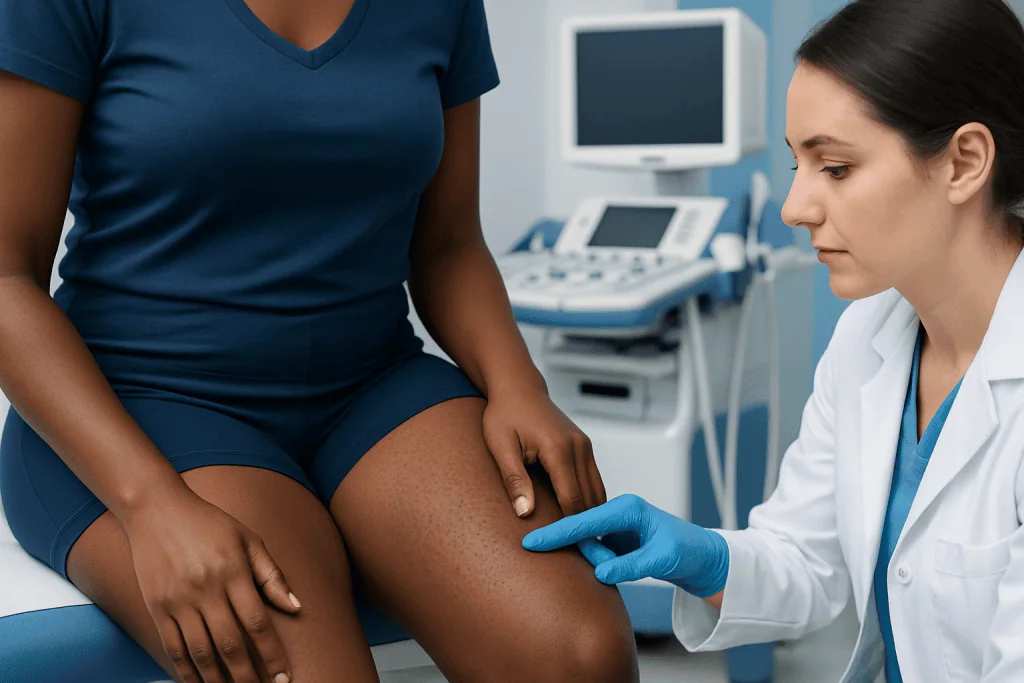
True blackheads are usually small, flat or slightly raised dark points. They are often not painful and may occur around follicles. In contrast, folliculitis causes inflamed follicles that may look like red, brown, or pus-filled bumps. After these bumps settle, they can leave darker marks that are more noticeable than the original inflammation.
Ingrown hairs can develop after shaving, waxing, or other hair-removal methods. A hair may curl back into the skin, causing a tender bump, itch, or visible trapped hair. Repeated ingrown hairs can create a pattern of dark spots and uneven texture on the upper inner thighs, groin crease, or bikini line.
Some people notice velvety, more diffuse darkening in skin folds rather than individual marks. This can occur from friction, but it may also be associated with acanthosis nigricans, a skin change sometimes linked with insulin resistance, certain medicines, hormonal conditions, or rarely other medical causes. A clinician can distinguish these patterns during an examination.
- More consistent with clogged follicles: tiny dark plugs, rough texture, little or no pain.
- More consistent with irritation or folliculitis: itching, tenderness, redness, pustules, or bumps after sweating or hair removal.
- More consistent with deeper inflammatory disease: recurring painful lumps, tunnels under the skin, drainage, or scarring.
Common Causes and Contributing Factors

Chafing is a major contributor. Skin-to-skin contact, exercise, prolonged walking, and tight garments can repeatedly irritate the inner thighs. Sweat and humidity may further soften the outer skin layer, making follicles more likely to become blocked. This does not indicate that a person is unclean; in fact, excessive washing or scrubbing can aggravate the problem.
Hair removal can also play a role. Shaving too closely, using a dull razor, shaving against hair growth, waxing, or applying irritating depilatory products may trigger ingrown hairs and follicle inflammation. Heavy occlusive lotions, fragranced products, or oils may worsen plugging for some people, particularly when used immediately before exercise or under tight clothing.
Body weight is not the sole cause of dark inner thighs, but increased skin friction can make chafing more likely. Diabetes or insulin resistance may be relevant when darkening is broad, velvety, and present in other folds such as the neck or underarms. Polycystic ovary syndrome can also be associated with insulin resistance and unwanted hair growth in some individuals.
Less commonly, recurrent boil-like lesions in the groin and inner thighs may represent hidradenitis suppurativa. This long-term inflammatory condition is not caused by poor hygiene and is not contagious. Early recognition matters because appropriate treatment can reduce symptoms and help limit scarring.
How a Clinician Identifies the Cause
A doctor or dermatologist will usually diagnose the cause by examining the skin and asking about symptoms, hair-removal practices, skin products, exercise, sweating, medical history, and whether similar changes occur elsewhere. They may ask whether lesions itch, hurt, drain, recur in the same sites, or leave scars. These details help separate acne-like follicular plugging from infection, eczema, contact irritation, or hidradenitis suppurativa.
Testing is not always necessary. If there are pustules, drainage, or frequent infections, a clinician may collect a sample to check for bacteria or yeast. If the skin appears velvety and dark in several body folds, blood tests may be considered to assess blood glucose or other metabolic factors, depending on the person’s health history and examination.
It is helpful to avoid self-diagnosis based on color alone. Skin inflammation can appear red, purple, gray, or deep brown depending on natural skin tone. Taking clear photographs when bumps are active and noting potential triggers can help make a medical appointment more productive.
Treatment Options: Treat the Bumps and Protect the Skin
Care is guided by the underlying cause. For mild blackheads or rough follicular plugging, clinicians may recommend a gentle cleanser and an over-the-counter product containing salicylic acid, which can help unclog pores. A topical retinoid may also be appropriate for some people, but it can cause dryness or irritation initially and should be selected carefully, especially during pregnancy or breastfeeding.
If folliculitis or ingrown hairs are contributing, treatment may include changes to hair removal, an antiseptic wash, or prescription topical medicines. Antibiotics are not routinely needed for every bump; they are reserved for situations in which a clinician suspects a bacterial infection or significant inflammation. Recurrent inflammatory nodules require a more individualized plan.
Dark marks improve best when the ongoing trigger is addressed. Dermatologists may suggest pigment-friendly options such as azelaic acid, certain retinoids, or other prescription treatments when appropriate. These products work gradually. Strong bleaching creams, unregulated skin-lightening products, and home chemical peels should be avoided because they can cause burns, thinning, or worsening discoloration.
For people with persistent or severe symptoms, dermatology care can clarify the diagnosis and discuss medical procedures when needed. Acibadem International’s multidisciplinary specialists and JCI-accredited hospitals diagnose and treat skin concerns for international patients, with care tailored to the individual clinical findings.
Prevention and Everyday Self-Care
Reducing friction and inflammation is often the most useful first step. Loose, breathable clothing can reduce heat and rubbing, while clean moisture-wicking fabrics may be helpful during exercise. Changing out of sweaty clothing soon after activity and gently patting the area dry can limit prolonged moisture without over-cleansing the skin.
Use a mild, fragrance-free cleanser and lukewarm water. Scrubs, loofahs, rough exfoliating gloves, and frequent picking can create tiny injuries that lead to more inflammation and darker marks. If a chemical exfoliant is used, start slowly, avoid applying it to broken or freshly shaved skin, and stop if there is burning, significant peeling, or worsening discomfort.
People who shave may reduce ingrown hairs by using a clean sharp razor, shaving after softening the hair with warm water, using a suitable shaving gel, and moving in the direction of hair growth. Avoid stretching the skin or repeatedly passing over the same area. Some people may prefer trimming rather than close shaving; longer-term hair-reduction options can be discussed with a qualified clinician.
Maintaining general skin health also matters. A simple non-comedogenic moisturizer can support the skin barrier, particularly after bathing. If darkening is accompanied by changes in weight, irregular periods, increased thirst, fatigue, or a family history of diabetes, discussing these concerns with a doctor is sensible.
When to Seek Medical Care
Medical care is recommended when bumps are painful, repeatedly return, become large, produce pus or blood, develop a bad odor, or leave scars. Prompt assessment is also appropriate for fever, rapidly spreading redness, marked swelling, or severe pain, as these symptoms may indicate an infection requiring treatment.
A clinician should evaluate darkened skin that appears suddenly, spreads quickly, becomes thick or velvety, or occurs alongside darkening of the neck or underarms. While such changes are often benign, an assessment can identify whether metabolic or hormonal factors may be contributing.
People should also arrange a review if several weeks of gentle skin care does not help, if the diagnosis is uncertain, or if the appearance is causing distress. A dermatologist can offer practical options while helping prevent unnecessary irritation from trial-and-error treatments.
Frequently asked questions
Are dark inner thighs with blackheads caused by poor hygiene?
No. They are commonly related to friction, sweat, blocked follicles, hair removal, and inflammation rather than poor hygiene. Washing aggressively can strip the skin barrier and may worsen irritation and dark marks.
Can blackheads occur on the inner thighs?
Yes. Open comedones can occur where follicles become blocked, including the upper inner thighs and groin-adjacent skin. However, ingrown hairs and folliculitis can closely resemble blackheads, so persistent bumps may need professional assessment.
How can dark marks on the inner thighs fade?
Dark marks often fade gradually after the source of rubbing, inflammation, or ingrown hairs is controlled. Gentle skin care, avoiding picking, and clinician-recommended topical treatments may help, but improvement commonly takes time.
Should blackheads or bumps on the inner thighs be squeezed?
It is best not to squeeze them. Squeezing can push inflammation deeper, introduce bacteria, and increase the likelihood of scarring or post-inflammatory hyperpigmentation. A clinician can safely advise on treatment if lesions are persistent.
Could dark inner thighs be a sign of diabetes?
Diffuse, velvety darkening in body folds can sometimes be associated with insulin resistance, which is linked with type 2 diabetes risk. It is not diagnostic by itself, but it is worth discussing with a doctor, especially if similar changes are present on the neck or underarms.
When might recurrent inner thigh bumps be hidradenitis suppurativa?
Hidradenitis suppurativa may cause recurring painful lumps, abscesses, drainage, tunnels beneath the skin, and scars in the groin, inner thighs, underarms, or buttocks. It is a medical inflammatory condition, not an infection caused by poor hygiene, and early medical care can help manage it.
References
- American Academy of Dermatology
- Mayo Clinic
- National Health Service
- Centers for Disease Control and Prevention
- DermNet New Zealand
This article is for general information only and is not a substitute for professional medical advice. Please consult a qualified doctor about your individual situation.
Hair transplant in Turkey — costs, graft counts & a free assessment
JCI-accredited · board-certified surgeons · reply within 24h
Add us as a Preferred Source to see more of our trusted health content across Google Search, AI Overviews and Discover.