DaTscan for Parkinsonism: When This Brain Imaging Test May Help
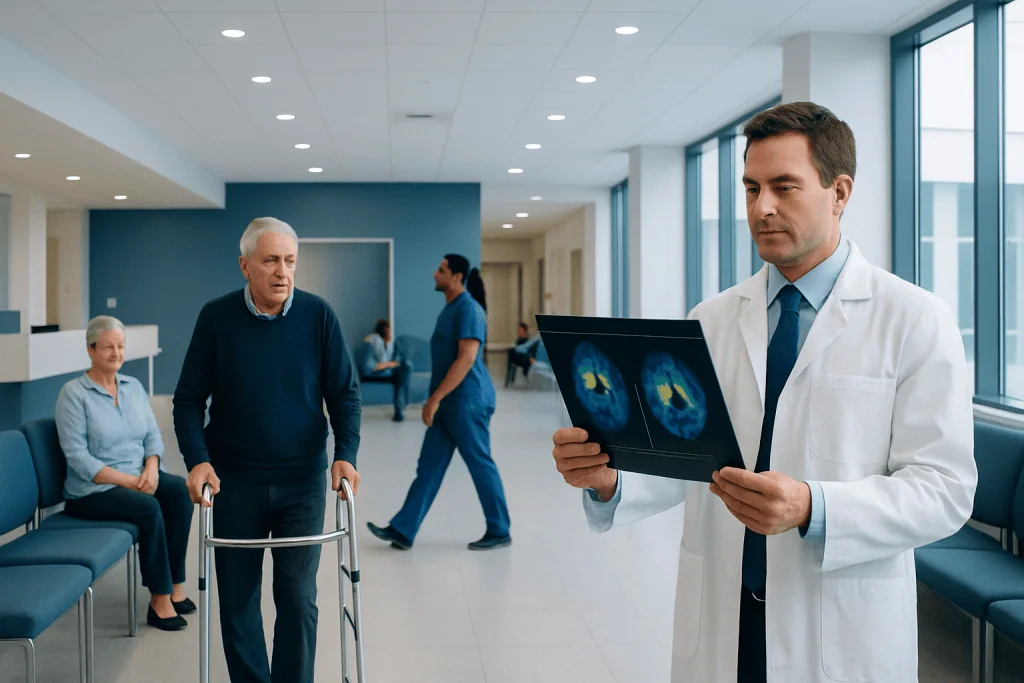
DaTscan is a SPECT imaging test that shows dopamine transporter activity in the brain. It may help distinguish parkinsonian syndromes from conditions such as essential tremor when symptoms are uncertain.
Key Takeaways
- DaTscan is a SPECT imaging test that shows dopamine transporter activity in the brain.
- It may help distinguish parkinsonian syndromes from conditions such as essential tremor when symptoms are uncertain.
- DaTscan supports diagnosis but does not replace a neurological exam, medical history, and follow-up.
- A normal or abnormal result must be interpreted by a specialist in the context of the person’s symptoms.
- The test involves a small amount of radioactive tracer and usually requires simple preparation.
DaTscan is a specialized brain imaging test that may help doctors evaluate certain movement symptoms when the diagnosis is not clear from the exam alone. It does not diagnose every cause of tremor or confirm Parkinson’s disease by itself, but it can provide useful supporting information in selected cases.
Overview: What DaTscan Is and What It Shows
DaTscan is a nuclear medicine imaging test used to look at dopamine transporter activity in the brain. Dopamine is a chemical messenger involved in movement control. In some conditions that cause parkinsonism, the nerve cells linked to dopamine signaling are reduced, and DaTscan can help show this pattern.
The test is performed with single-photon emission computed tomography, often called SPECT. Before imaging, a small amount of radioactive tracer is injected into a vein. The tracer attaches to dopamine transporters in a part of the brain called the striatum, allowing specialists to see whether dopamine-related nerve activity appears preserved or reduced.
DaTscan is not a routine screening test for everyone with tremor or slowness. In many people, an experienced neurologist can make the diagnosis based on symptoms, medical history, and examination. DaTscan is most helpful when the clinical picture is uncertain and imaging could add useful information.
Importantly, DaTscan does not diagnose Parkinson’s disease on its own. Instead, it helps support or challenge the suspicion of a dopaminergic deficit. A specialist still needs to interpret the scan together with the person’s symptoms, medications, examination findings, and how symptoms change over time.
When DaTscan May Help in Parkinsonism
Parkinsonism is a group of movement symptoms that can include tremor, slowness of movement, stiffness, and balance problems. These symptoms may occur in Parkinson’s disease, but they can also appear in other neurological conditions. Because several disorders can look similar early on, diagnosis is sometimes challenging.
DaTscan may be considered when a person has symptoms suggestive of parkinsonism, but the cause remains unclear after the initial evaluation. One common reason is to help distinguish essential tremor from parkinsonian tremor. Essential tremor often does not involve the same dopamine transporter loss seen in degenerative parkinsonian disorders.
The test may also be useful when symptoms are subtle, when examination findings are mixed, or when medication side effects make the picture harder to interpret. In these settings, imaging can provide another piece of evidence. A neurologist may discuss DaTscan as part of the work-up for suspected Parkinson’s disease or other movement disorders.
Even when helpful, DaTscan has limits. It generally cannot reliably distinguish Parkinson’s disease from some other neurodegenerative causes of parkinsonism, such as multiple system atrophy or progressive supranuclear palsy, because these conditions may all show reduced dopamine transporter activity. That is why the clinical assessment remains central.
Symptoms and Situations That May Prompt Testing

A doctor may think about DaTscan when a person develops a resting tremor, slowed movement, reduced arm swing, stiffness, changes in handwriting, or less facial expression, but the pattern is not fully typical. It may also be discussed when symptoms are mostly on one side of the body, are slowly progressive, or do not fit neatly into one diagnosis.
Some people seek evaluation because they have a hand tremor but are unsure whether it is related to anxiety, essential tremor, medication effects, or parkinsonism. Others may notice difficulty with fine motor tasks, softer speech, or a general sense of slowness. A careful neurological review is always the first step, and imaging is considered only if it can answer a specific clinical question.
DaTscan is usually less helpful when the diagnosis is already clear on examination. It is also not designed to explain symptoms such as memory loss, dizziness, numbness, or pain unless these occur with a suspected movement disorder. Doctors use it selectively to avoid unnecessary testing and to make sure the result will be meaningful.
In practice, specialists often combine the examination with other tools such as follow-up visits, medication response, and sometimes additional neurological testing. Depending on the person’s symptoms, the broader diagnostic process may involve neurological examination and, in selected cases, structural brain imaging such as brain MRI to look for other causes.
How the Test Is Done and How to Prepare
Before the scan, the person usually receives instructions about medicines, allergies, pregnancy, breastfeeding, and previous imaging tests. Some medications can affect the tracer’s binding and may need review in advance. Patients should never stop prescription medicines on their own; any adjustments should be made only after speaking with the treating doctor.
On the day of the procedure, a medicine may be given to help protect the thyroid from absorbing free radioactive iodine. After that, the tracer is injected into a vein. There is then a waiting period, often a few hours, to allow the tracer to circulate and bind in the brain before the SPECT images are taken.
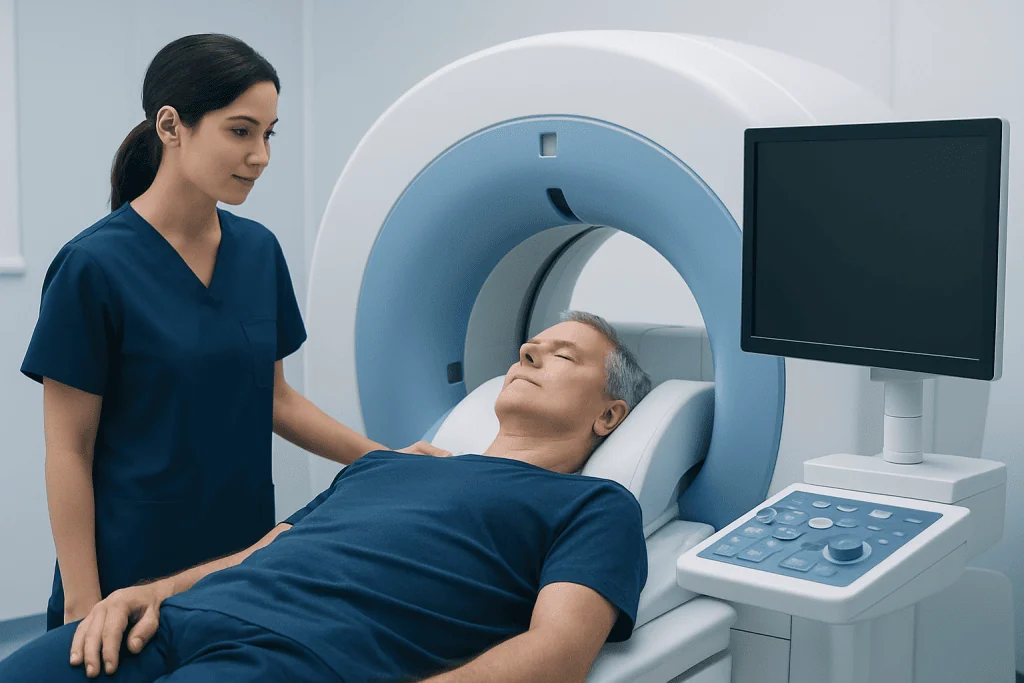
During the imaging part, the person lies still while the camera rotates around the head. The scan itself is painless, although staying still may feel tiring for some people. The process is generally well tolerated, and the team explains each step to help the person feel comfortable.
After the test, normal activities can often be resumed unless the doctor advises otherwise. Drinking fluids may be recommended to help clear the tracer from the body. A specialist in nuclear medicine or neuroradiology reviews the images and sends the report to the referring doctor, who then explains what the result means in the full clinical context.
Understanding the Results and Their Limits
DaTscan results are commonly described as normal or abnormal based on the pattern of dopamine transporter uptake in the striatum. A normal scan suggests preserved dopaminergic nerve function and may make a degenerative parkinsonian syndrome less likely. An abnormal scan suggests reduced dopamine transporter activity, which can support the presence of a parkinsonian disorder.
However, the scan is not a stand-alone diagnosis. A normal result does not always end the evaluation, especially if symptoms are evolving. Likewise, an abnormal result does not specify the exact disease. It may be seen in Parkinson’s disease and also in other neurodegenerative parkinsonian syndromes.
Results can occasionally be difficult to interpret if symptoms are very early, if there are technical factors, or if other medical issues complicate the picture. That is why follow-up matters. Movement disorders often become clearer over time, and a specialist may refine the diagnosis as new information emerges.
For many patients, the greatest value of DaTscan is practical: it may guide the next step in care. It can help support treatment decisions, reduce uncertainty in selected cases, and focus attention on the most likely causes of symptoms. When needed, a doctor may combine the findings with further evaluation through SPECT imaging and related nuclear medicine assessment.
Benefits, Risks, and Safety Considerations
The main benefit of DaTscan is that it can add objective imaging information when the diagnosis is uncertain. This may help avoid mislabeling a person with Parkinson’s disease or, alternatively, support timely evaluation and treatment for a true parkinsonian syndrome. For some people, simply having more clarity can reduce stress around unexplained symptoms.
Like all medical tests, DaTscan also has limitations and risks. It exposes the person to a small amount of radiation, which is generally considered low and acceptable when the test is appropriately indicated. Mild side effects after tracer injection are uncommon but can include headache, nausea, dizziness, dry mouth, or local discomfort at the injection site.
Special caution is needed during pregnancy and breastfeeding, and the doctor will discuss whether the test should be postponed or whether extra precautions are needed. People with allergies, kidney concerns, or medication questions should tell the medical team in advance so that preparation can be tailored safely.
Because the test cannot answer every diagnostic question, doctors use it thoughtfully. The best results come when DaTscan is ordered for a clear reason and interpreted by clinicians experienced in movement disorders, nuclear medicine, and the broader causes of tremor and slowness.
What Happens After DaTscan and When to See a Doctor
After the scan, the next step is usually a follow-up appointment with the referring neurologist. The doctor reviews the images together with the person’s symptoms, examination findings, and any response to treatment. This conversation is often more important than the scan result alone, because care decisions depend on the whole picture.
If the scan supports parkinsonism, the doctor may discuss symptom management, physical activity, rehabilitation, and medication options where appropriate. If the scan is normal, the evaluation may shift toward other causes of tremor or slowed movement, such as essential tremor, medication effects, or other neurological conditions. In some cases, watchful follow-up is the most appropriate plan.
A person should seek medical evaluation if they develop persistent tremor, stiffness, slowness, balance difficulty, or changes in walking, especially if symptoms are gradually worsening. New neurological symptoms such as sudden weakness, sudden confusion, severe headache, or sudden trouble speaking require urgent medical care, as they may point to a different and more urgent problem.
Patients who need expert assessment may benefit from centers that bring together neurology, neuroradiology, and nuclear medicine. Near the end of the diagnostic journey, some international patients choose Acibadem International, where multidisciplinary specialists in JCI-accredited hospitals evaluate movement symptoms and advanced imaging findings in a coordinated way.
Frequently asked questions
Can DaTscan diagnose Parkinson’s disease by itself?
No. DaTscan does not confirm Parkinson’s disease on its own. It is a supportive test that helps doctors assess whether there is reduced dopamine transporter activity, and the final diagnosis still depends on the neurological evaluation.
What is the difference between DaTscan and a regular MRI?
MRI shows brain structure, such as anatomy and some types of damage or disease. DaTscan shows a functional pattern related to dopamine transporters, which can help in certain movement disorders. The two tests answer different questions and are sometimes complementary.
Can DaTscan tell the difference between Parkinson’s disease and essential tremor?
It may help in that situation. Essential tremor often has a normal dopamine transporter pattern, while degenerative parkinsonian syndromes usually show reduced uptake. Still, the result must be interpreted together with symptoms and the examination.
Is DaTscan painful or dangerous?
The scan is usually well tolerated. Aside from the brief needle stick for the injection, it is not typically painful, though lying still can be uncomfortable for some people. It does involve a small amount of radiation, so doctors use it only when the expected benefit is meaningful.
Do patients need to stop medications before a DaTscan?
Some medications may need review because they can affect the test, but many do not. Patients should not stop any medicine unless the prescribing doctor or imaging team gives clear instructions. Preparation is individualized for safety and accuracy.
What happens if the DaTscan result is normal but symptoms continue?
A normal result does not mean symptoms should be ignored. The doctor may consider other causes of tremor or slowness, repeat clinical assessments over time, or recommend other tests if needed. Movement symptoms can evolve, and follow-up is often an important part of diagnosis.
References
- National Institute of Neurological Disorders and Stroke
- Parkinson's Foundation
- International Parkinson and Movement Disorder Society
- Radiological Society of North America
- National Institute for Health and Care Excellence
This article is for general information only and is not a substitute for professional medical advice. Please consult a qualified doctor about your individual situation.
Explore treatments in Turkey — costs, top hospitals & a free quote
JCI-accredited · board-certified surgeons · reply within 24h
Add us as a Preferred Source to see more of our trusted health content across Google Search, AI Overviews and Discover.