

Deadlift Muscles Worked: What Patients Need to Know
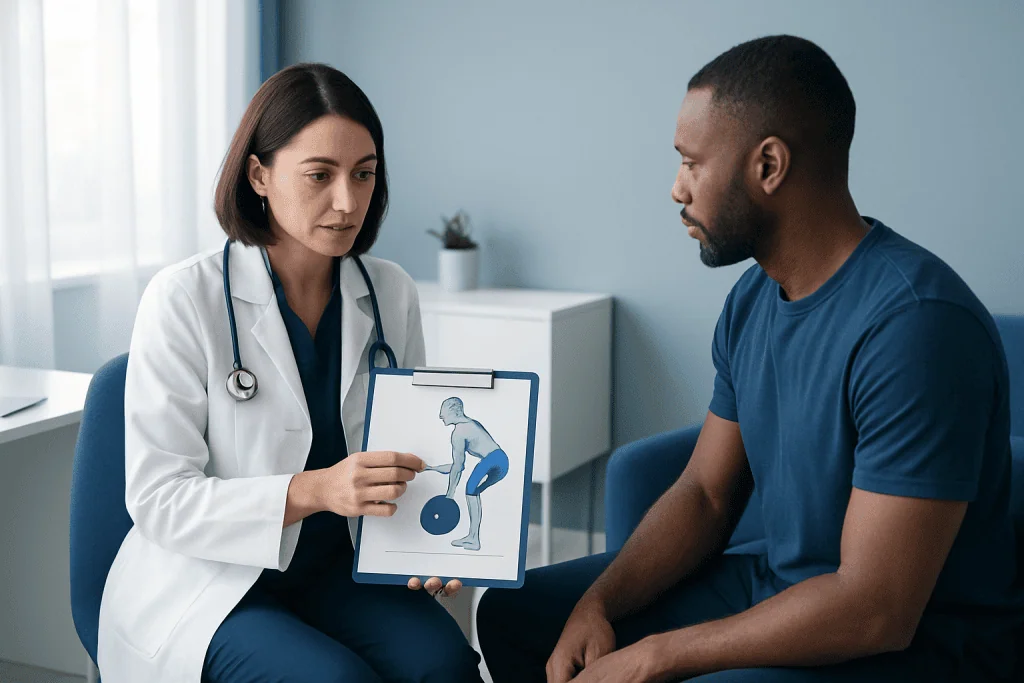
The deadlift mainly trains the posterior chain: glutes, hamstrings, and back muscles. Core, forearm, shoulder, and hip muscles work hard to stabilize the body during the lift.
Key Takeaways
- The deadlift mainly trains the posterior chain: glutes, hamstrings, and back muscles.
- Core, forearm, shoulder, and hip muscles work hard to stabilize the body during the lift.
- Good form, gradual progression, and appropriate load are more important than lifting heavy quickly.
- Pain during or after deadlifting is not normal and may need medical assessment if it persists or is severe.
- People with prior spine, hip, or knee problems should consider individualized guidance before starting.
Deadlift muscles worked most strongly include the glutes, hamstrings, spinal erectors, core, and upper back, while the forearms, hips, and shoulders help stabilize the lift. For many adults, this movement can support strength and daily function when it is learned progressively and performed with sound technique.
Overview: Which muscles does a deadlift work?
The main answer to deadlift muscles worked is this: a deadlift primarily uses the glutes, hamstrings, and lower back muscles to extend the hips and straighten the body, while the core and upper back help keep the spine stable. The forearms and hands also work continuously to maintain grip, and the quadriceps help start the movement from the floor.
Although many people think of the deadlift as only a back exercise, it is more accurately a full-body strength movement with a strong emphasis on the posterior chain. The posterior chain includes the muscles along the back of the body, especially the hips and legs, which are important for standing up, climbing stairs, lifting objects, and maintaining posture.
For patients and general readers, the most helpful way to understand the deadlift is to think of it as a coordinated pattern rather than a single-muscle exercise. Several muscles contract together to move the weight while protecting the joints. This is one reason it is widely used in strength training and rehabilitation settings under proper supervision.
Primary and supporting muscles involved
The strongest contributors in a conventional deadlift are the gluteus maximus, hamstrings, and spinal erectors. The glutes drive hip extension at the top of the lift, the hamstrings assist with hip movement and control, and the spinal erectors help the trunk stay upright. These muscles do not work in isolation; they coordinate throughout the lift from floor to standing.
The core muscles also play a major role. This includes the deep abdominal muscles, obliques, and other trunk stabilizers. Their job is not mainly to bend the body, but to resist unwanted motion and help maintain a neutral, braced torso while force is transferred from the legs and hips to the bar.
The upper back and shoulders are heavily involved as stabilizers. The latissimus dorsi, trapezius, rhomboids, and rear shoulder muscles help keep the weight close to the body and support shoulder position. At the same time, the forearms and grip muscles work continuously, especially during heavier lifts or higher repetitions.
- Primary movers: glutes, hamstrings, spinal erectors
- Important assistants: quadriceps, adductors, latissimus dorsi
- Key stabilizers: abdominals, obliques, trapezius, rhomboids, forearms
How the movement changes muscle emphasis
Not every deadlift variation stresses the body in the same way. A conventional deadlift usually places substantial demand on the hips, hamstrings, glutes, and back. A sumo deadlift, with a wider stance, may shift more work toward the hips, inner thighs, and quadriceps while sometimes allowing a more upright trunk position.
A Romanian deadlift often emphasizes the hamstrings and glutes because the movement starts from standing and focuses on the hip hinge rather than pulling from the floor. In contrast, trap-bar deadlifts may distribute force somewhat differently and can feel more comfortable for some people because the load is positioned closer to the body’s center.
Body proportions also matter. People with longer femurs, limited ankle mobility, reduced hip mobility, or prior injuries may naturally use different mechanics. This does not always mean something is wrong, but it can affect which muscles feel most challenged. If someone consistently feels strain in one area instead of balanced muscular effort, an assessment of technique, mobility, or underlying joint problems may help.
Benefits for strength, posture, and daily function
When performed safely, deadlifts can strengthen muscles that support everyday activities such as bending, picking up groceries, lifting children, standing from a low seat, and carrying household items. Because the exercise trains coordinated hip and trunk extension, it can improve the body’s ability to generate force efficiently during practical tasks.
Deadlifts may also contribute to better postural control by strengthening the back, hips, and trunk muscles that help maintain upright alignment. This does not mean they automatically “fix” posture, but they can support overall musculoskeletal conditioning when combined with appropriate mobility and movement habits.
For some people, deadlifting is part of a broader plan that includes physical therapy and rehabilitation after injury or deconditioning. In others, it may be introduced gradually alongside programs for flexibility, balance, and core stability. The best exercise plan depends on the individual, especially if there is a history of lumbar disc herniation or ongoing joint symptoms.
Common mistakes, discomfort, and injury risks
The deadlift is not inherently dangerous, but poor technique, excessive load, fatigue, or moving too quickly can increase strain on muscles and joints. Common issues include rounding the lower back under load, letting the weight drift too far from the body, jerking the bar off the floor, or trying to lift more than current strength and control allow.
It is common to feel muscle effort in the hips, hamstrings, buttocks, upper back, and trunk. However, sharp pain, radiating pain into the leg, numbness, significant joint pain, or pain that worsens with each session should not be ignored. These symptoms can reflect a strain, overuse problem, or another musculoskeletal condition rather than normal post-exercise soreness.
Some people may already have conditions that deserve added caution, such as scoliosis, osteoporosis, prior surgery, or chronic low back pain. In those cases, exercise selection and form may need to be individualized. Patients with persistent symptoms may benefit from evaluation by specialists in orthopedics and traumatology or supervised rehabilitation before continuing heavy lifting.
How to approach deadlifts more safely
Safer deadlifting begins with learning the hip hinge pattern before adding substantial weight. This means practicing how to bend at the hips while keeping the torso braced and the weight close to the body. Many people benefit from starting with a dowel, kettlebell, or light bar and receiving feedback from a qualified trainer, physiotherapist, or physician-guided exercise team.
Warm-up matters as well. A short preparation period may include light aerobic activity, hip mobility work, and gradual practice sets. Progression should be slow enough to allow the muscles, tendons, and joints to adapt. Rest, sleep, and recovery are also part of injury prevention, especially in adults returning to exercise after a break.
General safety points include:
- Use a load that allows controlled movement and steady breathing.
- Keep the weight close to the legs and avoid sudden jerking.
- Stop if there is sharp pain, dizziness, or loss of control.
- Do not train through persistent back, hip, or knee pain without medical advice.
- Consider an individualized plan if pregnant, older, or managing a chronic condition.
When to seek medical care
Medical care is appropriate if pain starts suddenly during a deadlift and is severe, if there is swelling or inability to bear weight, or if symptoms do not improve with rest and activity modification. Evaluation is also important when pain travels down the leg, causes numbness or weakness, or is associated with bowel or bladder changes, which may require urgent attention.
People with repeated strains, ongoing low back pain, or uncertainty about whether they should continue lifting may benefit from a clinical assessment. A doctor may review movement patterns, prior injuries, flexibility, and strength imbalances, and may recommend imaging only when it is clinically appropriate. In some cases, structured sports medicine care can help patients return to exercise more safely.
Near the end of a care pathway, some patients also need guidance on exercise selection after diagnosis of a spine, hip, or knee condition. Acibadem International’s multidisciplinary specialists in JCI-accredited hospitals evaluate and treat musculoskeletal concerns for international patients, with care plans that may include rehabilitation, orthopedic assessment, and supervised return to activity.
Frequently asked questions
Is the deadlift mainly a leg exercise or a back exercise?
It is both, but it is best understood as a full-body pulling movement with strong emphasis on the hips and posterior chain. The glutes, hamstrings, and spinal erectors do much of the work, while the core and upper back stabilize the body.
Do deadlifts work the abs?
Yes. The abdominal muscles and deeper core stabilizers work hard during a deadlift to keep the torso braced and resist unwanted movement. They act more as stabilizers than as the main moving muscles.
Should a person feel deadlifts in the lower back?
Some muscular effort in the lower back can be normal because the spinal erectors help maintain posture during the lift. Sharp pain, pinching, radiating symptoms, or discomfort that persists after training should be assessed rather than treated as normal soreness.
Are deadlifts safe for people with back pain?
That depends on the cause of the back pain, the lifting technique, and the individual's condition. Some people can use modified lifting patterns in rehabilitation, while others need medical evaluation first, especially if they have nerve symptoms, recent injury, or ongoing severe pain.
Which deadlift variation emphasizes the hamstrings the most?
Romanian deadlifts often place strong emphasis on the hamstrings and glutes because they focus on controlled hip hinging. However, the best variation depends on flexibility, current symptoms, training goals, and overall technique.
Can deadlifts help with everyday function?
Yes, they can support movements used in daily life, such as lifting objects from the floor, standing upright, and carrying loads. Their practical value comes from training several muscle groups to work together in a coordinated way.
References
- American Academy of Orthopaedic Surgeons
- American College of Sports Medicine
- National Institute of Arthritis and Musculoskeletal and Skin Diseases
- National Strength and Conditioning Association
- World Health Organization
This article is for general information only and is not a substitute for professional medical advice. Please consult a qualified doctor about your individual situation.
Joint and spine care in Turkey — expert assessment & treatment
JCI-accredited · board-certified surgeons · reply within 24h
Add us as a Preferred Source to see more of our trusted health content across Google Search, AI Overviews and Discover.

More from the Health Library

Liquid Adderall: What Patients Need to Know

Allosexual — Explained by Medical Evidence, Not Myths

Sunflower Seeds: An Evidence-Based Guide for Patients

Best Time to Take Fish Oil: An Evidence-Based Guide for Patients

Rabeprazole Sodium: An Evidence-Based Guide for Patients

Esophageal Perforation: An Evidence-Based Guide for Patients
Orthopedic Surgery & Traumatology Specialists at Acibadem

Prof. Dr. Barış Kocaoğlu
Orthopedic Surgery & Traumatology
Dr. Bengü Kasım
Physical Medicine & Rehabilitation
Dr. Berhan Bayram
Orthopedic Surgery & Traumatology
Assoc. Prof. Dr. Berkin Toker
Orthopedic Surgery & Traumatology