Degenerative Disease Definition: What Doctors Mean by Progressive Nerve Damage

A degenerative disease is a condition that slowly causes loss of normal tissue or nerve function. When doctors mention progressive nerve damage, they are often referring to neurodegenerative disorders or chronic nerve injury.
Key Takeaways
- A degenerative disease is a condition that slowly causes loss of normal tissue or nerve function.
- When doctors mention progressive nerve damage, they are often referring to neurodegenerative disorders or chronic nerve injury.
- Symptoms depend on the part of the nervous system involved and may affect movement, memory, speech, balance, or sensation.
- Diagnosis usually combines a neurological exam with imaging, blood tests, and sometimes specialized nerve or genetic testing.
- Treatment often focuses on symptom control, rehabilitation, safety, and addressing any treatable causes of nerve damage.
- Early medical evaluation can help clarify the cause and support better long-term planning and care.
The term degenerative disease usually refers to a condition that gradually worsens because cells or tissues lose structure and function over time. In neurology, doctors often use it to describe progressive nerve damage affecting the brain, spinal cord, or peripheral nerves.
Overview: what degenerative disease means
The phrase degenerative disease definition describes a broad group of conditions in which cells, tissues, or organs gradually lose their normal structure and function. In everyday medical use, the word “degenerative” means that the problem tends to progress over time rather than appearing suddenly. This does not describe a single disease. Instead, it is a general term that doctors use for many different disorders.
When the nervous system is involved, degenerative disease often refers to progressive nerve damage. This can affect nerve cells in the brain, spinal cord, or peripheral nerves. Depending on which area is affected, a person may develop changes in movement, memory, speech, balance, coordination, sensation, or muscle strength.
Examples of neurological degenerative conditions include Alzheimer’s disease, Parkinson’s disease, amyotrophic lateral sclerosis, Huntington’s disease, and some forms of peripheral neuropathy. Some of these primarily affect thinking and memory, while others mainly affect movement or muscle control. Doctors may also evaluate symptoms alongside related conditions such as Parkinson’s disease or Alzheimer’s disease when considering the cause of progressive neurological changes.
Although many degenerative disorders are chronic, the pace and pattern can vary widely. Some progress slowly over many years, while others move faster. A careful diagnosis is important because not all nerve damage is degenerative, and some causes are treatable or partly reversible.
How progressive nerve damage affects the body
Nerve cells carry signals that allow the body to think, move, feel, remember, speak, and control automatic functions such as swallowing or bladder activity. When these cells are injured or slowly lost, communication within the nervous system becomes less efficient. This is why degenerative neurological conditions can cause a wide range of symptoms rather than one single complaint.
If damage affects the brain, symptoms may include memory loss, confusion, mood changes, tremor, slowness of movement, or problems with planning and language. If the spinal cord or motor nerves are involved, weakness, stiffness, muscle wasting, or difficulty walking may appear. If sensory nerves are damaged, a person may notice numbness, burning, tingling, or reduced balance.
Not every person experiences the same pattern. Even within one diagnosis, symptoms can differ in severity and timing. Doctors therefore focus on the person’s overall symptom pattern, neurological examination, and functional changes in daily life rather than relying on one sign alone.
Progressive nerve damage can also affect independence over time. Tasks such as dressing, handwriting, driving, swallowing, or working may become harder. Recognizing early changes can help patients and families seek support, begin treatment, and plan practical adjustments before complications develop.
Symptoms doctors look for

The symptoms of a degenerative neurological condition depend on which nerves or brain regions are affected. In some people, the first changes are subtle, such as mild forgetfulness, slower walking, reduced facial expression, or occasional imbalance. In others, symptoms begin with numbness, weakness, hand clumsiness, or speech changes.
Common symptoms may include:
- Memory or concentration problems
- Tremor, stiffness, or slowed movement
- Weakness or muscle wasting
- Balance problems or falls
- Numbness, tingling, or burning pain
- Speech or swallowing difficulties
- Vision or coordination changes
- Mood, behavior, or sleep changes
Doctors also pay attention to symptoms that suggest the problem may not be purely degenerative. These include sudden onset, fever, severe headache, rapid confusion, or symptoms linked to infection, stroke, vitamin deficiency, autoimmune disease, or toxin exposure. Distinguishing these possibilities is important because management may be very different.
Families often notice changes before the person does, especially when symptoms involve memory, judgment, or behavior. Keeping a written record of when symptoms started and how they have changed can be very helpful during a medical appointment.
Causes and risk factors
Degenerative nerve disorders can develop for several reasons. In some conditions, abnormal proteins build up in or around nerve cells and interfere with their function. In others, inherited gene changes increase the chance of gradual nerve cell loss. Age is a major risk factor for several neurodegenerative disorders, but these diseases are not considered a normal part of aging.
Family history may matter, especially in conditions with known genetic forms. Environmental exposures, repeated head injury, vascular disease, diabetes, alcohol misuse, nutritional deficiencies, and chronic inflammation can also contribute to nerve damage in some situations. However, many people with degenerative disease have no clear single cause identified.
Doctors also consider whether symptoms may be related to other conditions that can mimic degeneration. These can include thyroid disorders, vitamin B12 deficiency, infections, medication side effects, structural spine disease, or multiple sclerosis. Careful assessment helps avoid overlooking potentially treatable explanations.
Because “degenerative” describes a process rather than a precise diagnosis, risk factors vary from one condition to another. This is why a specialist may ask detailed questions about work exposures, family history, past medical problems, medication use, sleep, mood, and daily function.
How diagnosis is made
Diagnosis begins with a detailed medical history and neurological examination. The doctor will ask when symptoms started, whether they are getting worse, and which body functions are affected. The examination may assess strength, reflexes, sensation, coordination, walking, memory, speech, and eye movements.
Additional testing depends on the suspected cause. Brain or spinal imaging, especially MRI, may help identify patterns of atrophy, inflammation, stroke, tumors, or structural compression. Blood tests can look for vitamin deficiencies, thyroid problems, infection, autoimmune disease, metabolic causes, or other conditions that can resemble nerve degeneration.
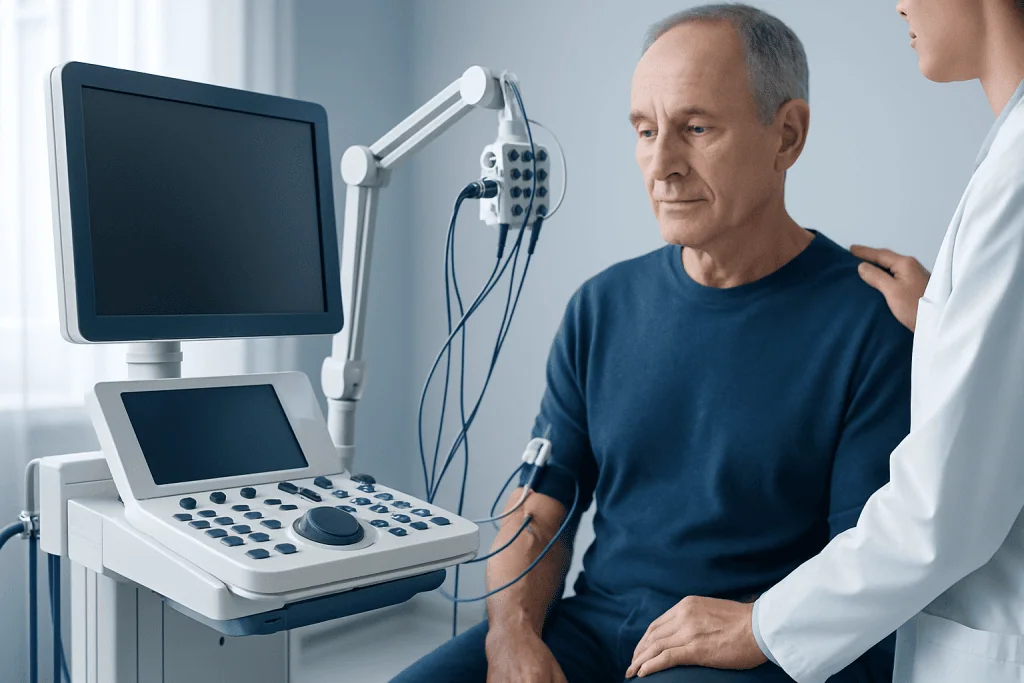
Some patients need more specialized evaluation, such as nerve conduction studies, electromyography, neuropsychological testing, lumbar puncture, or genetic counseling and testing. Imaging may be part of an MRI scan or other diagnostic workup, while electrical testing can help clarify whether symptoms reflect peripheral nerve or muscle involvement.
Diagnosis is sometimes straightforward, but in early stages it may take time and follow-up visits to see how symptoms evolve. This can feel frustrating, yet careful observation is often necessary to reach the most accurate conclusion and choose the most appropriate treatment plan.
Treatment options and long-term care
Treatment depends on the exact diagnosis. For some neurodegenerative diseases, medication can help control symptoms such as tremor, muscle stiffness, pain, mood symptoms, or memory-related difficulties. For other causes of nerve damage, treatment may focus on correcting an underlying problem, such as improving blood sugar control, replacing vitamin deficiencies, or stopping a harmful medication or toxin exposure.
Rehabilitation is often a major part of care. Physical therapy can support balance, mobility, flexibility, and fall prevention. Occupational therapy may help with hand function, home safety, and daily activities. Speech and language therapy can assist with communication and swallowing when these become affected. In selected situations, supportive procedures or targeted therapies may be considered alongside physical therapy and rehabilitation.
Some patients benefit from multidisciplinary care involving neurologists, physiatrists, therapists, dietitians, psychologists, and social workers. This approach can improve comfort, function, and quality of life even when a cure is not available. Symptom tracking, medication review, sleep management, and caregiver support are also important parts of long-term treatment.
Near the later stages of some conditions, assistive devices or more advanced supportive treatments may be helpful. Depending on the diagnosis, evaluation by specialists in neurology can help guide medical therapy, monitoring, and future planning. Acibadem International’s multidisciplinary specialists and JCI-accredited hospitals diagnose and treat neurological conditions for international patients.
Prevention and self-care
Not all degenerative diseases can be prevented, especially those strongly linked to age or genetics. Still, healthy lifestyle measures may support brain and nerve health and reduce the risk of conditions that worsen nerve damage. Doctors usually recommend regular physical activity, good sleep, blood pressure control, diabetes management, a balanced diet, smoking avoidance, and limiting alcohol.
Protecting the brain and nervous system also matters. Using seat belts, preventing falls, wearing appropriate protective equipment during sports or work, and treating hearing or vision problems can all support long-term safety and function. Social activity, mental stimulation, and management of depression or anxiety may also help overall well-being.
For people already living with progressive nerve damage, self-care focuses on preserving function and independence. Helpful strategies may include medication routines, home adaptations, mobility aids, swallowing precautions, and regular follow-up with the care team. Families and caregivers often play an important role in noticing changes and helping with practical support.
Patients should be cautious about supplements, restrictive diets, or unproven “nerve repair” claims found online. It is safest to discuss any new therapy with a qualified doctor, because some products may interact with medications or delay proper treatment.
When to see a doctor
A person should arrange a medical evaluation if they notice ongoing or worsening symptoms such as tremor, memory changes, weakness, numbness, walking difficulty, repeated falls, or changes in speech and swallowing. Early assessment can help identify the cause, rule out reversible problems, and begin supportive treatment sooner.
Urgent medical care is needed if neurological symptoms start suddenly or are accompanied by facial drooping, severe headache, chest pain, fainting, seizures, sudden confusion, or loss of consciousness. These features may suggest a stroke or another emergency rather than a slowly progressive degenerative condition.
It is also important to seek help if symptoms begin to interfere with driving, work, finances, medication use, or personal safety at home. These functional changes can be early signs that more support is needed, even when symptoms seem mild.
Doctors generally encourage patients not to assume that all nerve symptoms are part of aging. A professional evaluation provides the best chance of understanding what is happening and building a safe, realistic plan for treatment and follow-up.
Frequently asked questions
What is the medical meaning of degenerative disease?
In medicine, degenerative disease means a condition in which cells or tissues gradually lose normal structure and function over time. It is a broad descriptive term, not a single diagnosis, and it can apply to different parts of the body including the nervous system.
Does degenerative disease always mean nerve damage?
No. Degenerative disease can affect joints, the spine, the eyes, or other tissues as well as nerves. However, in neurology, the phrase often refers to progressive damage involving the brain, spinal cord, or peripheral nerves.
Is progressive nerve damage always permanent?
Not always. Some causes of nerve dysfunction, such as vitamin deficiency, medication effects, or metabolic problems, may improve when treated early. Others are long-term and progressive, so the goal becomes slowing impact, managing symptoms, and maintaining function.
Are degenerative neurological diseases curable?
Some neurodegenerative diseases do not currently have a cure, but many have treatments that can relieve symptoms and support quality of life. Accurate diagnosis matters because some conditions that look degenerative may be treatable or partly reversible.
How do doctors test for degenerative nerve conditions?
Doctors usually start with a medical history and neurological examination. Depending on the symptoms, they may also order MRI scans, blood tests, nerve conduction studies, cognitive testing, or genetic testing to better understand the cause.
Can lifestyle changes help with degenerative disease?
Lifestyle changes cannot cure most degenerative neurological disorders, but they can still be very helpful. Exercise, sleep, good nutrition, blood pressure and diabetes control, and fall prevention may support overall brain and nerve health and improve daily function.
References
- World Health Organization
- National Institute of Neurological Disorders and Stroke
- National Institute on Aging
- Mayo Clinic
- MedlinePlus
This article is for general information only and is not a substitute for professional medical advice. Please consult a qualified doctor about your individual situation.
Joint and spine care in Turkey — expert assessment & treatment
JCI-accredited · board-certified surgeons · reply within 24h
Add us as a Preferred Source to see more of our trusted health content across Google Search, AI Overviews and Discover.