Dental Bridges: A Complete Medical Overview
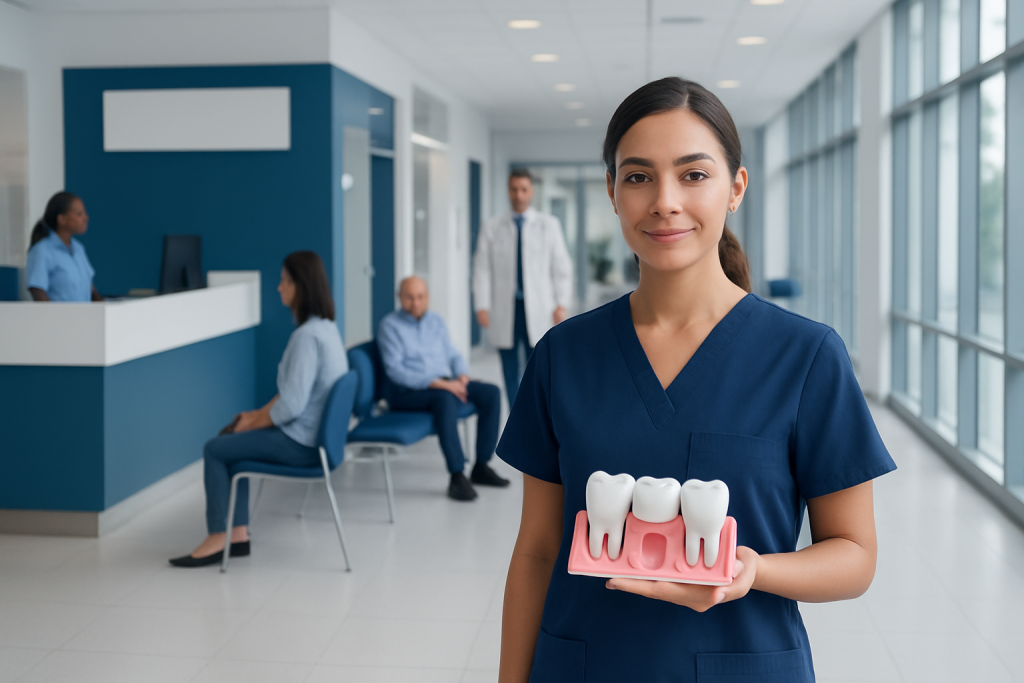
Dental bridges are a common fixed option for replacing missing teeth. Different bridge designs are used depending on the location of the gap and the health of surrounding teeth and gums.
Key Takeaways
- Dental bridges are a common fixed option for replacing missing teeth.
- Different bridge designs are used depending on the location of the gap and the health of surrounding teeth and gums.
- A dentist evaluates the bite, bone support, gum health, and adjacent teeth before recommending a bridge.
- Good oral hygiene and regular dental follow-up are important for bridge longevity.
- Not every patient is best served by a bridge; implants, removable partial dentures, or other treatments may be more suitable in some cases.
Dental bridges are fixed restorations used to replace one or more missing teeth by supporting an artificial tooth with neighboring teeth or dental implants. They can improve chewing, speech, bite balance, and appearance when carefully planned and maintained.
Overview: what dental bridges are and what they do
Dental bridges are fixed dental restorations that replace one or more missing teeth. They work by filling the gap with an artificial tooth, called a pontic, that is supported by nearby natural teeth or by implants. For many people, a bridge restores function and appearance without being removed for daily wear.
Missing teeth can affect more than a smile. They may change the way a person chews, speaks, or bites down, and over time the surrounding teeth can drift into the empty space. By re-establishing contact between teeth, a bridge can help support a more even bite and make everyday eating and speaking feel more comfortable.
Dental bridges are not a single device but a group of treatment designs. The best option depends on where the tooth is missing, the condition of nearby teeth, the health of the gums, and the person’s long-term oral care habits. A dentist may also discuss alternatives such as dental implants or other restorations if they are more suitable for the person’s needs.
How dental bridges are designed and the main types
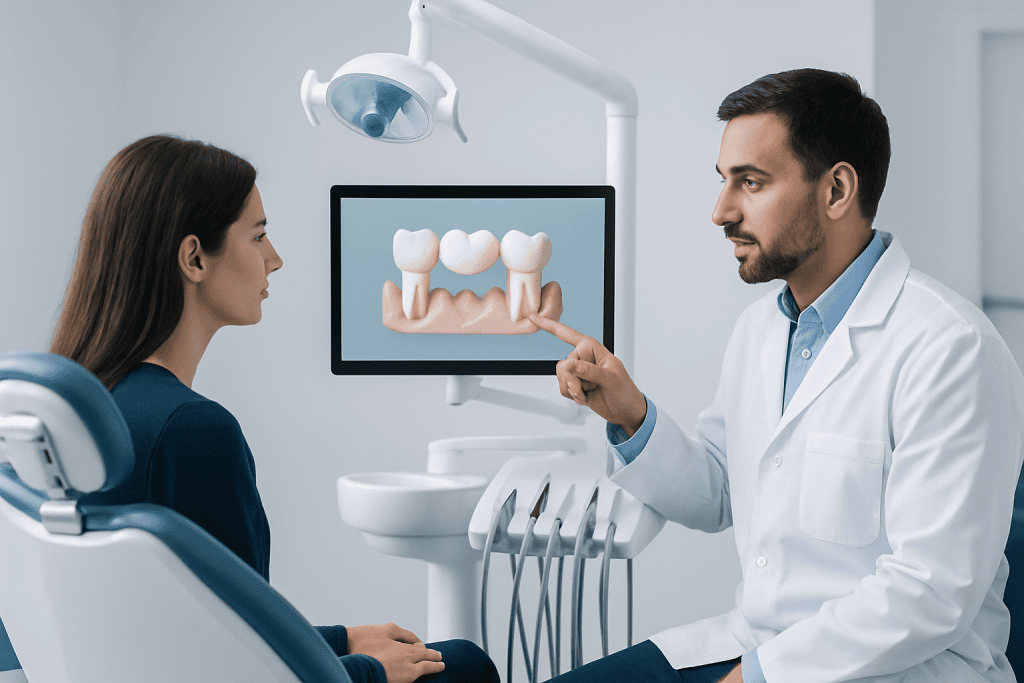
Several bridge designs are used in modern dentistry. A traditional bridge is supported by crowns placed on the teeth next to the gap. This is one of the most common designs, especially when the neighboring teeth already need large restorations or have enough strength to support the bridge.
A cantilever bridge is attached on only one side of the gap. It is used more selectively because it can place extra force on the supporting tooth. A Maryland bridge uses metal or ceramic wings bonded to the back of nearby teeth, often for front teeth where chewing forces are lower and a more conservative approach may be possible.
Another option is an implant-supported bridge. Instead of relying on natural teeth, the bridge is attached to implants placed in the jaw. This may be useful when several teeth are missing or when preserving adjacent healthy teeth is a priority. In treatment planning, the dentist considers whether fixed replacement with a bridge or dental crowns on support teeth is the most appropriate route for stable, long-term function.
- Traditional bridge: supported by crowns on both sides
- Cantilever bridge: supported on one side only
- Maryland bridge: bonded to nearby teeth, often in the front
- Implant-supported bridge: attached to dental implants instead of natural teeth
Who may need a dental bridge

A bridge may be considered when one or more teeth are missing and the gap is affecting chewing, appearance, pronunciation, or bite alignment. Some people seek treatment soon after a tooth is lost, while others come later after noticing shifting teeth, food trapping, or uneven pressure when they chew.
Bridges can be appropriate for adults with healthy gums and enough support from surrounding teeth or implants. The nearby teeth should be strong enough to handle added biting forces if they are going to support the bridge. The gums and jawbone also need evaluation, because untreated gum disease or unstable bone support can shorten the life of a restoration.
A dental bridge may be less suitable if a person has active gum disease, significant tooth decay, uncontrolled teeth grinding, or poor oral hygiene that makes plaque difficult to control around the margins. In those cases, the dentist usually recommends first treating the underlying problem and then reassessing replacement options.
How dentists assess candidates and make the diagnosis
Planning for a bridge begins with a full dental examination rather than just looking at the missing tooth. The dentist assesses the gums, supporting bone, alignment of the bite, condition of the neighboring teeth, and the amount of space available for a restoration. Medical history also matters, especially if healing, dry mouth, or bruxism could affect the result.
Dental X-rays are commonly used to examine roots, bone levels, hidden decay, and previous dental work. In some cases, digital scans, photographs, or impressions are taken to study the bite more precisely and to help the dental laboratory create a restoration that fits well. If implants are being considered, more detailed imaging may be needed.
Diagnosis may also include evaluating why the tooth was lost in the first place. If the gap developed because of trauma, severe tooth decay, or chronic gum disease, these issues need attention so the replacement is not placed into an unhealthy environment. The aim is to select a bridge design that fits the mouth biologically and mechanically, not just cosmetically.
The dental bridge procedure and what to expect
The procedure depends on the type of bridge chosen. For a traditional bridge, the supporting teeth are usually prepared so crowns can fit over them. Impressions or digital scans are then taken and sent to a laboratory where the bridge is custom-made. A temporary bridge may be placed in the meantime to protect the prepared teeth and maintain appearance.
At a later visit, the final bridge is checked for fit, contact points, bite balance, and color before being cemented or bonded in place. Small adjustments are common to improve comfort and function. People often need a short period to adapt to the feel of chewing and speaking with the new restoration.
If an implant-supported bridge is planned, treatment usually takes longer because implants need time to heal and integrate with the jawbone before the final bridge is attached. In some cases, patients also need preliminary care such as fillings, gum treatment, or root canal treatment on support teeth before a fixed bridge can be safely placed.
Benefits, limitations, and possible complications
A well-made dental bridge can restore chewing efficiency, improve speech clarity, and help maintain facial and bite support after tooth loss. Many patients appreciate that bridges are fixed in the mouth and do not need to be removed each day. They can also blend naturally with surrounding teeth when color and shape are carefully matched.
At the same time, bridges have limitations. Traditional bridges usually require reshaping neighboring teeth, even if those teeth are otherwise healthy. Bridges also do not stop bone changes beneath the missing tooth in the same way an implant may. Their success depends heavily on the long-term health of the supporting teeth and gums.
Possible complications include decay at the edges of crowns, loosening of the cement, fracture of porcelain or framework material, gum irritation, food trapping, or bite discomfort. People who clench or grind their teeth may place extra stress on the restoration. Regular dental review helps identify small issues early before they become larger problems.
Care, maintenance, and prevention of future problems
Good daily care is essential for keeping a bridge and its supporting teeth healthy. A person should brush carefully along the gumline and around the margins of the bridge, and clean underneath the pontic using tools recommended by a dentist, such as floss threaders, interdental brushes, or water-flossing devices. The goal is to reduce plaque accumulation in areas that are harder to reach.
Routine dental visits are important because bridges can look fine from the outside even when hidden decay or gum inflammation is developing around the support teeth. Professional cleaning and examination help detect early problems, adjust the bite if needed, and assess whether the bridge is still fitting properly.
Preventive habits also matter. Limiting frequent sugary snacks and drinks, managing dry mouth, wearing a night guard if teeth grinding is present, and treating cavities or gum disease promptly all support bridge longevity. If a bridge becomes rough, loose, or difficult to clean, it should be reviewed rather than ignored.
When to seek medical care
A dentist should evaluate a missing tooth even if the area is not painful. Early assessment can help prevent movement of nearby teeth and can make treatment planning simpler. It is also sensible to seek care if chewing has become uncomfortable, food repeatedly gets trapped, or speech has changed after tooth loss.
Prompt dental attention is important if there is gum swelling, bleeding, bad taste, increasing sensitivity, a cracked support tooth, or a bridge that feels loose or changes the bite. These symptoms do not always mean a serious problem, but they do suggest that the restoration or the surrounding tissues should be examined.
People with complex oral health needs may benefit from multidisciplinary care. Acibadem International’s dental specialists and JCI-accredited hospitals diagnose and treat tooth loss and restorative needs for international patients, including planning for bridges, implant-supported full-arch options when appropriate, and related oral rehabilitation.
Frequently asked questions
How long do dental bridges last?
Dental bridges can last for many years when they are well designed and properly maintained. Their lifespan depends on oral hygiene, gum health, bite forces, and the condition of the support teeth or implants. Regular dental checkups help extend their durability.
Are dental bridges painful to get?
The procedure is usually done with local anesthesia, so the tooth preparation itself should not be painful. Some people notice temporary sensitivity or mild soreness afterward, especially around prepared teeth or gums. This often settles as the mouth adjusts, but persistent pain should be checked by a dentist.
What is the difference between a dental bridge and an implant?
A dental bridge replaces a missing tooth by using nearby teeth or implants for support, while a single implant replaces the missing tooth root and supports its own crown. Bridges may be a good option when support teeth already need crowns or when implant placement is not suitable. Implants may better preserve bone in some situations, so the choice is individualized.
Can a dental bridge replace more than one tooth?
Yes, a bridge can replace more than one missing tooth, depending on the location of the gap and the strength of available support. Longer spans require careful planning because biting forces increase as more teeth are replaced. A dentist will assess whether a bridge is stable enough or whether implants or another approach would be safer.
How should a person clean under a dental bridge?
Cleaning under a bridge usually requires more than standard brushing alone. Dentists often recommend floss threaders, super floss, interdental brushes, or water-flossing devices to clean beneath the pontic and around support teeth. The exact method depends on the bridge design and the shape of the gums.
Can a loose dental bridge be repaired?
Sometimes a loose bridge can be re-cemented or adjusted, but this depends on why it became loose. If there is decay, damage to the support teeth, fracture of the bridge, or gum disease, additional treatment may be needed first. A loose bridge should not be ignored because delayed care can worsen the underlying problem.
References
- American Dental Association
- National Institute of Dental and Craniofacial Research
- Mayo Clinic
- Cleveland Clinic
- FDI World Dental Federation
This article is for general information only and is not a substitute for professional medical advice. Please consult a qualified doctor about your individual situation.
Dental Bridge in Turkey — costs, top hospitals & a free quote
JCI-accredited · board-certified surgeons · reply within 24h
Add us as a Preferred Source to see more of our trusted health content across Google Search, AI Overviews and Discover.

Dental & Oral Health
Full-scope dental care from implants and aesthetics to oral and maxillofacial surgery.
151 specialists in this unitMore from the Health Library

Holter Monitor: An Evidence-Based Guide for Patients

Knee for Knee — Explained by Medical Evidence, Not Myths

Tamiflu: What Patients Need to Know

Pinto Beans — Explained by Medical Evidence, Not Myths

Acetylcholine: What Patients Need to Know