

Dental Crowns and Bridges: Restoring Damaged or Missing Teeth

A dental crown covers and protects a weakened or heavily restored tooth, while a dental bridge replaces one or more missing teeth. Crowns and bridges may be made from ceramic, porcelain-fused-to-metal, metal alloys, zirconia, or other dental materials selected according to function and appearance.
Key Takeaways
- A dental crown covers and protects a weakened or heavily restored tooth, while a dental bridge replaces one or more missing teeth.
- Crowns and bridges may be made from ceramic, porcelain-fused-to-metal, metal alloys, zirconia, or other dental materials selected according to function and appearance.
- Treatment usually requires tooth preparation, impressions or digital scans, a temporary restoration, and placement of the final crown or bridge.
- Possible risks include tooth sensitivity, gum irritation, loosening, fracture, or decay around the restoration if oral hygiene is poor.
- Daily brushing, flossing, cleaning under bridges, and routine dental check-ups are essential for long-term success.
Dental crowns and bridges are common restorative treatments used to strengthen damaged teeth and replace missing teeth. With careful planning, good oral hygiene, and regular dental visits, they can help restore chewing, speech, appearance, and confidence.
Overview
Dental crowns and bridges are fixed dental restorations designed to repair or replace teeth. A crown is a custom-made cap that covers the visible part of a tooth, helping restore its shape, strength, size, and appearance. A bridge is used to fill a gap left by one or more missing teeth, usually by anchoring an artificial tooth to neighboring teeth or dental implants.
These treatments are often recommended when a tooth is too damaged for a simple filling, after root canal treatment, or when tooth loss affects chewing, speaking, or the alignment of nearby teeth. Unlike removable dentures, traditional crowns and bridges are cemented or bonded in place, so they feel stable during normal daily activities.
The choice between a crown, a bridge, an implant-supported restoration, or another option depends on oral health, bone support, bite forces, appearance goals, medical history, and personal preference. A dentist evaluates the teeth, gums, jawbone, and bite before recommending the most appropriate plan.
When Crowns and Bridges Are Recommended
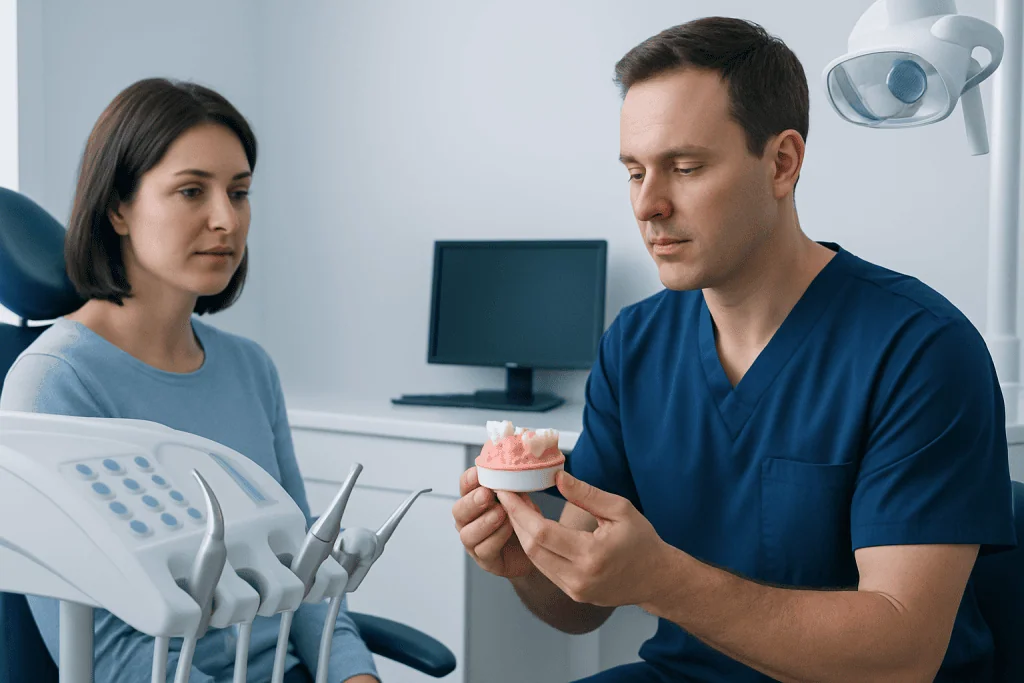
A dental crown may be recommended for a tooth that is cracked, worn down, weakened, misshapen, severely discolored, or heavily filled. Crowns are also commonly placed after root canal treatment, because a treated tooth may become more fragile and need extra protection. In cosmetic dentistry, crowns can improve the appearance of teeth when more conservative options are not suitable.
A dental bridge may be recommended when one or more teeth are missing and the patient is not a suitable candidate for an implant, prefers a non-surgical option, or has neighboring teeth that already need crowns. A missing tooth can allow adjacent teeth to shift, which may affect the bite and make cleaning more difficult. Replacing the missing tooth can help distribute chewing forces more evenly.
Common reasons for considering crowns or bridges include:
- Large cavities or old fillings that have weakened a tooth
- Cracked, fractured, or worn teeth
- Tooth loss due to decay, gum disease, injury, or extraction
- Difficulty chewing because of damaged or missing teeth
- Changes in speech or appearance caused by gaps
- Need to protect a tooth after root canal therapy
Not every damaged tooth needs a crown, and not every missing tooth requires a bridge. In some cases, an inlay, onlay, veneer, implant, removable partial denture, or orthodontic treatment may be more appropriate. A personalized dental examination is important before deciding.
Types and Materials
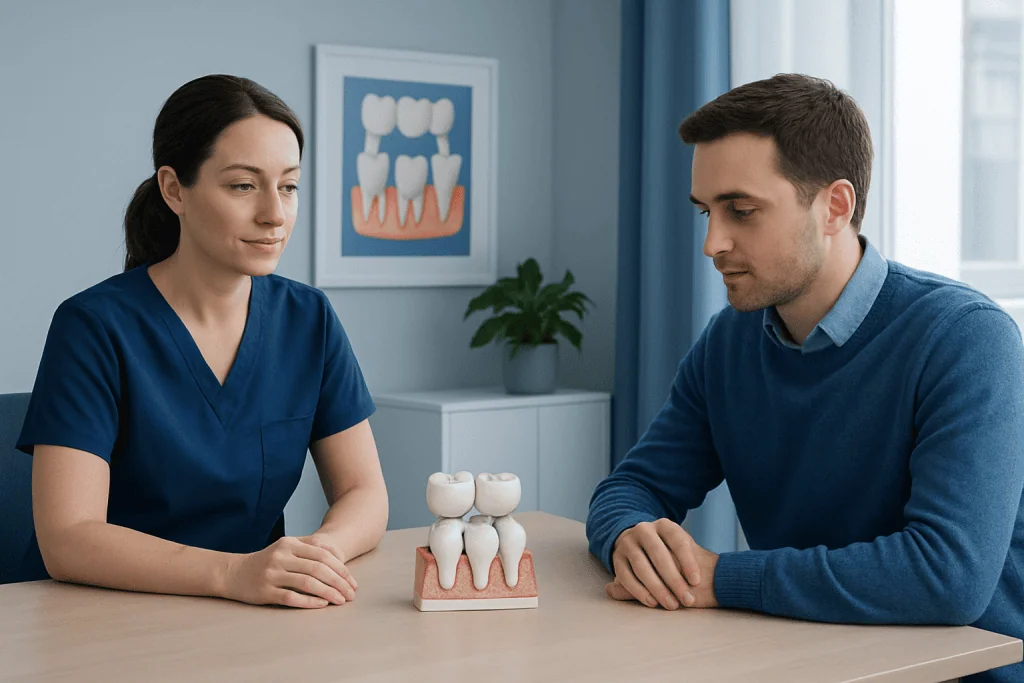
Crowns and bridges can be made from several materials. Tooth-colored ceramics and porcelain are popular for front teeth because they can be matched closely to the natural shade of the smile. Zirconia is a strong ceramic material often used when both durability and aesthetics are important. Porcelain-fused-to-metal restorations combine a metal base with a tooth-colored outer layer, although the edge may become more visible if the gums recede over time.
Metal crowns, including gold or other dental alloys, are highly durable and may be considered for back teeth where chewing forces are strongest and appearance is less critical. All-resin restorations may be used in selected cases, often as temporary restorations, but they may wear faster than ceramic or metal options. The best material depends on the tooth location, bite pattern, gum line, allergy history, aesthetic expectations, and budget considerations.
Bridges also vary by design. A traditional bridge uses crowns on the teeth on both sides of the gap to hold the replacement tooth in place. A cantilever bridge is supported on only one side and is used selectively because it can place extra force on the supporting tooth. An implant-supported bridge attaches to dental implants rather than natural teeth and may be recommended when several teeth are missing.
The Treatment Process
The process usually begins with a consultation, dental examination, and imaging such as dental X-rays. The dentist checks the health of the tooth roots, surrounding bone, gums, and bite. If there is decay, infection, gum disease, or inadequate tooth structure, those issues are treated before the final crown or bridge is made.
For a crown, the tooth is shaped so the restoration can fit securely over it. For a traditional bridge, the teeth next to the gap are prepared to support crowns. The dentist then takes impressions or uses a digital scanner to record the shape of the teeth and bite. A temporary crown or bridge may be placed to protect the prepared teeth while the final restoration is being made by a dental laboratory or milling system.
At the fitting appointment, the dentist checks the color, shape, margins, contact with neighboring teeth, and bite. Adjustments may be made before the restoration is permanently cemented or bonded. Local anesthesia is commonly used during preparation when needed, and many patients are able to return to normal daily activities soon afterward.
Some clinics offer same-day crowns using digital design and milling technology, but not every case is suitable. Bridges, complex cases, and highly aesthetic front-tooth restorations may require additional planning and laboratory work. The dentist will explain the expected timeline before treatment begins.
Benefits, Limitations, and Possible Risks
Dental crowns can protect weakened teeth, restore chewing ability, improve tooth shape, and help prevent further breakdown. Bridges can close gaps, support a more balanced bite, improve speech in some cases, and help maintain the position of neighboring teeth. Both treatments can also improve the appearance of the smile when planned carefully.
However, crowns and bridges are not a substitute for natural tooth structure. Preparing a tooth for a crown or bridge involves removing some enamel, and the supporting teeth must remain healthy. A bridge also requires careful cleaning underneath the artificial tooth, because food and plaque can collect in areas that are harder to reach.
Possible complications include temporary sensitivity to hot or cold, gum tenderness, high bite discomfort, chipping of ceramic material, loosening of the cement, or decay at the edge of the restoration. In some cases, a tooth may later need root canal treatment if the nerve becomes inflamed. These issues are more manageable when they are detected early during follow-up visits.
Patients who grind or clench their teeth may place extra stress on crowns and bridges. A dentist may recommend a night guard to protect the restorations and natural teeth. Good communication about habits, comfort, and bite changes helps the dental team reduce long-term risks.
Care, Longevity, and Daily Self-Care
The lifespan of a crown or bridge varies from person to person and depends on oral hygiene, bite forces, material choice, diet, gum health, and regular dental care. Many restorations function well for years, but they still need monitoring. Even though the crown or bridge material cannot decay, the natural tooth underneath or around the margins can develop cavities if plaque is not removed.
Daily care includes brushing twice a day with fluoride toothpaste and cleaning between the teeth once daily. For bridges, special floss threaders, interdental brushes, or water flossers may be recommended to clean under the replacement tooth and around the supporting teeth. Patients should ask their dentist or hygienist to demonstrate the best technique for their specific bridge design.
It is also wise to avoid using teeth as tools, biting very hard objects such as ice or pens, and chewing sticky foods that may pull at temporary restorations. People with a history of gum disease should be especially consistent with professional cleanings and periodontal maintenance. A balanced diet and limiting frequent sugary snacks support both natural teeth and restorations.
If a crown or bridge feels loose, rough, painful, or higher than the other teeth, it should be checked promptly. Small adjustments or repairs can sometimes prevent larger problems. Regular dental visits allow the dentist to examine the edges of the restoration, gum health, and bite stability.
When to See a Dentist
A person should schedule a dental evaluation if a tooth is cracked, heavily filled, painful when chewing, sensitive for more than a short period, or visibly worn down. It is also important to seek advice after losing a tooth, even if there is no pain, because gaps can affect bite balance and oral hygiene over time. Early planning usually provides more treatment options.
Dental attention is also recommended if an existing crown or bridge becomes loose, falls out, causes swelling, traps food, or creates persistent gum bleeding. Sudden pain, facial swelling, fever, or a bad taste may suggest infection and should be assessed as soon as possible by a qualified dental professional.
Patients considering crowns or bridges should ask about all suitable options, including the advantages and limitations of implants, removable dentures, and more conservative restorations. For international patients, Acibadem International provides access to multidisciplinary dental specialists and JCI-accredited hospitals for diagnosis and treatment planning, where care can be coordinated according to individual needs.
Frequently asked questions
What is the difference between a dental crown and a dental bridge?
A dental crown covers one damaged or weakened tooth to restore its strength, shape, and appearance. A dental bridge replaces one or more missing teeth by attaching an artificial tooth to neighboring teeth or implants. Both are fixed restorations, but they are used for different dental problems.
Is getting a crown or bridge painful?
Most crown and bridge procedures are performed with local anesthesia when tooth preparation is needed, so patients usually feel pressure rather than pain. Some mild tenderness or sensitivity can occur after the appointment and often improves as the tooth and gums settle. Persistent or worsening pain should be checked by a dentist.
How long do dental crowns and bridges last?
Longevity varies depending on oral hygiene, bite forces, materials, gum health, and regular dental visits. Crowns and bridges can function for many years when they are well designed and properly maintained. They may need repair or replacement if decay, gum disease, fracture, or loosening develops.
Can a tooth decay under a crown?
Yes. The crown material itself does not decay, but the natural tooth at the edge of the crown can still develop cavities if plaque builds up. Brushing, flossing, fluoride use, and regular dental check-ups help protect the tooth underneath.
How should a dental bridge be cleaned?
A bridge should be brushed like natural teeth, but the area under the replacement tooth needs special attention. Floss threaders, interdental brushes, or water flossers may help remove plaque and food debris. A dental professional can show the most effective method for the specific bridge design.
Are implants better than bridges?
Dental implants and bridges are both established options for replacing missing teeth, but the best choice depends on the patient. Implants do not require reshaping neighboring teeth, but they involve surgery and need adequate bone support. Bridges may be suitable when adjacent teeth already need crowns or when implants are not preferred or medically appropriate.
References
- American Dental Association
- Mayo Clinic
- Cleveland Clinic
- National Institute of Dental and Craniofacial Research
- FDI World Dental Federation
This article is for general information only and is not a substitute for professional medical advice. Please consult a qualified doctor about your individual situation.
Dental Crowns in Turkey — costs, top hospitals & a free quote
JCI-accredited · board-certified surgeons · reply within 24h
Add us as a Preferred Source to see more of our trusted health content across Google Search, AI Overviews and Discover.

Dental & Oral Health
Full-scope dental care from implants and aesthetics to oral and maxillofacial surgery.
158 specialists in this unitRelated Treatments
More from the Health Library



Related Specialists

Assoc. Prof. Dr. Ferit Bayram
Oral & Dental Health
Dt. Alara Naz Kenir
Oral & Dental Health
Dt. Gonca Katmer
Oral & Dental HealthDt. Doğa Baysal
Oral & Dental Health