Dental Emergency Abroad: When to Seek Urgent Care During Travel

Severe toothache, facial swelling, uncontrolled bleeding, and knocked-out or broken teeth often need urgent dental care. Fever, pus, trouble swallowing, or difficulty breathing may suggest a serious infection and require immediate medical attention.
Key Takeaways
- Severe toothache, facial swelling, uncontrolled bleeding, and knocked-out or broken teeth often need urgent dental care.
- Fever, pus, trouble swallowing, or difficulty breathing may suggest a serious infection and require immediate medical attention.
- Simple first aid, such as rinsing with clean water, controlling bleeding, and protecting a broken tooth, can help before treatment.
- Travelers should avoid placing aspirin directly on gums or trying to glue teeth back themselves.
- Travel insurance details, a medication list, and access to a local emergency dentist can make travel-related dental problems easier to manage.
A dental emergency abroad can be stressful, but knowing the warning signs helps travelers act quickly and safely. Severe pain, swelling, bleeding, trauma, or signs of infection usually need urgent dental or medical assessment, while minor discomfort may be managed temporarily until a dentist is available.
Overview
A dental emergency abroad is any oral health problem that needs prompt attention to relieve severe symptoms, prevent infection, save a tooth, or stop bleeding. Travel can make these situations feel more complicated because the person may be far from their regular dentist, dealing with a language barrier, or uncertain where to seek help. Even so, many dental emergencies can be managed safely when the person recognizes the warning signs and gets the right care quickly.
Not every dental problem during travel is a true emergency. Mild tooth sensitivity, a small chipped edge without pain, or a lost filling without significant discomfort may sometimes wait a short time until a dental appointment is available. By contrast, strong throbbing pain, facial swelling, injury to the teeth or jaw, uncontrolled bleeding, and signs of infection should not be ignored.
Urgent dental care focuses on stabilizing the problem, reducing pain, and preventing complications. Depending on the cause, treatment may involve general dentistry, endodontic care for the tooth nerve, or immediate management of dental emergency and trauma. If breathing or swallowing becomes difficult, emergency medical care is more important than dental treatment alone.
Symptoms That Need Urgent Attention
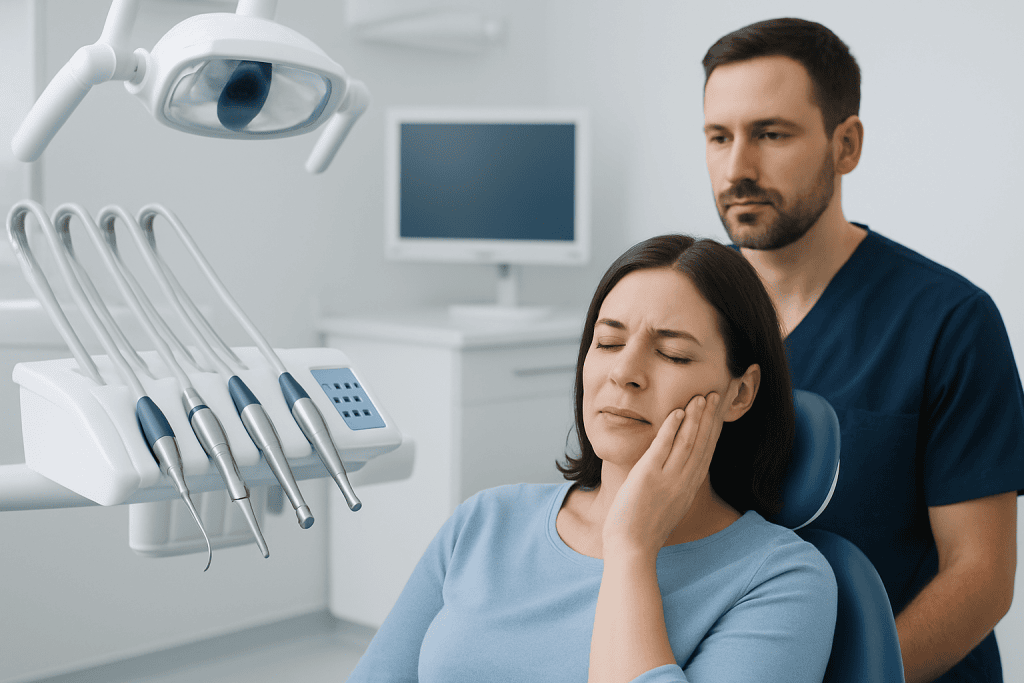
Some symptoms strongly suggest that a traveler should seek urgent dental care the same day. These include severe toothache that does not improve, sudden swelling of the gums, cheek, or jaw, bleeding that continues after pressure is applied, and a tooth that has been knocked out, loosened, or pushed out of position. Fractured teeth with exposed inner layers can also be very painful and vulnerable to infection.
Symptoms that may point to a more serious infection include fever, a bad taste in the mouth with pus drainage, increasing redness, swollen lymph nodes, or pain that spreads to the ear, jaw, or face. If the person has trouble opening the mouth, swallowing, or breathing, this may indicate a spreading infection and requires immediate medical evaluation, often in an emergency department.
Jaw injury after a fall, sports accident, or road traffic incident should also be treated urgently, especially if the bite feels misaligned or the person cannot close the mouth normally. Dental work can create urgent problems too. For example, a broken crown, deep crack, or painful restoration may need prompt assessment and possibly repair with dental crowns or other restorative treatment once the emergency is controlled.
- Severe or worsening tooth pain
- Facial, gum, or jaw swelling
- Knocked-out, loose, cracked, or displaced tooth
- Bleeding that does not stop
- Fever, pus, foul taste, or spreading infection
- Difficulty swallowing or breathing
Common Causes of Dental Emergencies During Travel
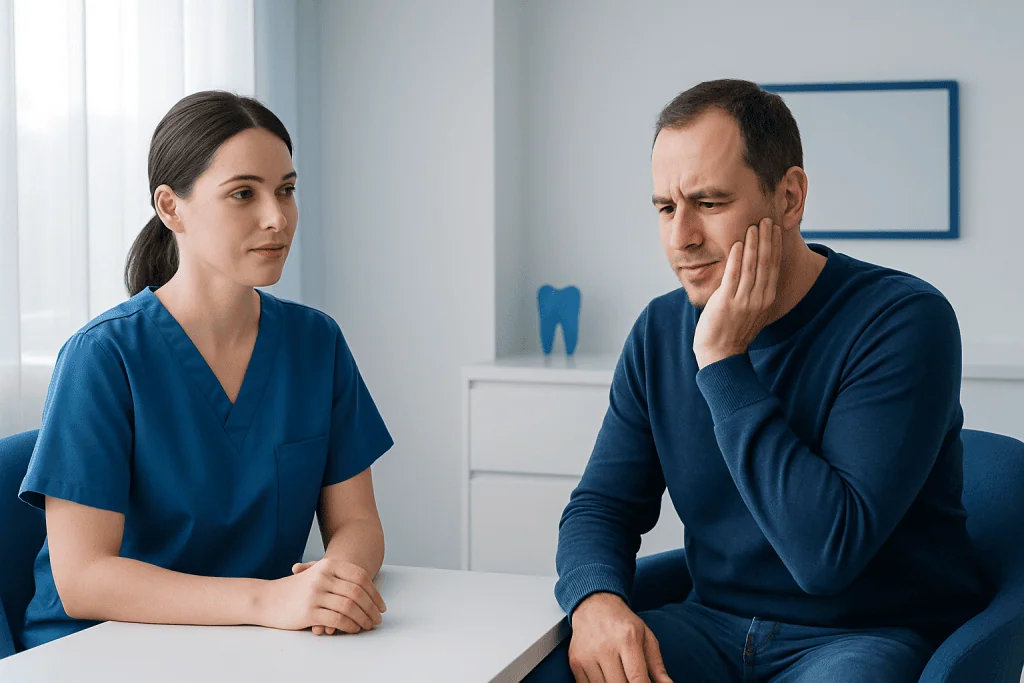
Dental emergencies during travel often happen because a hidden dental problem flares up away from home. A cavity may deepen and irritate the tooth nerve, leading to severe pain. Gum disease can also become more noticeable during travel, especially if oral hygiene routines are disrupted. Travelers who already have bleeding or inflamed gums may benefit from understanding conditions such as bleeding gums and seeking assessment if symptoms worsen.
Injuries are another major cause. Falls, sports, unfamiliar foods, hard candy, and biting on ice or bones can crack a tooth or damage a filling. Changes in routine, dehydration, stress, and teeth grinding may also aggravate jaw pain or trigger discomfort in already sensitive teeth. Existing dental restorations, such as crowns or bridges, may loosen or come off while traveling.
Certain travelers have a higher risk of urgent dental problems, including people with untreated decay, previous root canal issues, gum disease, recent dental work, diabetes, dry mouth, or weakened immunity. Long trips may increase risk if there is limited access to regular brushing, flossing, and hydration. Air travel itself does not usually cause dental emergencies, but pressure changes can sometimes worsen pain in an already inflamed tooth.
What to Do Right Away
Immediate first aid can reduce pain and improve the chance of saving a tooth. For a toothache, the person can gently rinse the mouth with clean water and remove any trapped food with soft floss if available. A cold compress on the outside of the cheek may help with swelling. It is best not to place aspirin directly on the gums because this can irritate the tissue.
If a tooth is knocked out, it should be handled only by the crown, not the root. If it is visibly dirty, it may be gently rinsed with clean water for a few seconds without scrubbing. If possible, the tooth can be placed back in the socket carefully and held there with a clean cloth or gauze. If that is not possible, it should be kept moist in milk or saliva and taken to a dentist immediately. Quick treatment offers the best chance of saving the tooth.
For bleeding after trauma, firm pressure with clean gauze or cloth can help. For a chipped or broken tooth, rinsing with water and saving any tooth fragments may be useful. If a crown or filling falls out, the area should be kept clean and the person should avoid chewing on that side until a dentist assesses the problem. Temporary self-care is not a substitute for professional treatment, especially if pain is strong or symptoms are worsening.
How Dentists Diagnose the Problem
When a traveler reaches urgent dental care, the dentist usually begins by asking when the pain or injury started, what makes it better or worse, and whether there are symptoms such as fever, swelling, or discharge. Information about allergies, current medicines, pregnancy, chronic conditions, and recent dental work is also important. Bringing a list of medications or a photo of medical records can be helpful when abroad.
The dental examination may include looking at the teeth, gums, and soft tissues, checking the bite, and gently testing the tooth response. X-rays are commonly used to see decay, infection, root injury, hidden fractures, or problems under a filling or crown. If facial trauma is more extensive, medical imaging may be needed to evaluate the jaw or surrounding bones.
The main goal of diagnosis is to determine whether the problem is coming from the tooth nerve, the gums, the supporting bone, or a traumatic injury. Some emergencies resemble others. For example, severe pain may be caused by decay, a cracked tooth, a dental abscess, or gum infection. Accurate diagnosis helps the clinician choose the safest and most effective next step.
Treatment Options for Urgent Dental Problems
Treatment depends on the cause. If there is infection or inflammation inside the tooth, the dentist may open the tooth to relieve pressure and plan or begin root canal treatment. If the damage is more limited, a new restoration such as dental fillings may be enough. Broken teeth may require smoothing, bonding, temporary protection, or a crown, depending on how deep the crack is.
When a tooth has been knocked out, displaced, or loosened, the dentist may reposition and stabilize it. Soft tissue injuries may need cleaning and repair. If swelling is related to an abscess, treatment may include drainage, cleaning the source of infection, and in some cases antibiotics when clinically appropriate. Pain relief may also be recommended, taking into account the person’s age, medical history, and any other medicines they use.
Sometimes the first visit abroad focuses on temporary stabilization, especially if the person is traveling onward soon. A temporary filling, dressing, splint, or pain-relieving procedure may be used until definitive care is possible. Near the end of care planning, some international patients choose follow-up at centers such as Acibadem International, where multidisciplinary specialists in JCI-accredited hospitals diagnose and treat dental conditions for travelers who need coordinated care.
Prevention and Travel Self-care
The best way to reduce the chance of a dental emergency abroad is to have a routine dental check-up before a major trip, especially if there has been recent tooth pain, a loose restoration, gum bleeding, or a history of dental infections. Addressing cavities, unstable crowns, or inflamed gums before departure can prevent problems from worsening while away. A dentist may also advise on managing teeth grinding or sensitivity during travel.
Daily self-care matters. Travelers should brush twice a day with fluoride toothpaste, clean between the teeth, stay hydrated, and limit frequent sugary snacks and drinks. Protective habits are also helpful, such as avoiding chewing ice, opening packaging with the teeth, or biting very hard foods. People who play sports during travel should use a properly fitted mouthguard.
A small dental travel kit can be useful. It may include a toothbrush, fluoride toothpaste, floss, orthodontic wax if needed, clean gauze, and the contact information for travel insurance and local emergency dental clinics. People with complex restorations, implants, or previous urgent problems may also wish to carry a short dental summary from their regular dentist.
When to See a Doctor Instead of Waiting
Travelers should seek same-day dental care for severe tooth pain, swelling, broken teeth with pain, lost restorations causing significant discomfort, or trauma to the mouth. They should go to an emergency department or urgent medical service immediately if there is facial swelling spreading rapidly, trouble swallowing, difficulty breathing, fever with worsening dental pain, heavy bleeding, or injury involving the jaw, head, or neck.
It is also important to seek medical advice promptly if the person has a weakened immune system, is undergoing cancer treatment, has uncontrolled diabetes, or has a history of serious infections. In these situations, what starts as a dental infection can become more complicated. Children, older adults, and pregnant travelers may need earlier assessment as well, particularly if eating, drinking, or pain control becomes difficult.
If symptoms seem mild but are not improving within a short time, arranging a dental evaluation is still wise. Persistent pain, a bad taste, increasing sensitivity, or gum swelling can be early signs of a problem that may worsen. Prompt care usually makes treatment simpler and can reduce the chance of losing a tooth or developing a more serious infection.
Frequently asked questions
How can a traveler tell if a dental problem is an emergency?
A dental problem is more likely to be an emergency if there is severe pain, swelling, uncontrolled bleeding, trauma, or signs of infection such as fever or pus. Trouble swallowing or breathing needs immediate medical attention, not just a routine dental visit.
What should someone do if a tooth gets knocked out while abroad?
The tooth should be picked up by the crown, not the root, and gently rinsed if dirty without scrubbing. If possible, it can be placed back into the socket, or otherwise kept moist in milk or saliva while the person seeks urgent dental care right away.
Can tooth pain during travel wait until returning home?
Mild, short-lived sensitivity may sometimes wait briefly, but persistent or severe pain should be checked sooner. Pain that keeps a person awake, is associated with swelling, or is getting worse can signal infection or nerve involvement.
Should antibiotics be started for dental pain during travel?
Antibiotics are not the right treatment for every dental problem and should be used only when prescribed by a qualified clinician. Many toothaches need dental treatment to remove the source of infection or inflammation rather than antibiotics alone.
Is it safe to use temporary dental repair kits from a pharmacy?
Temporary repair kits may offer short-term protection for a lost filling or crown, but they do not replace a dental examination. They should be used exactly as directed and only as a brief measure until professional care is available.
When should a person go to the emergency room instead of a dentist?
An emergency room is the better choice if there is difficulty breathing, trouble swallowing, rapidly spreading facial swelling, major trauma, or heavy bleeding. These problems can affect overall health and may need urgent medical support beyond dental treatment.
References
- World Health Organization
- American Dental Association
- National Health Service
- FDI World Dental Federation
This article is for general information only and is not a substitute for professional medical advice. Please consult a qualified doctor about your individual situation.
Explore treatments in Turkey — costs, top hospitals & a free quote
JCI-accredited · board-certified surgeons · reply within 24h
Add us as a Preferred Source to see more of our trusted health content across Google Search, AI Overviews and Discover.

Dental & Oral Health
Full-scope dental care from implants and aesthetics to oral and maxillofacial surgery.
151 specialists in this unitRelated Treatments
More from the Health Library



Related Specialists

Assoc. Prof. Dr. Ferit Bayram
Oral & Dental Health
Assoc. Prof. Dr. Yeliz Çavuşoğlu Yüce
Oral & Dental Health
Assoc. Prof. Dr. Mutlu Keskin
Oral & Dental Health
Prof. Dr. Ülkü Noyan
Oral & Dental Health