

Dental Trauma: Chipped, Broken, or Knocked-Out Teeth

A knocked-out permanent tooth is a dental emergency; handle it by the crown, keep it moist, and seek urgent dental care. Do not reinsert a knocked-out baby tooth, because this may damage the developing permanent tooth underneath.
Key Takeaways
- A knocked-out permanent tooth is a dental emergency; handle it by the crown, keep it moist, and seek urgent dental care.
- Do not reinsert a knocked-out baby tooth, because this may damage the developing permanent tooth underneath.
- Even small chips or cracks should be checked, especially if there is pain, sensitivity, swelling, or bleeding.
- Dental trauma may affect the tooth, gum, jawbone, lips, or facial tissues, so assessment may include dental X-rays and bite checks.
- Mouthguards, seat belts, and safe play habits help reduce the risk of dental injuries.
Dental trauma includes injuries such as chipped, broken, loosened, displaced, or knocked-out teeth. Quick, calm first aid and timely dental assessment can improve comfort, protect the tooth, and reduce the risk of long-term problems.
Overview
Dental trauma refers to an injury involving the teeth and the tissues that support them, including the gums, jawbone, lips, tongue, and cheeks. It can happen during sports, falls, road accidents, playground activities, biting hard foods, or accidental blows to the face. The injury may be obvious, such as a knocked-out tooth, or more subtle, such as a small crack that causes sensitivity days later.
Common types of dental trauma include chipped enamel, fractured teeth, loosened teeth, teeth pushed out of position, and avulsed teeth, meaning teeth that are completely knocked out. Injuries may affect only the visible crown of the tooth or may extend deeper into the dentin, pulp, or root. The pulp contains nerves and blood vessels, so deeper injuries are more likely to cause pain and require more complex treatment.
Prompt dental care matters because timing can influence whether a tooth can be saved, how comfortable the person feels, and whether complications such as infection, discoloration, or bite changes develop. However, many dental injuries can be treated successfully when first aid is appropriate and a dentist or emergency dental team evaluates the injury quickly.
Symptoms and Types of Dental Injury
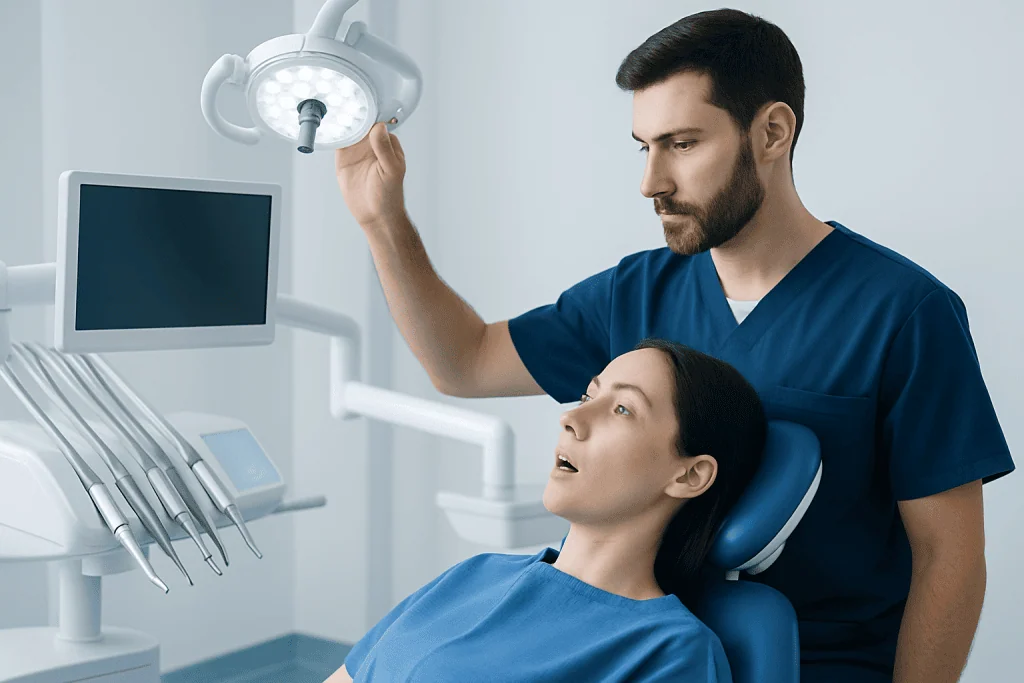
The symptoms of dental trauma vary depending on the type and depth of injury. A chipped tooth may cause a rough edge, mild sensitivity, or a visible change in shape. A deeper fracture may cause sharp pain when biting, sensitivity to cold or heat, bleeding from the tooth, or a pink or red area at the center of the broken surface, which may suggest pulp exposure.
A tooth may also be loosened, pushed inward, pushed outward, or driven partly into the gum. These injuries can make the bite feel different, cause pain when closing the mouth, or make the tooth look longer, shorter, or out of alignment. Gum bleeding, swelling, bruising, cuts to the lips or tongue, and jaw tenderness may occur at the same time.
Important signs to notice after a tooth injury include:
- Pain that is severe, increasing, or triggered by biting
- A tooth that feels loose, displaced, or higher than the others
- A broken piece of tooth or a missing tooth
- Bleeding from the gum or inside the tooth
- Swelling of the gum, cheek, or face
- Difficulty opening the mouth or closing the teeth together normally
Some injuries do not cause major pain at first, especially if the nerve has been damaged. For this reason, a dental assessment is recommended even when symptoms seem mild. Follow-up visits may also be needed because complications, such as tooth discoloration or pulp infection, can appear later.
First Aid for Chipped, Broken, or Knocked-Out Teeth

After dental trauma, the first step is to stay calm and check for more serious injuries. If there is heavy bleeding, loss of consciousness, breathing difficulty, suspected jaw fracture, or a major facial injury, emergency medical care should be sought immediately. For mouth bleeding, gentle pressure with clean gauze or a clean cloth can help. A cold compress on the outside of the cheek may reduce swelling and discomfort.
For a chipped or broken tooth, the person should rinse the mouth gently with clean water. If a tooth fragment is found, it can be saved in milk, saline, or a small container and brought to the dentist. The person should avoid chewing on the injured side and should not use the tooth to test whether it is stable. If a sharp edge irritates the tongue or cheek, covering it temporarily with orthodontic wax or sugar-free chewing gum may help until dental care is available.
A knocked-out permanent tooth needs urgent attention. The tooth should be handled only by the crown, which is the white part normally visible in the mouth, and not by the root. If it is dirty, it can be rinsed briefly with milk or saline, or gently with clean water, without scrubbing or removing attached tissue. If the person is conscious, cooperative, and it is a permanent tooth, the tooth may be placed back into its socket and held in place with gentle pressure or by biting on gauze.
If reinsertion is not possible, the tooth should be kept moist in milk, saline, or a tooth preservation solution if available. It may also be kept inside the cheek only if there is no risk of swallowing or choking. A knocked-out baby tooth should not be put back into the socket, because doing so may harm the developing permanent tooth. In all cases, urgent dental care is recommended, especially for a permanent tooth that has been knocked out.
Causes and Risk Factors
Dental trauma can affect people of any age. In children, it often occurs during falls, playground accidents, cycling, running, or contact games. In adolescents and adults, sports injuries, traffic accidents, workplace incidents, and physical impacts are common causes. Teeth can also break when biting hard foods or objects, particularly if they already have large fillings, untreated decay, or cracks.
Certain factors can increase the chance of dental injury. Protruding front teeth are more exposed during falls or impacts. Not using a mouthguard during contact or high-speed sports also raises risk. Bruxism, which is tooth grinding or clenching, can weaken enamel and contribute to cracks over time. Dental decay and previous large restorations may make a tooth less resistant to fracture.
Risk is also influenced by environment and habits. Slippery surfaces, lack of protective equipment, not wearing seat belts, and using teeth as tools to open packages can all contribute to injury. For children, age-appropriate supervision and safe play settings are important. For adults, regular dental check-ups can identify weakened teeth before they fracture unexpectedly.
Diagnosis
A dentist will assess both the injured tooth and the surrounding tissues. The examination usually includes questions about how and when the injury occurred, whether the tooth was displaced or knocked out, and whether any tooth fragments were found. The dentist may check the bite, tooth mobility, gum condition, and sensitivity to touch or temperature.
Dental X-rays are often used to look for root fractures, bone injury, tooth displacement, or fragments embedded in the lips or soft tissues. In some cases, additional imaging may be needed if a jaw fracture or complex facial injury is suspected. Pulp vitality testing may be performed at the first visit or during follow-up, although early results can be uncertain after trauma because the tooth nerve may be temporarily shocked.
Diagnosis is not always complete in one appointment. Some dental trauma requires monitoring over weeks or months to confirm whether the pulp remains healthy and whether the root continues to develop in younger patients. Follow-up is especially important for children and adolescents, because injured permanent teeth may still be maturing.
Treatment Options
Treatment depends on the type of injury, whether the tooth is baby or permanent, how much tooth structure is lost, and whether the pulp or root is involved. Small enamel chips may be smoothed or repaired with tooth-colored bonding. Larger broken areas may need a filling, bonding, veneer, or crown to restore shape, function, and appearance. If the pulp is exposed or becomes infected, root canal treatment or another pulp therapy may be recommended.
For a loose or displaced tooth, the dentist may gently reposition it and stabilize it with a flexible splint attached to neighboring teeth for a period of time. A knocked-out permanent tooth may be replanted if conditions are suitable. After replantation, the tooth usually needs careful follow-up and may require root canal treatment depending on the patient’s age, root development, and healing response.
Baby teeth are managed differently from permanent teeth. The priority is to protect the child’s comfort, prevent infection, and avoid damage to the developing permanent tooth. A displaced baby tooth may be monitored, repositioned, or removed depending on the direction and severity of displacement. A knocked-out baby tooth is not replanted.
Pain relief, soft foods, careful oral hygiene, and sometimes medication may be part of care, depending on the injury and the dentist’s assessment. If there are cuts, contaminated wounds, or concerns about tetanus protection, medical advice may be needed. Treatment planning should always be individualized by a qualified dental professional.
Prevention and Self-Care After Dental Trauma
Not every dental injury can be prevented, but several practical steps reduce risk. A properly fitted mouthguard is recommended for contact sports and activities with a risk of falls or facial impact, such as hockey, basketball, martial arts, skateboarding, and cycling. Custom mouthguards made by a dentist often fit more securely than over-the-counter options, although any suitable protection is generally better than none.
Everyday prevention also matters. Seat belts, helmets when appropriate, safe play areas, and avoiding chewing ice, hard candies, pens, or other hard objects can help protect teeth. People with protruding front teeth, severe grinding, or weak teeth from decay or large fillings may benefit from discussing preventive options with their dentist.
After a dental injury has been treated, self-care supports healing. The person may be advised to eat soft foods, avoid biting directly with the injured tooth, brush gently with a soft toothbrush, and keep follow-up appointments. If a splint is placed, it should not be pulled or tested. New symptoms such as swelling, fever, worsening pain, a bad taste, or tooth darkening should be reported to the dentist.
When to See a Doctor or Dentist
Urgent dental care is needed for a knocked-out permanent tooth, a tooth that is loose or displaced, a fracture with visible red or pink tissue, uncontrolled mouth bleeding, or severe pain. Care should also be sought promptly if the bite feels different, the jaw is painful, or there are cuts that may need cleaning or repair. A chipped tooth that seems minor should still be assessed, especially if sensitivity or sharp edges are present.
Emergency medical services should be used if dental trauma occurs together with head injury symptoms, loss of consciousness, confusion, vomiting, difficulty breathing, major facial swelling, or suspected jaw or facial fracture. Dental injuries can occur as part of broader trauma, so general safety comes first.
International patients with dental trauma may need coordinated assessment by dentists, oral surgeons, endodontists, pediatric dentists, or maxillofacial specialists. Acibadem International’s multidisciplinary specialists and JCI-accredited hospitals diagnose and treat dental and facial injuries for international patients, with care plans based on the type and urgency of the injury. Anyone with dental trauma should seek timely advice from a qualified dental professional to protect oral health and comfort.
Frequently asked questions
What should someone do first if a tooth is knocked out?
If it is a permanent tooth, it should be handled by the crown, not the root. If possible, it can be placed back into the socket gently, or kept moist in milk, saline, or a tooth preservation solution. Urgent dental care is important because timing can affect the chance of saving the tooth.
Should a knocked-out baby tooth be put back in?
No. A knocked-out baby tooth should not be replanted because it may damage the developing permanent tooth underneath. The child should still see a dentist promptly to check the gums, surrounding teeth, and any soft tissue injuries.
Is a small chipped tooth an emergency?
A small chip without pain may not require emergency treatment, but it should be checked by a dentist. Sharp edges can irritate the tongue or cheek, and cracks may extend deeper than they appear. If there is pain, swelling, bleeding, or sensitivity, earlier assessment is recommended.
Can a broken tooth be repaired?
Many broken teeth can be repaired with bonding, a filling, a crown, or other restorative treatment. If the nerve is exposed or infected, root canal treatment or another pulp therapy may be needed. The best option depends on the depth of the fracture and the health of the tooth root.
How long does a dental injury take to heal?
Healing time varies widely. Minor chips may be repaired in one visit, while loosened, displaced, or replanted teeth may need splinting and follow-up over weeks or months. Dentists often monitor injured teeth because nerve or root changes can appear later.
What can be done for pain after dental trauma?
A cold compress on the outside of the cheek and avoiding chewing on the injured side may help reduce discomfort. Pain-relief medicines should be used only as directed on the label or by a healthcare professional. Persistent, severe, or worsening pain should be evaluated by a dentist promptly.
How can sports-related dental injuries be prevented?
A well-fitting mouthguard can reduce the risk of tooth and mouth injuries during contact sports and activities with a fall risk. Helmets, face shields when appropriate, and safe playing techniques also help. People who play sports regularly can ask a dentist about the most suitable mouthguard for their activity.
References
- International Association of Dental Traumatology
- American Association of Endodontists
- American Dental Association
- European Academy of Paediatric Dentistry
- World Health Organization
This article is for general information only and is not a substitute for professional medical advice. Please consult a qualified doctor about your individual situation.
Joint and spine care in Turkey — expert assessment & treatment
JCI-accredited · board-certified surgeons · reply within 24h
Add us as a Preferred Source to see more of our trusted health content across Google Search, AI Overviews and Discover.

Dental & Oral Health
Full-scope dental care from implants and aesthetics to oral and maxillofacial surgery.
158 specialists in this unitRelated Treatments
More from the Health Library



Related Specialists

Assoc. Prof. Dr. Ferit Bayram
Oral & Dental Health
Dt. Alara Naz Kenir
Oral & Dental Health
Dt. Gonca Katmer
Oral & Dental HealthDt. Doğa Baysal
Oral & Dental Health