

Dental Veneers: Smile Correction, Materials, and Care

Dental veneers can correct discoloration, minor chips, small gaps, uneven edges, and some mild alignment concerns. Porcelain veneers usually offer excellent stain resistance and durability, while composite veneers may be more conservative and easier to repair.
Key Takeaways
- Dental veneers can correct discoloration, minor chips, small gaps, uneven edges, and some mild alignment concerns.
- Porcelain veneers usually offer excellent stain resistance and durability, while composite veneers may be more conservative and easier to repair.
- A thorough dental examination is essential before veneers to check gum health, enamel, bite, and any hidden tooth decay.
- Some veneer treatments require removing a thin layer of enamel, which makes the procedure partly irreversible.
- Daily brushing, flossing, regular dental check-ups, and avoiding biting hard objects help protect veneers over time.
Dental veneers are thin, custom-made shells placed on the front surface of teeth to improve color, shape, size, and alignment. With careful planning, the right material choice, and good oral hygiene, veneers can provide a natural-looking and long-lasting smile improvement.
Overview
Dental veneers are very thin coverings that are bonded to the visible front surfaces of teeth. They are designed to improve the appearance of teeth while preserving as much natural tooth structure as possible. Veneers are most often used on the upper front teeth, but they may also be placed on lower teeth when appropriate.
People choose veneers for several reasons, including teeth that are deeply stained, worn down, chipped, slightly uneven, or separated by small gaps. Veneers can also help create a more balanced smile when some teeth look smaller, narrower, or differently shaped than others. They are considered a cosmetic dental treatment, but they still require careful medical and dental planning.
A good veneer result should look natural, fit the person’s face, and work comfortably with the bite. The goal is not simply to make teeth brighter, but to create harmony between tooth color, gum line, lip position, and facial features. Because every smile is different, veneer treatment should begin with a detailed consultation and a personalized plan.
Who May Be a Good Candidate for Dental Veneers?
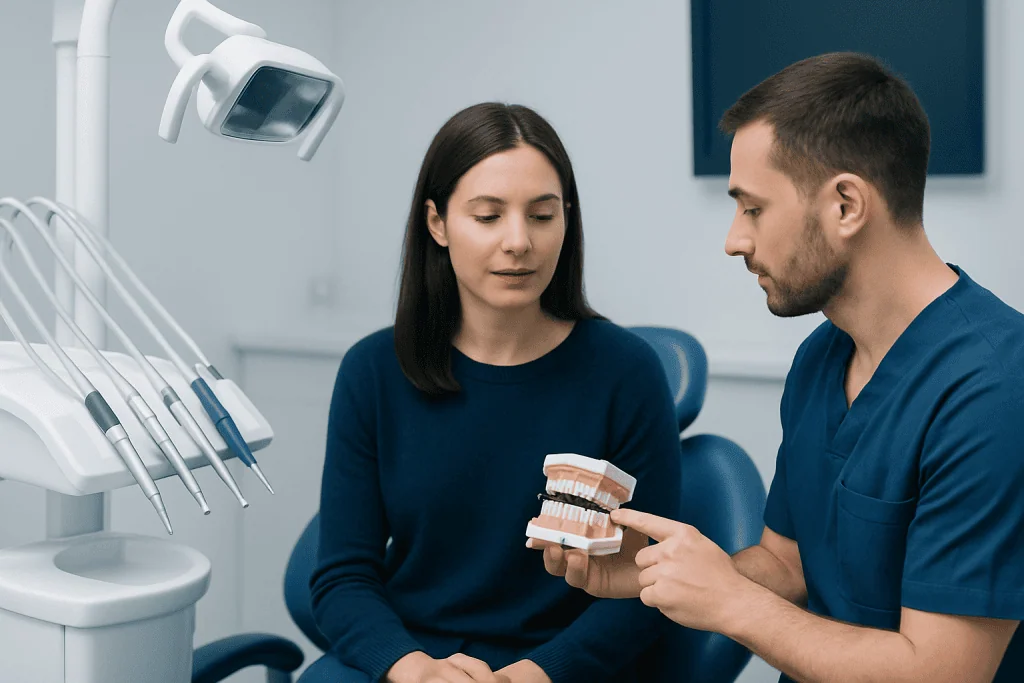
Veneers may be suitable for adults with healthy teeth and gums who want to improve the appearance of their smile. The teeth being treated should have enough enamel for bonding, and there should be no active decay or untreated gum disease. If cavities, gum inflammation, or infections are present, these need to be treated first.
Common reasons for considering veneers include tooth discoloration that does not respond well to whitening, small chips or cracks, uneven tooth edges, mild crowding, and small spaces between teeth. Veneers can also be used after orthodontic treatment or whitening when a person still wants more refinement in tooth shape or shade.
Veneers may not be the best first choice for people with severe tooth grinding, large untreated cavities, very weak teeth, advanced gum disease, or major bite problems. In these situations, a dentist may recommend other treatments first, such as night guards, orthodontics, crowns, periodontal care, or restorative dentistry. The safest plan is the one that protects both appearance and long-term oral health.
Materials: Porcelain, Composite, and Other Options

The two most common types of dental veneers are porcelain veneers and composite resin veneers. Porcelain veneers are made in a dental laboratory from ceramic materials that can closely imitate the translucency and shine of natural enamel. They are generally known for their strength, color stability, and resistance to staining.
Composite veneers are made from tooth-colored resin, often shaped directly on the tooth by the dentist. They may require less tooth preparation in some cases and can often be repaired more easily if they chip. However, composite resin may stain or wear faster than porcelain, depending on diet, habits, and oral hygiene.
Some patients may hear terms such as “minimal-prep,” “no-prep,” or “ultra-thin” veneers. These describe how much enamel may need to be adjusted before placement, but not every case is suitable for minimal preparation. The right material depends on the tooth position, enamel thickness, desired shade change, bite forces, budget considerations, and the patient’s expectations.
- Porcelain veneers: strong, stain-resistant, highly aesthetic, usually laboratory-made.
- Composite veneers: often completed more quickly, repairable, may be more conservative in selected cases.
- Minimal-prep veneers: suitable only when tooth position and smile design allow a natural shape without over-bulking.
Consultation, Smile Design, and Treatment Planning
A veneer consultation usually begins with a discussion about what the patient wants to change. The dentist examines the teeth, gums, bite, jaw movement, and existing dental work. X-rays or digital scans may be used to check the roots, bone support, tooth decay, and overall oral health.
Smile design may include clinical photographs, digital impressions, shade selection, and a preview of the proposed tooth shape. In some cases, a dentist may create a wax-up or digital mock-up so the patient can better understand the planned result. This step helps align expectations and prevents teeth from looking too large, too white, or unnatural.
Planning also includes deciding how many veneers are needed. Some patients need only one or two veneers to repair a chip or improve symmetry. Others may need several veneers across the visible smile zone for a more consistent color and shape. A conservative dentist will recommend the minimum treatment needed to achieve a healthy and balanced result.
How the Dental Veneer Procedure Is Done
The exact procedure depends on the material and the complexity of the case. For porcelain veneers, the dentist may remove a very thin layer of enamel from the front of the tooth to create space for the veneer. Local anesthesia may be used when needed for comfort, although many patients experience minimal discomfort.
After tooth preparation, the dentist takes a scan or impression and sends the information to a dental laboratory. Temporary veneers may be placed to protect the prepared teeth and help the patient evaluate the planned shape. At the next visit, the dentist checks the fit, color, and bite of the porcelain veneers before bonding them permanently with dental adhesive.
Composite veneers may sometimes be completed in a single visit. The dentist applies layers of composite resin, shapes the material, hardens it with a curing light, and polishes it to a natural shine. Whether porcelain or composite is used, careful bite adjustment is important so the veneers are not exposed to excessive pressure.
After placement, the gums may feel slightly sensitive for a short period, and the bite may feel different while the patient adjusts. Follow-up visits allow the dentist to check comfort, polish edges, and make small refinements if needed.
Benefits, Limitations, and Possible Risks
Dental veneers can make a meaningful difference in smile appearance. They can create a brighter, more even smile while maintaining a natural look when the shade and shape are chosen carefully. Veneers may also strengthen the visible surface of mildly worn or chipped teeth, although they are not a substitute for treating deeper structural problems.
It is important to understand that veneers have limitations. They do not correct major tooth misalignment, untreated gum disease, or severe bite problems. Whitening products do not change the color of veneers, so shade planning should be done before placement, especially if the patient wants to whiten the surrounding natural teeth.
Possible risks include temporary sensitivity, gum irritation, veneer chipping, debonding, color mismatch, or the need for replacement over time. If enamel is removed, the tooth will usually need to remain covered with a veneer or another restoration in the future. For this reason, patients should ask questions and make sure they understand whether their planned veneers are reversible or irreversible.
Veneer Care and Long-Term Maintenance
Veneers should be cared for much like natural teeth. Patients should brush twice daily with a non-abrasive fluoride toothpaste and clean between the teeth with floss or interdental brushes. Regular dental check-ups and professional cleanings help maintain gum health and allow early detection of small problems.
Although veneers are strong, they can still chip or loosen under excessive force. Patients should avoid biting hard objects such as ice, pens, fingernails, or hard food shells. People who grind or clench their teeth may be advised to wear a custom night guard to protect both veneers and natural teeth.
Diet and lifestyle habits can also affect the long-term appearance of veneers. Porcelain resists staining well, but the bonding edges and surrounding teeth can still discolor. Composite veneers are more prone to staining from coffee, tea, red wine, tobacco, and highly pigmented foods, so routine polishing may be recommended.
- Use a soft toothbrush and gentle brushing technique.
- Do not use teeth as tools to open packages or hold objects.
- Wear a mouthguard for contact sports when advised.
- Attend routine dental appointments even if veneers feel comfortable.
When to See a Dentist
A person considering veneers should see a dentist for a full evaluation before making a decision. This is especially important if there is tooth sensitivity, gum bleeding, tooth movement, jaw pain, frequent headaches, or a history of clenching and grinding. These issues do not always prevent veneer treatment, but they may need to be managed first.
Patients who already have veneers should contact a dentist if a veneer feels loose, cracks, chips, changes color at the edge, or causes discomfort when biting. Early attention may allow a simpler repair and help protect the underlying tooth. Persistent gum swelling, bad taste, or pain should also be assessed promptly.
For international patients seeking coordinated dental assessment and treatment, Acibadem International provides access to multidisciplinary specialists and JCI-accredited hospitals that diagnose and treat dental and oral health conditions. The most appropriate treatment plan should always be based on an in-person examination, diagnostic findings, and a clear discussion of benefits and limitations.
Frequently asked questions
Are dental veneers painful?
Most veneer procedures are not considered highly painful. Some patients may feel mild sensitivity during or after tooth preparation, especially if enamel is adjusted. Local anesthesia can be used when needed, and any lingering discomfort should be discussed with the dentist.
How long do dental veneers last?
The lifespan of veneers depends on the material, oral hygiene, bite forces, diet, and habits such as grinding. Porcelain veneers often last longer than composite veneers, but all veneers may eventually need repair or replacement. Regular dental visits help identify early wear or bonding issues.
Can veneers be whitened?
Veneers do not respond to whitening gels in the same way natural teeth do. If a patient wants a brighter smile, whitening is usually considered before veneers are made so the shade can be matched properly. If existing veneers look too dark, replacement may be the only way to change their color.
Do veneers damage natural teeth?
Veneers can be conservative when planned carefully, but some cases require removing a thin layer of enamel. Once enamel is removed, the treatment is generally not fully reversible. A dentist should explain how much preparation is needed and whether less invasive alternatives are possible.
What is the difference between veneers and crowns?
A veneer covers mainly the front surface of a tooth, while a crown covers the entire visible part of the tooth. Veneers are often used for cosmetic changes when the tooth is otherwise strong. Crowns may be recommended when a tooth is weakened, heavily filled, cracked, or needs more structural support.
Can someone with crooked teeth get veneers?
Veneers may improve the appearance of mild unevenness, but they cannot safely correct all alignment problems. If teeth are significantly crowded, rotated, or affected by bite issues, orthodontic treatment may be recommended first. This can lead to a more conservative and stable cosmetic result.
References
- American Dental Association
- FDI World Dental Federation
- American Academy of Cosmetic Dentistry
- National Institute of Dental and Craniofacial Research
- European Federation of Periodontology
This article is for general information only and is not a substitute for professional medical advice. Please consult a qualified doctor about your individual situation.
Explore treatments in Turkey — costs, top hospitals & a free quote
JCI-accredited · board-certified surgeons · reply within 24h
Add us as a Preferred Source to see more of our trusted health content across Google Search, AI Overviews and Discover.

Dental & Oral Health
Full-scope dental care from implants and aesthetics to oral and maxillofacial surgery.
158 specialists in this unitRelated Treatments
More from the Health Library



Related Specialists

Assoc. Prof. Dr. Ferit Bayram
Oral & Dental Health
Dt. Alara Naz Kenir
Oral & Dental Health
Dt. Gonca Katmer
Oral & Dental HealthDt. Doğa Baysal
Oral & Dental Health