

Dentures: Full and Partial Options for Missing Teeth

Dentures may replace all teeth in an arch or only several missing teeth, depending on the patient’s needs. Full dentures, partial dentures, immediate dentures and implant-supported dentures each have different advantages and limitations.
Key Takeaways
- Dentures may replace all teeth in an arch or only several missing teeth, depending on the patient’s needs.
- Full dentures, partial dentures, immediate dentures and implant-supported dentures each have different advantages and limitations.
- A proper dental examination, impressions or digital scans, and bite assessment are essential for a comfortable fit.
- Good daily cleaning and regular dental check-ups help protect the mouth and extend the life of dentures.
- New soreness, looseness, broken parts or difficulty eating should be assessed by a dentist rather than adjusted at home.
Dentures are removable dental appliances designed to replace missing teeth and support everyday functions such as chewing, speaking and smiling. Modern full and partial dentures can be carefully customized for comfort, appearance and oral health needs.
Overview
Dentures are custom-made replacements for missing teeth and the surrounding gum area. They can be used when teeth have been lost due to decay, gum disease, injury, age-related wear or other dental conditions. While dentures are often associated with older adults, they may be appropriate for adults of many ages when tooth loss affects comfort, confidence or oral function.
There are two main categories: full dentures and partial dentures. Full dentures replace all teeth in the upper jaw, lower jaw or both. Partial dentures replace one or more missing teeth while natural teeth remain in the mouth. Both types are designed to improve the ability to chew, help support clear speech and maintain facial support where teeth are missing.
Modern denture care focuses on both function and appearance. Dentists assess the gums, jawbone, bite, remaining teeth and overall oral health before recommending a denture design. The goal is not only to fill gaps, but also to create a stable, cleanable and comfortable appliance that fits the person’s mouth and daily life.
Types of Dentures
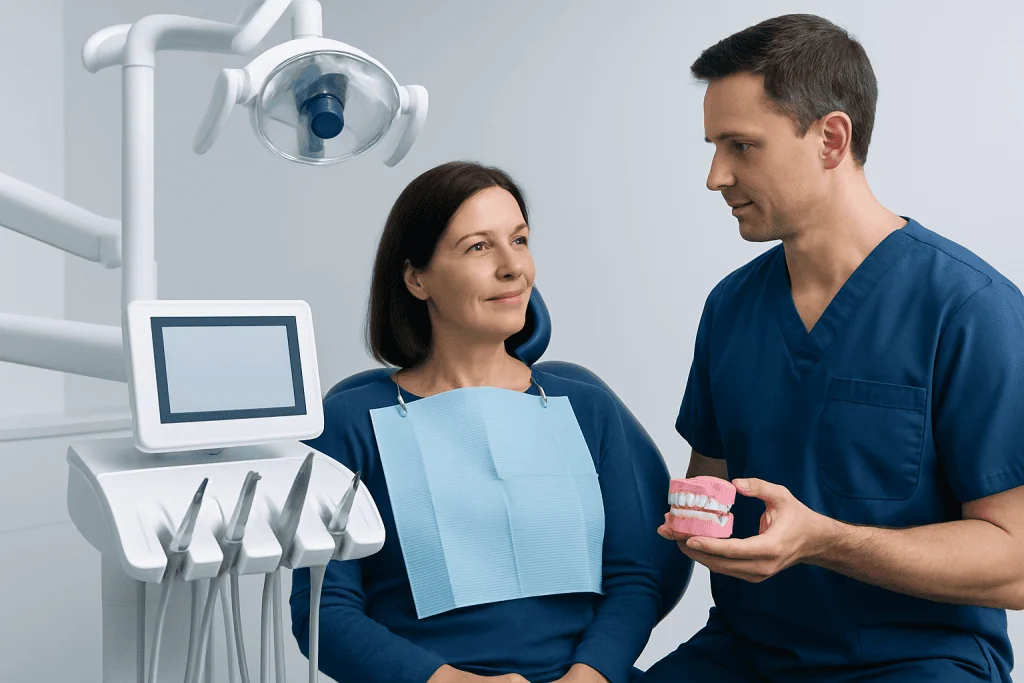
Full dentures, also called complete dentures, are used when all teeth in an upper or lower arch are missing or need to be removed. They rest on the gums and underlying bone, and upper dentures often cover the palate for added suction. Lower full dentures can be more challenging to stabilize because the tongue and floor of the mouth move during speaking and eating.
Partial dentures are used when some healthy natural teeth remain. They may be made with a metal framework, acrylic base, flexible material or a combination of these. Partial dentures often use clasps or precision attachments to hold onto nearby teeth. In many cases, they also help prevent remaining teeth from drifting into empty spaces.
Other options may be recommended depending on timing and stability needs:
- Immediate dentures: placed soon after tooth removal, allowing the person to avoid being without teeth during healing.
- Conventional dentures: made after the gums have healed, often providing a more predictable final fit.
- Implant-supported dentures: attached to dental implants for improved retention and chewing stability in suitable patients.
- Overdentures: designed to fit over selected remaining tooth roots or implants for additional support.
Who May Benefit From Dentures?

Dentures may benefit people who have lost several teeth or all teeth and have difficulty chewing a balanced diet. Missing teeth can make it harder to bite into certain foods, and some people begin avoiding fruits, vegetables, proteins or other foods that require more chewing. A well-planned denture can help restore a wider range of food choices, although adaptation time is normal.
Dentures may also help with speech and facial support. Teeth play a role in forming certain sounds, and gaps may affect pronunciation. When many teeth are missing, the lips and cheeks may lose support, which can change facial appearance. Dentures can help restore this support in a natural-looking way when designed carefully.
Not every person with missing teeth needs the same solution. Bridges, dental implants or implant-supported prostheses may be alternatives for some patients. The best choice depends on oral health, bone condition, number and position of missing teeth, medical history, budget considerations and personal preferences. A dentist or prosthodontist can explain the advantages and limitations of each option.
Assessment and Diagnosis Before Dentures
Before dentures are made, the dentist performs a detailed oral examination. This includes checking the gums, jawbone shape, remaining teeth, bite relationship and any signs of infection, decay or gum disease. If natural teeth remain, the dentist will assess whether they are strong enough to support a partial denture or whether treatment is needed first.
Dental X-rays or other imaging may be used to evaluate tooth roots, bone levels and hidden problems. Impressions or digital scans are then taken to create accurate models of the mouth. The dentist also records how the upper and lower jaws meet, because a balanced bite is important for comfort, chewing and denture stability.
In some cases, extractions, gum treatment or healing time may be needed before the final denture is made. When immediate dentures are chosen, measurements are taken before teeth are removed so the denture can be inserted after extraction. Because gums and bone change during healing, immediate dentures usually require adjustments and may later need relining or replacement.
Treatment Process and Fitting
The denture process usually involves several appointments. After the initial assessment, impressions or scans are used to create a custom design. Trial fittings may be arranged so the dentist can check tooth position, bite, smile line and comfort before the final denture is finished. This step helps ensure that the denture supports both function and appearance.
When the denture is delivered, the dentist checks how it fits against the gums and how the bite comes together. Small pressure areas are common at first because the mouth is adapting to a new appliance. Follow-up visits are important, especially in the first days and weeks, so the dentist can make precise adjustments. Patients should not try to file, bend or repair dentures at home, as this may damage the appliance or irritate the mouth.
Learning to use dentures takes practice. Eating soft foods cut into small pieces, chewing slowly on both sides and reading aloud to practice speech can help. Increased saliva, minor speech changes and a sense of bulkiness are common early experiences and often improve as the mouth adapts. Persistent pain, looseness or sores should be assessed by a dental professional.
Caring for Dentures and Oral Health
Daily denture care is essential for comfort, hygiene and long-term oral health. Dentures should generally be removed and cleaned every day using a denture brush or soft brush and a cleanser recommended by a dentist. Regular toothpaste may be too abrasive for some denture materials, so patients should follow professional guidance. Dentures should also be handled carefully over a towel or basin of water to reduce the risk of breakage if dropped.
The mouth also needs daily care. Gums, tongue, palate and any remaining teeth should be cleaned gently to reduce plaque and support healthy tissues. If a partial denture is worn, extra attention is needed around clasps and remaining teeth, because food and plaque can collect in these areas. Regular dental visits allow the dentist to check both the denture and the health of the mouth.
Many dentures should be removed during sleep unless the dentist gives a different instruction. This gives the gums time to rest and helps reduce irritation. Dentures may need to be kept moist when not worn to maintain their shape, but soaking instructions vary by material. Denture cleaning tablets, adhesives and storage solutions should be used only as directed.
Possible Challenges, Adjustments and Long-Term Care
It is normal for dentures to require adjustments over time. After tooth loss, the jawbone and gums gradually change shape, which can make a denture feel loose or less stable. Weight changes, aging, oral health conditions and normal wear of denture teeth may also affect fit. A loose denture can cause rubbing, sore spots, chewing difficulty or speech changes.
Relining, rebasing or replacing a denture may be recommended when the fit changes. Relining adds material to the tissue side of the denture to improve contact with the gums. Rebasing replaces the base while keeping the denture teeth, when appropriate. Replacement may be needed if the denture is worn, repeatedly breaking, no longer fits well or no longer supports the bite properly.
Denture adhesives can help some people feel more secure, but they should not be used to compensate for a poorly fitting denture. Excessive or frequent need for adhesive is a sign that the appliance should be checked. A dentist can identify whether the issue is fit, bite, tissue irritation, dry mouth, bone changes or another concern.
When to See a Dentist
A dentist should be consulted if dentures cause persistent pain, bleeding, ulcers, clicking, looseness, difficulty chewing or sudden changes in speech. Any broken, cracked or warped denture should be professionally repaired rather than glued at home. People with partial dentures should also seek care if a clasp becomes loose or if a supporting tooth becomes sensitive or mobile.
Regular check-ups remain important even for people with full dentures and no natural teeth. The dentist examines the gums, tongue, palate, jaw joints and denture fit. These visits can help detect irritation, infections, oral lesions and bite problems early. Patients with diabetes, dry mouth, immune conditions or a history of oral disease may need more individualized follow-up.
For international patients seeking evaluation, Acibadem International’s multidisciplinary dental and medical specialists in JCI-accredited hospitals can assess missing teeth and discuss denture and implant-supported options when appropriate. The most suitable treatment plan should always be based on a personal examination, medical history and the patient’s goals.
Frequently asked questions
What is the difference between full dentures and partial dentures?
Full dentures replace all teeth in the upper jaw, lower jaw or both. Partial dentures replace only some missing teeth and are supported by the gums and remaining natural teeth. The choice depends on how many teeth are missing, the health of the remaining teeth and the patient’s bite.
How long does it take to get used to new dentures?
Many people need a few weeks to become comfortable with new dentures, although the adjustment period varies. Speaking and eating may feel different at first, and mild sore spots can occur. Follow-up visits help the dentist make small adjustments for comfort and function.
Can dentures look natural?
Yes, modern dentures can be designed to look natural by matching tooth shape, size, color and gum appearance to the person’s face and smile. A trial fitting may help check appearance before the final denture is completed. Natural-looking results depend on careful planning and good communication with the dental team.
Are implant-supported dentures better than regular dentures?
Implant-supported dentures may provide better stability and chewing confidence for suitable patients, especially in the lower jaw. However, they require enough bone, healthy tissues and a surgical implant procedure. Regular dentures may still be an effective and appropriate option for many people.
Should dentures be worn at night?
Many patients are advised to remove dentures during sleep to allow the gums to rest and to support oral hygiene. However, instructions may vary depending on the type of denture, healing after extractions or specific dental conditions. Patients should follow their dentist’s advice.
How often should dentures be replaced?
Dentures may need adjustment, relining or replacement as the mouth changes over time. There is no single schedule that fits everyone, because wear, fit and oral health vary. A dentist can assess whether the current denture still supports a healthy bite and comfortable function.
What should a person do if dentures feel loose or painful?
Loose or painful dentures should be checked by a dentist. The cause may be a pressure spot, bite imbalance, gum change, bone shrinkage or appliance damage. Home repairs or filing can make the problem worse, so professional adjustment is the safest approach.
References
- American Dental Association
- Mayo Clinic
- National Institute of Dental and Craniofacial Research
- NHS
- FDI World Dental Federation
This article is for general information only and is not a substitute for professional medical advice. Please consult a qualified doctor about your individual situation.
Explore treatments in Turkey — costs, top hospitals & a free quote
JCI-accredited · board-certified surgeons · reply within 24h
Add us as a Preferred Source to see more of our trusted health content across Google Search, AI Overviews and Discover.

Dental & Oral Health
Full-scope dental care from implants and aesthetics to oral and maxillofacial surgery.
158 specialists in this unitRelated Treatments
More from the Health Library



Related Specialists

Assoc. Prof. Dr. Ferit Bayram
Oral & Dental Health
Dt. Alara Naz Kenir
Oral & Dental Health
Dt. Gonca Katmer
Oral & Dental HealthDt. Doğa Baysal
Oral & Dental Health