Dermarolling for Hair Loss: Does Microneedling Work? Evidence and How-To
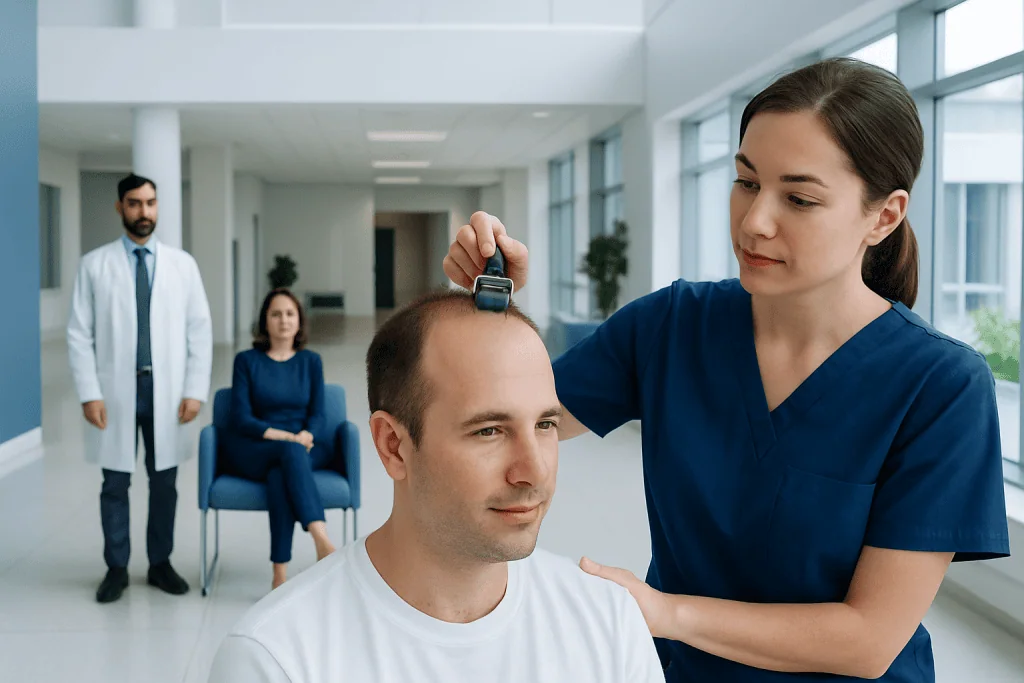
Microneedling may improve hair growth in selected patients, particularly those with androgenetic alopecia. Results are usually better when dermarolling is combined with a doctor-guided treatment plan rather than used alone.
Key Takeaways
- Microneedling may improve hair growth in selected patients, particularly those with androgenetic alopecia.
- Results are usually better when dermarolling is combined with a doctor-guided treatment plan rather than used alone.
- Using the wrong needle length, poor hygiene, or too-frequent sessions can irritate the scalp and worsen inflammation.
- Not all hair loss responds to dermarolling; scarring alopecia, active scalp disease, or sudden shedding need medical evaluation.
- A dermatologist can help confirm the cause of hair loss and advise whether microneedling is appropriate.
Dermaroller hair growth treatments may support hair regrowth in some people, especially when thinning is related to pattern hair loss and combined with medical therapy. Microneedling is not a cure for every type of hair loss, so identifying the underlying cause is the most important first step.
Overview: Can a Dermaroller Help Hair Growth?
Dermaroller hair growth is possible in some cases, but microneedling is best understood as a supportive technique rather than a standalone cure. Tiny needles create controlled micro-injuries in the scalp, which may stimulate wound-healing signals, increase local blood flow, and improve absorption of certain topical treatments. This is why microneedling has attracted attention as part of a broader hair-loss plan.
The best evidence so far is for androgenetic alopecia, also called male or female pattern hair loss. In this setting, microneedling may help dormant or miniaturized follicles respond better to treatment. It is much less reliable for hair shedding caused by stress, nutritional deficiency, thyroid disease, autoimmune conditions, or scarring disorders.
Because hair loss has many causes, a person should not assume that a dermaroller is the right answer just because thinning is visible. Medical assessment can help distinguish common pattern hair loss from conditions such as alopecia or scalp inflammation. For people who may ultimately need procedural restoration, a specialist may also discuss options such as hair transplant as part of long-term planning.
How Microneedling Is Thought to Work
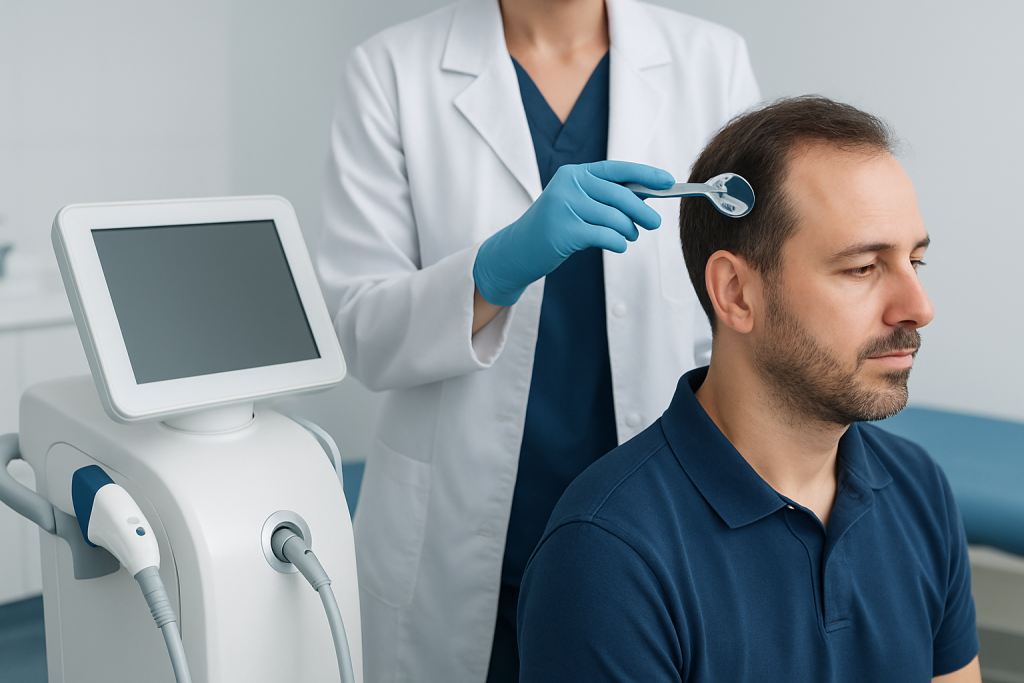
Microneedling uses a roller or pen with very fine needles to create tiny punctures in the skin. On the scalp, this controlled injury may trigger natural repair pathways, including growth factors involved in tissue renewal. Researchers believe these signals may encourage hair follicles to move into a more active growth phase in some patients.
Another possible benefit is improved delivery of topical medications. When a doctor recommends scalp treatment such as minoxidil, microneedling may enhance contact between the treatment and the skin barrier. This may be one reason some studies suggest better outcomes when microneedling is paired with standard therapy rather than used by itself.
It is important to keep expectations realistic. Hair follicles affected by advanced miniaturization, scarring, or permanent damage may not recover with microneedling. The technique also does not correct hormonal drivers, autoimmune disease, or systemic medical problems, so it works best when used thoughtfully within a diagnosis-based plan.
What the Evidence Shows
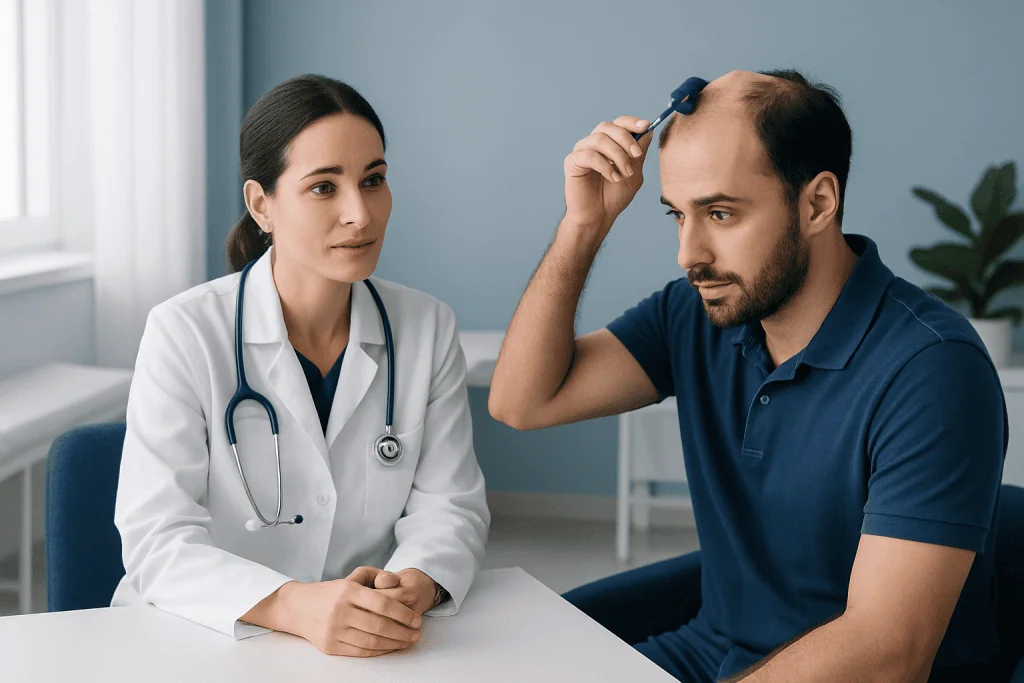
Clinical research on microneedling for hair loss is promising but still developing. Small studies have suggested that patients with androgenetic alopecia may see greater improvement when microneedling is added to established medical treatment compared with standard treatment alone. These studies often report gains in hair density, thickness, or visible coverage over several months.
At the same time, the evidence has limits. Studies use different needle lengths, session intervals, treatment combinations, and outcome measures, which makes results harder to compare directly. Many trials are small, and not all include long follow-up periods, so there is still uncertainty about which protocols work best and who is most likely to benefit.
For patients, the practical message is balanced: microneedling may help selected people, but it is not guaranteed and should not replace proper diagnosis. If hair thinning is advanced, specialists may also assess whether medical therapies, platelet-rich plasma, or restorative procedures such as hair transplantation are more appropriate for the desired result.
Who May Benefit Most, and Who Should Avoid It
Microneedling is generally considered most suitable for adults with mild to moderate pattern hair loss who still have active follicles in the thinning area. It may also be considered for some patients with stable hair loss who are already using medical therapy and want to discuss additional, evidence-informed options with a dermatologist.
It may not be appropriate for everyone. People with active scalp psoriasis, eczema, severe dandruff with inflammation, infection, open wounds, or a history of keloid scarring should avoid home microneedling unless a clinician specifically advises otherwise. Those using blood-thinning medication or who have bleeding disorders should also ask a doctor before treatment.
Microneedling is not a good self-treatment for sudden patchy hair loss, rapid shedding, pain, burning, or scalp scarring. These signs may point to conditions that need prompt medical attention, including inflammatory or autoimmune causes. In such cases, treating the underlying disease is more important than trying to stimulate growth mechanically.
- May help: pattern hair loss with ongoing follicles
- Needs caution: sensitive skin, history of scarring, bleeding risk
- Usually avoid until assessed: infection, inflamed scalp, unexplained sudden shedding
How to Use a Dermaroller Safely
Home dermarolling should be approached carefully. The scalp and hair follicles are delicate, and overly aggressive treatment can irritate the skin instead of helping it. In general, gentler, less frequent sessions are safer than intense rolling, especially for beginners. Devices should be clean, used only by one person, and replaced according to manufacturer and medical guidance.
Before use, the scalp should be clean and free of styling products, visible irritation, or infection. The roller is typically passed lightly over the thinning area in several directions without pressing hard enough to tear the skin. Mild redness can occur, but significant bleeding, persistent pain, or crusting suggests the technique is too aggressive or not suitable.
After microneedling, the scalp should be kept clean and protected from irritation. People should avoid using harsh products, scratching the scalp, or sharing devices. Because the ideal needle length and schedule vary, a dermatologist is the safest source of advice. In-clinic microneedling can be more controlled than self-treatment and may be paired with other options such as PRP treatment when clinically appropriate.
Patients should also remember that more is not better. Overuse can lead to inflammation that disrupts the scalp barrier and may worsen discomfort or shedding. A doctor can explain whether a home device is reasonable, how often it should be used, and whether it fits with a broader program that might include hair loss evaluation and treatment.
Possible Side Effects and Limits
Common short-term effects of microneedling include redness, tenderness, mild swelling, and temporary sensitivity of the scalp. These usually settle within a short period when treatment is done properly. However, the scalp can become more reactive if sessions are too frequent, the needles are too long, or the device is not clean.
Less common but more important risks include infection, contact irritation from products applied afterward, prolonged inflammation, and worsening of certain scalp conditions. If the scalp develops significant pain, pus, spreading redness, fever, or marked shedding after treatment, medical review is advisable.
Microneedling also has practical limits. It does not create new follicles where none remain, and it cannot reliably reverse severe baldness on its own. Some people notice little benefit even with correct technique. When hair loss has progressed substantially, physicians may discuss restoration options and supportive procedures such as hair transplant surgery depending on the hair-loss pattern and goals.
A Smarter Plan Than Dermarolling Alone
The most effective approach to hair thinning is usually personalized rather than one-size-fits-all. A clinician first looks for the cause of hair loss, then builds treatment around that diagnosis. This may include medical history, scalp examination, blood tests, dermoscopy, and a review of family history, medications, and recent illness or stress.
For pattern hair loss, microneedling may be one part of a broader strategy that can include topical or oral medications, nutritional correction when needed, and procedural options for advanced thinning. Patients often do better when treatment is started early, before follicles become too miniaturized or inactive.
If cosmetic coverage is already greatly reduced, surgical restoration may be considered after proper assessment of donor hair and expectations. In some cases, doctors evaluate scalp stability and future planning using pattern maps and density estimates, including cluster topics such as Norwood scale patterns or expected graft needs. Near the end of the care pathway, Acibadem International’s multidisciplinary specialists in JCI-accredited hospitals diagnose and treat hair-loss conditions for international patients using evidence-based evaluation and treatment planning.
When to Seek Medical Care
A person should seek medical advice if hair loss is sudden, patchy, painful, or accompanied by redness, scaling, burning, or scarring. These features are not typical of simple pattern hair loss and may indicate infection, autoimmune disease, inflammatory scalp disorders, or another condition that needs targeted treatment.
Medical review is also important if thinning continues despite self-care, if there is hair loss of the eyebrows or body hair, or if shedding starts after a major illness, pregnancy, rapid weight change, or a new medication. In these situations, the goal is to identify the cause rather than treat the scalp blindly.
After diagnosis, a dermatologist can advise whether microneedling is suitable, whether to avoid it, and how it fits with other options. This can help patients avoid unnecessary irritation and focus on the treatments most likely to support healthy hair growth safely.
Frequently asked questions
Does dermarolling really work for hair growth?
It may help some people, especially those with androgenetic alopecia, also called pattern hair loss. Evidence suggests it tends to work better as part of a medical treatment plan than as a stand-alone remedy.
How long does it take to see results from scalp microneedling?
Hair growth is gradual, so visible change usually takes several months rather than weeks. Consistency, the cause of hair loss, and whether other treatments are used all affect the timeline.
Can a dermaroller make hair loss worse?
Yes, if it is used too aggressively, too often, or on an inflamed or infected scalp. Irritation and inflammation can increase discomfort and may temporarily worsen shedding in some people.
Is microneedling better than minoxidil for hair loss?
They are different treatments and are often discussed together rather than compared as direct substitutes. Current evidence suggests microneedling may enhance results in some patients when combined with standard therapies such as minoxidil.
What needle size is best for home dermarolling on the scalp?
There is no single best size for everyone, and longer needles are not necessarily better. Because safety and suitability depend on the scalp condition and diagnosis, it is wise to ask a dermatologist before starting.
Who should not use a dermaroller for hair growth?
People with scalp infection, active dermatitis, psoriasis flares, open wounds, a tendency to form keloids, or unexplained sudden hair loss should avoid self-treatment until they are assessed. Those with bleeding risks should also seek medical advice first.
References
- American Academy of Dermatology
- National Institute for Health and Care Excellence
- British Association of Dermatologists
- Cochrane
- Mayo Clinic
This article is for general information only and is not a substitute for professional medical advice. Please consult a qualified doctor about your individual situation.
Hair transplant in Turkey — costs, graft counts & a free assessment
JCI-accredited · board-certified surgeons · reply within 24h
Add us as a Preferred Source to see more of our trusted health content across Google Search, AI Overviews and Discover.