Diabetic Retinopathy: Eye Damage, Screening, and Treatment

Diabetic retinopathy develops when high blood glucose damages tiny blood vessels in the retina. The condition may have no symptoms in its early stages, so routine dilated eye exams are essential.
Key Takeaways
- Diabetic retinopathy develops when high blood glucose damages tiny blood vessels in the retina.
- The condition may have no symptoms in its early stages, so routine dilated eye exams are essential.
- Risk increases with longer duration of diabetes, high blood glucose, high blood pressure, kidney disease, pregnancy, and smoking.
- Treatment may include careful monitoring, laser therapy, eye injections, or surgery, depending on the stage and complications.
- Managing blood glucose, blood pressure, cholesterol, and lifestyle habits helps reduce the risk of progression.
Diabetic retinopathy is a diabetes-related eye condition that can damage the retina and affect vision, often before symptoms appear. Regular eye screening, good diabetes control, and timely treatment can help protect sight.
Overview
Diabetic retinopathy is a common complication of diabetes that affects the retina, the light-sensitive tissue at the back of the eye. The retina needs a healthy network of tiny blood vessels to receive oxygen and nutrients. Over time, high blood glucose can weaken and damage these vessels, leading to leakage, swelling, bleeding, or the growth of fragile new vessels.
The condition can occur in people with type 1 diabetes, type 2 diabetes, and diabetes during pregnancy. It usually develops gradually, and many people do not notice vision changes in the early stages. This is why diabetes eye screening is an important part of routine diabetes care, even when vision seems normal.
Diabetic retinopathy can range from mild changes that need monitoring to advanced disease that requires urgent treatment. The goal of care is to detect changes early, slow progression, and treat complications before they cause lasting vision loss.
Symptoms
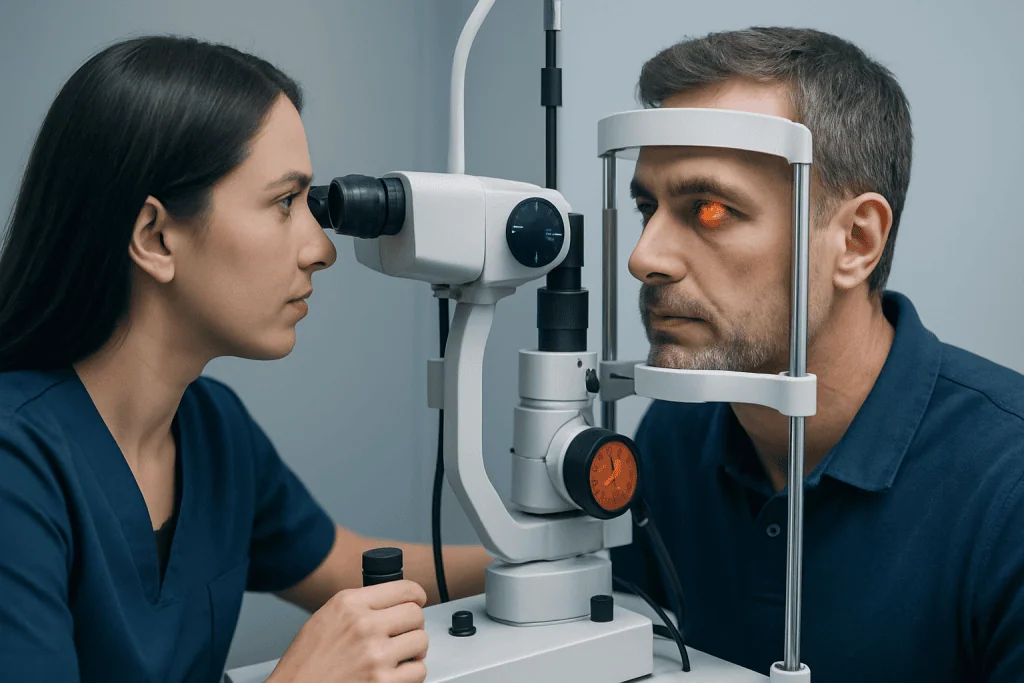
Early diabetic retinopathy often causes no symptoms. A person may read, drive, and use screens normally while small blood vessel changes are already present in the retina. Because symptoms are not a reliable warning sign, scheduled dilated eye exams are the safest way to find the condition early.
When symptoms do occur, they may include blurred vision, fluctuating vision, dark spots, floaters, reduced night vision, or difficulty seeing fine detail. Some people notice that straight lines look distorted or that colors appear less bright. Vision may change from day to day, especially when blood glucose levels vary significantly.
Sudden vision changes can occur if there is bleeding inside the eye or severe swelling in the central retina, called the macula. Symptoms such as a sudden shower of floaters, a dark curtain over vision, or rapid loss of sight should be assessed promptly by an eye specialist.
Causes & Risk Factors
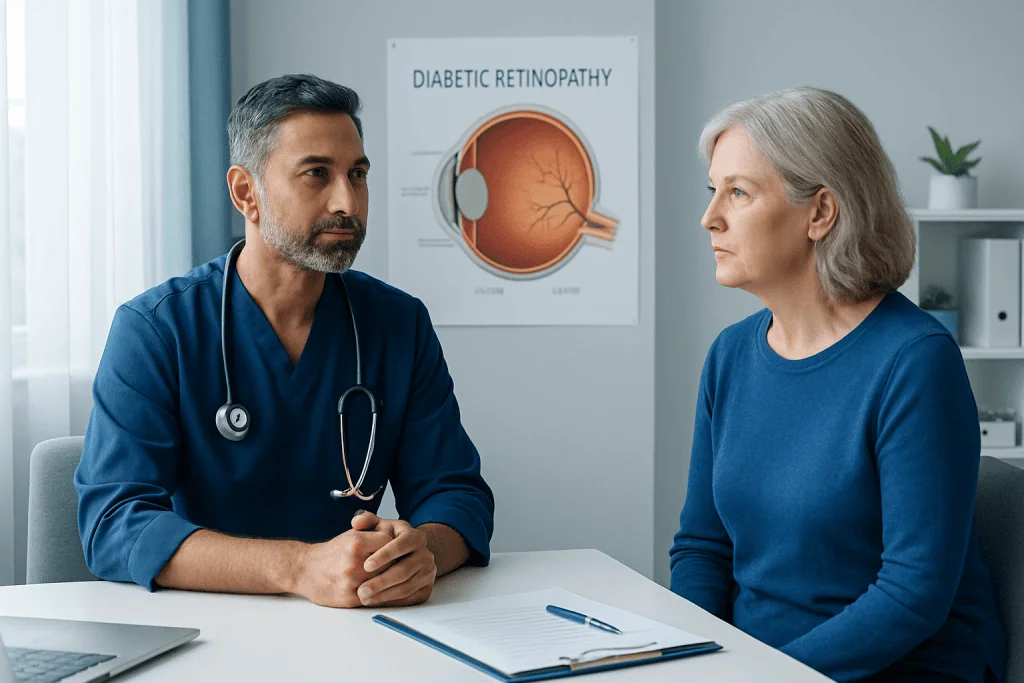
The main cause of diabetic retinopathy is long-term damage to retinal blood vessels from high blood glucose. These vessels may become blocked, leak fluid, or allow fats and proteins to collect in the retina. In more advanced disease, the eye may try to grow new blood vessels, but these are fragile and can bleed easily.
Several factors can increase the risk or speed of progression. The longer a person has diabetes, the greater the chance of developing some degree of retinal change. Poorly controlled blood glucose, high blood pressure, abnormal cholesterol levels, kidney disease, anemia, and smoking can also contribute.
Pregnancy can increase the risk of retinopathy progression in people who already have diabetes. Women with type 1 or type 2 diabetes who are pregnant or planning pregnancy should discuss eye screening with their doctor. Gestational diabetes alone is less commonly linked to retinopathy, but medical follow-up remains important for overall health.
- Key risk factors include longer diabetes duration and consistently high blood glucose.
- High blood pressure and high cholesterol can worsen blood vessel damage.
- Kidney disease and smoking may increase the likelihood of progression.
- Pregnancy may require more frequent eye monitoring in women with pre-existing diabetes.
Screening & Diagnosis
Diabetic retinopathy is diagnosed through a comprehensive eye examination, usually performed by an ophthalmologist or trained eye care professional. A dilated eye exam allows the retina to be viewed more clearly. Eye drops are used to widen the pupils, and the doctor checks for bleeding, leakage, swelling, blocked vessels, and abnormal new vessels.
Retinal photography may be used for screening, especially in diabetes clinics or community programs. Optical coherence tomography, often called OCT, creates detailed cross-sectional images of the retina and is useful for detecting diabetic macular edema, which is swelling in the central part of the retina. Fluorescein angiography may be used in selected cases to show leaking or blocked blood vessels.
Screening schedules depend on the type of diabetes, age, pregnancy status, and previous eye findings. Many adults with diabetes need at least regular eye examinations, and some need more frequent monitoring if retinopathy is present. The person’s endocrinologist, diabetes care team, and ophthalmologist can recommend an appropriate schedule.
Diagnosis is usually classified by severity. Non-proliferative diabetic retinopathy is an earlier stage with damaged or leaking vessels. Proliferative diabetic retinopathy is a more advanced stage in which abnormal new vessels grow. Diabetic macular edema can occur at any stage and is an important cause of central vision blurring.
Treatment Options
Treatment depends on the stage of retinopathy, whether the macula is swollen, and how vision is affected. Mild disease may not need eye procedures immediately, but it does require careful monitoring and strong diabetes management. Improving blood glucose, blood pressure, and cholesterol control can help slow further damage.
For diabetic macular edema or proliferative diabetic retinopathy, eye injections are commonly used. These medicines, often called anti-VEGF treatments, help reduce abnormal blood vessel growth and leakage. Some patients may need repeated injections over time, and the treatment plan is individualized based on retinal findings and response.
Laser treatment may be recommended to seal leaking areas, reduce swelling, or treat areas of the retina that are not receiving enough blood supply. In advanced cases with significant bleeding into the eye, scar tissue, or retinal detachment, a surgical procedure called vitrectomy may be needed to remove blood or repair the retina.
Treatment can often stabilize the condition and may improve vision in some cases, especially when started early. However, results vary depending on the severity and duration of retinal damage. Regular follow-up is essential because diabetic retinopathy is a long-term condition that can recur or progress even after successful treatment.
Prevention & Self-care
Not every case of diabetic retinopathy can be prevented, but the risk of developing or worsening eye damage can be reduced. The most important step is consistent diabetes management, including healthy eating, appropriate physical activity, prescribed medicines, and regular monitoring as recommended by a healthcare professional.
Blood pressure and cholesterol management are also important because the retina is highly sensitive to blood vessel health. Patients should take prescribed medications as directed and attend routine check-ups for diabetes, kidney function, heart health, and eye care. Stopping smoking is strongly recommended, as smoking can worsen blood vessel damage throughout the body.
Self-care does not replace eye screening. A person with diabetes should not wait until vision changes to see an eye specialist. Keeping a personal record of eye exam dates, results, treatments, and follow-up plans can make long-term care easier and safer.
- Attend scheduled dilated eye exams, even when vision is clear.
- Follow the diabetes care plan agreed with the medical team.
- Keep blood pressure and cholesterol under medical control.
- Report new floaters, blurred vision, or sudden vision loss promptly.
- Avoid smoking and seek support if quitting is difficult.
When to See a Doctor
People with diabetes should ask their healthcare provider when to begin eye screening and how often to repeat it. Those who already have diabetic retinopathy, diabetic macular edema, kidney disease, pregnancy, or poor glucose control may need closer monitoring. Regular communication between the diabetes team and eye specialist helps coordinate care.
Medical attention should be sought promptly for sudden blurred vision, new floaters, flashes of light, a dark shadow in the field of vision, eye pain, or rapid loss of sight. These symptoms do not always mean permanent damage, but they should be assessed quickly to identify treatable problems.
International patients who need coordinated diabetes and eye care may be evaluated at Acibadem International, where multidisciplinary specialists and JCI-accredited hospitals diagnose and treat diabetic retinopathy and related conditions. As with any medical decision, patients should discuss options, benefits, and risks with qualified doctors who can assess their individual situation.
Frequently asked questions
Can diabetic retinopathy be reversed?
Some early retinal changes may improve with better blood glucose, blood pressure, and cholesterol control. More advanced damage may not fully reverse, but treatment can often slow progression and help preserve vision. Early detection gives the best chance of protecting sight.
How often should people with diabetes have an eye exam?
The timing depends on diabetes type, age, pregnancy status, and previous eye findings. Many adults with diabetes need regular dilated eye examinations, and people with existing retinopathy may need more frequent follow-up. A doctor or ophthalmologist should recommend the schedule.
Does diabetic retinopathy always cause blindness?
No. Many people with diabetic retinopathy maintain useful vision, especially when the condition is found early and managed properly. Regular screening and timely treatment greatly reduce the risk of severe vision loss.
What is diabetic macular edema?
Diabetic macular edema is swelling in the macula, the central part of the retina responsible for sharp detailed vision. It can cause blurred or distorted central vision and may occur at any stage of diabetic retinopathy. Treatments such as eye injections or laser therapy may be recommended.
Are eye injections painful?
Eye injections are usually performed with numbing drops and antiseptic preparation to reduce discomfort and infection risk. Patients may feel pressure or mild irritation, but the procedure is generally brief. The ophthalmologist explains what to expect and how to care for the eye afterward.
Can good diabetes control prevent retinopathy completely?
Good diabetes control lowers the risk and can slow progression, but it cannot guarantee that retinopathy will never occur. Duration of diabetes, genetics, blood pressure, cholesterol, kidney health, and other factors also play a role. Eye screening remains necessary even with excellent control.
This article is for general information only and is not a substitute for professional medical advice. Please consult a qualified doctor about your individual situation.
Diabetic Retinopathy in Turkey — costs, top hospitals & a free quote
JCI-accredited · board-certified surgeons · reply within 24h
Add us as a Preferred Source to see more of our trusted health content across Google Search, AI Overviews and Discover.
Check your numbers in seconds
BMI, calories, due date, blood pressure and 30+ more clinical calculators — free, instant, doctor-reviewed ranges.

Ophthalmology
Comprehensive eye care from laser vision correction to retina, cornea and cataract surgery.
75 specialists in this unitRelated Conditions
More from the Health Library

Graves’ Disease: Autoimmune Thyroid Overactivity and Eye Symptoms

Goiter: Causes, Symptoms, and When an Enlarged Thyroid Needs Treatment

What Is Endocrinology? The Endocrine System Explained

Living with Endocrine Disorders: Daily Self-Care, Follow-Up, and Monitoring

Hyperthyroidism: Symptoms, Causes, and Treatment Options