Different Types of Vaginas: A Complete Medical Overview

There is a wide range of normal variation in vulvar appearance. The vagina is the internal canal; many people use the word to describe the external vulva.
Key Takeaways
- There is a wide range of normal variation in vulvar appearance.
- The vagina is the internal canal; many people use the word to describe the external vulva.
- Labia may be longer, shorter, darker, lighter, more prominent, or asymmetrical and still be normal.
- Pain, itching, unusual discharge, sores, bleeding, or new lumps should be checked by a doctor.
- Good intimate health focuses on comfort, hygiene, and symptom awareness rather than appearance.
Different types of vaginas usually describe normal differences in the appearance of the vulva, the external genital area. Size, shape, color, symmetry, and hair pattern can vary widely, and most of these differences are healthy and do not need treatment.
Overview: what people mean by different types of vaginas
When people ask about different types of vaginas, they are usually asking about the appearance of the external genital area. Medically, this outer area is called the vulva. It includes the labia majora, labia minora, clitoris, vaginal opening, and the opening of the urethra.
There is no single “normal” look. Vulvas vary naturally in size, shape, color, fullness, symmetry, and the visibility of the inner labia. These differences are influenced by genetics, hormones, age, childbirth, body weight, and normal tissue elasticity.
The vagina itself is the internal muscular canal that leads from the vaginal opening to the cervix. Because everyday language often uses “vagina” to mean the whole area, it can be helpful to understand this distinction. Knowing the correct anatomy can make it easier to recognize what is normal and when a symptom may need medical advice.
Normal variations in vulvar anatomy
Normal vulvar variation can be broad. Some people have outer labia that are fuller and more prominent, while others have flatter outer labia. The inner labia may stay tucked inside the outer folds or may extend beyond them. One side may also be longer or shaped differently than the other, which is common and usually harmless.
Color also varies. Vulvar skin may be pink, brown, reddish, purple-toned, or a deeper shade than surrounding skin. Color can change over time with puberty, hormonal shifts, pregnancy, aging, or friction. Texture can differ as well, with some tissue appearing smooth and some more folded or wrinkled.
Other visible differences may include the size of the clitoral hood, the spacing of the labia, and the amount and pattern of pubic hair. These features do not by themselves indicate a health problem. Appearance alone is usually less important than whether the area is comfortable and free of concerning symptoms.
- Inner labia may be small, medium, or more visible.
- Outer labia may be plump, thin, or less noticeable.
- Mild asymmetry is common.
- Skin tone can vary within the same person.
- Changes can occur naturally with age and hormonal stages.
How the vulva changes across life stages

The vulva changes naturally throughout life. In childhood, the tissues are usually small and delicate. During puberty, rising estrogen levels lead to growth of the labia, pubic hair development, and changes in pigmentation. This is a normal part of sexual maturation.
During the reproductive years, the vulva may change with the menstrual cycle, sexual arousal, pregnancy, and childbirth. Increased blood flow can temporarily deepen color or cause mild swelling. Pregnancy may make veins more visible, and childbirth can alter tissue stretch and contour.
Later in life, especially around menopause, lower estrogen levels can lead to thinner, drier, and more fragile tissues. The vulva may appear less full, and irritation may become more noticeable. These are common changes, but bothersome symptoms such as dryness, pain, or repeated infections should be discussed with a clinician.
What is considered healthy and what may not be
A healthy vulva does not need to look a certain way. In most cases, healthy tissue may be uneven, darker than nearby skin, or naturally prominent. The key signs of health are comfort, the absence of persistent symptoms, and no sudden unexplained changes.
Some changes deserve attention because they can suggest irritation, infection, dermatologic conditions, or less commonly a more serious problem. These include persistent itching, burning, unusual discharge, a strong odor, painful urination, sores, blisters, rash, swelling, or bleeding that is not part of menstruation.
New lumps, persistent thickened skin, or marked color changes should also be evaluated. Conditions such as yeast infections, bacterial imbalance, skin disorders, cysts, or vaginal cancer can affect the area. Most symptoms have benign causes, but prompt assessment is the safest way to find the reason and treat it appropriately.
Common concerns about appearance and comfort
Many people worry that their vulva looks unusual because of images in media, cosmetic marketing, or limited education about normal anatomy. In reality, there is significant diversity in vulvar appearance. A longer inner labia, uneven shape, or darker pigmentation is often completely normal.
Appearance becomes medically relevant when it is linked to discomfort. For example, prominent labial tissue may rub against clothing, cause irritation during exercise, or contribute to discomfort during sex. In such cases, a gynecologist can assess whether symptoms are due to anatomy, skin sensitivity, infection, or another condition.
Concerns may also relate to odor or discharge. A mild natural scent is normal, and vaginal discharge changes across the cycle. However, fishy odor, cottage cheese-like discharge, green or yellow discharge, or associated itching and burning may indicate infection and should be evaluated. Depending on the concern, tests or treatments may be considered, and in selected cases a doctor may recommend gynecologic evaluation and treatment.
Diagnosis: how doctors assess vulvar and vaginal concerns
Doctors begin with a medical history and a physical examination. They usually ask about symptoms, menstrual history, sexual activity, hygiene products, skin sensitivities, previous infections, and any recent changes. This helps distinguish normal anatomy from a medical issue.
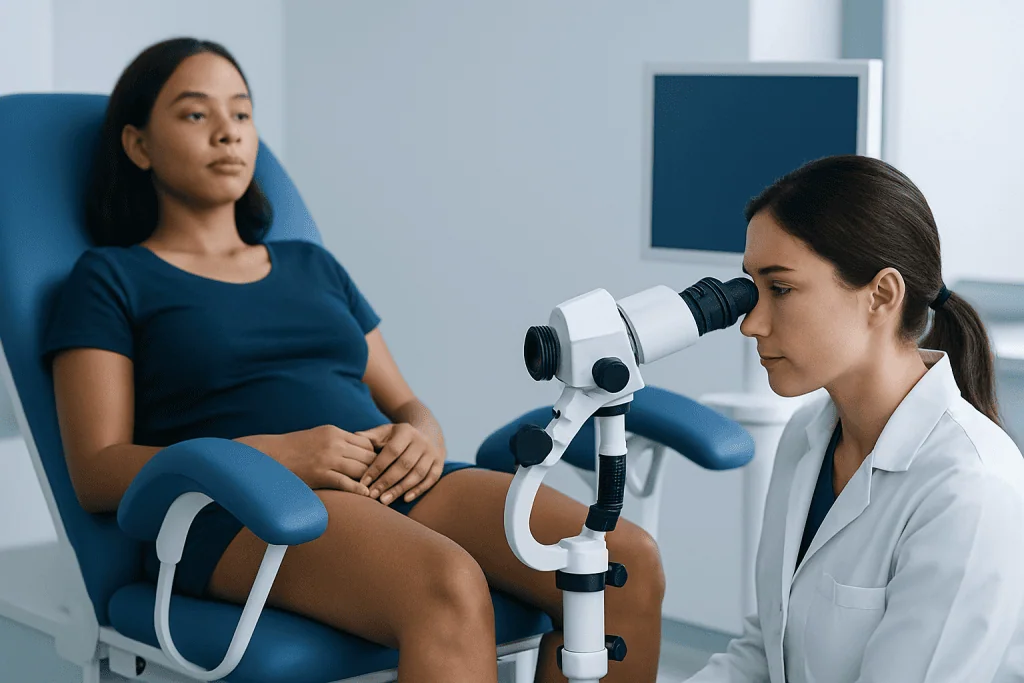
The physical exam may include inspection of the vulva and, when appropriate, an internal pelvic examination. If there is discharge, irritation, or pain, samples may be taken to check for infection or changes in the vaginal environment. If a skin condition is suspected, the doctor may suggest referral to a gynecologist or dermatologist.
In some cases, additional evaluation is needed for persistent pain, masses, abnormal bleeding, or suspicious lesions. This can include imaging, colposcopic assessment, or tissue sampling. If there is concern about deeper gynecologic disease, more specialized care such as gynecologic oncology assessment may be appropriate.
Self-care, hygiene, and treatment options
For most people, no treatment is needed for the natural appearance of the vulva. Basic care includes washing gently with water or a mild unscented cleanser on the external area only, avoiding harsh soaps, douching, and fragranced products, and wearing breathable underwear. These steps help protect the skin barrier and the natural vaginal environment.
If symptoms are present, treatment depends on the cause. Infections may require antifungal or antibiotic therapy. Dryness or irritation may improve with moisturizers, lubricants, or hormone-related treatment when recommended by a doctor. Skin conditions such as eczema, contact dermatitis, or lichen-related disorders may need prescription creams and follow-up.
Some people ask about procedures to alter the appearance of the vulva. Surgery is not medically necessary for normal variation alone. However, if anatomy causes persistent friction, pain, hygiene difficulty, or functional discomfort, a specialist may discuss options such as labiaplasty after careful evaluation of symptoms, goals, and risks.
When to seek medical care
Medical care is recommended when a new symptom appears or when a familiar symptom does not improve. A person should arrange an appointment if there is persistent itching, burning, swelling, pelvic pain, painful sex, painful urination, unusual discharge, or a strong odor. Bleeding after sex, bleeding between periods, or any sore that does not heal also deserves attention.
Urgent evaluation may be needed for severe pain, rapid swelling, fever, heavy bleeding, or a painful lump. Although many causes are minor and treatable, it is best not to self-diagnose persistent genital symptoms. Early assessment can provide reassurance and help prevent complications.
For international patients who need specialist care, Acibadem International’s multidisciplinary teams in JCI-accredited hospitals evaluate and treat gynecologic conditions in a coordinated setting. A qualified gynecologist can explain whether a visible difference is part of normal anatomy or a sign of a condition that needs treatment.
Frequently asked questions
Is it normal for the labia to be uneven?
Yes. Mild asymmetry is very common, and one side of the labia may be longer, thicker, or shaped differently than the other. Unevenness alone is usually not a medical problem unless it causes pain, rubbing, or other symptoms.
Do different colors of the vulva mean something is wrong?
Not usually. Vulvar color varies widely and may be pink, brown, red-toned, purple-toned, or darker than surrounding skin. Sudden marked color changes, irritation, sores, or thickened patches should be checked by a doctor.
What is the difference between the vagina and the vulva?
The vulva is the external genital area, including the labia, clitoris, and vaginal opening. The vagina is the internal canal that connects the vaginal opening to the cervix. In everyday speech, many people say vagina when they mean vulva.
Can the vulva change after childbirth or menopause?
Yes. Childbirth can stretch tissues and change contour, while menopause can lead to thinner, drier, and less elastic tissue because of lower estrogen levels. These changes are common, but symptoms such as pain, dryness, or irritation can often be treated.
Should a healthy vulva have a smell?
A mild natural scent is normal and can change slightly with sweating, menstruation, and the menstrual cycle. A strong fishy odor or odor with itching, burning, or unusual discharge may suggest an infection or imbalance and should be assessed.
When should someone worry about a lump or sore?
A new lump, cyst, ulcer, blister, or sore that does not heal should be evaluated, especially if it is painful, growing, bleeding, or accompanied by fever. Many causes are benign, but an examination is important to rule out infection, cysts, skin disease, or more serious conditions.
References
- American College of Obstetricians and Gynecologists
- Office on Women's Health
- National Health Service
- Mayo Clinic
- World Health Organization
This article is for general information only and is not a substitute for professional medical advice. Please consult a qualified doctor about your individual situation.
Hair transplant in Turkey — costs, graft counts & a free assessment
JCI-accredited · board-certified surgeons · reply within 24h
Add us as a Preferred Source to see more of our trusted health content across Google Search, AI Overviews and Discover.