Digital Twins in Medicine: What They Are and How They May Guide Treatment
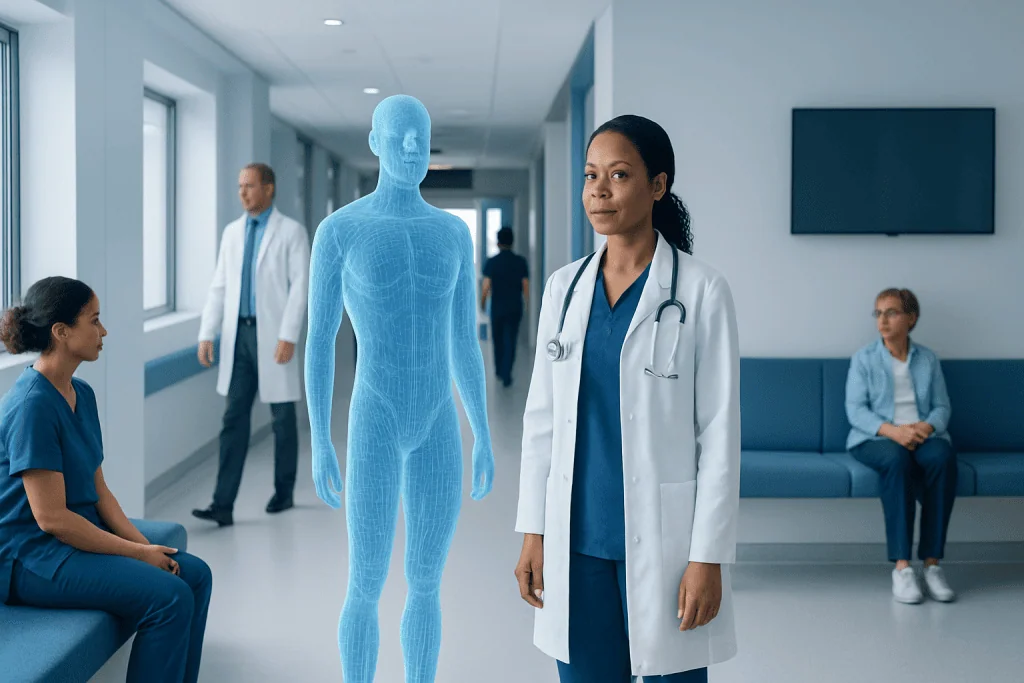
A digital twin is a virtual model built from real patient data such as scans, lab results, and monitoring information. In medicine, digital twins may help predict disease changes, compare treatment options, and support personalized care.
Key Takeaways
- A digital twin is a virtual model built from real patient data such as scans, lab results, and monitoring information.
- In medicine, digital twins may help predict disease changes, compare treatment options, and support personalized care.
- These tools are promising in areas such as cardiology, oncology, surgery planning, and chronic disease management.
- Digital twins do not make decisions alone; doctors interpret the results alongside symptoms, exams, and standard tests.
- Privacy, data quality, and validation are essential before digital twin technology can be widely used in routine care.
Digital twins in medicine are computer-based models designed to reflect a person’s body, health data, or a specific organ system. They may help clinicians test scenarios virtually, support more personalized care, and improve planning, although they are still developing and are not a replacement for medical judgment.
Overview: What digital twins in medicine mean
Digital twins in medicine are virtual representations of a person, part of the body, or a disease process created using real-world health data. The idea comes from engineering, where a digital copy of a machine is used to predict performance and test changes before they happen in real life. In healthcare, the same concept may allow clinicians to model how a patient’s body could respond to illness, surgery, or treatment.
A medical digital twin may be built from information such as imaging scans, blood tests, genetic data, heart rhythm recordings, wearable device data, and details from a person’s medical history. Advanced computer models and artificial intelligence can then analyze these data points together. The aim is not simply to store information, but to create a dynamic model that changes as the patient changes.
This technology is part of the broader move toward precision medicine. Instead of relying only on what works for the average patient, doctors may eventually use a digital twin to explore what is most likely to help a specific individual. Even so, digital twins are still an emerging tool. In most settings, they are used in research, pilot programs, or highly specialized clinical applications rather than everyday routine care.
How a medical digital twin is created
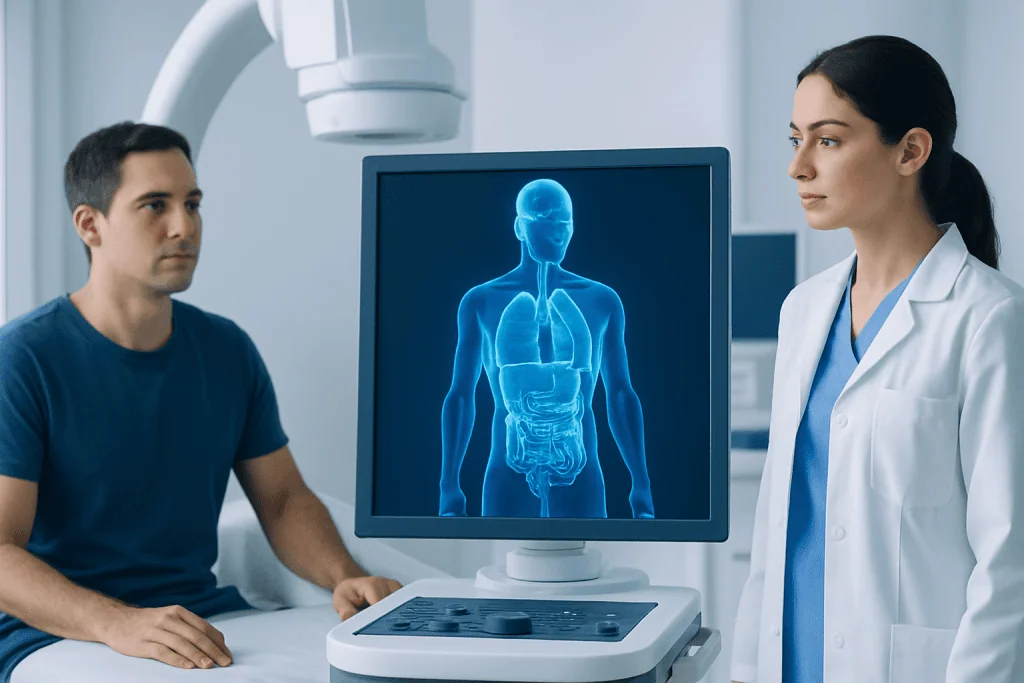
Creating a digital twin usually begins with collecting reliable patient data. This may include CT, MRI, ultrasound, or other imaging studies; laboratory results; pathology findings; medication history; vital signs; and information from implanted devices or wearables. In some cases, genetic or molecular data are also included to better understand disease behavior at a more detailed level.
Once the data are gathered, software organizes them into a structured model. Depending on the medical goal, the twin might represent a whole person, a single organ such as the heart, or a particular condition such as a tumor. Mathematical modeling, physics-based simulation, and machine learning may all be used to estimate how that digital model behaves over time.
The digital twin is then refined as new information becomes available. For example, repeat scans, response to medication, or recovery after surgery can be fed back into the model. This matters because health is not static. A useful digital twin must evolve with the patient so that its predictions remain relevant, realistic, and clinically meaningful.
How digital twins may guide treatment
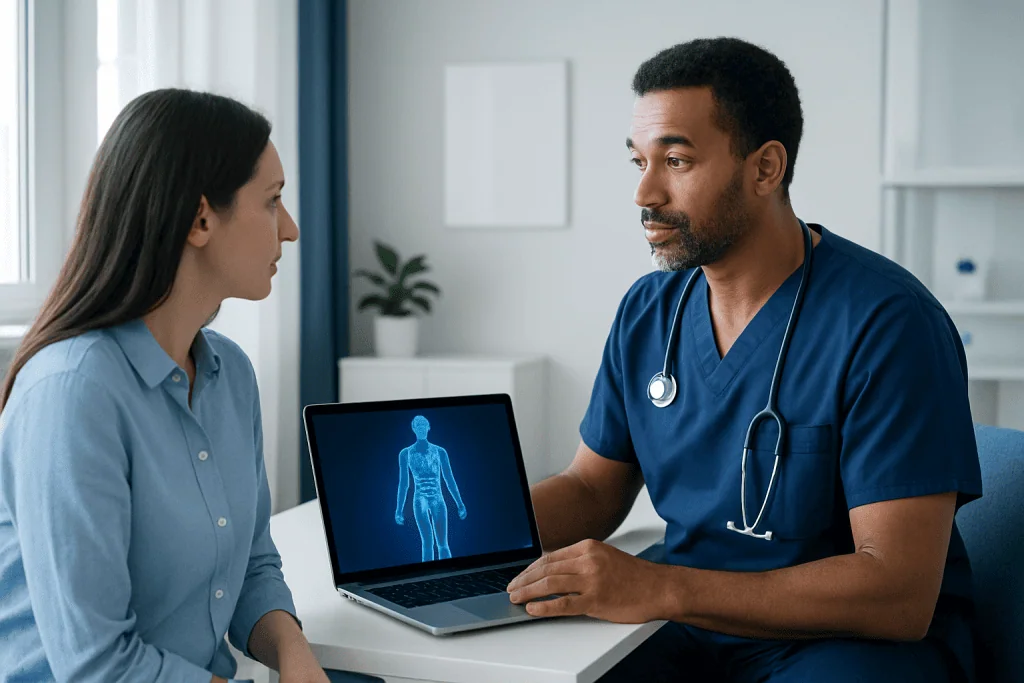
The main promise of digital twins in medicine is the ability to test options virtually before applying them in real life. A clinician may be able to compare how different treatments, procedures, or care plans could affect a patient and then choose the most suitable path. This could help reduce uncertainty, especially in complex cases where timing, anatomy, or individual biology matters.
For example, a digital twin of the heart may help model blood flow, valve function, or rhythm disturbances to support planning for cardiology treatment. In cancer care, a digital twin may combine imaging, pathology, and molecular information to estimate how a tumor might respond to oncology care or how it may change over time. In surgery, a virtual model can help teams rehearse difficult operations and plan the safest approach.
Digital twins may also support monitoring after treatment. If the model is updated with fresh data, it may help identify early signs that a disease is returning, a therapy is not working as expected, or recovery is progressing well. Even so, these tools are used to support decisions, not to replace the expertise of physicians, the patient’s preferences, or established medical guidelines.
Where digital twins are being used or studied
Several medical specialties are actively exploring digital twin technology. Cardiology is one of the leading areas because the heart can often be modeled using detailed imaging and physiological measurements. A patient-specific heart model may help evaluate structural problems, guide procedure planning, or improve understanding of complex rhythm issues.
Oncology is another important field. Researchers are investigating whether digital twins can help forecast tumor growth, estimate treatment response, and personalize follow-up plans for conditions such as cancer. In orthopedics and rehabilitation, digital models may be used to assess movement, plan orthopedic treatment, or optimize recovery after injury or surgery.
Neurology, intensive care, endocrinology, and chronic disease management are also promising areas. A digital twin may one day help model how a person with diabetes responds to changes in medication, meals, or physical activity. In respiratory medicine, these tools may support evaluation of people with lung cancer or other lung conditions by integrating scans and clinical data. However, the level of maturity differs by specialty, and many applications remain under study rather than standard practice.
Potential benefits and current limitations
The potential benefits of digital twins are significant. They may improve personalization of care, support earlier intervention, and help doctors plan with greater confidence. By simulating possible outcomes, they could reduce trial-and-error decision-making and make treatment more efficient. They may also improve communication by giving patients and care teams a clearer picture of what is happening in the body.
At the same time, important limitations remain. A digital twin is only as good as the data used to build it. If the information is incomplete, outdated, or inconsistent, the model may be less accurate. Human biology is also extremely complex, and no model can capture every factor that affects health, including lifestyle, emotional stress, social circumstances, and unexpected changes in disease.
Validation is another key issue. Before a digital twin can guide real treatment decisions broadly, it must be carefully tested to show that it is reliable, safe, and clinically useful. Researchers and regulators are still working through questions about standards, quality control, transparency, and responsibility. For these reasons, digital twins should be seen as an evolving support tool rather than a finished solution.
Privacy, ethics, and safety considerations
Because digital twins depend on large amounts of personal health information, privacy protection is essential. Medical data may include scans, genetic details, device readings, and other sensitive records. Healthcare providers and technology developers must use strong safeguards to protect confidentiality and handle data in line with legal and ethical standards.
There are also ethical questions about fairness and access. If a model is trained mostly on data from certain populations, it may work less well for others. This can create bias and widen health inequalities if not addressed carefully. Transparent design, diverse datasets, and ongoing review are important to make the technology as equitable as possible.
Safety depends on keeping people in the decision-making loop. Doctors need to understand what a digital twin can and cannot do, and patients should know whether such a tool is being used in their care. Informed discussions help build trust. The safest approach is one in which digital twins complement clinical judgment, standard testing, and patient-centered decision-making rather than replacing them.
What patients should know now
For most people, digital twins in medicine are not yet something they will encounter during a routine clinic visit. In many hospitals and research centers, the technology is still being developed, tested, or used in selected complex cases. That means patients should view digital twins as a promising future direction in care, not as a standard option available everywhere today.
If a doctor mentions a digital model or simulation, it can be helpful to ask what data are being used, what the model is meant to predict, and how it will affect the treatment plan. Patients can also ask whether the tool has been validated for that specific purpose and how their privacy will be protected. Clear questions can make complex technology easier to understand.
People living with complicated or long-term conditions may hear more about these approaches as precision medicine advances. Near the end of the care journey, support from experienced teams remains important. Acibadem International’s multidisciplinary specialists and JCI-accredited hospitals diagnose and treat complex conditions for international patients, including cases that may benefit from advanced imaging, data-driven planning, and personalized care pathways such as advanced diagnostics.
Even as technology progresses, the core of good care stays the same: careful medical evaluation, open communication, and treatment decisions made with a qualified healthcare professional. Digital twins may strengthen that process, but they work best when used thoughtfully and alongside trusted clinical expertise.
Frequently asked questions
What is a digital twin in medicine in simple terms?
A digital twin in medicine is a computer-based model designed to represent a real patient, organ, or disease using that person’s health data. Doctors and researchers may use it to simulate possible changes and explore how different treatments could work.
Are digital twins in medicine being used today?
Yes, but mainly in research settings, specialized centers, and selected clinical applications. They are not yet a routine part of care for most patients, and their use varies by hospital, specialty, and condition.
Can a digital twin choose the best treatment on its own?
No. A digital twin may provide useful predictions or comparisons, but it does not replace a doctor’s judgment. Treatment decisions still depend on symptoms, examinations, test results, patient goals, and established medical standards.
Which medical fields may benefit most from digital twins?
Cardiology, oncology, surgery planning, orthopedics, and chronic disease management are among the most active areas. These fields often use detailed imaging or measurable body data, which makes patient-specific modeling more practical.
Are digital twins the same as artificial intelligence?
Not exactly. Artificial intelligence may be one of the tools used to build or improve a digital twin, but a digital twin is broader than AI alone. It usually combines patient data, clinical knowledge, and simulation methods to model health in a more dynamic way.
What are the main concerns about digital twins in medicine?
The main concerns include data privacy, model accuracy, bias, and whether the technology has been properly validated. Because these systems handle sensitive health information and may influence care, they need careful oversight and responsible use.
References
- World Health Organization
- U.S. Food and Drug Administration
- National Institutes of Health
- European Medicines Agency
- Nature Medicine
This article is for general information only and is not a substitute for professional medical advice. Please consult a qualified doctor about your individual situation.
Explore treatments in Turkey — costs, top hospitals & a free quote
JCI-accredited · board-certified surgeons · reply within 24h
Add us as a Preferred Source to see more of our trusted health content across Google Search, AI Overviews and Discover.