Diplopia: What Patients Need to Know

Diplopia can be monocular (in one eye) or binocular (only when both eyes are open), and this difference helps guide diagnosis. Common causes include refractive problems, cataracts, eye muscle imbalance, nerve palsies, thyroid eye disease, and neurological conditions.
Key Takeaways
- Diplopia can be monocular (in one eye) or binocular (only when both eyes are open), and this difference helps guide diagnosis.
- Common causes include refractive problems, cataracts, eye muscle imbalance, nerve palsies, thyroid eye disease, and neurological conditions.
- Sudden diplopia, especially with headache, weakness, drooping eyelid, or trouble speaking, needs urgent medical care.
- Treatment depends on the cause and may include glasses, prisms, eye patching, medication, or surgery.
- A prompt eye and medical evaluation is important because double vision is a symptom, not a disease itself.
Diplopia means seeing two images of one object, often called double vision. It may be temporary or ongoing, and because it can come from eye, nerve, muscle, or brain-related causes, it should be assessed by a qualified doctor.
Overview: what diplopia means
Diplopia is the medical term for double vision. A person with diplopia sees two images of a single object, and the images may appear side by side, one above the other, or slightly tilted. Some people notice it all the time, while others only experience it when looking in certain directions or when tired.
Doctors often begin by asking an important question: does the double vision go away when one eye is covered? If it remains when either eye is open alone, it is called monocular diplopia. If it disappears when one eye is covered and only happens with both eyes open, it is called binocular diplopia. This distinction is very helpful because the causes are different.
Diplopia itself is not a diagnosis. It is a symptom that can result from a problem in the eye’s surface or lens, the muscles that move the eyes, the nerves that control those muscles, or the parts of the brain that coordinate vision. For this reason, careful assessment matters, especially when symptoms start suddenly.
Symptoms and how diplopia may feel
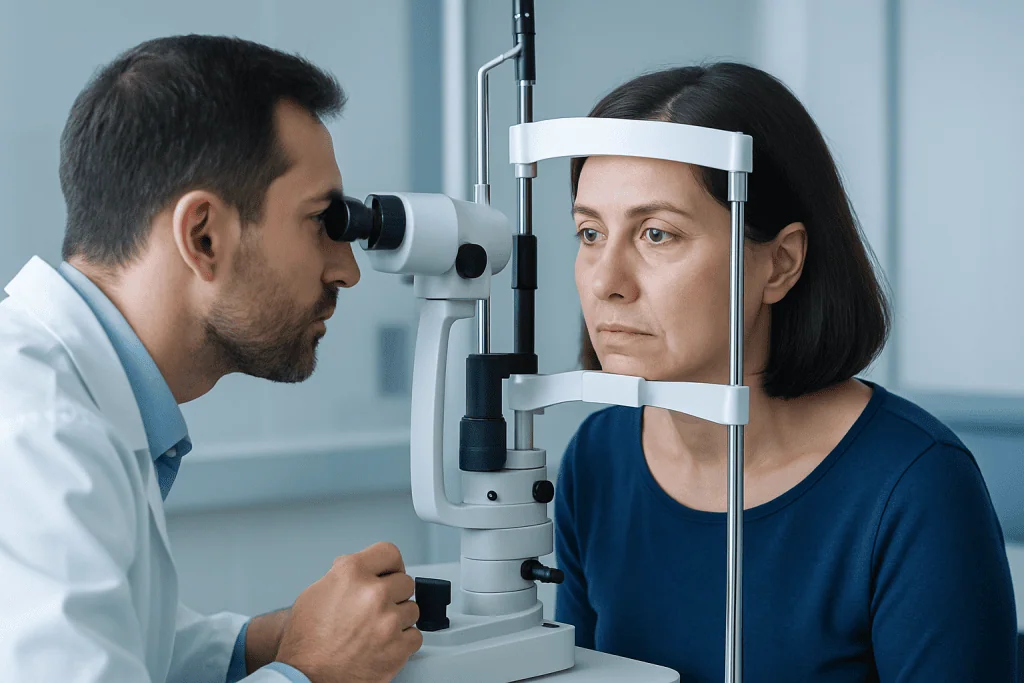
The main symptom is seeing two images instead of one. These images may be clear or blurry, close together or far apart, and they may change depending on the direction of gaze. Some people find that closing one eye helps them function, while others develop a head tilt or turn to reduce the double vision.
Diplopia may also come with eye strain, headaches, nausea, dizziness, or a feeling that the eyes are not working together. Children may not always describe double vision clearly; instead, they may squint, cover one eye, avoid reading, or seem unusually clumsy.
Associated symptoms can give clues to the cause. Redness, pain, and light sensitivity may suggest an eye problem. A drooping eyelid, facial weakness, numbness, trouble speaking, or balance changes may point to a nerve or brain-related condition and should be assessed promptly.
- Horizontal double vision often relates to side-to-side eye alignment problems.
- Vertical double vision may occur when one eye sits higher than the other.
- Monocular double vision is more often linked to the eye itself, such as the cornea, lens, or refractive error.
- Binocular double vision usually reflects misalignment of the two eyes.
Causes and risk factors
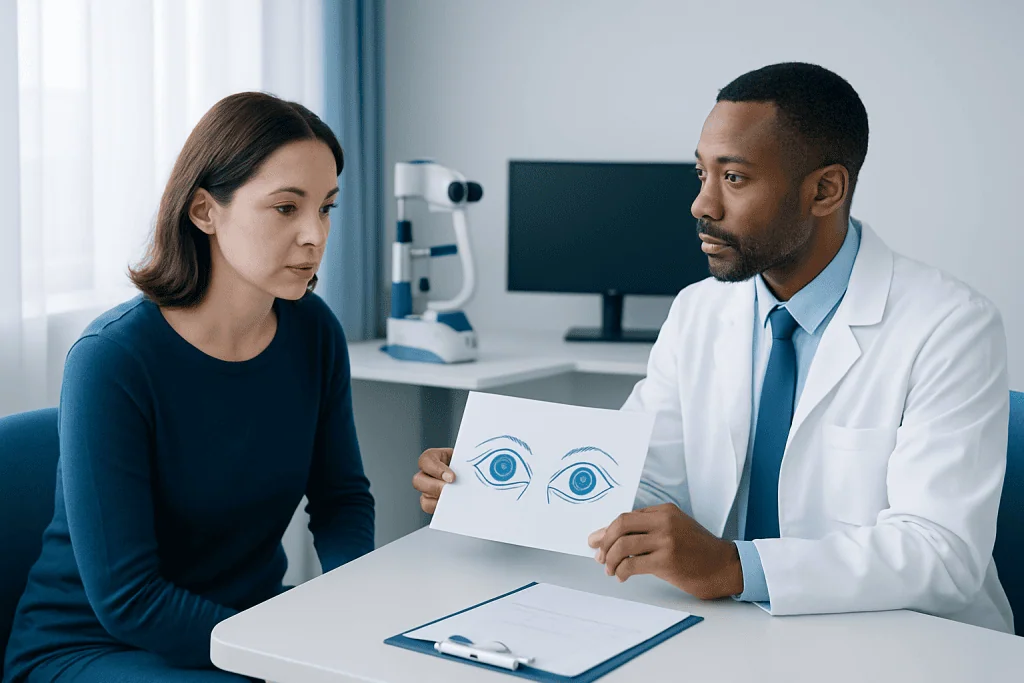
Monocular diplopia is often caused by problems within one eye. These may include dry eye, irregularities of the cornea, cataracts, uncorrected astigmatism, or less commonly issues affecting the lens or retina. In these cases, the problem does not come from the eyes being misaligned; instead, the image entering one eye is distorted.
Binocular diplopia happens when the eyes are not aligned properly. This can result from weakness or restriction of the eye muscles, problems with the cranial nerves that move the eyes, or disorders that affect communication between nerves and muscles. Examples include thyroid eye disease, diabetes-related nerve palsy, myasthenia gravis, orbital injury, and some brain conditions such as stroke or multiple sclerosis.
Other risk factors depend on the underlying cause. Older age increases the likelihood of cataracts and vascular nerve palsies. Diabetes, high blood pressure, and smoking can raise the risk of blood vessel-related nerve problems. Autoimmune disease may increase the likelihood of conditions such as thyroid eye disease or myasthenia gravis. Head trauma can also trigger double vision by affecting the eye socket, muscles, or nerves.
Because several causes overlap with broader health conditions, doctors may also consider whether diplopia is linked to disorders such as stroke, thyroid disease, or other neurological or eye conditions. The goal is not to assume the most serious cause, but to identify what is driving the symptom and treat it appropriately.
How doctors diagnose diplopia
Assessment starts with a detailed history. Doctors ask when the double vision began, whether it was sudden or gradual, whether it is constant or intermittent, and whether it disappears when one eye is covered. They also ask about pain, recent infection, head injury, headache, neurological symptoms, and medical conditions such as diabetes or thyroid disease.
The examination usually includes visual acuity testing, refraction, assessment of eye movements, pupil testing, eyelid position, and alignment of the eyes in different directions of gaze. The doctor may use prisms or cover tests to measure the degree of misalignment. A slit-lamp exam helps evaluate the cornea and lens, while a retinal exam assesses the back of the eye.
Additional tests depend on what the exam suggests. Blood tests may look for thyroid problems, inflammation, diabetes, or autoimmune disease. Imaging such as MRI or CT may be recommended if there is concern about the brain, nerves, orbit, or recent trauma. In some cases, specialists in neuro-ophthalmology evaluation or neurology care help clarify the cause when eye and nervous system symptoms overlap.
Treatment options for double vision
Treatment for diplopia depends entirely on the cause. If the problem is due to dry eye, corneal irregularity, or an uncorrected refractive error, lubricating drops, updated glasses, or contact lens adjustments may help. Cataract-related monocular diplopia may improve once the cataract is treated.
For binocular diplopia, short-term symptom relief may come from patching one eye or using temporary prisms in glasses. These measures do not cure the cause, but they can improve comfort and help with daily activities such as reading or walking. If a nerve palsy is expected to recover, doctors may monitor the condition over time while using these supportive measures.
Some causes need medical treatment. Examples include managing blood sugar and blood pressure for vascular nerve palsies, treating thyroid eye disease, or using therapies for myasthenia gravis. If there is a structural problem in the orbit or a condition affecting the brain, treatment may involve coordinated care with other specialists and sometimes brain tumor treatment or other targeted therapies.
When eye alignment remains stable but double vision persists, surgery on the eye muscles may be considered. This is usually planned after measurements are repeated and the doctor confirms that the deviation is unlikely to change further. In complex cases, multidisciplinary teams may be involved; near the end of the care pathway, centers such as Acibadem International can provide coordinated evaluation and treatment through multidisciplinary specialists in JCI-accredited hospitals for international patients.
Prevention and self-care
Not every cause of diplopia can be prevented, but some practical steps may lower risk or reduce symptoms. Managing chronic conditions such as diabetes, high blood pressure, and thyroid disease can help protect the nerves and blood vessels involved in eye movement. Regular eye examinations also support early detection of cataracts, refractive changes, and other eye problems.
For people with temporary or fluctuating double vision, rest may help if fatigue makes symptoms worse. Good lighting, taking breaks during screen use, and avoiding activities that feel unsafe during an episode can also be useful. A person should not drive if double vision affects their ability to judge distance or see clearly.
Self-care is helpful for comfort, but it should not replace medical assessment when diplopia is new, recurrent, or unexplained. Covering one eye may reduce symptoms for a short time, but it is only a temporary measure. A doctor can advise whether prisms, prescription changes, or further investigations are appropriate.
When to seek medical care
New diplopia should be evaluated by a doctor, especially if it starts suddenly or comes with other symptoms. Although some causes are temporary or treatable, double vision can occasionally signal a condition that needs urgent attention. Prompt assessment helps identify whether the problem is coming from the eye itself, the nerves, or the brain.
Urgent medical care is important if diplopia occurs with severe headache, weakness, numbness, trouble speaking, confusion, facial drooping, loss of balance, fever, eye pain, recent head injury, or sudden vision loss. These features may suggest a neurological, vascular, infectious, or traumatic cause that should not be delayed.
Children with suspected double vision should also be assessed, even if symptoms seem intermittent. Younger children may suppress one image rather than report double vision, and untreated eye alignment problems can affect visual development. A specialist can decide whether observation, corrective lenses, or referral for eye surgery is appropriate.
Frequently asked questions
Is diplopia the same as blurry vision?
No. Diplopia means seeing two images of one object, while blurry vision means a single image is out of focus. Some people have both at the same time, but they are different symptoms with different possible causes.
Can diplopia go away on its own?
Sometimes it can, depending on the cause. For example, some nerve palsies or temporary eye muscle problems may improve over time. Even if symptoms improve, a doctor should still assess new or unexplained diplopia.
What is the difference between monocular and binocular diplopia?
Monocular diplopia stays present when one affected eye is open by itself and is usually related to a problem within that eye. Binocular diplopia only happens when both eyes are open and usually reflects eye misalignment. This distinction helps doctors decide which tests are needed.
Is diplopia an emergency?
It can be, especially when it starts suddenly or is accompanied by neurological symptoms, severe headache, eye pain, or recent trauma. In those situations, urgent medical care is recommended. If the symptom is mild but new, prompt routine evaluation is still important.
How is diplopia treated?
Treatment depends on the underlying cause rather than the symptom alone. Options may include glasses, prisms, lubricating drops, patching, medication, treatment of a medical condition, or surgery. A careful diagnosis is needed before the best treatment can be chosen.
Can children have diplopia?
Yes, children can experience double vision, although they may not describe it clearly. They may squint, cover one eye, tilt the head, or avoid near tasks. Early evaluation is important because some alignment problems can affect visual development.
References
- American Academy of Ophthalmology
- National Eye Institute
- American Association for Pediatric Ophthalmology and Strabismus
- National Institute of Neurological Disorders and Stroke
- Mayo Clinic
This article is for general information only and is not a substitute for professional medical advice. Please consult a qualified doctor about your individual situation.
Explore treatments in Turkey — costs, top hospitals & a free quote
JCI-accredited · board-certified surgeons · reply within 24h
Add us as a Preferred Source to see more of our trusted health content across Google Search, AI Overviews and Discover.
Check your numbers in seconds
BMI, calories, due date, blood pressure and 30+ more clinical calculators — free, instant, doctor-reviewed ranges.