Distorted Vision: A Complete Medical Overview

Distorted vision is a symptom, not a diagnosis, and it can have many possible causes. Common descriptions include wavy lines, blurred shapes, double vision, missing areas, or objects appearing smaller or larger than usual.
Key Takeaways
- Distorted vision is a symptom, not a diagnosis, and it can have many possible causes.
- Common descriptions include wavy lines, blurred shapes, double vision, missing areas, or objects appearing smaller or larger than usual.
- Sudden distorted vision, especially with eye pain, headache, weakness, or flashes and floaters, needs urgent medical care.
- Evaluation may include an eye exam, imaging of the retina, and sometimes neurological assessment.
- Treatment depends on the cause and may range from glasses or eye drops to urgent retinal or neurological care.
Distorted vision is a symptom in which images appear warped, wavy, stretched, blurred, doubled, or otherwise different from normal. It can result from problems in the eye itself, the optic nerve, or the brain, so timely medical assessment is important, especially if the change is sudden.
What distorted vision means
Distorted vision describes any change in the way a person sees the shape, clarity, size, position, or straightness of objects. Some people notice that lines look wavy, faces seem uneven, words appear bent on a page, or part of the visual field looks stretched, dim, or missing. Others may describe double vision, shimmering, or a general sense that sight is “not right” even if it is not simply blurry.
This symptom can happen in one eye or both eyes. That difference matters, because distortion in one eye often points to a problem in the cornea, lens, retina, or macula, while distortion in both eyes may suggest a refractive issue, migraine, medication effect, or a neurological cause. A careful history and examination help narrow the possibilities.
Distorted vision is not a disease by itself. It is a sign that the visual system, from the front surface of the eye to the visual centers in the brain, may not be processing images normally. Because some causes are minor and others are urgent, the safest approach is to have new or worsening distortion assessed by a qualified doctor.
How distorted vision can feel
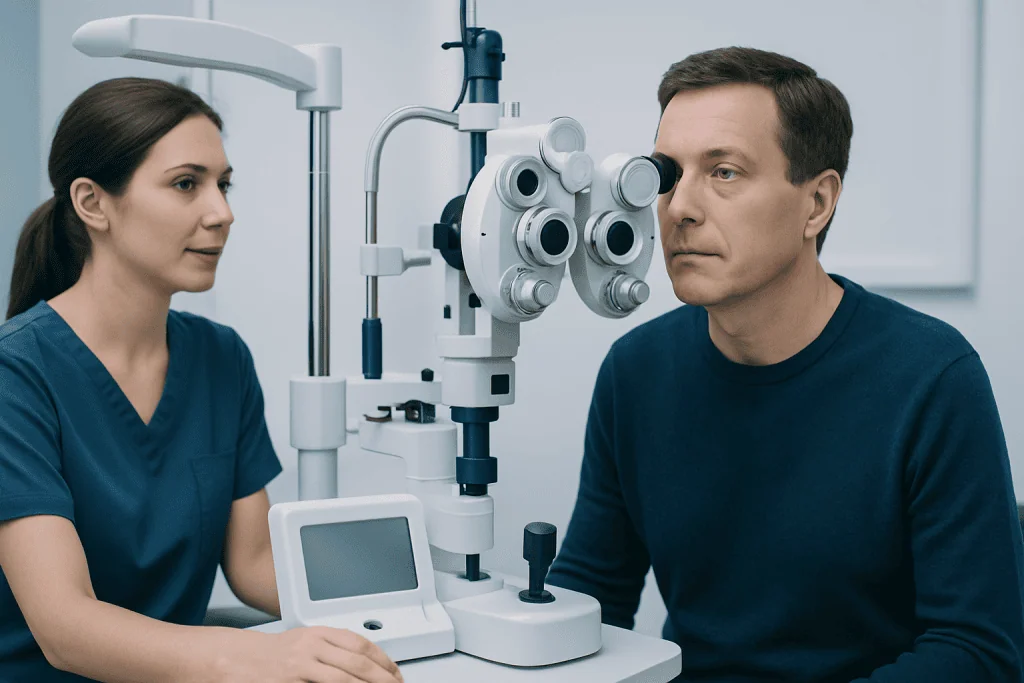
People use many different words to describe distorted vision, and each description can offer clues. Straight lines may look bent or wavy, which often suggests changes in the macula, the part of the retina responsible for central detailed vision. Images may appear doubled, shadowed, tilted, or out of focus. Some people notice halos, glare, rippling, blind spots, or that colors seem less vivid.
Symptoms may be constant or intermittent. Distortion that comes and goes can happen with dry eye, migraine aura, blood sugar fluctuations, or eye strain, while steady distortion may be more consistent with retinal disease, cataract, or an irregular corneal surface. Symptoms may also be worse in bright light, at night, while reading, or when looking at fine detail.
Other symptoms can occur at the same time, including:
- Blurred vision
- Eye pain or redness
- Headache
- Flashes of light or new floaters
- Loss of side vision or a curtain-like shadow
- Nausea, dizziness, or balance problems
- Weakness, numbness, or speech changes
These associated symptoms can help determine whether the problem is mainly in the eye or whether it may involve the nervous system and need faster evaluation.
Common causes and risk factors

Distorted vision has a wide range of possible causes. Eye-related causes include dry eye, astigmatism, cataract, corneal swelling, eye infection, inflammation, and problems affecting the macula or retina. Macular disease is a well-known cause of central visual distortion. In some people, macular degeneration may cause straight lines to appear wavy or make faces and text look distorted.
Retinal conditions can be especially important because they may threaten sight if not treated promptly. A retinal detachment may cause flashes, floaters, a dark curtain, or sudden visual distortion. Diabetic eye disease, retinal vein problems, and swelling in the macula can also change how images are seen. Some people with glaucoma notice missing areas of vision rather than obvious distortion, but visual changes can overlap.
Neurological causes are another key group. Migraine aura can temporarily cause zigzag lines, shimmering, blind spots, or distorted shapes. Problems affecting the optic nerve, eye movement nerves, or brain, including stroke or multiple sclerosis, can also alter vision. Double vision may happen when the eyes do not align properly or when the brain has trouble processing visual input.
Risk factors depend on the underlying cause but may include older age, diabetes, high blood pressure, smoking, a family history of retinal disease, long-standing nearsightedness, prior eye surgery, trauma, autoimmune disease, and certain medicines. Anyone with sudden symptoms or known eye disease should take new distortion seriously.
How doctors diagnose distorted vision
Diagnosis begins with a detailed description of the symptom. Doctors often ask when the distortion started, whether it affects one eye or both, whether it is constant or intermittent, and whether there are flashes, floaters, pain, headache, or neurological symptoms. A simple home check can sometimes help before the visit: covering one eye and then the other may reveal whether the problem is coming mainly from one eye.
An eye examination usually includes visual acuity testing, refraction, pupil assessment, eye movement testing, and measurement of eye pressure when appropriate. The doctor will examine the front of the eye and the retina after dilating the pupils. For patients with central distortion, tools such as retinal imaging or optical coherence tomography can help show subtle changes in the macula and retina.
Additional tests depend on the suspected cause. These may include visual field testing, corneal topography, fluorescein angiography, ultrasound, or blood tests. If the pattern suggests a neurological problem, brain imaging or referral to a neurologist or neuro-ophthalmologist may be needed. The main goal is not only to confirm that vision is distorted, but to identify exactly where the visual pathway is affected.
Treatment options depend on the cause
There is no single treatment for distorted vision because management depends entirely on the underlying condition. Some causes are relatively straightforward. Dry eye may improve with lubrication and treatment of eyelid inflammation. Refractive errors and astigmatism may improve with updated glasses or contact lenses. Cataracts may gradually cause blur, glare, and distorted contrast, and some people benefit from cataract surgery when daily activities become affected.
Retinal and macular diseases often need specialist care. Depending on the diagnosis, treatment may include injections, laser treatment, or surgery. For example, a torn or detached retina may require prompt retinal detachment surgery to protect vision. Conditions affecting the macula may need close monitoring and targeted therapy under an ophthalmologist’s care.
If distortion is related to the cornea, treatments may include medication, special contact lenses, or procedures for structural problems. Inflammatory or infectious causes may require prescription eye drops or systemic medicine. People with diabetes, high blood pressure, or autoimmune disease may also need broader medical management to protect eye health.
When symptoms point to a brain or nerve cause, treatment is directed at that condition. Migraine-related visual symptoms may improve with trigger management and migraine care, while double vision from nerve or muscle problems may require prisms, medication, or neurological assessment. If a stroke or other acute neurological issue is suspected, urgent evaluation is essential. In complex cases, multidisciplinary teams, including ophthalmology and neurology care, may be involved.
Self-care and prevention
Not every cause of distorted vision can be prevented, but healthy habits can reduce risk and help people notice problems earlier. Regular eye examinations are especially important for older adults and for anyone with diabetes, high blood pressure, high myopia, or a family history of serious eye disease. Early detection often makes treatment more effective and may help preserve vision.
At home, people with central retinal conditions are sometimes advised to monitor vision one eye at a time, especially while reading or looking at straight lines. New waviness, missing spots, or worsening blur should be reported promptly. Good control of blood sugar and blood pressure, not smoking, wearing protective eyewear, and following treatment plans for existing eye conditions all support long-term eye health.
Practical self-care may also help reduce strain or temporary distortion related to surface irritation. This includes taking screen breaks, blinking regularly, staying hydrated, and using doctor-recommended lubricating drops if dry eye is present. However, self-care should not replace medical assessment when symptoms are new, sudden, or progressive.
For international patients needing evaluation, Acibadem International’s multidisciplinary specialists in JCI-accredited hospitals assess vision symptoms and provide treatment when needed, including services in ophthalmology.
When to seek medical care
Any new distorted vision deserves attention, but some situations are more urgent than others. A person should seek prompt medical care if distortion develops suddenly, affects only one eye, worsens quickly, or interferes with reading, driving, balance, or daily tasks. A same-day eye assessment may be important if there are flashes of light, many new floaters, or a shadow or curtain over part of the vision.
Emergency care is especially important if distorted vision occurs with severe eye pain, redness after injury, sudden loss of vision, a severe headache unlike usual headaches, or neurological symptoms such as facial drooping, trouble speaking, weakness, numbness, or confusion. These features can suggest a serious eye emergency or a brain-related condition that should not wait.
Even when symptoms seem mild, persistent distortion should be checked rather than ignored. Early evaluation can identify treatable problems before they progress and can offer reassurance when the cause is less serious.
Frequently asked questions
Is distorted vision the same as blurry vision?
Not exactly. Blurry vision usually means reduced sharpness, while distorted vision means images look altered in shape, position, size, or straightness. Many people experience both at the same time, but the distinction can help doctors identify the cause.
Can distorted vision go away on its own?
Sometimes it can, especially if it is related to temporary dry eye, eye strain, or a migraine aura. However, distorted vision can also be a sign of retinal, corneal, or neurological disease. If it is new, recurrent, or worsening, medical evaluation is the safest choice.
Is sudden distorted vision an emergency?
It can be. Sudden distortion may happen with retinal detachment, retinal vascular problems, stroke, or acute neurological conditions. Urgent assessment is especially important if there are flashes, floaters, eye pain, headache, weakness, or speech changes.
Can anxiety cause distorted vision?
Anxiety can contribute to symptoms such as eye strain, light sensitivity, or a sense that vision feels unusual, particularly during panic or hyperventilation. Still, true visual distortion should not automatically be attributed to anxiety. A doctor should rule out eye and neurological causes first.
Why do straight lines look wavy?
Wavy lines can happen when the macula, the central part of the retina, is affected. Swelling, degeneration, scar tissue, or other macular changes can interfere with how the eye processes fine detail. This symptom should be examined by an eye specialist.
Should distorted vision be checked if it affects only one eye?
Yes. Distortion in one eye can point to problems in the cornea, lens, retina, or macula and may be easier to miss if the other eye sees well. Covering each eye separately can help identify this pattern, but a professional examination is still needed.
References
- American Academy of Ophthalmology
- National Eye Institute
- Mayo Clinic
- American Society of Retina Specialists
- Centers for Disease Control and Prevention
This article is for general information only and is not a substitute for professional medical advice. Please consult a qualified doctor about your individual situation.
Explore treatments in Turkey — costs, top hospitals & a free quote
JCI-accredited · board-certified surgeons · reply within 24h
Add us as a Preferred Source to see more of our trusted health content across Google Search, AI Overviews and Discover.
Check your numbers in seconds
BMI, calories, due date, blood pressure and 30+ more clinical calculators — free, instant, doctor-reviewed ranges.

More from the Health Library

Aura — Explained by Medical Evidence, Not Myths

Vagina Hurts: An Evidence-Based Guide for Patients

Sonogram — Explained by Medical Evidence, Not Myths

Atarax — Explained by Medical Evidence, Not Myths

Psychomotor Agitation — Explained by Medical Evidence, Not Myths

Calisthenics: What Patients Need to Know
Related Specialists

Dr. Soner Dileklen
Internal Medicine
Prof. Dr. Namık Demir
Gynecology & Obstetrics
Dr. Alper Tunga Özbek
Pediatrics
Dr. Ulambadrakh Khenchbısh
Orthopedic Surgery & Traumatology