Divorce Rate after Radical Prostatectomy: Procedure, Recovery and Results

Radical prostatectomy is surgery to remove the prostate gland, most often to treat localized prostate cancer. Relationship changes after surgery are individual and may be influenced by urinary, sexual and emotional recovery.
Key Takeaways
- Radical prostatectomy is surgery to remove the prostate gland, most often to treat localized prostate cancer.
- Relationship changes after surgery are individual and may be influenced by urinary, sexual and emotional recovery.
- Most people need several weeks to recover physically, while continence and erectile function may improve over months or longer.
- Nerve-sparing techniques, pelvic-floor rehabilitation and erectile-function treatment may support recovery when appropriate.
- Follow-up prostate-specific antigen testing is essential after surgery to monitor treatment results.
There is no reliable evidence that radical prostatectomy itself causes divorce or that couples should expect separation after surgery. However, changes in erections, ejaculation, urinary control, body image and emotional wellbeing can place strain on a relationship, making open communication and timely support important parts of recovery.
Divorce Rate After Radical Prostatectomy: What Does It Mean for Couples?
The divorce rate after radical prostatectomy is not known to be higher in a consistent or predictable way. Research on marriage and prostate cancer treatment is limited, and relationship outcomes depend on many personal factors, including the couple’s communication, emotional health, previous relationship quality, expectations about intimacy and access to support.
Radical prostatectomy can change sexual function, bladder control and daily routines, especially during the first months of recovery. These changes may feel difficult for both partners, but they do not define the future of a relationship. Discussing concerns early, involving a partner in medical appointments when desired, and seeking help from urology, sexual-health, continence or counselling professionals can help couples adapt.
Radical prostatectomy is an operation that removes the prostate gland and usually the seminal vesicles. It is commonly used for prostate cancer that appears confined to the prostate or for selected cases where surgery is considered the most suitable treatment. The surgical approach and expected outcomes should be discussed individually with a urologic cancer specialist.
How Radical Prostatectomy Works and Who May Be a Candidate
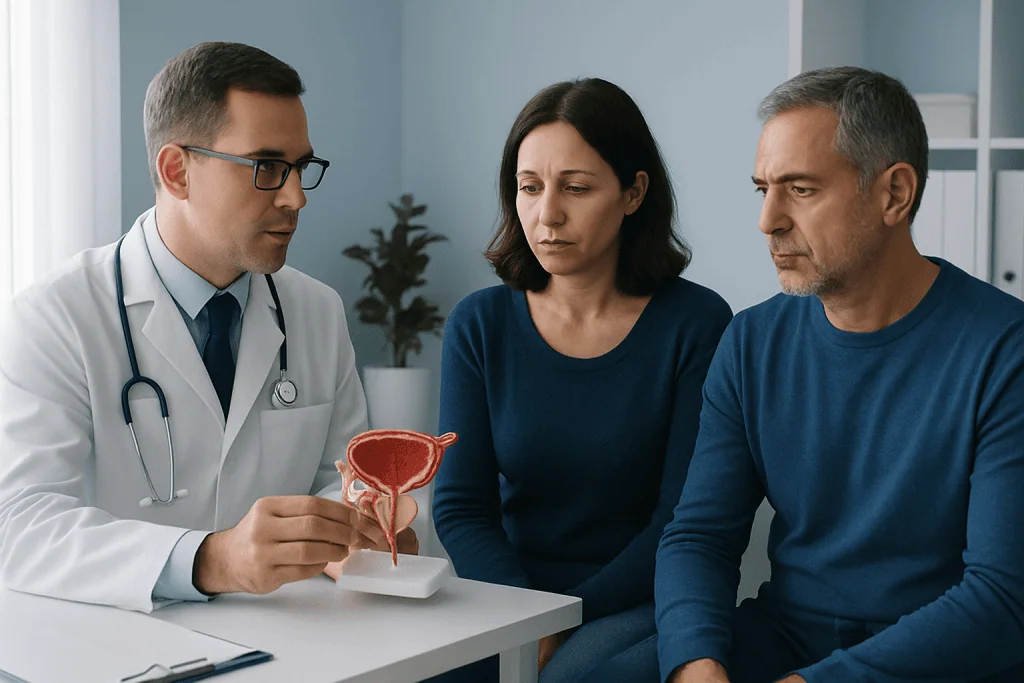
The prostate sits below the bladder and surrounds part of the urethra, the tube that carries urine out of the body. During a radical prostatectomy, the surgeon removes the prostate and reconnects the bladder to the remaining urethra. Nearby lymph nodes may also be removed and examined when there is a meaningful risk that cancer cells have spread beyond the prostate.
People may be considered for surgery when prostate cancer is localized or locally advanced but potentially removable, and when their overall health is suitable for an operation. Decisions also take into account PSA level, biopsy grade group, imaging findings, urinary symptoms, age, other medical conditions and personal priorities. For some people, active surveillance, radiation therapy, hormone therapy or a combination of treatments may be more appropriate.
Before choosing treatment, the care team explains the likely cancer-control benefits and the possible effect on urinary and sexual function. A balanced discussion may also compare surgery with prostate cancer treatment approaches that do not involve removal of the prostate.
Radical Prostatectomy Step by Step
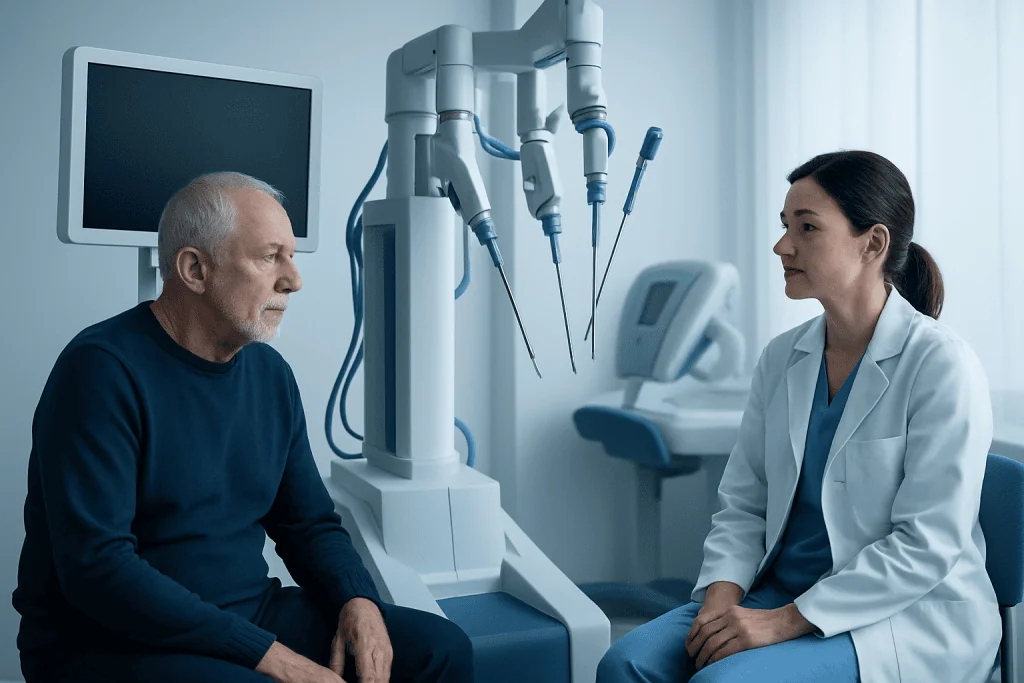
Radical prostatectomy is performed under general anesthesia. It may be done through open surgery or minimally invasive surgery, including laparoscopic or robot-assisted techniques. The best approach depends on the individual, the surgeon’s expertise, anatomy, cancer features and available resources; the key aim is complete and safe cancer removal where appropriate.
After making the necessary incision or small access openings, the surgeon carefully separates and removes the prostate. If clinically appropriate, a nerve-sparing technique may be used to protect erectile-function nerves that run close to the prostate. Nerve sparing is not always possible, particularly when cancer is suspected near these structures, because cancer control remains the priority.
The bladder is then joined to the urethra. A urinary catheter is left in place temporarily to allow this connection to heal. Removed tissue is examined by a pathologist, who reports details such as cancer grade, surgical margins and whether disease was found in lymph nodes. These results guide follow-up planning and whether additional treatment should be considered.
Recovery Timeline, Benefits and Possible Risks
Hospital stay and early recovery vary according to the surgical method, general health and any complications. Walking is usually encouraged soon after surgery to support circulation and bowel function. The catheter commonly remains in place for a short period, and the clinical team gives instructions about catheter care, wound care, activity, constipation prevention and pain management.
During the first few weeks, fatigue, reduced stamina, mild discomfort and temporary urinary leakage are common. Many people gradually return to light everyday activities within several weeks, while strenuous exercise and heavy lifting are delayed until the surgeon confirms healing. Full recovery of energy can take longer, particularly after major surgery or if other treatments are needed.
A main potential benefit is removal of a cancer that is believed to be confined to, or removable from, the prostate. Possible risks include bleeding, infection, blood clots, injury to nearby structures, narrowing at the surgical join, urinary incontinence and erectile dysfunction. Dry orgasm and infertility occur because the prostate and seminal vesicles are removed; sperm banking before treatment may be relevant for people who wish to preserve the possibility of biological children.
Recovery support can include robotic prostatectomy assessment where suitable, pelvic-floor physiotherapy, continence care and treatment for erectile dysfunction. The care team can explain which options are appropriate at each stage of recovery.
What Is Life Like After a Radical Prostatectomy?
Life after radical prostatectomy can be active and fulfilling, but it often involves an adjustment period. Some people experience temporary leakage with coughing, exercise or urgency, while others need pads for longer. Pelvic-floor muscle training, guided by an experienced professional, may improve bladder control and confidence.
Sexual changes are also common. Erections may be weaker or absent initially, even when nerves are preserved, because nerve recovery can be slow. Erectile-function rehabilitation may include tablets, vacuum erection devices, injections or other options recommended by a clinician. Intimacy can remain meaningful, although couples may need time to explore comfort, communication and new ways of being close.
After removal of the prostate, semen is no longer produced, so orgasm is usually dry. The ability to feel orgasm may remain, but the sensation can differ. Emotional responses may include relief, sadness, anxiety about cancer recurrence, frustration or concerns about masculinity; these are understandable and can be addressed with medical, psychological or relationship support.
What Is Life Like With No Prostate?
A person can live normally without a prostate because the gland is not essential for everyday survival. The prostate contributes fluid to semen and affects urinary anatomy, so its removal changes ejaculation and requires healing at the connection between the bladder and urethra. It does not remove the ability to urinate, although bladder control may take time to return.
Without a prostate, there is no risk of future prostate cancer arising in the removed gland, but regular follow-up is still important. PSA should fall to a very low or undetectable level after surgery. Rising PSA on follow-up can suggest persistent or recurrent prostate cancer and needs assessment by the treating team.
Many people resume work, travel, exercise and relationships after recovery. The long-term experience differs from person to person, and it is reasonable to ask for help with continence, sexual health, mood, sleep or relationship concerns rather than trying to manage these issues alone.
Can I Drive a Car After Prostate Surgery?
Driving should wait until the person is no longer taking opioid pain medicines or other medication that can impair alertness, can comfortably sit and move, and can perform an emergency stop without pain or hesitation. The exact timing varies, but it is commonly not advised during the immediate postoperative period. The surgeon’s instructions should take priority.
A person should also avoid driving while a catheter causes discomfort, while they feel weak or dizzy, or if a wound, seat belt or sudden movement would be painful. Starting with a short journey as a passenger or taking short walks may help assess comfort during recovery.
Before returning to driving, it is sensible to confirm that insurance requirements are met and that the person can safely control the vehicle. If there is uncertainty, the surgical team can provide individualized guidance based on healing and the type of operation performed.
What Is the Life Expectancy After Prostate Radiation?
Life expectancy after prostate radiation depends primarily on the stage and biology of the prostate cancer, the person’s age, overall health and how well the cancer responds to treatment. Radiation therapy can offer excellent long-term cancer control for many people with localized prostate cancer, and it is a standard alternative to surgery for appropriately selected patients.
It is not possible to predict life expectancy from treatment type alone. Some people with low-risk prostate cancer may live for many years without cancer affecting their lifespan, while people with higher-risk or metastatic disease may need more intensive, ongoing treatment. The oncology team uses PSA, biopsy findings, imaging and other health factors to discuss an individual outlook.
Radiation can have side effects involving the bladder, bowel and sexual function, which may emerge gradually. Follow-up appointments and PSA monitoring are important after radiation just as they are after surgery. Treatment decisions should reflect cancer control, side-effect considerations and the person’s values.
Protecting Wellbeing and Knowing When to Seek Medical Care
Preparation and aftercare can ease the adjustment after radical prostatectomy. People may benefit from discussing expected continence and sexual recovery before surgery, learning pelvic-floor exercises from a qualified clinician, planning practical help at home and identifying a trusted partner, family member or counsellor for emotional support. Couples may find it helpful to set aside time for honest, non-pressured conversations about changes in intimacy.
Urgent medical advice is needed for fever, worsening redness or drainage from a wound, severe or increasing pain, chest pain, shortness of breath, calf swelling, inability to drain urine through the catheter, heavy bleeding, or persistent vomiting. The surgical team should also be contacted for concerns about catheter problems, worsening urinary symptoms or difficulties managing pain.
Routine follow-up is equally important, including review of pathology results, catheter removal, PSA tests and recovery of urinary and sexual function. Acibadem International’s multidisciplinary specialists and JCI-accredited hospitals support international patients with prostate cancer diagnosis, surgery and follow-up care. A urologist can help coordinate appropriate care with oncology, physiotherapy and sexual-health services when needed.
Frequently asked questions
Does radical prostatectomy increase the risk of divorce?
There is no clear evidence that radical prostatectomy directly increases the risk of divorce. However, urinary leakage, erectile difficulties, infertility and emotional stress can affect a relationship. Early communication and support from healthcare and counselling professionals can help couples manage these changes.
How long does urinary incontinence last after radical prostatectomy?
Urinary control often improves over the first weeks to months after catheter removal, but the pace varies. Some people recover quickly, while others need longer-term pelvic-floor rehabilitation or additional treatment. A urologist should assess persistent or troublesome leakage.
Will erectile function return after prostate removal?
Erectile function may recover after surgery, particularly when nerve-sparing surgery is possible, but recovery can take months or longer. Age, erections before treatment, other health conditions and cancer location all influence the outcome. Several treatments can support erectile function during recovery.
Can a person have an orgasm after radical prostatectomy?
Many people can still experience orgasm after radical prostatectomy, although it is usually dry because semen is no longer produced. The feeling of orgasm may be different, and erectile difficulties may affect sexual activity. A sexual-health specialist can discuss options for rehabilitation and intimacy.
How is prostate cancer monitored after radical prostatectomy?
Follow-up usually includes regular PSA blood tests. PSA is expected to become very low or undetectable after the prostate is removed. A detectable or rising PSA result does not always provide the full answer by itself, but it requires review by the treating team.
When should a person contact their doctor after prostate surgery?
The surgical team should be contacted for fever, severe pain, worsening wound changes, catheter blockage, heavy bleeding, chest pain, shortness of breath or leg swelling. These symptoms may need prompt assessment. It is also appropriate to seek help for ongoing incontinence, sexual concerns, low mood or relationship stress.
References
- European Association of Urology
- American Urological Association
- National Cancer Institute
- American Cancer Society
- National Health Service
This article is for general information only and is not a substitute for professional medical advice. Please consult a qualified doctor about your individual situation.
Oncology care in Turkey — second opinion and treatment plan
JCI-accredited · board-certified surgeons · reply within 24h
Add us as a Preferred Source to see more of our trusted health content across Google Search, AI Overviews and Discover.