Do Vascular Neurologists Treat Aneurysms and AVMs?

Vascular neurologists evaluate blood vessel conditions in the brain and their link to stroke and other neurological symptoms. They often help diagnose aneurysms and AVMs and guide urgent decisions, especially after bleeding or stroke-like symptoms.
Key Takeaways
- Vascular neurologists evaluate blood vessel conditions in the brain and their link to stroke and other neurological symptoms.
- They often help diagnose aneurysms and AVMs and guide urgent decisions, especially after bleeding or stroke-like symptoms.
- Procedural treatment is commonly performed by neurosurgeons or interventional neuroradiology specialists, depending on the case.
- Care is usually multidisciplinary and may include imaging, medicines, monitoring, surgery, or minimally invasive procedures.
- Anyone with sudden severe headache, new weakness, seizures, or confusion should seek emergency medical attention.
Vascular neurologists often play an important role in the care of brain aneurysms and arteriovenous malformations (AVMs), especially when these conditions affect blood flow to the brain or raise stroke risk. They may not always perform the procedure themselves, but they frequently help diagnose the problem, assess urgency, manage complications, and coordinate treatment with neurosurgeons and interventional specialists.
Overview: What vascular neurologists do in aneurysm and AVM care
Vascular neurologists are doctors who specialize in disorders of the blood vessels that affect the brain and nervous system. Their expertise is especially important in conditions linked to stroke, bleeding in or around the brain, and changes in blood flow. Because aneurysms and arteriovenous malformations (AVMs) involve abnormal blood vessels, vascular neurologists are often part of the care team.
Brain aneurysms are weak or bulging areas in an artery wall. AVMs are tangles of abnormal blood vessels that connect arteries and veins in an unusual way. Both conditions can sometimes exist without symptoms, but both may also lead to serious problems such as bleeding, seizures, headaches, or stroke-like symptoms.
In many cases, a vascular neurologist does not work alone. They may assess symptoms, order and interpret imaging, determine whether a stroke or hemorrhage has occurred, and help decide how urgently treatment is needed. They also coordinate care with specialists in interventional neuroradiology and neurosurgery when a procedure or operation is required.
This team-based approach helps match each person to the most appropriate care. The best plan depends on factors such as the lesion’s size and location, whether bleeding has occurred, the person’s age and overall health, and the risks and benefits of treatment versus observation.
Aneurysms and AVMs: how they differ
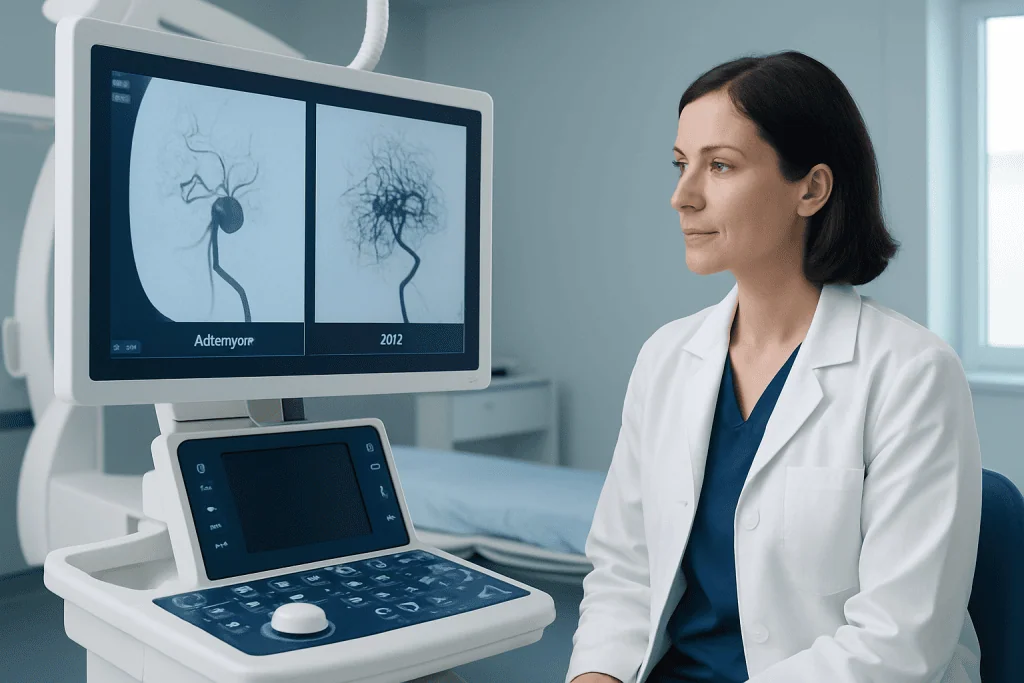
Although aneurysms and AVMs both involve abnormal blood vessels, they are not the same condition. An aneurysm is a balloon-like bulge in a blood vessel wall, most often in an artery. If it ruptures, it can cause bleeding around the brain, a medical emergency known as subarachnoid hemorrhage.
An AVM is a cluster of abnormal vessels in which blood flows directly from arteries to veins without the usual network of capillaries in between. This can place stress on the vessels and surrounding brain tissue. AVMs may bleed, cause seizures, trigger headaches, or be found incidentally during imaging done for another reason.
Some people also hear about related vascular conditions such as carotid artery disease or other cerebrovascular disorders. While these are different from aneurysms and AVMs, they fall within the broader field of vascular neurology because they affect circulation to the brain and can increase stroke risk.
Understanding the distinction matters because treatment planning is different. Some aneurysms are best monitored, while others need clipping or endovascular coiling. Some AVMs may be observed, while others are treated with embolization, surgery, radiosurgery, or a combination of approaches.
Symptoms and warning signs

Many aneurysms and AVMs do not cause symptoms until they bleed or affect nearby brain structures. An unruptured aneurysm may sometimes cause headache, visual changes, eye pain, drooping eyelid, or facial numbness if it presses on nerves. However, many are discovered by chance during a scan for another issue.
A ruptured aneurysm often causes a sudden, severe headache that people may describe as the worst headache of their life. It can also lead to nausea, vomiting, neck stiffness, sensitivity to light, confusion, fainting, or seizures. These symptoms need immediate emergency care.
AVMs may cause recurrent headaches, seizures, weakness, numbness, speech problems, dizziness, or difficulty with coordination, depending on their location. If an AVM bleeds, symptoms can appear suddenly and may look similar to a stroke or brain hemorrhage.
- Sudden severe headache
- New weakness or numbness on one side
- Trouble speaking or understanding speech
- Seizure without a known cause
- Vision loss or double vision
- Confusion, reduced alertness, or loss of consciousness
A vascular neurologist is often involved when these symptoms raise concern for bleeding, stroke, or another urgent neurovascular event. Rapid assessment helps guide imaging and treatment decisions.
How vascular neurologists diagnose these conditions
The first step is a careful medical history and neurological examination. The doctor asks about the timing of symptoms, headache pattern, seizures, family history, prior bleeding, high blood pressure, smoking, and other factors that may influence risk. This helps determine whether urgent imaging is needed and what type of lesion may be present.
Imaging is central to diagnosis. Common tests include CT, MRI, CT angiography, MR angiography, and catheter angiography. A catheter angiogram can give very detailed information about blood vessel anatomy and is often used when planning treatment for an aneurysm or AVM.
Vascular neurologists are particularly skilled at evaluating whether symptoms represent a stroke, a transient ischemic attack, a hemorrhage, or another neurological problem. They may also help identify conditions that increase bleeding or stroke risk, including stroke syndromes and less common vascular abnormalities.
Once imaging confirms the diagnosis, the care team considers the lesion’s size, shape, location, and whether it has already bled. These details help estimate risk and guide the next steps, whether that means observation, follow-up imaging, or referral for a procedure.
Do vascular neurologists treat aneurysms and AVMs directly?
The answer is often yes, but not always in the same way people expect. Vascular neurologists do treat aneurysms and AVMs by evaluating them, managing symptoms and complications, reducing stroke risk, and helping decide the safest treatment plan. In some centers, they may also have additional training in catheter-based procedures, but procedural roles vary by hospital and specialty training.
For many patients, the vascular neurologist acts as the doctor who brings the full picture together. They may stabilize a patient after bleeding, manage blood pressure, monitor for vasospasm after aneurysm rupture, address seizures, and coordinate rehabilitation if neurological deficits occur. They also help patients understand the risks of treatment versus careful follow-up.
Procedural treatment is commonly carried out by specialists in endovascular therapy or by neurosurgeons, depending on the anatomy and urgency of the case. This may include coiling, stenting, embolization, microsurgical clipping, or resection. For some AVMs, focused radiation may also be considered.
Because these conditions can be complex, multidisciplinary care is often the safest and most effective approach. Near the end of the care pathway, hospitals such as Acibadem International may offer this coordinated model through multidisciplinary specialists and JCI-accredited hospitals for international patients.
Treatment options and how decisions are made
Treatment depends on whether the aneurysm or AVM has bled, what symptoms it is causing, and the estimated risk of future bleeding. A small unruptured aneurysm may be monitored with periodic imaging, while a larger or irregularly shaped aneurysm may be considered for intervention. Similarly, some AVMs are watched carefully, while others are treated to reduce the risk of hemorrhage or seizures.
Endovascular treatments are performed through blood vessels using catheters. For aneurysms, this may include coiling or other techniques to seal off the weakened area from the circulation. For AVMs, embolization may be used to block abnormal vessels, sometimes as a main treatment and sometimes before surgery or radiosurgery.
Surgical options may include clipping an aneurysm or removing an AVM when the location and anatomy make surgery appropriate. In selected AVMs, radiosurgery may be used to gradually close off abnormal vessels over time. The care team weighs possible benefits against risks such as stroke, bleeding, or neurological deficits.
Medical management is also important. This can include pain control, seizure treatment, blood pressure management, and monitoring in an intensive care setting after a hemorrhage. When a person has experienced a significant bleed or neurological injury, rehabilitation and close follow-up are often part of recovery.
Prevention, monitoring, and self-care
Not every aneurysm or AVM can be prevented, and many are not caused by anything a person did wrong. However, managing overall vascular health may help lower complications. A doctor may advise controlling high blood pressure, avoiding tobacco, limiting heavy alcohol use, and following treatment plans for other medical conditions.
People who have an unruptured aneurysm or an AVM under observation should keep follow-up appointments and imaging studies as recommended. Monitoring helps detect changes in size or shape and gives the care team a chance to reassess treatment options if the risk profile changes.
General brain and vascular health habits are also useful. These may include regular physical activity as advised by a doctor, a balanced eating pattern, stress management, and taking prescribed medications consistently. Anyone with a family history of aneurysms or certain inherited disorders should mention this to their physician.
- Take new neurological symptoms seriously
- Keep blood pressure within the target range set by a doctor
- Do not stop prescribed medicines without medical advice
- Attend all follow-up scans and specialist visits
- Ask which activities are safe in the individual situation
When to seek urgent medical attention
Immediate medical care is important if there is a sudden explosive headache, a seizure, fainting, new weakness, trouble speaking, severe confusion, or any other sudden neurological change. These symptoms can signal bleeding in the brain or a stroke and should not be watched at home.
Even if symptoms improve, urgent assessment is still necessary. Some people have a warning leak before a major hemorrhage, and transient neurological symptoms can be a sign of serious vascular disease. Early evaluation can be life-saving and may reduce the chance of lasting disability.
For non-emergency concerns, a referral to a vascular neurologist may be helpful after an incidental finding of an aneurysm or AVM on imaging. This specialist can explain the diagnosis, estimate risk, and coordinate consultation with procedural teams when needed.
Patients and families often benefit from asking clear questions about the diagnosis, the reason for observation or treatment, possible warning signs, and the expected follow-up plan. Reassurance usually comes from understanding that these conditions are managed carefully by experienced teams rather than by one specialist alone.
Frequently asked questions
Can a vascular neurologist diagnose an aneurysm or AVM?
Yes. Vascular neurologists commonly help diagnose aneurysms and AVMs by assessing symptoms, performing a neurological evaluation, and ordering or reviewing brain and blood vessel imaging. They are especially involved when there is concern about stroke, bleeding, or other urgent neurological complications.
Do vascular neurologists perform surgery for aneurysms or AVMs?
Usually, open surgery is performed by a neurosurgeon rather than a vascular neurologist. However, the vascular neurologist often remains closely involved in deciding on treatment, managing medical issues, and coordinating care before and after the procedure.
Who treats aneurysms and AVMs if more than one specialist is needed?
Care is often provided by a multidisciplinary team. This may include a vascular neurologist, neurosurgeon, interventional neuroradiologist, critical care specialists, rehabilitation experts, and other clinicians depending on the person’s symptoms and treatment plan.
Does every aneurysm or AVM need treatment?
No. Some aneurysms and AVMs are monitored rather than treated right away, especially if the estimated risk of intervention is higher than the risk of the lesion itself. The decision depends on imaging findings, symptoms, prior bleeding, age, overall health, and expert judgment.
What symptoms suggest an aneurysm or AVM may be an emergency?
Emergency warning signs include a sudden very severe headache, seizure, collapse, new weakness, speech difficulty, confusion, vision loss, or loss of consciousness. These symptoms may indicate bleeding or stroke and require immediate medical attention.
What is the difference between an aneurysm and an AVM?
An aneurysm is a bulging, weakened area in a blood vessel wall, usually an artery. An AVM is an abnormal tangle of arteries and veins with disrupted blood flow, and it can affect surrounding brain tissue differently from an aneurysm.
References
- American Stroke Association
- National Institute of Neurological Disorders and Stroke
- Brain Aneurysm Foundation
- National Health Service
- American Association of Neurological Surgeons
This article is for general information only and is not a substitute for professional medical advice. Please consult a qualified doctor about your individual situation.
Explore treatments in Turkey — costs, top hospitals & a free quote
JCI-accredited · board-certified surgeons · reply within 24h
Add us as a Preferred Source to see more of our trusted health content across Google Search, AI Overviews and Discover.
Check your numbers in seconds
BMI, calories, due date, blood pressure and 30+ more clinical calculators — free, instant, doctor-reviewed ranges.