Down Syndrome: Symptoms, Causes, and Treatment Options

Down syndrome is usually caused by an extra chromosome 21, also called trisomy 21. Features and health needs vary widely from person to person.
Key Takeaways
- Down syndrome is usually caused by an extra chromosome 21, also called trisomy 21.
- Features and health needs vary widely from person to person.
- Early screening, regular checkups, and supportive therapies can improve development and quality of life.
- Care often involves a team that may include pediatricians, heart specialists, therapists, and educators.
- People with Down syndrome benefit from lifelong, individualized medical and social support.
Down syndrome is a genetic condition caused by an extra copy of chromosome 21. It can affect physical growth, learning, and overall health, but with timely medical care, therapies, and family support, many people with Down syndrome lead active and meaningful lives.
Overview
Down syndrome is a genetic condition that happens when a person is born with extra genetic material from chromosome 21. This additional chromosome changes how the body and brain develop. The condition is present from birth and can affect learning, physical growth, muscle tone, and the function of different organs, but its effects can range from mild to more complex.
Many families first ask what down syndrome means for a child’s health and future. The most accurate answer is that there is no single pattern. Some children have only a few medical concerns, while others need ongoing care for heart, hearing, thyroid, digestive, or developmental issues. Early support makes an important difference, and many children with Down syndrome learn, communicate, attend school, and participate actively in family and community life.
Down syndrome is not an illness that someone “catches,” and it is not caused by anything a parent did or did not do during pregnancy. It is a chromosomal difference. Because health needs can change over time, care is usually planned around the individual rather than the diagnosis alone.
How Down Syndrome Affects the Body and Development
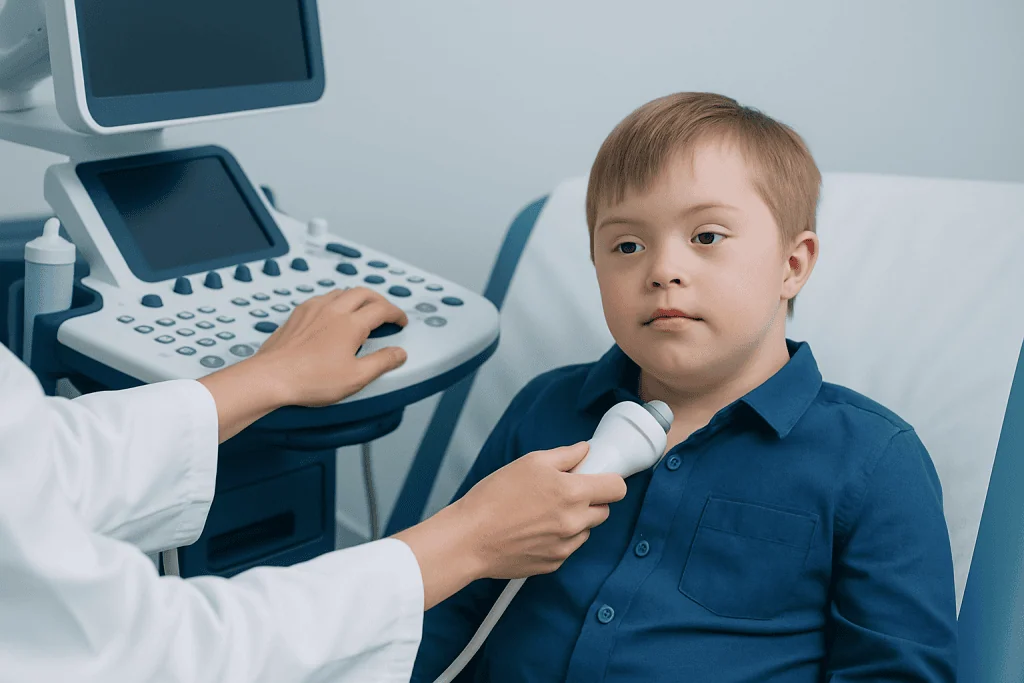
The extra chromosome influences development in several ways. Many babies with Down syndrome have low muscle tone, also called hypotonia, which can affect feeding, head control, crawling, and later motor milestones. Growth may be slower than average, and some children have distinct physical features such as an upward slant to the eyes, a flat nasal bridge, or a single deep crease across the palm. These features help doctors recognize the condition, but they do not predict a person’s abilities.
Developmental differences are common, especially in speech, language, attention, and learning. Intellectual disability is usually mild to moderate, though the degree varies. Social interest and emotional connection are often strengths, but each child has a unique personality, temperament, and pace of learning.
Down syndrome can also affect internal organs and body systems. Congenital heart defects, hearing loss, vision problems, thyroid disorders, sleep apnea, and digestive conditions may occur more often than in the general population. For this reason, routine health surveillance is an important part of care, even when a child seems generally well.
Symptoms and Common Signs

The signs of down syndrome may be noticed during pregnancy, at birth, or later as a child grows. A newborn may have low muscle tone, a smaller-than-average stature, a short neck, or distinctive facial features. Some babies have feeding difficulties or slower weight gain in early infancy. Others appear well at first and are diagnosed after routine examination or genetic testing.
As children grow, common features may include delayed sitting, walking, and talking; learning difficulties; and differences in fine motor skills. Some children also have recurrent ear infections, hearing concerns, constipation, or sleep-related breathing problems. Medical concerns can be subtle, so regular checkups help identify them early.
Symptoms and associated conditions can include:
- Low muscle tone and loose joints
- Developmental delay and learning differences
- Speech and language delay
- Congenital heart defects
- Hearing and vision problems
- Thyroid disorders
- Sleep apnea or poor sleep quality
- Digestive or feeding difficulties
Not every person with Down syndrome has all of these features. Some have very few medical complications, while others need more frequent evaluation and treatment. A personalized approach helps families focus on the child’s actual needs rather than assumptions.
Causes and Risk Factors
Down syndrome is caused by an extra full or partial copy of chromosome 21. The most common form is trisomy 21, where there are three copies of chromosome 21 in all or most cells. Less commonly, a person may have translocation Down syndrome, in which extra chromosome 21 material is attached to another chromosome, or mosaic Down syndrome, where only some cells have the extra chromosome.
In most cases, the chromosomal change happens by chance during the formation of the egg or sperm. It is usually not inherited. However, some translocation forms can be passed through families, so genetic counseling may be recommended after diagnosis to help parents understand recurrence risk and family planning options.
Maternal age is a known risk factor, and the chance of having a baby with Down syndrome increases with age. Still, babies with Down syndrome are born to mothers of all ages, and the condition can occur in any pregnancy. Risk factors help estimate probability, but they do not explain every case.
Diagnosis Before and After Birth
Down syndrome may be suspected during pregnancy through screening tests or ultrasound findings, but screening alone does not confirm the diagnosis. Prenatal screening estimates the chance that a fetus has the condition. If the chance appears increased, diagnostic testing such as chorionic villus sampling or amniocentesis can confirm whether an extra chromosome 21 is present.
After birth, doctors may suspect Down syndrome based on physical features and the baby’s examination. The diagnosis is confirmed with a blood test called a karyotype, which looks at the chromosomes. In some cases, additional genetic testing is used to identify mosaic or translocation forms.
Once the diagnosis is made, doctors usually recommend a detailed health evaluation. This often includes hearing and vision assessment, thyroid testing, growth monitoring, and screening for congenital heart disease. Because heart differences are relatively common, many babies are referred for a heart ultrasound and specialist review, especially if there are signs of congenital heart disease.
Treatment Options and Long-Term Care
There is no cure that removes the extra chromosome, so down syndrome treatment focuses on supporting development, managing associated conditions, and promoting independence and wellbeing. Care often begins in infancy with feeding guidance, physical therapy, and close growth monitoring. As the child grows, speech therapy, occupational therapy, educational support, and behavioral guidance may be added according to need.
Medical treatment depends on the specific health issues present. For example, some children need treatment for hearing loss, thyroid disease, sleep apnea, digestive concerns, or eye problems. If a baby is born with a structural heart problem, doctors may recommend follow-up with pediatric cardiology and, when necessary, pediatric cardiac surgery. Digestive conditions that affect feeding or bowel function may sometimes require assessment by specialists in pediatric surgery.
Children and adults with Down syndrome usually benefit from coordinated care across several specialties. This may include pediatrics, cardiology, endocrinology, audiology, ophthalmology, dentistry, rehabilitation, and psychology. Regular reviews help doctors adjust care as needs change from infancy to adolescence and adulthood.
Near the end of the care journey, families may seek centers with multidisciplinary expertise for ongoing assessment and treatment planning. Acibadem International’s multidisciplinary specialists and JCI-accredited hospitals diagnose and treat Down syndrome and related health conditions for international patients when more complex evaluation is needed.
Daily Support, Education, and Self-care
Much of successful care happens outside the clinic. Children with Down syndrome often do best with structured routines, early stimulation, and encouragement in communication, movement, and play. Family involvement is central, and small, steady steps in daily life can support progress in motor skills, speech, self-care, and social participation.
Education plans should be individualized. Many children benefit from early intervention services, inclusive schooling, speech support, and adaptive learning strategies. Clear instructions, repetition, visual supports, and positive reinforcement can be especially helpful. Families may also work with therapists to build feeding, dressing, toileting, and fine motor skills over time.
Healthy habits matter at every age. Regular exercise, balanced nutrition, dental care, good sleep routines, and attention to mental wellbeing all support overall health. Because some children are more likely to have sleep-disordered breathing, obesity, or thyroid problems, it is helpful to discuss changes in appetite, energy, sleep, or behavior with a doctor rather than assuming they are part of the condition itself.
When to Seek Medical Care
Medical care should be sought promptly if a baby or child with Down syndrome has trouble feeding, poor weight gain, breathing difficulty, bluish skin, unusual sleepiness, repeated vomiting, dehydration, or signs of infection. These symptoms can have many causes, but they should not be ignored. New concerns about hearing, vision, sleep, behavior, or loss of previously gained skills also deserve medical review.
Routine care is just as important as urgent care. Regular appointments help detect conditions that may not cause obvious symptoms at first, including hearing loss, thyroid disease, vision changes, and some heart problems. Families should ask for follow-up if they notice snoring, pauses in breathing during sleep, constipation that does not improve, persistent ear problems, or school difficulties.
For adults with Down syndrome, medical attention is important if there are changes in memory, function, mood, mobility, or sleep. Ongoing care should continue across the lifespan, with attention to both physical health and emotional wellbeing. A qualified doctor can help decide when specialist referral or further testing is needed.
Frequently asked questions
What is Down syndrome?
Down syndrome is a genetic condition caused by an extra copy of chromosome 21. This extra genetic material affects development and can influence learning, growth, muscle tone, and overall health.
Can Down syndrome be cured?
There is no cure that removes the extra chromosome. Treatment focuses on early support, developmental therapies, regular health screening, and management of any associated medical conditions.
What are the first signs of Down syndrome in a baby?
Early signs may include low muscle tone, feeding difficulties, slower development, and certain physical features noticed at birth. However, the diagnosis is confirmed with genetic testing rather than appearance alone.
Is Down syndrome inherited?
Most cases are not inherited and happen by chance during the formation of reproductive cells. A smaller number are linked to translocation, which can sometimes run in families, so genetic counseling may be advised.
Can people with Down syndrome go to school and live independently?
Many people with Down syndrome attend school, build friendships, work, and participate actively in their communities. The level of independence varies, but early intervention, education, and ongoing support can help each person reach their potential.
Why are regular checkups important in Down syndrome?
People with Down syndrome have a higher chance of certain health issues such as heart conditions, hearing loss, thyroid disease, and sleep apnea. Regular follow-up helps doctors detect and treat problems early, often before they become more disruptive.
References
- Centers for Disease Control and Prevention
- National Institute of Child Health and Human Development
- American Academy of Pediatrics
- National Down Syndrome Society
- World Health Organization
This article is for general information only and is not a substitute for professional medical advice. Please consult a qualified doctor about your individual situation.
Explore treatments in Turkey — costs, top hospitals & a free quote
JCI-accredited · board-certified surgeons · reply within 24h
Add us as a Preferred Source to see more of our trusted health content across Google Search, AI Overviews and Discover.