Ear, Nose, and Throat Exams: What to Expect at Your First Visit

An ENT specialist evaluates problems involving the ears, nose, throat, sinuses, voice, and related structures of the head and neck. Most first visits include a symptom review, medical history, and a physical examination using a light and small instruments.
Key Takeaways
- An ENT specialist evaluates problems involving the ears, nose, throat, sinuses, voice, and related structures of the head and neck.
- Most first visits include a symptom review, medical history, and a physical examination using a light and small instruments.
- Common in-office tests may include hearing checks, nasal endoscopy, throat examination, or imaging referrals when appropriate.
- Many ENT conditions can be managed with medicines, monitoring, lifestyle changes, or targeted procedures depending on the cause.
- Preparing a symptom timeline, medication list, and previous test results can make the first appointment more useful.
Ear, nose, and throat exams help evaluate symptoms involving hearing, balance, nasal breathing, sinus problems, swallowing, and voice. A first ENT visit is usually structured, safe, and focused on understanding symptoms through a history, physical exam, and, when needed, simple in-office tests.
Overview: What an ENT exam is
An ear, nose, and throat exam is an assessment performed by an ENT specialist, also called an otolaryngologist. This type of doctor evaluates conditions involving the ears, nasal passages, sinuses, throat, voice box, swallowing structures, and sometimes the head and neck. People may be referred for symptoms such as recurring ear infections, hearing changes, nasal blockage, sinus pressure, sore throat, hoarseness, dizziness, snoring, or trouble swallowing.
A first visit is usually designed to answer a few key questions: what symptoms are present, how long they have lasted, what may be causing them, and whether further testing is needed. In many cases, the appointment includes a detailed conversation followed by a focused physical examination. Some people also have simple in-office procedures that help the doctor look more closely inside the nose or throat.
For most patients, the visit is straightforward and well tolerated. The examination tools are small, and many checks are completed in a matter of minutes. If a more specialized procedure or imaging study is needed, the doctor usually explains why it is recommended and what it may show.
When someone may need an ENT evaluation
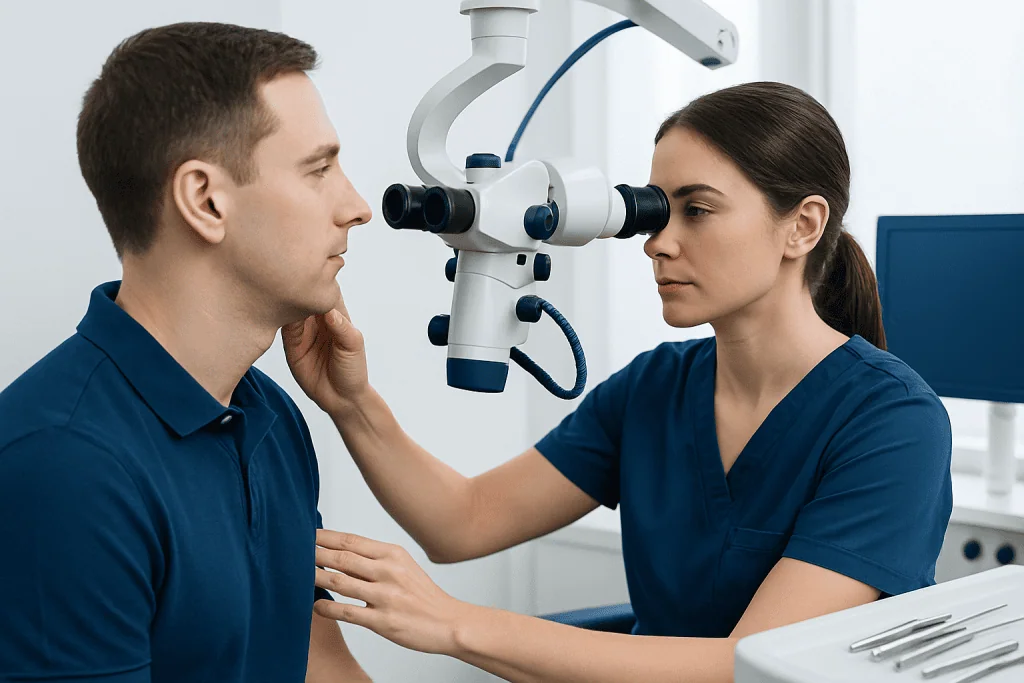
People are commonly sent for ear, nose, and throat exams when symptoms do not improve, return often, or affect daily life. Ear-related reasons include ear pain, hearing loss, ringing in the ears, a feeling of fullness, repeated infections, balance problems, or drainage from the ear. Nasal and sinus concerns include ongoing congestion, facial pressure, frequent sinus infections, nosebleeds, reduced sense of smell, or difficulty breathing through the nose.
Throat and voice symptoms are another common reason for referral. These may include persistent sore throat, hoarseness, chronic cough, swallowing discomfort, a sensation of a lump in the throat, enlarged tonsils, or sleep-related breathing issues such as snoring. In children, ENT assessments are often requested for repeated ear infections, hearing concerns, enlarged adenoids, mouth breathing, or recurrent tonsillitis.
Sometimes an ENT exam helps clarify symptoms that overlap with other conditions. For example, dizziness may involve the inner ear, while a chronic cough or throat clearing may be linked to postnasal drip, irritation, or reflux. An ENT specialist may also evaluate findings already suspected by another doctor, such as sinusitis or persistent tonsillitis.
How to prepare for the first visit

Preparing in advance can help the appointment go more smoothly. It is useful to bring a list of symptoms, when they started, whether they come and go, and what seems to make them better or worse. Patients may also want to note related details such as fever, recent infections, allergies, noise exposure, smoking history, reflux symptoms, or any previous surgery involving the ears, nose, throat, or neck.
A current medication list is important, including prescription medicines, over-the-counter products, nasal sprays, vitamins, and supplements. If available, previous hearing tests, imaging reports, allergy testing, sleep studies, or referral notes can give helpful background. People who use hearing aids should usually bring them to the appointment.
It can also help to think about practical questions beforehand. A patient may wish to ask what the likely causes are, whether the condition is temporary or long term, what tests are needed, and what treatment options exist. If a nasal or throat endoscopy might be performed, eating and drinking instructions are usually not complicated, but following any clinic-specific guidance is sensible.
What happens during the examination
The first part of the visit is usually the medical history. The doctor asks about symptoms, past illnesses, allergies, medications, family history, and any factors that may affect ENT health, such as recent infections, voice strain, loud noise exposure, or environmental irritants. This discussion helps the specialist choose the most relevant parts of the examination.
Next comes the physical exam. The ears are often examined with an otoscope to check the ear canal and eardrum. The nose may be inspected with a light and a small speculum to look for swelling, mucus, polyps, bleeding points, or a deviated septum. The mouth and throat are checked for redness, tonsil enlargement, lesions, mucus, or signs of irritation. The doctor may also gently feel the neck and jaw area for glands, swelling, or tenderness.
Depending on the symptoms, the doctor may recommend simple in-office procedures. These can include hearing assessment, tympanometry, or looking more deeply into the nose or throat with a thin flexible scope. Nasal or throat endoscopy is commonly used to evaluate chronic blockage, hoarseness, swallowing symptoms, or suspected structural problems. It is usually brief and may involve a numbing spray for comfort. In selected cases, the evaluation may lead to tests such as a hearing test, nasal or throat endoscopy, or imaging such as MRI scanning if more detail is needed.
- History of symptoms and general health
- Examination of ears, nose, mouth, throat, and neck
- Possible hearing or balance-related checks
- Possible flexible scope exam for the nose or throat
- Discussion of findings and next steps
Common findings and possible diagnoses
Many first visits identify common and treatable causes of symptoms. Ear findings may include wax buildup, middle ear fluid, eardrum irritation, infection, or hearing changes that need formal testing. Nasal symptoms may be related to allergies, sinus inflammation, structural narrowing, polyps, or a deviated septum. Throat and voice symptoms can be linked to infection, irritation, vocal cord strain, tonsil problems, or reflux affecting the throat.
Sometimes the examination is normal, which is still useful information. A normal exam can help the doctor decide whether symptoms may come from an intermittent problem, a functional issue, or a condition outside the ENT area. In that situation, the specialist may advise observation, further tests, or referral to another doctor if needed.
ENT specialists also look for patterns that need timely follow-up, especially if symptoms are persistent, one-sided, or associated with unexplained weight loss, bleeding, or a neck lump. Most causes are not serious, but careful evaluation helps ensure that important conditions are not missed and that treatment is appropriately targeted.
Treatment options after the exam
Treatment depends on the cause of the symptoms rather than the location alone. Some patients only need reassurance, monitoring, and symptom-relief measures. Others may benefit from medicines such as saline rinses, allergy treatment, antibiotics when bacterial infection is suspected, reflux management, or drops for ear conditions. The doctor usually explains expected benefits, how long improvement may take, and when follow-up is needed.
For structural or persistent problems, procedures may be considered. Examples include earwax removal, drainage of fluid, treatment for nosebleeds, biopsy of an abnormal area, or surgery for ongoing sinus disease, enlarged tonsils, nasal obstruction, or chronic ear disease. If hearing loss is present, the next step may involve more detailed hearing evaluation and discussion of support options. In some cases, patients may be referred for cochlear implant assessment or septoplasty when clinically appropriate.
Care is often multidisciplinary when symptoms overlap with allergy, pulmonology, gastroenterology, speech therapy, neurology, or sleep medicine. Near the end of the care pathway, some patients choose centers such as Acibadem International, where multidisciplinary specialists in JCI-accredited hospitals diagnose and treat ENT conditions for international patients.
Self-care, follow-up, and when to seek medical advice
After the appointment, patients are often advised to follow a care plan and monitor symptoms over time. This may include using prescribed treatments correctly, avoiding smoke or other irritants, staying hydrated, resting the voice, managing allergies, or using saline nasal care. Follow-up is important when the doctor wants to see whether treatment is working or review test results.
People should contact a doctor sooner if symptoms suddenly worsen or do not improve as expected. Prompt medical advice is especially important for sudden hearing loss, severe dizziness, significant shortness of breath, difficulty swallowing liquids, persistent hoarseness, repeated nosebleeds, high fever with worsening pain, or swelling in the neck. These symptoms do not always mean a serious problem, but they should not be ignored.
In general, an ENT first visit is meant to provide clarity and a practical plan. Most patients leave with a better understanding of what may be causing their symptoms, what tests are useful, and what treatments or lifestyle steps can support recovery and long-term comfort.
Frequently asked questions
What does an ENT doctor check during the first visit?
An ENT doctor usually reviews symptoms, medical history, and any previous test results first. The examination often includes the ears, nose, throat, and neck, and sometimes a hearing check or a small flexible scope exam if more detail is needed.
Are ear, nose, and throat exams painful?
Most ENT exams are not painful, though some parts may feel slightly uncomfortable for a few moments. If a scope exam is needed, a numbing spray may be used to make the procedure easier to tolerate.
How long does an ENT appointment usually take?
The length varies depending on the symptoms and whether testing is needed, but many first visits are completed within a standard outpatient appointment. If hearing tests, endoscopy, or imaging planning are added, the visit may take longer.
Should someone avoid eating before an ENT exam?
Usually no special fasting is needed for a routine ENT visit. However, if a clinic plans a specific procedure, it may provide separate instructions, so it is best to check beforehand.
What should a patient bring to the first ENT appointment?
It helps to bring a symptom timeline, a medication list, referral notes, and any prior hearing tests, scans, or lab results. Hearing aids, allergy information, and a list of questions can also make the visit more productive.
Can an ENT specialist diagnose dizziness or balance problems?
Yes, an ENT specialist can evaluate dizziness when an inner ear cause is suspected. The doctor may ask about triggers, hearing symptoms, and balance changes, and may recommend hearing or vestibular testing if needed.
References
- American Academy of Otolaryngology–Head and Neck Surgery
- National Institute on Deafness and Other Communication Disorders
- NHS
- Mayo Clinic
This article is for general information only and is not a substitute for professional medical advice. Please consult a qualified doctor about your individual situation.
Explore treatments in Turkey — costs, top hospitals & a free quote
JCI-accredited · board-certified surgeons · reply within 24h
Add us as a Preferred Source to see more of our trusted health content across Google Search, AI Overviews and Discover.

Otorhinolaryngology (ENT)
Care for ear, nose, throat and head-and-neck conditions, including hearing and balance disorders.
126 specialists in this unit