Early Stage Knee Infection Pictures: Early Signs, Risk Factors, and How It Is Treated

A knee infection may affect the skin, tissues around the joint, the joint itself, or a surgical implant. Early visible changes can include redness, swelling, shiny skin, warmth, and sometimes wound drainage.
Key Takeaways
- A knee infection may affect the skin, tissues around the joint, the joint itself, or a surgical implant.
- Early visible changes can include redness, swelling, shiny skin, warmth, and sometimes wound drainage.
- A rapidly painful, swollen knee with reduced movement may be septic arthritis, which requires urgent assessment.
- Diagnosis may involve an examination, blood tests, imaging, and sampling fluid from the knee joint.
- Treatment depends on the infection site and severity and may include antibiotics, drainage, or surgery.
Early stage knee infection pictures can help people recognize visible changes such as redness, swelling, warmth, or a draining wound around the knee. However, images cannot confirm an infection: a painful, swollen, hot knee—especially with fever or difficulty bearing weight—needs prompt medical evaluation.
What Early Stage Knee Infection Pictures May Show
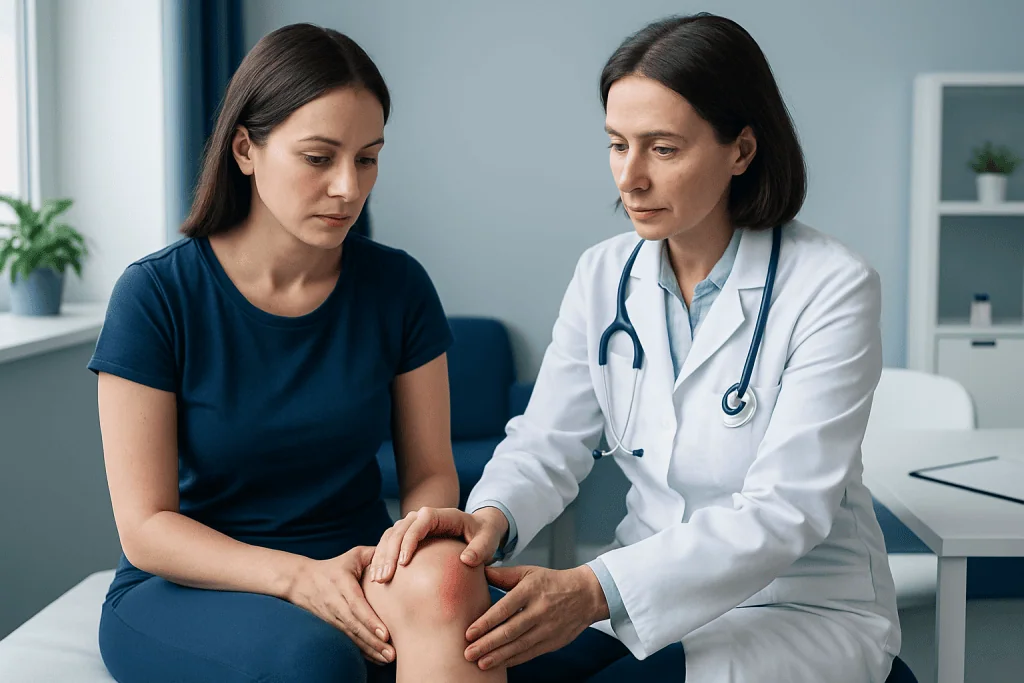
Early stage knee infection pictures commonly show a knee that looks more red, puffy, or glossy than the other side. The skin may appear stretched by swelling, and redness may spread beyond a small cut, insect bite, surgical scar, or other break in the skin. In lighter skin tones, redness may be clearly pink or red; in darker skin tones, it may look darker, purplish, grayish, or unusually shiny rather than bright red.
Pictures are useful for noticing change, but they cannot identify where an infection is located or how serious it is. A superficial skin infection can look similar to inflammation from an injury, arthritis flare, gout, bursitis, or a reaction to a bite. A deeper infection inside the knee joint may cause little obvious redness early on, while producing severe pain and marked difficulty moving the knee.
It can be helpful to compare both knees in good light and note whether swelling, discoloration, warmth, or a wound is changing over hours or days. Photographs taken for personal tracking may also help a clinician understand progression, but they should not delay in-person care when symptoms are significant.
Recognizing Early Symptoms Beyond Appearance
In addition to a visible change, an infected knee may feel warm or hot to touch and become increasingly tender. Pain can occur at rest and may worsen with bending, straightening, walking, or putting weight through the leg. The person may notice stiffness, reduced range of motion, or a feeling that the knee is too swollen to move normally.
Symptoms vary according to the affected area. Infection of the skin and soft tissue may begin with a sore, expanding red area. An infection within the joint, called septic arthritis, often causes sudden severe pain, swelling, and a strong reluctance to move the knee. Infection after an operation or knee replacement may include persistent wound drainage, worsening pain after initial improvement, or new swelling around the scar.
Some people also develop fever, chills, fatigue, or feel generally unwell. Fever is an important sign, but its absence does not rule out infection, particularly in older adults, people with diabetes, or people taking medicines that suppress the immune system.
- New redness, warmth, or swelling around the knee
- Pain that is worsening rather than improving
- Difficulty walking, bearing weight, or bending the knee
- Pus, cloudy fluid, or persistent drainage from a wound or surgical incision
- Fever, chills, or feeling unwell alongside knee symptoms
Types of Knee Infection and Why the Location Matters
The term “knee infection” can describe several conditions. Cellulitis affects the skin and tissue beneath it. An infected bursa, often near the front of the knee, can cause a localized lump, warmth, and tenderness. Septic arthritis affects the joint space and can damage cartilage if treatment is delayed. Bone infection, known as osteomyelitis, is less common but may occur when bacteria spread from nearby tissues or through the bloodstream.
People who have had knee surgery or a knee replacement can, rarely, develop a periprosthetic joint infection. This may happen soon after surgery or later if bacteria reach the bloodstream and settle around an implant. New or increasing pain, warmth, swelling, wound problems, or unexplained loss of knee function after replacement surgery should be assessed by the surgical team or another qualified clinician.
Because the symptoms overlap, it is not safe to diagnose the type of infection based on appearance alone. A clinician will consider the timing of symptoms, recent injuries or procedures, overall health, and whether joint movement is especially painful. Information about septic arthritis can also help explain why a suspected joint infection is treated urgently.
Causes and Risk Factors
Most knee infections are caused by bacteria. Germs may enter through a cut, scrape, puncture wound, skin ulcer, injection site, or surgical incision. They can also travel through the bloodstream from an infection elsewhere in the body. Less commonly, fungi or other organisms are involved, particularly in people with markedly weakened immune systems.
Anyone can develop an infection, but some factors raise the likelihood. These include recent knee surgery, joint injections, an artificial knee joint, a significant skin wound, diabetes, poor circulation, inflammatory arthritis, kidney disease, and medicines that reduce immune activity. Previous joint disease may also make it harder to distinguish infection from a non-infectious flare.
Minor injuries do not usually cause joint infection, and most red or sore knees are not necessarily infected. Still, rapid symptom progression, severe pain, and systemic symptoms deserve medical attention because early treatment can prevent complications.
How a Knee Infection Is Diagnosed
Diagnosis begins with a clinical assessment. A doctor will ask when symptoms started, whether there was a wound, illness, injection, surgery, or joint replacement, and whether symptoms are becoming worse. They will examine the skin, compare both knees, check movement, and look for signs that infection may involve the joint rather than only the surface tissues.
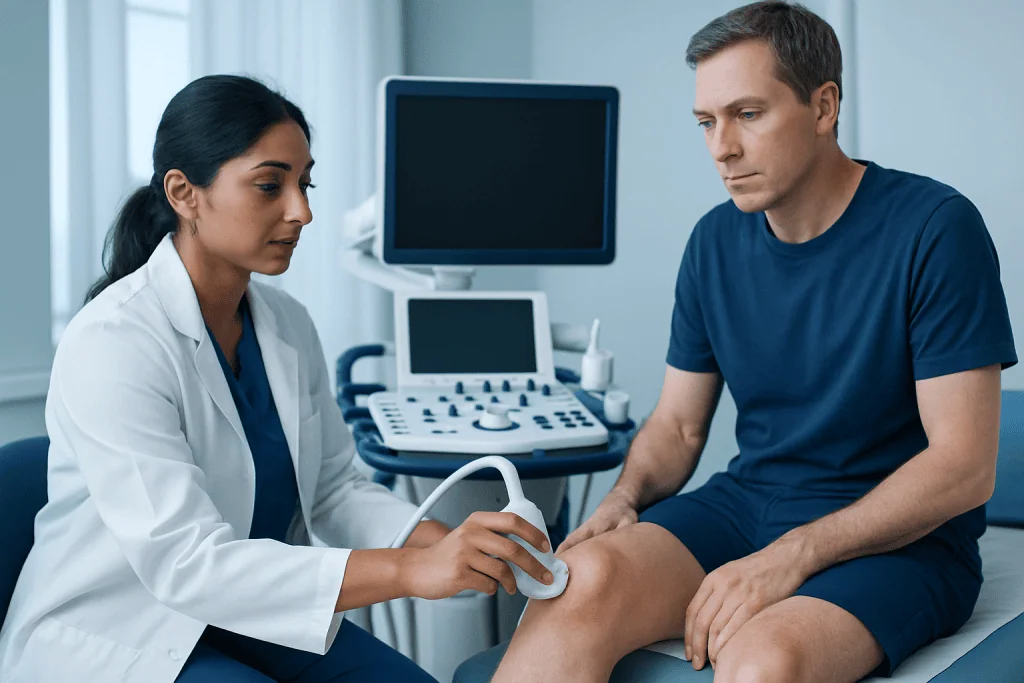
Blood tests may look for evidence of inflammation or infection, and blood cultures may be used when bloodstream infection is possible. Ultrasound can identify fluid or a collection near the knee, while X-rays may help assess the bones, joint, or implant. MRI or other imaging may sometimes be needed to evaluate deeper soft tissues or bone.
When septic arthritis is suspected, a clinician may use a needle to remove fluid from the knee. Laboratory testing of this fluid can identify infection and guide antibiotic selection. This procedure is an important part of evaluation because prompt, targeted treatment is essential when bacteria are present in the joint.
Treatment Options and Recovery
Treatment is tailored to the location, cause, severity, and a person’s general health. Skin and soft-tissue infections may be treated with antibiotics, wound care, elevation, and close follow-up. The choice of antibiotic is based on likely bacteria, local guidance, allergy history, test results, and whether treatment by mouth or through a vein is appropriate.
A suspected or confirmed infection inside the joint generally requires urgent hospital-based care. Antibiotics are often combined with drainage of infected joint fluid, either by repeated needle aspiration or an operation to wash out the joint. More extensive surgery may be needed for some infections involving bone, deep abscesses, or a knee replacement.
Rest may be advised initially, but gradual movement and rehabilitation can become important once infection and pain are under control. The care team will monitor symptoms and test results to check recovery. People should take prescribed medicines exactly as directed and attend follow-up appointments, even if the knee starts to feel better.
Acibadem International’s multidisciplinary specialists and JCI-accredited hospitals evaluate and treat knee infections for international patients, coordinating orthopedic, infectious disease, imaging, and rehabilitation care when needed.
Prevention and Practical Self-Care
Not every knee infection can be prevented, but basic skin and wound care lowers risk. Cuts and abrasions should be cleaned with running water, protected with a clean dressing when needed, and checked for increasing redness, swelling, drainage, or pain. People should avoid squeezing, lancing, or attempting to drain a swollen area around the knee at home.
After knee surgery, following wound-care instructions is especially important. Keep the incision clean and dry as advised, avoid unapproved creams or dressings, and contact the surgical team if drainage, spreading redness, fever, or worsening pain develops. Good management of diabetes and other long-term conditions can also support wound healing and infection prevention.
Cold packs may reduce discomfort from some non-infectious knee injuries, but they do not treat an infection. It is also important not to rely on pain relievers, topical products, or leftover antibiotics to manage a suspected infection. These approaches can mask symptoms, cause side effects, or delay correct treatment.
When to Seek Medical Care
Urgent same-day medical assessment is appropriate for a knee that becomes rapidly swollen, hot, red, and painful, especially if bending the knee or bearing weight is difficult. The same applies to fever, chills, pus or drainage, red streaking from a wound, or feeling generally unwell. These features may indicate a deeper or spreading infection that requires prompt treatment.
Emergency care is appropriate if the person is confused, faint, severely weak, has trouble breathing, develops a rapidly spreading rash or discoloration, or appears seriously unwell. Infants, older adults, people with diabetes, and people with weakened immune systems should have a lower threshold for seeking urgent advice.
A less severe but persistent change should still be reviewed by a doctor, particularly after a knee injection, injury, surgery, or joint replacement. A clinician can distinguish possible infection from other causes of knee pain and swelling and recommend the safest next step.
Frequently asked questions
What does an early knee infection look like?
It may look like redness, swelling, shiny or stretched skin, or drainage from a cut or surgical wound. The area may also look darker or purplish rather than red in darker skin tones. Appearance alone cannot confirm an infection.
Can a knee joint infection occur without a fever?
Yes. Some people with a knee joint infection do not have a noticeable fever, especially older adults or people with certain long-term conditions or immune-suppressing medicines. Severe knee pain, swelling, warmth, and limited movement still need prompt assessment.
How quickly can a knee infection develop?
Symptoms may develop over hours to days, particularly with septic arthritis. Skin infections may also spread quickly. Any rapid worsening of pain, swelling, redness, or ability to walk should be evaluated urgently.
Is a warm swollen knee always an infection?
No. Arthritis, gout, bursitis, injury, bleeding into the joint, and other conditions can also cause warmth and swelling. Because infection can have similar symptoms and may require urgent treatment, a clinician should assess a new or rapidly worsening hot swollen knee.
Can antibiotics alone treat a knee infection?
Antibiotics may be enough for some uncomplicated skin infections. If infection is inside the knee joint or there is an abscess, infected fluid often needs drainage as well. The treatment plan depends on test results and the part of the knee involved.
What should someone do if a knee surgery incision starts draining?
They should contact their surgeon or healthcare team promptly, particularly if drainage is cloudy, yellow, bloody, foul-smelling, or increasing. New redness, warmth, fever, worsening pain, or wound opening should be assessed without delay. The area should not be squeezed or treated with unapproved products.
References
- Centers for Disease Control and Prevention
- National Institute of Arthritis and Musculoskeletal and Skin Diseases
- American Academy of Orthopaedic Surgeons
- NHS
- Merck Manual Consumer Version
This article is for general information only and is not a substitute for professional medical advice. Please consult a qualified doctor about your individual situation.
Joint and spine care in Turkey — expert assessment & treatment
JCI-accredited · board-certified surgeons · reply within 24h
Add us as a Preferred Source to see more of our trusted health content across Google Search, AI Overviews and Discover.

More from the Health Library



Related Specialists

Assoc. Prof. Dr. Engin Çelik
Gynecology & Obstetrics
Prof. Dr. Özgen Işık
General Surgery
Dr. Mahmut Ercüment Cengiz
Gynecology & Obstetrics
Dr. Elif Dinçer
Radiology