Ectopic Pregnancy After IVF: Symptoms, Risk Factors, and Early Monitoring

IVF lowers some infertility barriers but does not fully eliminate the risk of ectopic pregnancy. Symptoms may include one-sided pelvic pain, spotting, shoulder-tip pain, dizziness, or worsening abdominal pain, but some patients have few early symptoms.
Key Takeaways
- IVF lowers some infertility barriers but does not fully eliminate the risk of ectopic pregnancy.
- Symptoms may include one-sided pelvic pain, spotting, shoulder-tip pain, dizziness, or worsening abdominal pain, but some patients have few early symptoms.
- Serial beta-hCG blood tests and transvaginal ultrasound are the main tools used to monitor early IVF pregnancy.
- A heterotopic pregnancy, where one pregnancy is in the uterus and another is ectopic, is uncommon but more likely after fertility treatment than in spontaneous conception.
- Treatment depends on stability, pregnancy location, whether an intrauterine pregnancy is present, and the patient’s reproductive goals.
Ectopic pregnancy after IVF occurs when an embryo implants outside the uterus, most often in a fallopian tube, despite embryo transfer into the womb. Early blood tests, timely ultrasound, and prompt medical assessment help confirm pregnancy location and guide safe treatment.
Overview
An ectopic pregnancy is a pregnancy that implants outside the lining of the uterus. The most common location is the fallopian tube, although it can also occur in the cervix, ovary, cesarean scar, or abdominal cavity. An ectopic pregnancy cannot develop safely in these locations and requires careful medical evaluation.
Ectopic pregnancy after IVF can feel confusing because embryos are transferred directly into the uterus during IVF treatment. However, after transfer, an embryo may still move within the reproductive tract before implantation. For this reason, confirming a positive pregnancy test is only the first step; confirming where the pregnancy is located is equally important.
Most IVF pregnancies are located normally inside the uterus. When ectopic pregnancy occurs, early monitoring usually allows doctors to identify concerns before complications develop. Fertility teams typically schedule blood tests and an early ultrasound so that patients do not have to rely on symptoms alone.
Symptoms of Ectopic Pregnancy After IVF
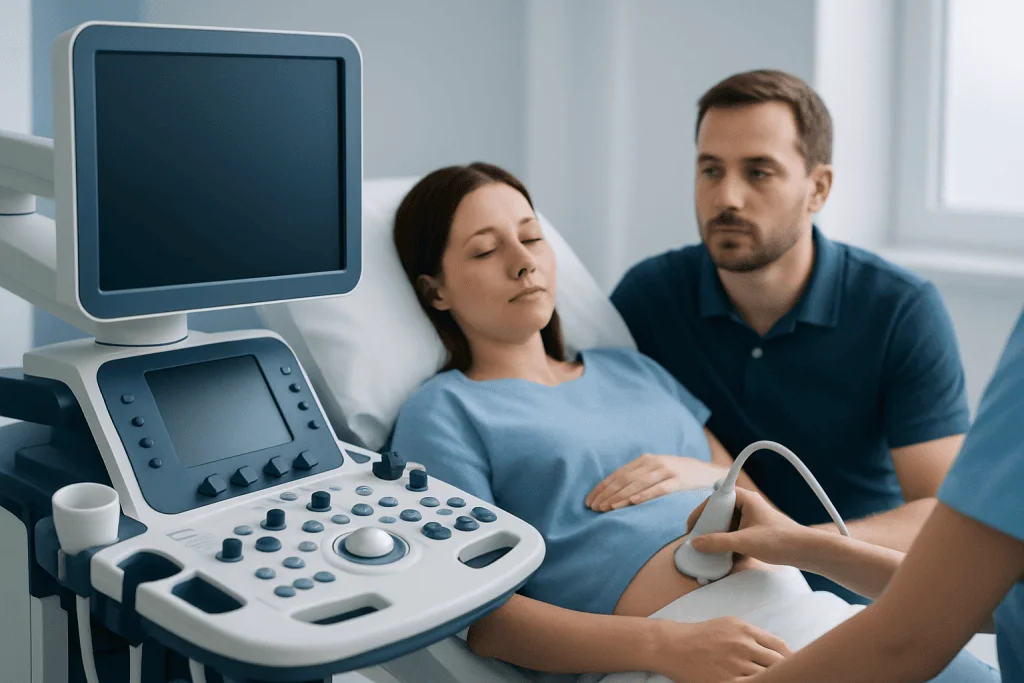
Symptoms can vary widely. Some patients have no obvious symptoms at first and only learn there is a concern during routine IVF monitoring. Others may notice pelvic discomfort, light bleeding, or pain that feels different from typical early pregnancy cramping.
Possible symptoms include one-sided pelvic or lower abdominal pain, vaginal spotting or bleeding, pain that worsens with movement, rectal pressure, nausea, or unusual weakness. Shoulder-tip pain, fainting, severe dizziness, or sudden intense abdominal pain can suggest internal bleeding and require urgent medical care.
It is important to remember that mild cramping and spotting can also occur in normal early pregnancy, after embryo transfer, or with hormonal medications. Because symptoms overlap, patients should avoid self-diagnosis and contact their fertility clinic or obstetrician if pain or bleeding occurs, especially after a positive IVF pregnancy test.
Why Ectopic Pregnancy Can Happen After IVF
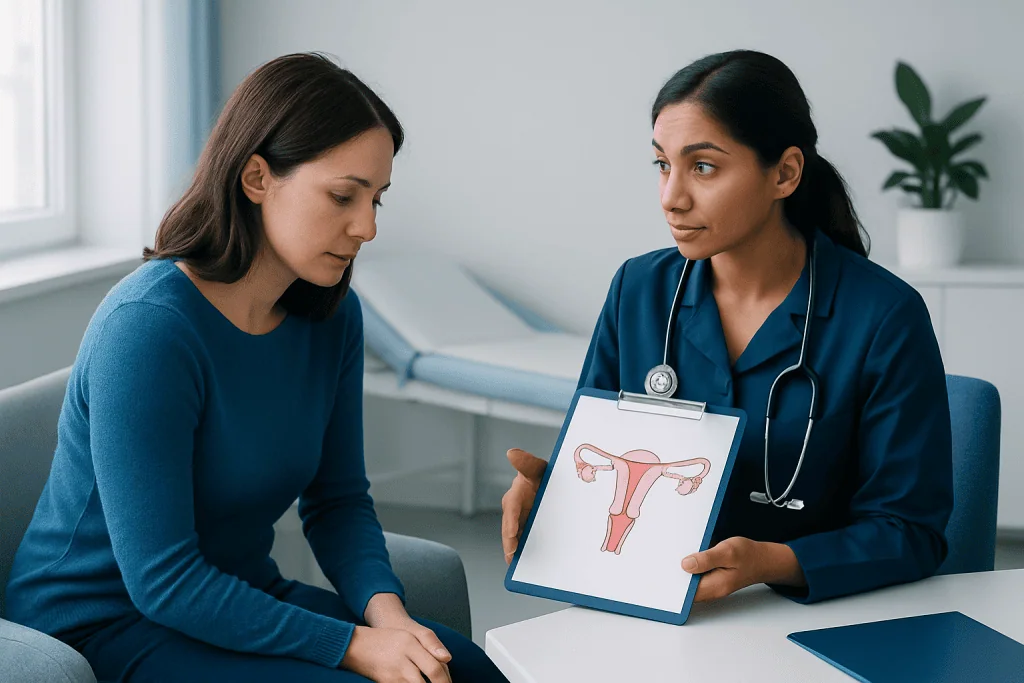
During IVF, embryos are placed inside the uterine cavity, but implantation does not happen instantly. The embryo and uterine fluid can move, and in some cases the embryo may migrate toward a fallopian tube or another site before implanting. This is one reason IVF reduces some causes of infertility but does not completely prevent ectopic pregnancy.
Underlying tubal disease is an important factor. A fallopian tube that has been damaged by previous infection, surgery, inflammation, endometriosis, or a prior ectopic pregnancy may have altered function. Even if conception occurs through IVF rather than inside the tube, tubal changes may still influence the risk of abnormal implantation.
Embryo transfer technique and reproductive history may also be relevant. Factors sometimes discussed include difficult embryo transfer, placement of transfer fluid too high in the uterus, transfer of more than one embryo, and a history of infertility related to tubal or pelvic disease. These factors do not mean an ectopic pregnancy will occur, but they may lead clinicians to monitor especially closely.
Risk Factors to Discuss With the Fertility Team
Before and after embryo transfer, patients should tell their fertility specialist about any previous ectopic pregnancy, fallopian tube surgery, pelvic inflammatory disease, endometriosis, appendicitis with complications, cesarean scar problems, or known hydrosalpinx. A hydrosalpinx is a fluid-filled, damaged fallopian tube that may affect fertility and early pregnancy outcomes.
Patients receiving care for female infertility may already have had imaging or surgery that provides information about the tubes and pelvis. This history helps the team plan monitoring and decide whether any additional evaluation is needed before future transfers.
Other factors that may be considered include smoking, older maternal age, prior pelvic surgery, and assisted reproduction involving multiple embryos. Individual risk is best assessed by a clinician who can review the full fertility history, ultrasound findings, laboratory results, and treatment plan.
Early Monitoring: hCG Blood Tests and Ultrasound
After IVF, the first pregnancy blood test usually measures beta-human chorionic gonadotropin, commonly called beta-hCG. This hormone is produced by early pregnancy tissue. A single result confirms that pregnancy hormone is present, but it cannot reliably show whether the pregnancy is in the uterus or elsewhere.
Doctors often repeat beta-hCG testing over several days to look at the trend. In many healthy early pregnancies, the level rises in a predictable pattern, although there is natural variation. A slower-than-expected rise, plateau, or fall may suggest a pregnancy that is not developing normally, but it still does not confirm the exact location without imaging.
Transvaginal ultrasound is used to look for a gestational sac inside the uterus and to assess the ovaries, tubes, pelvis, and any free fluid. Timing matters: if the scan is too early, a normal intrauterine pregnancy may not yet be visible. Fertility clinics usually schedule ultrasound based on days after embryo transfer, hCG levels, and symptoms.
Patients should keep all scheduled follow-up appointments even if they feel well. Early IVF monitoring is designed to answer three key questions: Is pregnancy hormone rising appropriately, is the pregnancy located in the uterus, and is there any sign that urgent evaluation is needed?
Heterotopic Pregnancy After IVF
A heterotopic pregnancy means that one pregnancy is located inside the uterus while another is ectopic. This is uncommon, but it is seen more often after fertility treatment than after spontaneous conception. It can be more difficult to diagnose because seeing an intrauterine pregnancy does not always completely exclude an ectopic pregnancy in IVF patients.
Symptoms of heterotopic pregnancy may be similar to ectopic pregnancy, including one-sided pain, bleeding, dizziness, or increasing abdominal discomfort. However, some patients have reassuring early signs from the intrauterine pregnancy while the ectopic pregnancy continues to grow elsewhere.
If heterotopic pregnancy is suspected, management is individualized. Treatment aims to protect the patient’s health while considering the intrauterine pregnancy when present. Certain medications used for ectopic pregnancy are generally not appropriate when a viable intrauterine pregnancy exists, so specialist assessment is essential.
Treatment Options
Treatment depends on the patient’s symptoms, vital signs, hCG trend, ultrasound findings, pregnancy location, and whether there is also an intrauterine pregnancy. In carefully selected cases where hCG levels are falling and the patient is stable, close observation may be considered. This approach requires reliable follow-up and clear instructions about when to seek urgent care.
Medication may be used for some ectopic pregnancies when there is no viable intrauterine pregnancy and the patient meets safety criteria. The most common medication stops rapidly dividing pregnancy tissue from continuing to grow. Patients need follow-up blood tests until the pregnancy hormone has resolved, and they should discuss medication precautions and future conception timing with their doctor.
Surgery may be recommended if there is significant pain, bleeding, concern for rupture, certain ectopic locations, high-risk ultrasound findings, or a heterotopic pregnancy. Minimally invasive laparoscopy is often used when appropriate, but the exact procedure depends on the ectopic site and the condition of the fallopian tube or surrounding tissue.
After treatment, emotional recovery is also important. An ectopic pregnancy after fertility treatment can bring grief, fear, and frustration. Patients may benefit from follow-up with their fertility specialist to review what happened, discuss future transfer planning, and consider support from counseling or patient support groups.
Prevention, Self-Care, and When to See a Doctor
Not all ectopic pregnancies can be prevented, but risk can sometimes be reduced through careful pre-IVF assessment. Treating pelvic infections promptly, evaluating known tubal disease, discussing hydrosalpinx management, and planning embryo transfer technique are all part of individualized care. In some cases, the fertility team may recommend additional steps before another embryo transfer.
After a positive IVF pregnancy test, patients should follow their clinic’s monitoring schedule and report symptoms early. They should not stop prescribed IVF hormones unless instructed, because spotting or discomfort may have several possible causes. Safe self-care includes resting as needed, staying hydrated, avoiding strenuous activity if advised, and keeping emergency contact information available.
Urgent medical attention is needed for severe or worsening abdominal pain, fainting, shoulder-tip pain, heavy bleeding, weakness, or dizziness. Patients should also contact their doctor promptly for persistent one-sided pain, new bleeding, or anxiety about symptoms. Acibadem International’s multidisciplinary specialists and JCI-accredited hospitals diagnose and treat early pregnancy complications, including ectopic pregnancy, for international patients as part of coordinated fertility and women’s health care.
Anyone planning pregnancy after infertility treatment can ask their doctor how their personal history affects risk. For patients comparing options such as ICSI or other forms of infertility treatment, the goal is not only achieving pregnancy but also monitoring early pregnancy safely and compassionately.
Frequently asked questions
Can an ectopic pregnancy happen even though the embryo was placed in the uterus?
Yes. During IVF, the embryo is transferred into the uterus, but implantation does not occur immediately. In rare cases, the embryo may move and implant in a fallopian tube or another location outside the uterine lining.
How soon after IVF can an ectopic pregnancy be detected?
Doctors may suspect a problem from early beta-hCG trends, but ultrasound is usually needed to confirm the pregnancy location. The timing depends on the number of days after embryo transfer, the hCG level, and symptoms.
Does a normal hCG rise rule out ectopic pregnancy?
No. A reassuring hCG rise is helpful, but it does not prove the pregnancy is inside the uterus. Ultrasound confirmation of an intrauterine pregnancy is the key step, especially after IVF.
What is the difference between ectopic and heterotopic pregnancy?
An ectopic pregnancy is located outside the uterus. A heterotopic pregnancy includes both an intrauterine pregnancy and an ectopic pregnancy at the same time, which is uncommon but more likely after fertility treatment than in natural conception.
Can an ectopic pregnancy after IVF be treated without surgery?
Sometimes, yes. Medication or close observation may be appropriate for selected stable patients, depending on hCG levels, ultrasound findings, and whether an intrauterine pregnancy is present. Surgery is needed in some cases, especially if there is bleeding, rupture risk, or heterotopic pregnancy.
Can someone try IVF again after an ectopic pregnancy?
Many patients can try again after recovery, but timing and preparation should be individualized. The fertility specialist will review the ectopic pregnancy, tubal history, treatment used, and any steps that may reduce risk in a future transfer.
References
- American College of Obstetricians and Gynecologists
- European Society of Human Reproduction and Embryology
- Royal College of Obstetricians and Gynaecologists
- Mayo Clinic
- American Society for Reproductive Medicine
This article is for general information only and is not a substitute for professional medical advice. Please consult a qualified doctor about your individual situation.
IVF & fertility treatment in Turkey — success rates and costs
JCI-accredited · board-certified surgeons · reply within 24h
Add us as a Preferred Source to see more of our trusted health content across Google Search, AI Overviews and Discover.

Related Treatments
Related Conditions
More from the Health Library



Related Specialists

Prof. Dr. Bülent Tıraş
Gynecology & Obstetrics
Prof. Dr. Mete Güngör
Gynecology & Obstetrics
Prof. Dr. Faruk Suat Dede
Gynecology & Obstetrics
Prof. Dr. Tansu Küçük
Gynecology & Obstetrics