Eczema on Feet: A Complete Medical Overview

Eczema on feet often causes itchy, dry, cracked, or inflamed skin and sometimes blistering. Several types of eczema can affect the feet, including atopic, contact, and dyshidrotic eczema.
Key Takeaways
- Eczema on feet often causes itchy, dry, cracked, or inflamed skin and sometimes blistering.
- Several types of eczema can affect the feet, including atopic, contact, and dyshidrotic eczema.
- Triggers may include sweat, shoe materials, soaps, friction, and prolonged dampness.
- Fungal infection, psoriasis, and other rashes can look similar, so diagnosis matters.
- Treatment usually combines moisturizers, trigger avoidance, and prescribed anti-inflammatory medicines when needed.
- Medical review is important if symptoms are severe, painful, infected, or not improving.
Eczema on feet is a common inflammatory skin condition that can cause itching, dryness, redness, scaling, or small blisters on the soles, toes, and sides of the feet. It is not one single disease pattern, and proper care depends on identifying whether irritation, allergy, sweat, friction, or another skin condition is contributing to the problem.
Overview: what eczema on feet means
Eczema on feet refers to inflammation of the skin affecting the soles, heels, toes, or the skin between and around the toes. It commonly leads to itching, dryness, redness, scaling, and sometimes painful cracks. In some people, small fluid-filled blisters appear, especially on the sides of the feet or toes, which may suggest a form called dyshidrotic eczema.
This is an umbrella term rather than a single diagnosis. Doctors may use names such as atopic dermatitis, contact dermatitis, or dyshidrotic eczema depending on the pattern and likely cause. Because the feet are exposed to friction, sweat, occlusive footwear, soaps, and environmental allergens, symptoms can persist unless the trigger is recognized and addressed.
Foot eczema can affect daily comfort more than people expect. Walking may become uncomfortable, exercise can worsen irritation, and nighttime itching may disturb sleep. Although it is not contagious, it can sometimes be mistaken for athlete’s foot or another skin disorder, which is why a careful assessment is useful when symptoms keep returning.
How eczema on feet can look and feel
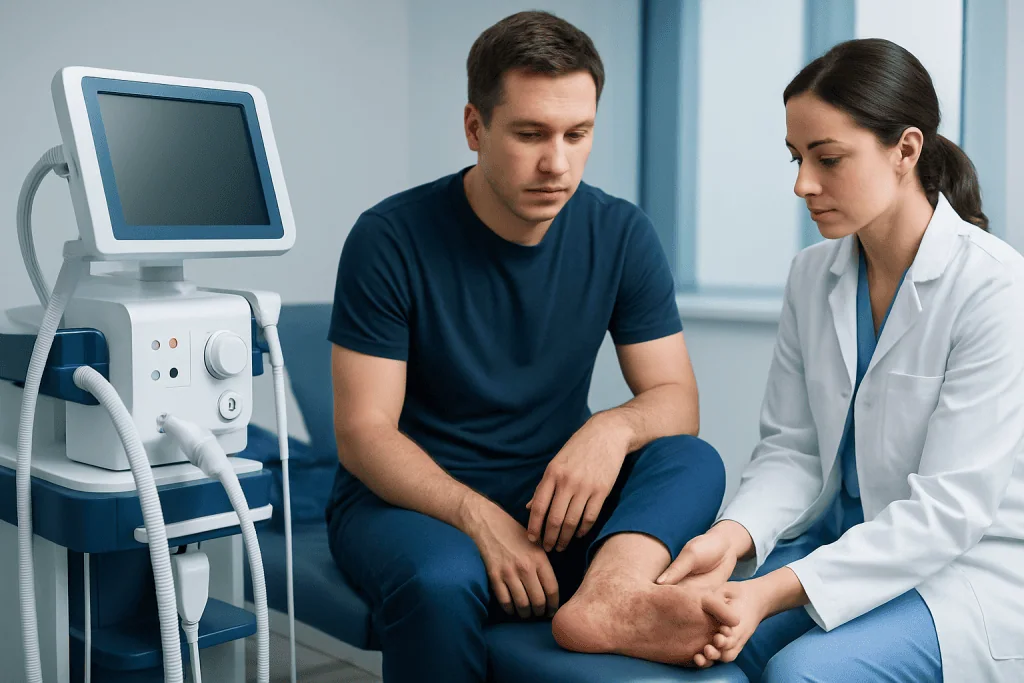
The appearance of eczema on feet varies from person to person. Some have patches of very dry, rough skin on the soles or heels, while others develop red or darker inflamed areas, peeling, or thickened skin from long-term rubbing and scratching. On darker skin tones, eczema may look purple, brown, gray, or ashy rather than bright red.
Common symptoms include itching, burning, tenderness, flaking, and cracks in the skin. Cracks around the heel or ball of the foot may sting or bleed. In dyshidrotic eczema, tiny deep-seated blisters can appear and cause intense itching before they dry and peel.
- Dry, scaly, or flaky skin
- Red, brown, purple, or gray inflamed patches
- Itching that may worsen with heat or sweating
- Small blisters on the sides of the feet or toes
- Thickened skin from chronic irritation
- Painful fissures, especially on the heels
Symptoms may come and go in flares. A flare can last days to weeks and may be triggered by a change in footwear, increased sweating, new skin products, or exposure to an irritant. If the skin barrier becomes damaged, secondary infection can develop more easily.
Why it happens: causes, triggers, and risk factors
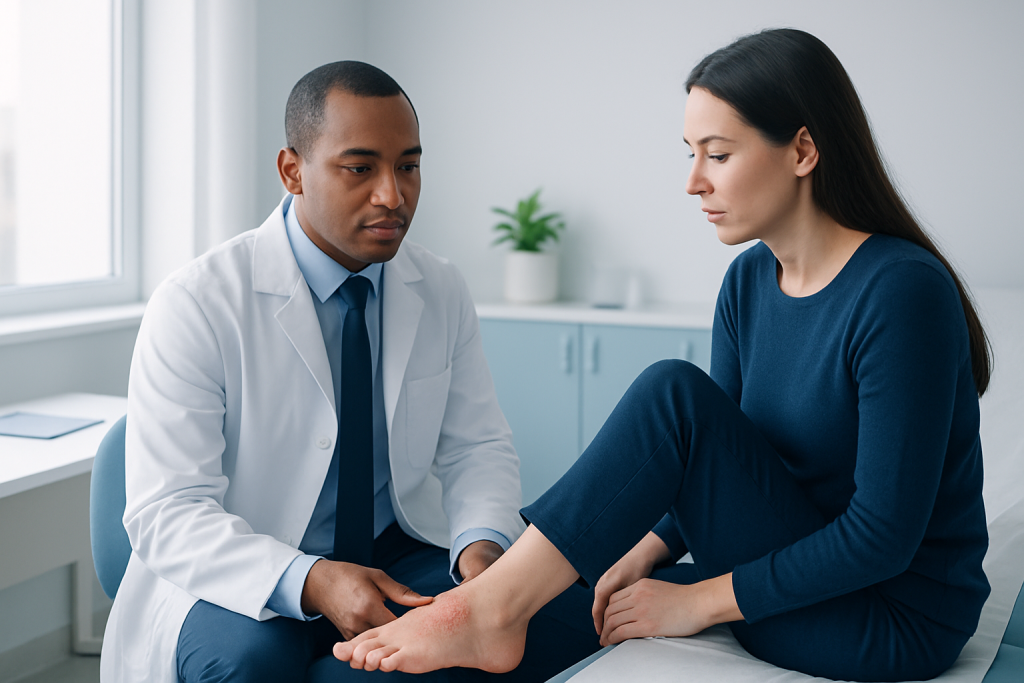
Eczema develops when the skin barrier is less able to retain moisture and protect against irritation. On the feet, repeated exposure to friction, sweat, detergents, and certain shoe materials can trigger inflammation. Some people have a personal or family history of eczema, asthma, or hay fever, which increases the likelihood of sensitive, reactive skin.
Contact dermatitis is a common cause of foot eczema. This can happen when the skin reacts to allergens or irritants in shoes, socks, adhesives, dyes, rubber, leather treatments, fragrance, or cleansing products. Even frequent washing without proper moisturizing may worsen dryness and irritation.
Dyshidrotic eczema is often linked with sweating, stress, warm weather, and prolonged dampness. Flares may also be more common in people whose hands or feet are frequently exposed to moisture. In some cases, a fungal infection such as athlete’s foot can either mimic eczema or coexist with it, making the rash harder to interpret.
Risk factors include:
- Personal or family history of eczema, asthma, or allergies
- Wearing tight, non-breathable shoes for long periods
- Excessive sweating or damp socks
- Exposure to irritants at home or work
- Cold, dry weather or very hot, humid conditions
- Stress, which may aggravate flares in some people
Conditions that can resemble foot eczema
Not every itchy or peeling rash on the feet is eczema. Athlete’s foot, psoriasis, fungal nail infection, bacterial infection, and some forms of palmoplantar dermatitis can look similar. This matters because treatment may be different. For example, a fungal infection is managed differently from inflammatory eczema, and steroid creams alone may sometimes mask or worsen an untreated fungal rash.
Psoriasis on the feet can cause sharply defined thick plaques and painful cracking. Allergic contact dermatitis may appear suddenly after a change in footwear or insoles. In children, inherited or inflammatory skin conditions can also be considered depending on the pattern and age.
When symptoms are persistent, recurrent, or one-sided, a doctor may look more closely for another cause. This can include examination of the skin and nails, review of exposures, and targeted testing. Accurate diagnosis helps avoid trial-and-error treatment and reduces the risk of ongoing irritation.
How doctors diagnose eczema on feet
Diagnosis usually begins with a medical history and skin examination. A doctor will ask when the rash started, whether it itches or burns, what footwear is used, whether there is sweating or dampness, and whether there is a history of eczema, asthma, or allergies. They will also look at the exact distribution of the rash, including the soles, toe webs, heels, and nails.
Sometimes additional tests are needed. If fungal infection is possible, the doctor may take a skin scraping for microscopy or culture. If contact allergy is suspected, patch testing may be recommended to identify reactions to substances such as rubber accelerators, adhesives, dyes, or preservatives.
Persistent or complex cases may be assessed by a specialist in dermatology care. In some situations, doctors may also evaluate circulation, nerve function, or signs of another medical condition if healing is poor or the pattern is unusual. The goal is to confirm the diagnosis and tailor treatment to the cause rather than only the appearance.
Treatment options and day-to-day management
Treatment for eczema on feet focuses on calming inflammation, repairing the skin barrier, relieving itching, and reducing exposure to triggers. Regular use of a plain, fragrance-free moisturizer is one of the most important steps. Creams or ointments are often preferred over lighter lotions because the skin on the feet is thicker and loses moisture easily.
When symptoms are active, doctors may prescribe topical anti-inflammatory treatment, such as a corticosteroid cream or ointment, for a limited period. For some people, especially with recurrent or sensitive areas, non-steroid topical medicines may be used. If there are signs of infection, treatment may also include medication directed at bacteria or fungus, depending on the cause.
Practical measures can make a significant difference:
- Use lukewarm rather than hot water for washing
- Choose fragrance-free cleansers and skin products
- Apply moisturizer soon after bathing and again as needed
- Wear breathable shoes and change damp socks promptly
- Avoid scratching, which can thicken and damage the skin
- Consider protective socks or barrier measures if work exposures are a trigger
In more severe or stubborn cases, dermatologists may discuss advanced therapies, phototherapy, or treatment plans for difficult inflammatory skin disease, similar to care used for eczema and atopic dermatitis more broadly. If another diagnosis is suspected, doctors may arrange targeted investigations such as allergy testing to help identify a trigger.
Prevention, self-care, and when to seek medical care
Preventing flares usually depends on reducing friction, heat, sweat, and chemical exposure while protecting the skin barrier. Rotating shoes, allowing footwear to dry fully, choosing breathable materials, and changing socks after exercise can all help. Some people benefit from keeping a symptom diary to notice links with particular shoes, detergents, or activities.
Daily self-care is often most effective when simple and consistent. Moisturizing the feet every day, especially after washing, can reduce cracking and sensitivity. It is also sensible to avoid harsh exfoliation or strong antiseptics unless advised by a doctor, because these can further irritate inflamed skin.
Medical review is recommended if the rash is severe, keeps returning, interferes with walking or sleep, or does not improve with basic skin care. A person should also seek care if there is increasing pain, swelling, oozing, warmth, fever, or spreading redness, as these may suggest infection. Prompt assessment is especially important for people with diabetes, poor circulation, or reduced sensation in the feet.
For international patients who need specialist assessment, Acibadem International’s multidisciplinary teams in JCI-accredited hospitals evaluate skin conditions and related causes, including access to dermatology care and broader support when needed. Even so, the best next step for any persistent foot rash is an individualized medical evaluation rather than self-diagnosis alone.
Frequently asked questions
What does eczema on feet usually look like?
It often appears as dry, itchy, inflamed skin on the soles, heels, toes, or sides of the feet. Some people develop peeling and cracks, while others get tiny blisters, especially with dyshidrotic eczema.
Is eczema on feet the same as athlete’s foot?
No. Eczema is an inflammatory skin condition, while athlete’s foot is a fungal infection. They can look similar, and sometimes they can occur together, so a doctor may need to examine the skin or test for fungus.
Can shoes cause eczema on feet?
Yes, certain shoes or shoe components can trigger or worsen foot eczema. Rubber, adhesives, dyes, leather treatments, friction, and trapped sweat are common contributors in sensitive skin.
How is eczema on feet treated?
Treatment usually includes regular moisturizers, avoiding triggers, and doctor-prescribed anti-inflammatory creams during flares. If infection or fungus is present, treatment may also need to target that specific problem.
Why does eczema on feet keep coming back?
Recurrence is common when the skin barrier stays irritated by sweat, friction, harsh cleansers, allergens, or dry conditions. Repeat flares can also happen if the rash is not actually eczema or if more than one condition is present.
When should someone see a doctor for eczema on feet?
A doctor should assess persistent, painful, spreading, or frequently recurring symptoms. Medical care is also important if there are signs of infection, difficulty walking, or if the person has diabetes or poor circulation.
References
- American Academy of Dermatology
- National Eczema Association
- National Institute of Arthritis and Musculoskeletal and Skin Diseases
- American Academy of Allergy, Asthma & Immunology
- Mayo Clinic
This article is for general information only and is not a substitute for professional medical advice. Please consult a qualified doctor about your individual situation.
Eczema in Turkey — costs, top hospitals & a free quote
JCI-accredited · board-certified surgeons · reply within 24h
Add us as a Preferred Source to see more of our trusted health content across Google Search, AI Overviews and Discover.

More from the Health Library

Gliptins Dpp-4 Inhibitors: An Evidence-Based Guide for Patients

Photosensitive Epilepsy: What Patients Need to Know

Naso carcinoma: A Complete Medical Guide for Patients

Dry Elbows — Explained by Medical Evidence, Not Myths

Monounsaturated Fat: What Patients Need to Know

Braces on Back: An Evidence-Based Guide for Patients
Related Specialists

Prof. Dr. Hakan Turan Çift
Orthopedic Surgery & Traumatology
Dr. Ayda Ünlüer
Rheumatology
Prof. Dr. Sertaç İşlekel
Neurosurgery
Dr. Özgür Kabagöz
Emergency Service