Eczema on Scalp: What Patients Need to Know

Eczema on scalp is not one single disease; it may refer to atopic dermatitis, seborrheic dermatitis, contact dermatitis, or other inflammatory scalp conditions. Symptoms often include itching, dryness or oiliness, visible flakes, redness, and irritated skin around the hairline or behind the ears.
Key Takeaways
- Eczema on scalp is not one single disease; it may refer to atopic dermatitis, seborrheic dermatitis, contact dermatitis, or other inflammatory scalp conditions.
- Symptoms often include itching, dryness or oiliness, visible flakes, redness, and irritated skin around the hairline or behind the ears.
- A careful diagnosis matters because dandruff, psoriasis, fungal infection, and allergic reactions can look similar.
- Treatment may include medicated shampoos, topical anti-inflammatory medicines, trigger avoidance, and regular scalp care.
- Medical review is important if symptoms are severe, spreading, painful, infected, or not improving with routine measures.
Eczema on scalp is a common term people use for inflammatory scalp conditions that cause itching, flaking, redness, and discomfort. In many cases it can be controlled with the right diagnosis, gentle scalp care, and treatment tailored to the specific type of dermatitis.
Overview: What eczema on scalp means
Eczema on scalp usually refers to inflammation of the scalp skin that leads to itching, flakes, redness, and irritation. It is not always one specific diagnosis. Patients and clinicians may use the term broadly for several forms of dermatitis affecting the scalp, including atopic dermatitis, seborrheic dermatitis, and contact dermatitis.
The scalp is different from other skin areas because it contains many hair follicles and oil glands. This can change how eczema appears. Some people notice fine dry flakes, while others develop greasy scales, sore patches, or thickened skin from repeated scratching. Symptoms may stay limited to the scalp or extend to the hairline, forehead, neck, or behind the ears.
Many patients assume scalp eczema is simply dandruff, but the picture can be more complex. Dandruff is often a mild form of scalp irritation, whereas eczema may involve more persistent inflammation and discomfort. Other conditions, such as psoriasis, fungal infections, or reactions to hair products, may also resemble eczema and need different treatment.
Signs and symptoms patients may notice

The most common symptom of eczema on scalp is itching. The itch may be mild and occasional or persistent enough to disrupt sleep and concentration. Scratching can temporarily relieve discomfort but often worsens irritation and may damage the skin barrier over time.
Flaking is another common feature. Flakes may be dry and powdery or thicker and oily. The scalp can also look red, inflamed, or sensitive, especially around the hairline and behind the ears. Some patients describe a burning or tight feeling rather than itch alone.
Symptoms vary depending on the type and severity of the condition. A person may notice:
- White, yellow, or grayish flakes
- Red or darker irritated patches, depending on skin tone
- Dryness or excessive oiliness
- Scabs or cracks from scratching
- Tenderness or soreness
- Temporary hair shedding related to inflammation or scratching
Scalp eczema itself does not usually permanently damage hair follicles. However, ongoing inflammation, rubbing, and crusting can contribute to temporary hair breakage or shedding. If there is scarring, patchy hair loss, or painful swelling, a clinician should assess for other causes.
Common causes and risk factors
The cause of eczema on scalp depends on the type of dermatitis. In atopic dermatitis, the skin barrier is more easily irritated, and the immune system reacts more strongly to triggers. This can lead to dryness, itching, and inflammation. A personal or family history of eczema, asthma, or hay fever makes this form more likely.
Seborrheic dermatitis is another frequent cause of scalp eczema symptoms. It is linked to inflammation in areas rich in oil glands and may involve a skin yeast called Malassezia, along with individual skin sensitivity. It often causes flaky, greasy scales and can affect the scalp, eyebrows, sides of the nose, and ears. Patients looking for more background on seborrheic dermatitis may benefit from a dedicated review of that condition.
Contact dermatitis happens when the scalp reacts to a product or ingredient. Hair dye, fragrance, preservatives, shampoos, styling products, and some oils may irritate the skin or trigger an allergy. In these cases, symptoms may start or worsen after a new product is introduced.
Other factors can make flares more likely, even if they are not the sole cause. These include stress, cold or dry weather, sweating, infrequent or overly harsh washing, and scratching. Some neurological conditions, immune changes, and general skin sensitivity may also increase the risk of seborrheic dermatitis.
How doctors diagnose scalp eczema
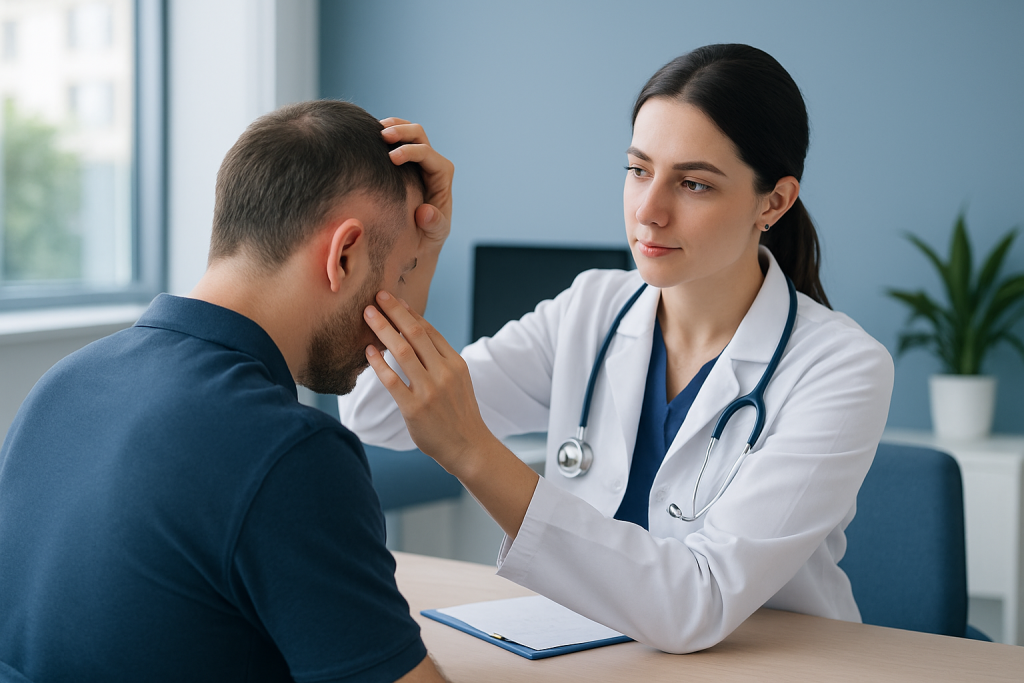
Diagnosis begins with a careful history and examination of the scalp and nearby skin. A doctor will ask when symptoms started, whether they are itchy or painful, what hair products are used, and whether there is a personal or family history of eczema, allergies, asthma, or psoriasis. This information often helps narrow the cause.
The appearance and distribution of scales and inflammation are important clues. Greasy yellowish flakes may suggest seborrheic dermatitis, while intense itching with exposure to a new product may point to contact dermatitis. Thick, sharply defined plaques can raise suspicion for psoriasis. Sometimes the doctor will also examine the ears, eyebrows, face, neck, and other body areas for similar changes.
Additional tests are not always needed, but they can be helpful in selected cases. A clinician may consider patch testing if allergic contact dermatitis is suspected, or skin scrapings if a fungal infection needs to be ruled out. In uncertain or persistent cases, referral to dermatology evaluation and care can help confirm the diagnosis and guide treatment.
Treatment options and what usually helps
Treatment for eczema on scalp depends on the underlying type, severity, and the patient’s age, skin sensitivity, and hair care routine. The main goals are to reduce inflammation, control itching and flakes, restore the skin barrier, and prevent new flares. Many patients improve with a combination of medicated treatments and gentle daily scalp care.
Doctors may recommend medicated shampoos for seborrheic dermatitis or heavy flaking. Depending on the diagnosis, these can contain antifungal, keratolytic, or anti-inflammatory ingredients. For more inflamed areas, short courses of topical treatments such as corticosteroid solutions, foams, or other prescription anti-inflammatory medicines may be used. When a broader skin condition is involved, management may overlap with treatment pathways used for eczema treatment or psoriasis treatment.
If contact dermatitis is suspected, treatment also includes stopping the triggering product. This can be especially important with hair dyes, fragranced shampoos, and styling products. In allergic cases, even small repeat exposures may keep the rash active, so identifying ingredients matters.
Very severe, recurrent, or unclear scalp disease may need specialist follow-up. Clinicians may adjust the diagnosis if symptoms do not respond as expected. Near the end of the care pathway, patients seeking international evaluation may also find support through Acibadem International, where multidisciplinary specialists in JCI-accredited hospitals diagnose and treat dermatologic conditions for international patients.
Daily scalp care, prevention, and self-care
Gentle scalp care plays an important role alongside medical treatment. Washing too little can allow scale and oil to build up, while harsh washing can further irritate sensitive skin. The best routine depends on the scalp type and diagnosis, but most patients benefit from a consistent, moderate approach rather than extremes.
Helpful self-care habits include using a mild shampoo between medicated washes, rinsing products thoroughly, and avoiding vigorous scrubbing with nails. Lukewarm water is often better tolerated than very hot water. People with longer hair may find it easier to focus treatment shampoos directly on the scalp rather than the hair length, leaving the product on for the time recommended by a clinician or label instructions.
Prevention also means learning personal triggers. Patients may consider keeping track of symptoms in relation to stress, weather changes, sweating, hats or helmets, hair dye, fragrances, and new styling products. Choosing fragrance-free or sensitive-skin products can help some people, especially if contact irritation is suspected.
General skin health matters too. Good sleep, stress management, and regular care for eczema on other body areas may reduce flare frequency. Scratching is difficult to avoid, but keeping nails short and treating itch early can help limit skin damage and secondary infection.
When to seek medical care
Patients should seek medical advice if eczema on scalp is persistent, severe, or difficult to identify. An evaluation is especially important when symptoms do not improve with basic scalp care or over-the-counter measures, or when the condition keeps returning quickly after treatment stops.
Prompt review is also recommended if there is pain, swelling, oozing, crusting, bleeding, a bad odor, or signs of infection. These features are not typical of simple mild scalp eczema and may mean the skin needs prescription treatment or that another diagnosis should be considered.
Medical care is advisable if there is noticeable hair loss, thick plaques, spread to the face or body, or a possible reaction after hair dye or another product. Infants, young children, and people with weakened immune systems should also be assessed more readily, because the causes and treatments may differ. A qualified doctor can confirm the diagnosis and help build a safe long-term plan.
Frequently asked questions
Is eczema on scalp the same as dandruff?
Not always. Dandruff is often used for mild scalp flaking, but eczema on scalp may involve more noticeable inflammation, itch, redness, and ongoing irritation. Seborrheic dermatitis is a common reason for dandruff-like symptoms, but atopic or contact dermatitis can also affect the scalp.
Can scalp eczema cause hair loss?
Scalp eczema may lead to temporary hair shedding or breakage, especially if there is intense scratching or inflammation. In most cases, hair regrows once the scalp improves. Persistent, patchy, or scarring hair loss should be assessed by a doctor to rule out other conditions.
What can trigger eczema on scalp flare-ups?
Triggers vary by person and type of dermatitis. Common ones include stress, cold or dry weather, sweating, harsh hair products, hair dye, fragrance, and scratching. Some people also notice flares when scalp washing is either too frequent and harsh or too infrequent.
How is scalp eczema treated?
Treatment depends on the cause. It may include medicated shampoos, prescription anti-inflammatory scalp treatments, antifungal ingredients for seborrheic dermatitis, and avoiding irritating or allergenic products. A doctor can choose the most suitable approach based on the diagnosis and symptom severity.
Can eczema on scalp spread to other areas?
The inflammation itself may affect nearby skin such as the hairline, ears, neck, eyebrows, or face, depending on the condition. This does not necessarily mean it is contagious. However, similar symptoms in other areas can help doctors identify the correct diagnosis.
When should someone see a doctor for scalp eczema?
Medical advice is sensible if symptoms are severe, painful, infected-looking, or not improving with routine care. A doctor should also assess significant hair loss, very thick scales, or a sudden reaction after using a new hair product. Early diagnosis can help prevent unnecessary discomfort and repeated flare-ups.
This article is for general information only and is not a substitute for professional medical advice. Please consult a qualified doctor about your individual situation.
Eczema in Turkey — costs, top hospitals & a free quote
JCI-accredited · board-certified surgeons · reply within 24h
Add us as a Preferred Source to see more of our trusted health content across Google Search, AI Overviews and Discover.

More from the Health Library

Sports Drinks for Electrolytes: A Complete Medical Overview

Keto Gummies: What Patients Need to Know

Signs That Diabetes Is Killing You: A Complete Medical Overview

Basilic Vein: A Complete Medical Overview

Choline — Explained by Medical Evidence, Not Myths