Eczema on Stomach — Explained by Medical Evidence, Not Myths

Eczema on the stomach can cause itching, dryness, scaling, redness or darker discoloration, and sometimes small blisters or skin cracking. Common triggers include fragranced products, metal from belt buckles or clothing fasteners, sweat, heat, friction and dry skin.
Key Takeaways
- Eczema on the stomach can cause itching, dryness, scaling, redness or darker discoloration, and sometimes small blisters or skin cracking.
- Common triggers include fragranced products, metal from belt buckles or clothing fasteners, sweat, heat, friction and dry skin.
- A clinician can help distinguish eczema from fungal infections, psoriasis, shingles, scabies and other causes of an abdominal rash.
- Regular use of fragrance-free moisturizers and avoidance of known triggers can support the skin barrier and reduce flares.
- Medical care is important when a rash is painful, spreading, infected, blistering, associated with fever, or not improving with appropriate self-care.
Eczema on the stomach is a common term for an itchy, dry, red or discolored rash on the abdominal skin. It can result from atopic eczema, contact with an irritant or allergen, sweat and friction, or other skin conditions that need medical assessment to distinguish them.
What Does Eczema on the Stomach Mean?
Eczema on the stomach describes inflammation of the skin on the abdomen that causes itchiness and a rash. The term does not refer to one single disease. It may describe atopic dermatitis, a long-term tendency toward dry, sensitive and inflamed skin, or contact dermatitis caused by something touching the abdominal area. In many people, eczema comes and goes in flares rather than remaining constant.
The rash may look red, pink, purple, gray, brown or darker than the surrounding skin, depending on a person’s natural skin tone. It may be dry, rough, scaly or thickened. With more active inflammation, small raised bumps, tiny fluid-filled blisters, weeping, crusting or scratch marks can occur. The skin around the navel, waistband and belt line is often affected because these areas are exposed to pressure, sweat and clothing contact.
Although eczema is uncomfortable, it is not contagious. However, not every itchy abdominal rash is eczema. A careful history and examination are useful because fungal infections, psoriasis, insect bites, medication reactions and certain viral rashes can resemble it.
Symptoms and Patterns to Notice
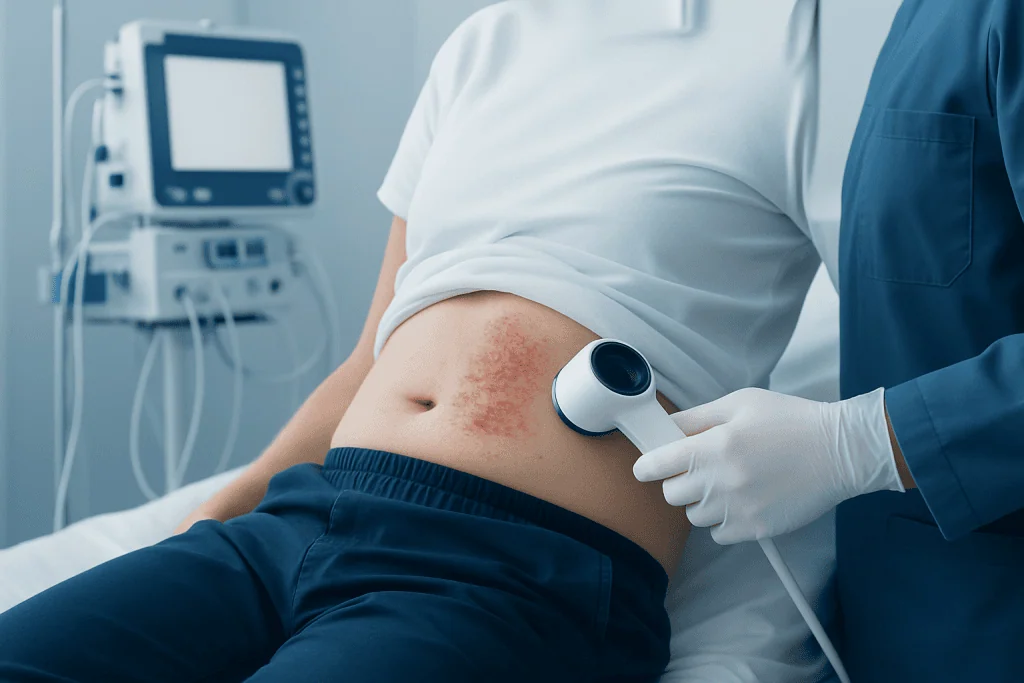
Itching is the most typical symptom of eczema on the stomach. It may be mild and intermittent or strong enough to interfere with sleep, concentration or daily comfort. Scratching can temporarily relieve itch but may further damage the skin barrier, leading to more irritation and a cycle of itch and scratching.
Symptoms can vary with the cause and stage of the rash. During a flare, the area may feel sensitive, warm, stinging or burning, particularly after bathing or using skin products. Over time, repeated scratching may make the skin thicker and more leathery, a change called lichenification. After the inflammation settles, the skin can remain lighter or darker than usual for some time; this color change is often temporary.
The location can offer useful clues. A sharply outlined rash directly beneath a metal jeans button or belt buckle may suggest contact allergy to nickel. A rash concentrated under a tight waistband may be related to friction, trapped moisture, elastic, detergent residue or textile dyes. Still, location alone cannot confirm a diagnosis, and a healthcare professional should assess persistent or unusual symptoms.
Why Eczema Can Develop on the Abdomen

Eczema develops when the skin barrier is less able to retain moisture and protect against irritants. In atopic dermatitis, genetic tendency, immune-system activity and environmental exposures all contribute. People with a personal or family history of eczema, asthma, hay fever or food allergies may be more likely to develop atopic dermatitis, but eczema can also occur without these conditions.
Contact dermatitis is especially relevant on the stomach. Irritant contact dermatitis can occur after repeated exposure to harsh soaps, fragranced lotions, cleaning products, sweat or frequent rubbing. Allergic contact dermatitis is an immune reaction to a specific substance. Possible triggers include nickel in belt buckles, snaps and buttons; fragrance and preservatives in cosmetics; rubber or adhesives; and dyes or chemicals in clothing.
Heat, dry air, sudden temperature changes and emotional stress may aggravate eczema in some people. Tight garments, exercise clothing that remains damp after sweating, and rough fabrics can worsen irritation. Food is not a routine cause of eczema on the stomach in adults, and unnecessarily restrictive diets are not recommended unless a qualified clinician has identified a specific food allergy or other dietary concern.
How a Diagnosis Is Made
Healthcare professionals usually diagnose eczema by looking at the skin and asking about symptoms, medical history, products used on the skin, clothing and workplace exposures. They may ask when the rash began, whether it itches or hurts, whether other body areas are affected, and what seems to improve or worsen it. Bringing photographs of early flares can be helpful if the rash changes before an appointment.
Testing is not always needed. If allergic contact dermatitis is suspected, a dermatologist may recommend patch testing. This involves applying small amounts of possible allergens to the skin under patches and checking for delayed reactions over several days. Patch testing is different from skin-prick testing, which is more commonly used to investigate immediate allergies such as hay fever or some food allergies.
A clinician may take a skin scraping or sample if a fungal infection is possible, particularly when the rash has a ring-like border, spreads outward, or does not respond as expected to eczema treatment. In uncommon or unclear cases, a small skin biopsy may be considered. Accurate diagnosis matters because treatment that helps eczema may not be suitable for an infection or another skin condition.
Treatment Options and Everyday Skin Care
Treatment aims to ease itch, calm inflammation, repair the skin barrier and avoid triggers. Regular moisturizing is a foundation of care. A thick, fragrance-free cream or ointment is generally more protective than a thin lotion, especially for very dry skin. It is often most helpful when applied soon after a short lukewarm shower or bath, while the skin is still slightly damp.
For an active flare, a clinician may advise a topical anti-inflammatory medicine, such as a corticosteroid of an appropriate strength for the body area and severity. These medicines should be used exactly as directed, including the recommended amount and duration. In selected circumstances, clinicians may prescribe nonsteroidal topical treatments or, for widespread or difficult-to-control eczema, other specialist-directed therapies. Treatment choice should reflect the diagnosis, age, pregnancy status, extent of the rash and other health factors.
Practical measures can reduce irritation. Use mild fragrance-free cleanser only where needed, pat the skin dry rather than rubbing, and choose loose, breathable fabrics such as cotton. Wash new clothing before wearing it, consider fragrance-free laundry products and remove sweaty clothing promptly. If a metal fastener appears to trigger the rash, creating a barrier between the metal and skin or replacing the item may help while medical advice is sought.
Prevention and Self-Care Between Flares
Preventing flares often involves keeping the skin barrier supported every day, not only when a rash is visible. Applying an unscented moisturizer at least once daily can reduce dryness. During colder or drier weather, more frequent application may be needed. Humidifying indoor air may be helpful for some people, provided the device is cleaned carefully to avoid mold growth.
It can be useful to keep a simple symptom diary. Note new skin products, laundry detergents, clothing, exercise, sweating, stress, travel and changes in weather around the time of a flare. This does not prove that a factor is the cause, but it can help identify patterns to discuss with a clinician. Avoid repeatedly trying multiple new products at once, as this can make a reaction harder to trace.
Keeping fingernails short and using cool compresses can help limit damage from scratching. Some people find that placing a soft cotton layer between skin and a waistband reduces rubbing. Over-the-counter products are not suitable for every rash, and prolonged self-treatment without a diagnosis can delay care if the cause is an infection, allergy or another condition.
When to Seek Medical Care
Medical assessment is advisable when an abdominal rash is new, persistent, recurrent, severe or uncertain in cause. A doctor or dermatologist can confirm whether it is eczema and identify possible contact triggers. An appointment is also appropriate when symptoms do not improve after gentle skin care and avoidance of obvious irritants, or when itching is affecting sleep and daily activities.
Prompt medical advice is important if the skin becomes increasingly painful, hot, swollen, rapidly spreading, or produces pus, yellow crusting or red streaks. These features can indicate a secondary skin infection. Fever, feeling unwell, widespread blisters, involvement of the eyes or mouth, or a rash that begins soon after starting a new medication also need timely evaluation.
Acibadem International’s multidisciplinary specialists and JCI-accredited hospitals can assess skin concerns, including persistent eczema and suspected contact allergy, for international patients. A qualified clinician can provide an individualized plan that considers the appearance of the rash, potential triggers and a person’s general health.
Frequently asked questions
Is eczema on the stomach contagious?
No. Eczema is not contagious and cannot be passed to another person through skin contact, shared clothing or towels. If a rash is contagious, such as some fungal or viral infections, it is not eczema and needs a different assessment and treatment.
Can a belt buckle cause eczema on the stomach?
Yes. Nickel in belt buckles, jeans buttons and other metal fasteners can cause allergic contact dermatitis in sensitive people. The rash often appears where the metal repeatedly touches the skin, but patch testing may be needed to confirm the allergy.
What is the difference between stomach eczema and a fungal rash?
Eczema commonly causes dry, itchy, ill-defined patches that may become scaly or thickened with scratching. A fungal rash may have a more defined, expanding edge and can sometimes form a ring, but appearances overlap. A clinician can examine the skin and, if needed, perform a simple test to distinguish them.
Can stress cause eczema on the abdomen?
Stress does not directly cause every case of eczema, but it can worsen itching and trigger flares in some people. Stress-reducing routines, good sleep and regular skin care may support symptom control. Persistent or distressing symptoms should still be reviewed by a healthcare professional.
Should a person use moisturizer on eczema that is weeping?
Weeping or oozing skin should be assessed, especially if it is new, spreading or accompanied by pain, crusting or fever, as infection may be present. A clinician can advise whether moisturizers, anti-inflammatory treatment, wet dressings or other care is appropriate. It is best not to use multiple new products on a weeping rash without advice.
How long does eczema on the stomach last?
The duration varies. A mild irritant-related flare may settle within days to weeks after the trigger is avoided and the skin is treated, while atopic eczema can be recurrent or long term. If the rash is not improving, keeps returning or has no clear trigger, medical evaluation can help clarify the cause.
References
- American Academy of Dermatology Association
- National Eczema Association
- National Institute of Allergy and Infectious Diseases
- NHS
- American Contact Dermatitis Society
This article is for general information only and is not a substitute for professional medical advice. Please consult a qualified doctor about your individual situation.
Eczema in Turkey — costs, top hospitals & a free quote
JCI-accredited · board-certified surgeons · reply within 24h
Add us as a Preferred Source to see more of our trusted health content across Google Search, AI Overviews and Discover.