Endoflip Procedure: An Evidence-Based Patient Guide

EndoFLIP uses a small balloon catheter with sensors to measure how the esophagus and lower esophageal sphincter open. It is usually performed during an upper endoscopy, often while the patient is sedated.
Key Takeaways
- EndoFLIP uses a small balloon catheter with sensors to measure how the esophagus and lower esophageal sphincter open.
- It is usually performed during an upper endoscopy, often while the patient is sedated.
- EndoFLIP complements rather than routinely replaces high-resolution manometry for esophageal motility assessment.
- Results may help diagnose or assess achalasia, esophagogastric junction outflow obstruction, and selected reflux-related concerns.
- Most people return home the same day after sedation, with little or no discomfort from the test itself.
The EndoFLIP procedure is a specialized test that measures the diameter, pressure, and flexibility of the esophagus and its lower valve during endoscopy. It can help clarify swallowing problems and support treatment planning for conditions such as achalasia and gastroesophageal reflux disease.
Overview: What Is the EndoFLIP Procedure?
The EndoFLIP procedure is a functional test used to assess the esophagus, the muscular tube that carries food from the mouth to the stomach. It measures how well the lower end of the esophagus opens and how flexible its walls are. The test is commonly performed during upper endoscopy and can provide useful information when a person has difficulty swallowing, regurgitation, chest discomfort related to swallowing, or suspected esophageal motility problems.
EndoFLIP stands for endoluminal functional lumen imaging probe. During the test, a clinician places a soft catheter with a small inflatable balloon through the mouth into the esophagus. Sensors within the balloon collect measurements as it is filled with a controlled amount of fluid. The information helps the care team understand the shape, diameter, pressure, and distensibility of the esophagus and the esophagogastric junction, where the esophagus meets the stomach.
This endoflip patient education guide explains what the test can and cannot show, who may benefit, what happens on the day, and how the results are used. EndoFLIP is a diagnostic tool; it does not treat an esophageal disorder on its own.
How EndoFLIP Works and What It Can Show
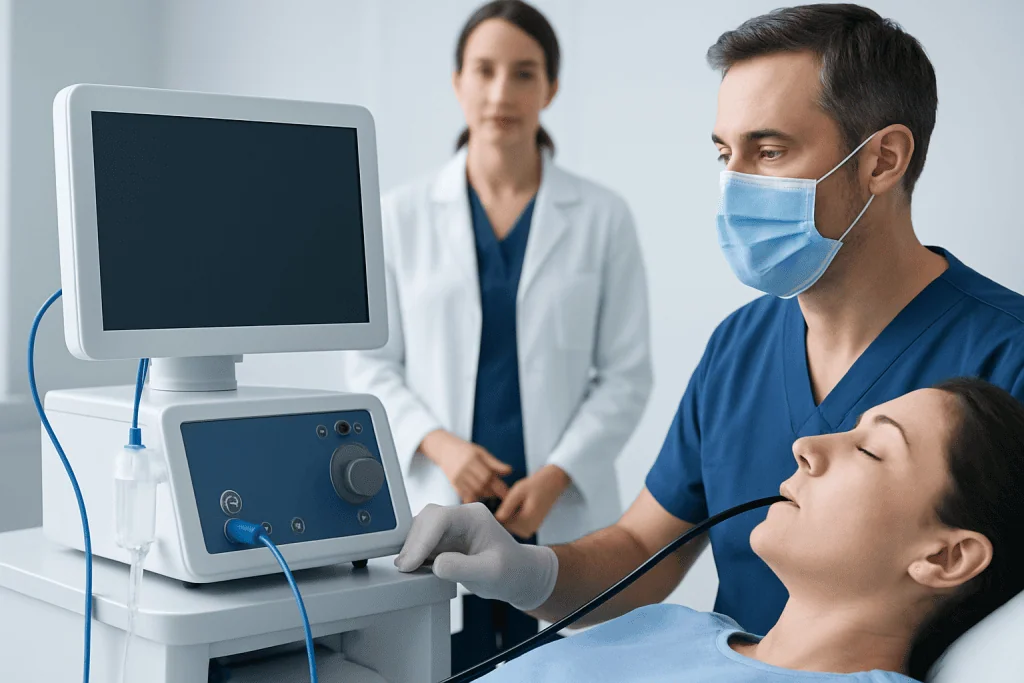
The EndoFLIP catheter contains multiple electrodes arranged inside a compliant balloon. When the balloon is gently expanded, the system uses impedance planimetry to calculate the cross-sectional area at several points along the esophagus. It also records pressure within the balloon. Together, these measurements create a real-time picture of how the esophageal opening changes during controlled distension.
A key measurement is distensibility, meaning how easily the esophagogastric junction opens in response to pressure. Reduced opening may be seen in achalasia or other disorders that limit passage of food into the stomach. The test may also show patterns of muscle activity in the esophageal body, sometimes called FLIP panometry. These patterns can add context to symptoms and to other investigations.
EndoFLIP findings are interpreted alongside a person’s symptoms, endoscopy findings, barium swallow imaging, and, when appropriate, high-resolution manometry. It is not generally used as a stand-alone diagnosis. Published endoflip guidelines and local endoflip protocol details may vary by clinical setting, the question being investigated, and whether the test is used before, during, or after treatment.
Who May Be a Candidate for EndoFLIP?

A gastroenterologist may consider EndoFLIP when standard tests have not fully explained swallowing symptoms or when there is concern about an esophageal motor disorder. It is particularly useful in the evaluation of suspected achalasia, esophagogastric junction outflow obstruction, and selected cases of non-obstructive dysphagia. It may also be used during treatment planning or follow-up after therapies designed to improve opening of the lower esophageal sphincter.
In some centers, EndoFLIP is used during procedures for achalasia, including peroral endoscopic myotomy, to assess the opening of the esophagogastric junction. It may also be considered in selected people being evaluated for anti-reflux surgery, although its role depends on the full clinical picture. A narrow area caused by scarring, inflammation, a ring, or a tumor may need different assessment and treatment.
Not every person with heartburn or swallowing difficulty needs EndoFLIP. A clinician will first review symptoms, medical history, medications, prior surgery, and results of available testing. People with known narrowing, bleeding concerns, severe cardiopulmonary illness, or anesthesia-related risks may require individualized planning before endoscopy and sedation.
- Difficulty swallowing solids, liquids, or both
- Food regurgitation or a sensation that food is sticking
- Possible achalasia or another esophageal motility disorder
- Unclear findings from other swallowing or motility tests
- Assessment during or after selected esophageal treatments
What Happens During the EndoFLIP Procedure?
Preparation usually follows the instructions for upper endoscopy. This commonly includes avoiding food and drinks for a specified period before the appointment so the stomach is empty. The clinical team should be told about medicines, allergies, pregnancy, diabetes, blood-thinning treatment, and any previous problems with sedation or anesthesia. Medication changes should only be made on the advice of the prescribing clinician.
At the procedure, the patient usually receives sedation or anesthesia appropriate to the planned endoscopy. The doctor passes an endoscope through the mouth to inspect the esophagus, stomach, and first part of the small intestine. The EndoFLIP catheter is then positioned across the lower esophageal sphincter. Its balloon is gradually filled in controlled steps while measurements are recorded.
After the readings are complete, the balloon is deflated and the catheter is removed. Endoscopy may include other clinically indicated steps, such as taking small tissue samples, but these are separate decisions. Although an endoflip procedure video may make the equipment appear complex, the test is typically integrated into an endoscopy workflow and is not usually noticeable to a sedated patient.
The care team monitors breathing, heart rate, blood pressure, and oxygen levels throughout sedation. Once alert and stable, most patients can leave the same day with a responsible adult, depending on the type of sedation used and local discharge requirements.
How Long Does an EndoFLIP Procedure Take?
The EndoFLIP measurements themselves often take only several minutes once the catheter is correctly positioned. However, the complete appointment includes preparation, sedation, endoscopy, recovery monitoring, and discussion of initial instructions. For this reason, patients should expect to spend longer at the facility than the measurement time alone.
When EndoFLIP is performed as part of a diagnostic upper endoscopy, the endoscopy portion may commonly take around 15 to 30 minutes, although timing varies. If it is used during a more complex therapeutic procedure, such as myotomy for achalasia, the overall procedure will take longer because treatment—not EndoFLIP testing—is the main part of the appointment.
Recovery from sedative medicines can take a few hours. Driving, operating machinery, signing important documents, drinking alcohol, and making major decisions should generally be avoided until the effects of sedation have fully worn off, according to the care team’s instructions.
Is EndoFLIP Better Than Manometry?
EndoFLIP is not simply better or worse than high-resolution manometry; the tests answer related but different questions. High-resolution manometry measures pressure and muscle coordination while a person performs swallows through a thin catheter placed while awake. It remains a central test for diagnosing and classifying many esophageal motility disorders.
EndoFLIP measures the esophagus during controlled balloon distension, usually under sedation. It provides information about the opening and flexibility of the esophagogastric junction and may demonstrate a pattern of esophageal contractile activity. This can be especially helpful when manometry cannot be completed, is inconclusive, or needs to be interpreted in the context of endoscopic findings.
For suspected achalasia, clinicians frequently use symptoms, endoscopy, timed barium esophagram, and manometry together. EndoFLIP can provide valuable additional evidence and can be particularly useful during intervention. The most suitable test depends on the person’s symptoms, ability to tolerate awake catheter testing, and the clinical question being asked.
Is EndoFLIP Painful? Recovery, Benefits and Risks
EndoFLIP is usually not painful because it is commonly performed while a patient is sedated for upper endoscopy. Afterward, some people notice a mild sore throat, bloating, gas, or temporary throat irritation. These symptoms generally improve within a short time. If no other procedure was performed, many people return to normal eating and regular activities as directed after sedation has worn off.
The potential benefit of EndoFLIP is more precise functional information about esophageal opening. This may help a specialist distinguish between possible causes of dysphagia, support decisions about treatment, or assess the result of an intervention. For example, management of confirmed achalasia may include achalasia treatment options that aim to reduce resistance at the lower esophageal sphincter.
Risks are generally similar to those of upper endoscopy and sedation. They may include medication reactions, aspiration, bleeding, infection, injury to the teeth or throat, and—very rarely—perforation of the esophagus. The added risk from the EndoFLIP catheter is considered low when it is used by trained teams, but individual risk depends on the person’s health and any accompanying procedure.
Contact the care team promptly for persistent or worsening chest pain, severe abdominal pain, fever, repeated vomiting, trouble breathing, vomiting blood, black stools, or inability to swallow after the procedure. These symptoms are uncommon but need medical assessment.
Who Performs EndoFLIP and When to Seek Medical Care
EndoFLIP is generally performed by a gastroenterologist or an advanced endoscopist trained in upper endoscopy and interpretation of esophageal functional testing. The procedure may involve anesthesiology professionals, specialized endoscopy nurses, and, depending on the findings, collaboration with surgeons, radiologists, speech and swallowing specialists, and motility experts. Results should be reviewed in the context of the person’s overall evaluation rather than considered in isolation.
Medical review is appropriate for ongoing swallowing difficulty, food sticking, recurrent regurgitation, unexplained weight loss, pain with swallowing, persistent vomiting, or chest discomfort that occurs with meals. Urgent assessment is needed if food becomes completely stuck, a person cannot swallow saliva, there is vomiting of blood, black stools, severe chest pain, or new breathing difficulty. Chest pain may have causes outside the esophagus and should not be assumed to be digestive.
Patients can ask their clinician whether they will receive written results, a diagram of the measurements, or an endoflip pdf summary as part of their records. Acibadem International’s multidisciplinary specialists and JCI-accredited hospitals diagnose and treat esophageal conditions for international patients, with care plans based on individual findings and clinical needs.
For people with confirmed swallowing disorders, timely specialist follow-up supports appropriate monitoring and treatment decisions. The aim is to identify the cause of symptoms, address nutrition and hydration concerns where necessary, and choose the least invasive effective approach.
Frequently asked questions
What is the EndoFLIP procedure used for?
The EndoFLIP procedure measures the opening, diameter, pressure, and flexibility of the esophagus and the junction between the esophagus and stomach. It is often used to evaluate swallowing problems and to provide additional information when achalasia or another motility disorder is suspected. It may also be used during selected esophageal treatments.
Is EndoFLIP better than manometry?
Neither test is universally better because they measure different aspects of esophageal function. Manometry evaluates pressures and coordination during swallowing, while EndoFLIP evaluates opening and distensibility during balloon expansion. A gastroenterologist may use one or both tests depending on the clinical situation.
How long does an EndoFLIP procedure take?
The measurement portion commonly takes only several minutes, but it is usually performed during an upper endoscopy. Including preparation, sedation, the procedure, and recovery, the visit commonly lasts several hours. The exact duration depends on whether other tests or treatments are being performed at the same time.
Who performs the EndoFLIP procedure?
A gastroenterologist or advanced endoscopist with training in esophageal testing typically performs EndoFLIP. Endoscopy nurses and anesthesia professionals may also be involved in the patient’s care. Interpretation is usually integrated with other test results by a clinician experienced in esophageal disorders.
Is EndoFLIP painful?
EndoFLIP is usually performed with sedation during upper endoscopy, so most patients do not feel the catheter placement or balloon measurements. Mild throat irritation, bloating, or gas can occur afterward and is usually temporary. The care team can explain the expected sedation plan and recovery instructions before the procedure.
What should a patient do before an EndoFLIP test?
Patients are usually asked not to eat or drink for a period before the test, similar to preparation for upper endoscopy. They should provide a complete medication list and tell the team about allergies, pregnancy, diabetes, blood-thinning medicines, and previous anesthesia concerns. Individual instructions from the endoscopy unit should be followed carefully.
References
- American College of Gastroenterology
- American Gastroenterological Association
- American Society for Gastrointestinal Endoscopy
- National Institute of Diabetes and Digestive and Kidney Diseases
- International Society for Diseases of the Esophagus
This article is for general information only and is not a substitute for professional medical advice. Please consult a qualified doctor about your individual situation.
Persistent digestive symptoms? Get evaluated in Turkey
JCI-accredited · board-certified surgeons · reply within 24h
Add us as a Preferred Source to see more of our trusted health content across Google Search, AI Overviews and Discover.

More from the Health Library



Related Specialists

Prof. Dr. Çağın Şentürk
Interventional Neuroradiology
Dr. Bahruz Zamanov
Pediatrics
Dt. Rıdvan Bayrı
Oral & Dental Health
Assoc. Prof. Dr. Gülfem Başol
Gynecology & Obstetrics