Endometrial Polyp: A Complete Medical Overview
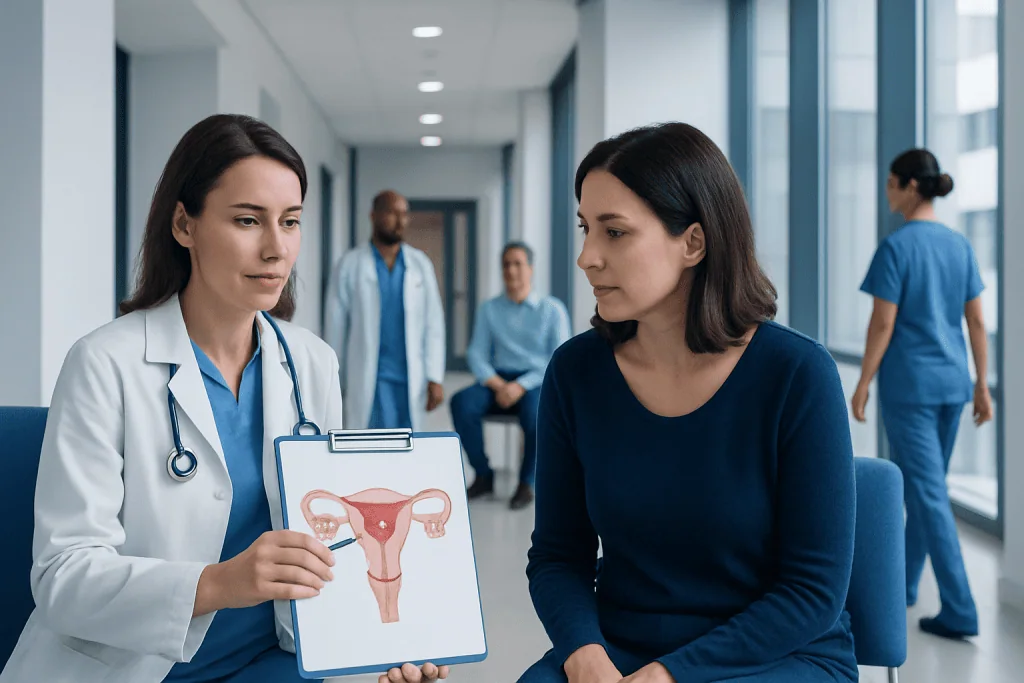
Endometrial polyps are growths that arise from the uterine lining and are often noncancerous. Many people have no symptoms, but abnormal uterine bleeding is the most common sign.
Key Takeaways
- Endometrial polyps are growths that arise from the uterine lining and are often noncancerous.
- Many people have no symptoms, but abnormal uterine bleeding is the most common sign.
- Diagnosis often involves pelvic ultrasound and may be confirmed with hysteroscopy or biopsy.
- Small asymptomatic polyps may be monitored, while symptomatic polyps are often removed.
- Postmenopausal bleeding should always be assessed by a qualified doctor.
An endometrial polyp is a usually benign overgrowth of the lining of the uterus. It may cause irregular bleeding, heavier periods, spotting after menopause, or no symptoms at all, and treatment depends on symptoms, size, and individual risk factors.
What is an endometrial polyp?
An endometrial polyp is a localized overgrowth of the endometrium, the tissue that lines the inside of the uterus. These growths are attached to the uterine wall by a thin stalk or a broad base and can vary in size from very small to large enough to fill part of the uterine cavity. Most endometrial polyps are benign, meaning they are not cancer.
Although the terms “endometrial polyp” and “uterine polyp” are often used interchangeably, the more precise term is endometrial polyp because the growth comes from the lining of the uterus rather than the muscular wall. Polyps may occur as a single growth or as multiple growths. Some are found during evaluation of bleeding changes, while others are discovered incidentally during imaging for another reason.
These polyps are most often seen in adults around the perimenopausal and postmenopausal years, but they can also occur earlier in reproductive life. Their importance is not only related to symptoms such as bleeding, but also to the small possibility of precancerous or cancerous change, particularly in certain higher-risk groups. For that reason, proper medical assessment is important.
How an endometrial polyp may affect the body
Endometrial polyps can interfere with the normal shedding pattern of the uterine lining. This is why they are commonly linked to spotting between periods, heavier menstrual bleeding, or bleeding after menopause. In some people, the polyp may be fragile and bleed easily even when it is small.
In addition to bleeding symptoms, polyps can sometimes affect fertility by changing the shape of the uterine cavity or making implantation less favorable. This does not mean every polyp causes infertility, but it is one reason a doctor may look for them during an evaluation for difficulty becoming pregnant or repeated miscarriage.
Some people never notice any symptoms at all. In those cases, the polyp may only be found during a routine pelvic ultrasound or while investigating another condition, such as uterine fibroids or unexplained pelvic symptoms. Whether a polyp needs treatment depends on the person’s age, symptoms, reproductive plans, and the appearance of the polyp on testing.
Symptoms and warning signs
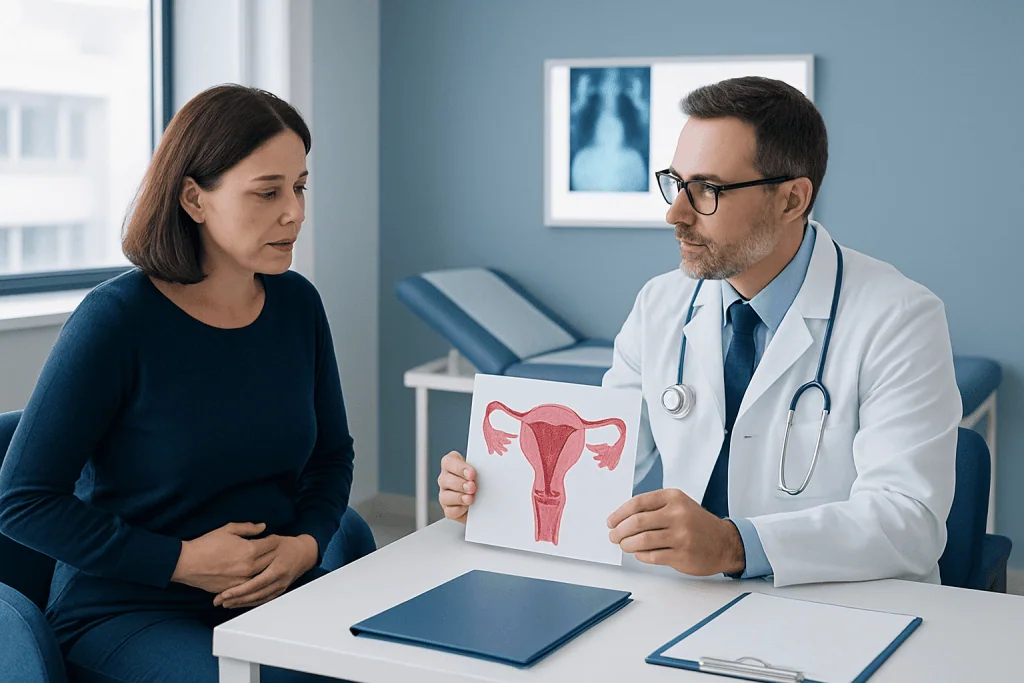
The most common symptom of an endometrial polyp is abnormal uterine bleeding. This can look different from one person to another. Some have heavier or longer menstrual periods, while others notice spotting between periods or bleeding after sexual intercourse. In postmenopausal people, any vaginal bleeding can be a warning sign and should be evaluated.
Possible symptoms include:
- Irregular menstrual bleeding
- Heavy periods
- Spotting between periods
- Bleeding after menopause
- Occasionally difficulty becoming pregnant
Less commonly, a larger polyp may cause cramping or a sensation of pelvic pressure, but this is not typical. Many people with endometrial polyps have no pain at all. It is also important to remember that these symptoms are not specific to polyps and can occur with other conditions, including hormonal changes, endometriosis, fibroids, and disorders of the uterine lining.
Because symptoms overlap with many gynecologic conditions, self-diagnosis is not reliable. A clinician can help determine whether a polyp is the cause of bleeding and whether additional testing is needed.
Causes and risk factors
The exact cause of endometrial polyps is not fully understood, but they appear to be influenced by hormones, especially estrogen. Since the endometrium responds to hormonal signals during the menstrual cycle, tissue in one area may overgrow and form a polyp. This is one reason polyps are more common during times of hormonal fluctuation, such as perimenopause.
Several factors can increase the chance of developing an endometrial polyp. These include increasing age, obesity, high blood pressure, and the use of certain medications that affect estrogen activity, such as tamoxifen. A history of abnormal uterine bleeding can also lead to testing that reveals a polyp.
Risk factors for atypical or cancerous change within a polyp are not the same as risk factors for forming a polyp in the first place. The likelihood of a concerning finding may be higher in people who are postmenopausal, have bleeding after menopause, have larger polyps, or have other risk factors for endometrial cancer. This does not mean a polyp is cancer, but it does affect how doctors recommend evaluation and treatment.
How doctors diagnose endometrial polyps
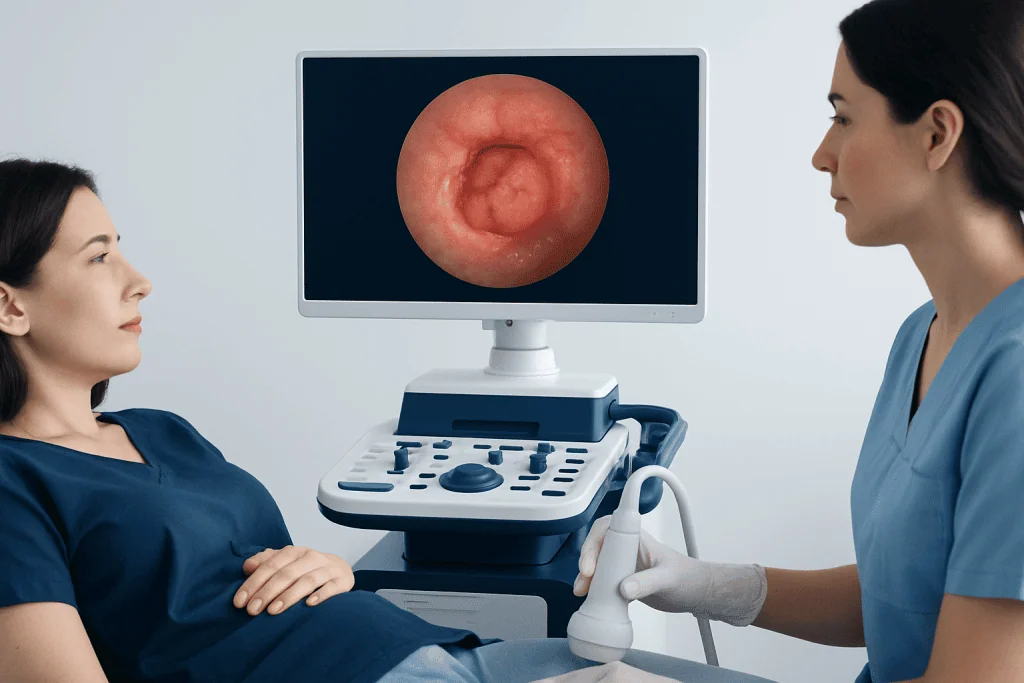
Diagnosis begins with a medical history and pelvic examination, especially when a person reports abnormal bleeding. Because a pelvic exam cannot usually confirm a polyp inside the uterine cavity, imaging and sometimes direct visualization are needed. A transvaginal ultrasound is often the first test because it can show thickening or a focal growth within the endometrium.
In some cases, the doctor may recommend saline infusion sonography, in which sterile fluid is placed into the uterus during ultrasound to outline the cavity more clearly. Another important tool is hysteroscopy, which allows a thin camera to pass through the cervix so the uterine cavity can be seen directly. This method can both diagnose and guide treatment.
A tissue sample may be taken with an office biopsy or during hysteroscopy. Pathology examination helps determine whether the polyp is benign, shows precancerous changes, or rarely contains cancer. If a person has bleeding after menopause, persistent irregular bleeding, or risk factors for cancer, a tissue diagnosis becomes especially important. Depending on the findings, evaluation may overlap with assessment for endometrial cancer.
Treatment options and follow-up
Treatment depends on symptoms, age, menopausal status, fertility goals, the size and number of polyps, and whether there is concern for abnormal cells. Small polyps without symptoms may sometimes be monitored, especially in premenopausal patients with low risk. In other situations, removal is preferred because it can relieve bleeding, allow complete tissue analysis, and reduce uncertainty.
The most common treatment is hysteroscopic polypectomy, a procedure in which the polyp is removed through the cervix without external incisions. This approach is often chosen because it allows the doctor to see the polyp clearly and remove it precisely. When appropriate, patients may be evaluated within a broader gynecology service, and some may undergo hysteroscopy for both diagnosis and treatment.
Medication does not usually eliminate a polyp permanently, although hormonal treatment may sometimes be used to help manage bleeding in selected cases. If pathology shows atypical cells or cancer, treatment plans become more individualized and may involve additional procedures or surgery. In more complex cases, this can include assessment by specialists in obstetrics and gynecology.
After removal, follow-up is guided by the pathology result and the person’s symptoms. Some polyps can recur, so renewed abnormal bleeding should be reported. Near the end of care planning, some international patients may choose centers such as Acibadem International, where multidisciplinary specialists in JCI-accredited hospitals diagnose and treat gynecologic conditions in a coordinated way.
Prevention, self-care, and when to seek medical care
There is no guaranteed way to prevent an endometrial polyp. However, general health measures such as maintaining a healthy weight, managing blood pressure, and attending regular gynecologic checkups may support earlier detection of uterine problems. People taking medications such as tamoxifen should follow their doctor’s recommendations for monitoring.
Self-care mainly involves noticing patterns in bleeding and keeping a record of menstrual changes, spotting, and any bleeding after menopause. This information can help a clinician decide which tests are most appropriate. It is also helpful to mention fertility concerns, because management may differ for someone trying to conceive.
Medical care should be sought if there is bleeding after menopause, very heavy menstrual bleeding, frequent spotting between periods, bleeding that keeps returning, or new bleeding while using hormone-related medicines. Care is also important if abnormal bleeding is accompanied by dizziness, weakness, significant pain, or concerns about pregnancy. Prompt evaluation does not mean something serious is certain; it simply helps clarify the cause and guide the safest treatment.
Frequently asked questions
Is an endometrial polyp the same as a fibroid?
No. An endometrial polyp grows from the lining of the uterus, while a fibroid grows from the muscular wall of the uterus. Both can cause abnormal bleeding, but they are different conditions and may need different treatment.
Are endometrial polyps usually cancerous?
Most endometrial polyps are benign. However, a small number may contain precancerous or cancerous cells, which is why doctors may recommend removal or biopsy, especially after menopause or when bleeding is present.
Can an endometrial polyp go away on its own?
Some small polyps may shrink or resolve, particularly before menopause. Even so, if there are symptoms or risk factors, a doctor may still recommend follow-up imaging or removal rather than watchful waiting alone.
Can an endometrial polyp affect fertility?
It can in some cases. A polyp may interfere with implantation or alter the uterine cavity, so doctors sometimes remove it during fertility evaluation, particularly if no other cause is clear.
How is an endometrial polyp removed?
The most common method is hysteroscopic polypectomy. A thin instrument is passed through the cervix into the uterus so the doctor can see and remove the polyp without external cuts.
Should postmenopausal bleeding always be checked?
Yes. Bleeding after menopause should always be assessed by a qualified doctor, even if it happens only once. There are several possible causes, and evaluation helps rule out conditions that need treatment.
References
- American College of Obstetricians and Gynecologists
- National Institute for Health and Care Excellence
- Royal College of Obstetricians and Gynaecologists
- Merck Manual Professional Edition
- Mayo Clinic
This article is for general information only and is not a substitute for professional medical advice. Please consult a qualified doctor about your individual situation.
Oncology care in Turkey — second opinion and treatment plan
JCI-accredited · board-certified surgeons · reply within 24h
Add us as a Preferred Source to see more of our trusted health content across Google Search, AI Overviews and Discover.
Check your numbers in seconds
BMI, calories, due date, blood pressure and 30+ more clinical calculators — free, instant, doctor-reviewed ranges.