Endovascular Neurosurgery Explained: How Catheter-Based Brain Treatment Works

Endovascular neurosurgery uses thin catheters guided through blood vessels to treat selected brain and spinal vascular conditions. It is commonly used for aneurysms, some strokes, arteriovenous malformations, fistulas, and vessel narrowing.
Key Takeaways
- Endovascular neurosurgery uses thin catheters guided through blood vessels to treat selected brain and spinal vascular conditions.
- It is commonly used for aneurysms, some strokes, arteriovenous malformations, fistulas, and vessel narrowing.
- Many procedures are performed with imaging guidance through a small puncture in the wrist or groin.
- Benefits may include less tissue disruption, shorter hospital stay, and faster recovery than open surgery for suitable patients.
- Treatment choice depends on the condition, urgency, anatomy, overall health, and specialist team assessment.
Endovascular neurosurgery is a minimally invasive approach used to diagnose and treat certain brain and spinal blood vessel conditions from inside the blood vessels. By guiding thin catheters through an artery, specialists can reach delicate areas of the brain without opening the skull in many cases.
Overview: What Endovascular Neurosurgery Means
Endovascular neurosurgery is a highly specialized field that treats disorders of the brain, spine, head, and neck from inside the blood vessels. The word “endovascular” means “within the vessel.” Instead of making a large incision, a doctor inserts a very thin tube called a catheter into an artery, usually in the wrist or groin, and carefully guides it to the area that needs treatment using real-time imaging.
This approach is often used by interventional neurologists, endovascular neurosurgeons, and neurointerventional radiologists working as a team. The goal may be to close off a weakened blood vessel, remove a clot, reduce abnormal blood flow, or improve blood supply to the brain. Because the treatment is delivered through the blood vessels, it can often reach areas that would otherwise be difficult to access.
Endovascular techniques are not a replacement for all brain surgery, but they have transformed care for many patients. In the right situation, they may reduce the need for open surgery, shorten recovery time, and lower physical strain on the body. Whether this method is appropriate depends on the exact diagnosis, how urgent the problem is, and the patient’s overall health.
Which Conditions Can Be Treated This Way?
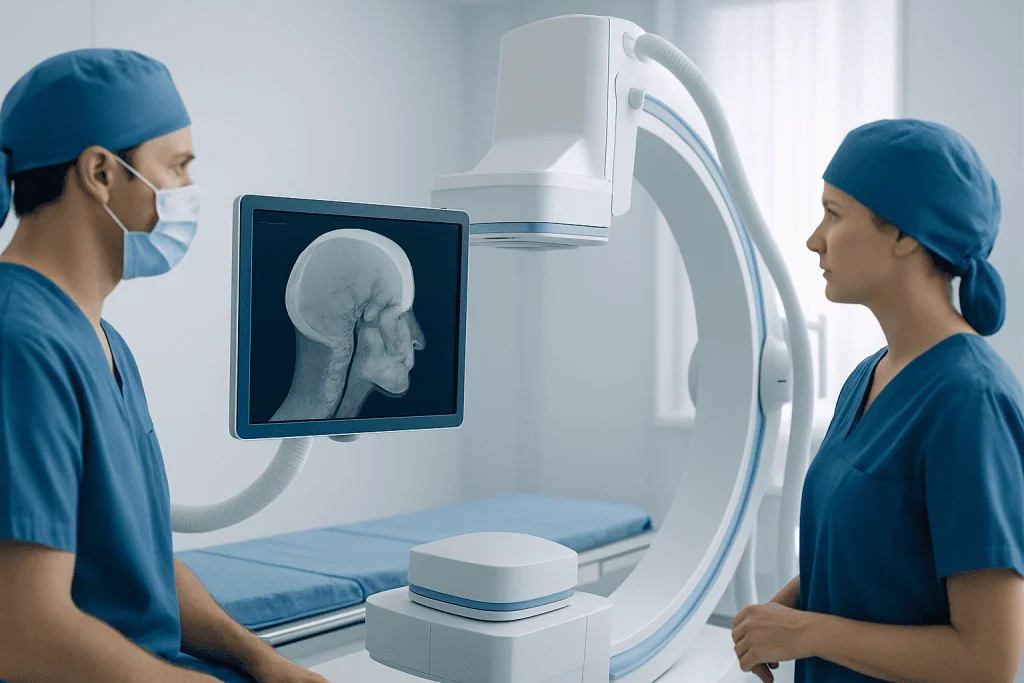
Endovascular neurosurgery is most often used for conditions involving the blood vessels of the brain and spine. One common example is a brain aneurysm, which is a weak or bulging area in an artery wall. Catheter-based treatment may help seal the aneurysm and reduce the risk of bleeding. Another major use is emergency treatment for some ischemic strokes caused by a blocked artery, where specialists may remove the clot using stroke treatment techniques such as mechanical thrombectomy.
It can also be used for arteriovenous malformations, or AVMs, which are abnormal tangles of blood vessels. Some patients with dural arteriovenous fistulas, carotid-cavernous fistulas, or narrowed arteries supplying the brain may also benefit from endovascular care. In selected cases, treatment may involve tiny coils, liquid embolic agents, stents, balloons, or clot-retrieval devices.
These procedures may be planned in advance or performed urgently. For example, an unruptured aneurysm may be treated electively after careful imaging and discussion, while a large-vessel stroke requires immediate assessment and treatment. The same general technique of catheter navigation is used, but the purpose and urgency differ greatly from one condition to another.
- Brain aneurysms
- Acute ischemic stroke due to large vessel blockage
- Arteriovenous malformations and fistulas
- Narrowing of brain or neck arteries
- Some causes of brain or spinal bleeding related to blood vessels
How Catheter-Based Brain Treatment Works

The procedure usually begins with preparation in an angiography suite, a specialized room equipped with advanced X-ray imaging. After the skin is cleaned and numbed, the doctor places a small sheath into an artery, often at the wrist or groin. Through this opening, catheters and very fine wires are guided through the body’s blood vessels toward the brain or spinal circulation.
Contrast dye is commonly used so the blood vessels can be seen clearly on imaging, a process called cerebral angiography. This helps the team map the anatomy in detail and guide treatment with precision. Depending on the goal, the doctor may place coils into an aneurysm, deploy a stent to support the vessel, inject an embolic material to block abnormal blood flow, or use a device to remove a clot.
Some procedures are done under local anesthesia with sedation, while others require general anesthesia so the patient remains completely still. The choice depends on the condition, the expected complexity of the treatment, and the patient’s medical needs. After the procedure, the catheter is removed and pressure or a closure device is used to seal the artery entry site.
For many patients, the idea of treating the brain through a blood vessel can seem surprising. In practice, it is a carefully planned, image-guided method designed to reach delicate structures with as little disruption to surrounding tissue as possible. In emergencies, it can also provide rapid access to blocked or bleeding vessels.
Benefits, Limits, and Possible Risks
The main benefit of endovascular neurosurgery is that it is minimally invasive. Because treatment is delivered through a small puncture rather than a large incision, patients often experience less pain, less tissue trauma, and a shorter hospital stay compared with open surgery when both are appropriate options. Recovery may also be faster, allowing an earlier return to daily activities.
Another advantage is access. Some blood vessel problems are located deep in the brain or in areas that are challenging to reach safely through conventional surgery. Endovascular tools may allow specialists to treat these conditions from within the circulation. In stroke care, speed is especially important, and catheter-based clot removal can significantly improve outcomes for selected patients.
At the same time, not every condition can be managed endovascularly. Some aneurysms, malformations, tumors, or bleeding problems may still need open neurosurgery, radiation-based treatment, medical therapy, or a combination approach. The best plan is often determined by a multidisciplinary team after reviewing imaging and weighing the expected benefits and limitations.
Like any procedure, endovascular treatment carries risks. These may include bleeding, bruising, vessel injury, blood clots, stroke, contrast-related problems, kidney strain in susceptible patients, infection, or reaction to anesthesia. Although serious complications are not common in experienced hands, patients should discuss their personal risk profile with the treating team before the procedure.
Diagnosis and Treatment Planning
Choosing endovascular neurosurgery starts with an accurate diagnosis. Doctors may use CT, MRI, CT angiography, MR angiography, ultrasound, or diagnostic cerebral angiography to understand the problem in detail. These tests help define the size, location, shape, and blood flow pattern of the abnormality, which is essential for deciding whether catheter-based treatment is possible and safe.
The specialist also reviews symptoms, medical history, current medicines, allergies, kidney function, and any bleeding or clotting disorders. In emergency stroke care, imaging helps determine whether a blocked artery can be treated and whether there is still brain tissue that may be saved. In non-emergency cases, the decision may involve balancing the natural risk of the condition against the risks and benefits of intervention.
Treatment planning is highly individualized. A patient may be offered embolization, stenting, coiling, flow diversion, or neurosurgery if an open operation would provide a better result. Sometimes endovascular treatment is used as a first step to make later surgery or radiosurgery safer. This team-based approach is especially helpful for complex vascular disorders such as arteriovenous malformation of the brain.
Recovery, Follow-Up, and Self-Care
After the procedure, patients are monitored closely in a recovery area, stroke unit, intensive care setting, or regular hospital room, depending on the reason for treatment. Nurses and doctors check neurological status, blood pressure, the puncture site, and overall stability. Some patients go home the next day, while others need a longer stay, especially after emergency treatment or treatment of a ruptured aneurysm.
At home, recovery advice usually includes resting for a short period, staying hydrated if appropriate, taking medicines exactly as prescribed, and watching the access site for swelling, increasing pain, or bleeding. Patients may also need to avoid heavy lifting for several days. If a stent has been placed, blood-thinning medication may be necessary for a period determined by the treating physician.
Follow-up is an important part of care. Some conditions, especially aneurysms and AVMs, need repeat imaging to confirm that the treatment remains effective over time. The schedule varies, but it may include clinic visits and imaging tests weeks to months later. Rehabilitation may also be needed after stroke to support speech, movement, strength, and independence.
For international patients seeking advanced vascular brain care, Acibadem International’s multidisciplinary specialists and JCI-accredited hospitals provide diagnosis, interventional radiology-supported procedures, treatment, and follow-up planning tailored to the individual case.
When to Seek Urgent Medical Help
Some symptoms suggest a brain or blood vessel emergency and need immediate medical attention. A sudden drooping face, arm weakness, speech difficulty, confusion, loss of balance, severe sudden headache, seizures, loss of consciousness, or sudden vision changes can indicate stroke or bleeding in the brain. In these situations, emergency care should not be delayed.
Even symptoms that improve quickly should be assessed, because a transient event can still signal an underlying vascular problem. Early evaluation may allow time-sensitive treatment and help prevent further injury. People with known aneurysms, AVMs, or significant vessel narrowing should follow their doctor’s instructions closely and understand which warning signs require urgent action.
After an endovascular procedure, urgent medical advice is also needed for worsening headache, new weakness or numbness, chest pain, shortness of breath, fever, heavy bleeding from the puncture site, or sudden swelling and pain at the access area. Prompt review helps the team identify complications early and provide the right care.
Frequently asked questions
Is endovascular neurosurgery the same as open brain surgery?
No. Endovascular neurosurgery treats certain problems from inside the blood vessels using catheters, usually through the wrist or groin. Open brain surgery involves a surgical opening to directly access the brain or skull.
What conditions are most commonly treated with endovascular neurosurgery?
Common examples include brain aneurysms, some ischemic strokes caused by large artery blockage, arteriovenous malformations, and certain vascular fistulas. It may also be used in selected cases of narrowed arteries affecting blood flow to the brain.
Does catheter-based brain treatment hurt?
Patients usually receive local anesthesia with sedation or general anesthesia, depending on the procedure. Most people do not feel pain during the treatment itself, though mild soreness or bruising at the access site can occur afterward.
How long does recovery take after endovascular neurosurgery?
Recovery time varies with the condition being treated and whether the procedure was planned or done in an emergency. Some patients recover quickly and go home within a day, while others need a longer hospital stay and rehabilitation, especially after stroke or brain bleeding.
Is endovascular treatment safer than traditional surgery?
It can be less invasive and may offer important advantages for suitable patients, but it is not automatically better in every case. Safety depends on the diagnosis, the anatomy of the blood vessels, the urgency of treatment, and the experience of the treating team.
Will follow-up imaging be needed after treatment?
Often, yes. Follow-up scans or angiography may be recommended to confirm that the treated vessel remains stable and that the problem has not returned or changed over time. The exact schedule depends on the condition and the type of device or treatment used.
References
- World Stroke Organization
- American Stroke Association
- National Institute of Neurological Disorders and Stroke
- Society of NeuroInterventional Surgery
- Radiological Society of North America
This article is for general information only and is not a substitute for professional medical advice. Please consult a qualified doctor about your individual situation.
Neurosurgery in Turkey — costs, top hospitals & a free quote
JCI-accredited · board-certified surgeons · reply within 24h
Add us as a Preferred Source to see more of our trusted health content across Google Search, AI Overviews and Discover.