Epiphora — Explained by Medical Evidence, Not Myths

Epiphora is the medical term for persistent or excessive tearing. Common causes include blocked tear drainage, dry eye irritation, allergies, infections, and eyelid position problems.
Key Takeaways
- Epiphora is the medical term for persistent or excessive tearing.
- Common causes include blocked tear drainage, dry eye irritation, allergies, infections, and eyelid position problems.
- Diagnosis focuses on finding the reason tears are overflowing rather than assuming all watery eyes have the same cause.
- Treatment may include lubricating drops, allergy care, infection treatment, tear duct procedures, or eyelid surgery depending on the cause.
- Medical assessment is important if watering is one-sided, painful, recurrent, or linked with discharge or vision changes.
Epiphora means excessive tearing or watery eyes. It is a symptom rather than a disease, and it commonly happens when tears are produced in excess, do not drain properly, or both.
What epiphora means
Epiphora is the medical term for eyes that water more than normal. In simple terms, tears overflow onto the eyelids or cheeks because the eye is making too many tears, the normal drainage pathway is not working well, or both are happening at the same time. Although it can be inconvenient, epiphora is a sign that can often be explained by a specific, treatable cause.
Tears are important for eye health. They keep the surface of the eye smooth, wash away dust and irritants, and help protect against infection. Normally, tears spread across the eye and then drain through tiny openings in the inner corners of the upper and lower eyelids, called puncta, before passing into the tear sac and nasolacrimal duct. If this pathway is narrowed or blocked, tears may spill over even when tear production is normal.
Not every watery eye is caused by a blocked tear duct. The eye may also respond to dryness, inflammation, allergy, an eyelash rubbing the cornea, or bright wind and cold air by producing reflex tears. This is why epiphora is best understood as a symptom that needs an explanation, not as a single disease by itself.
How epiphora can feel and look
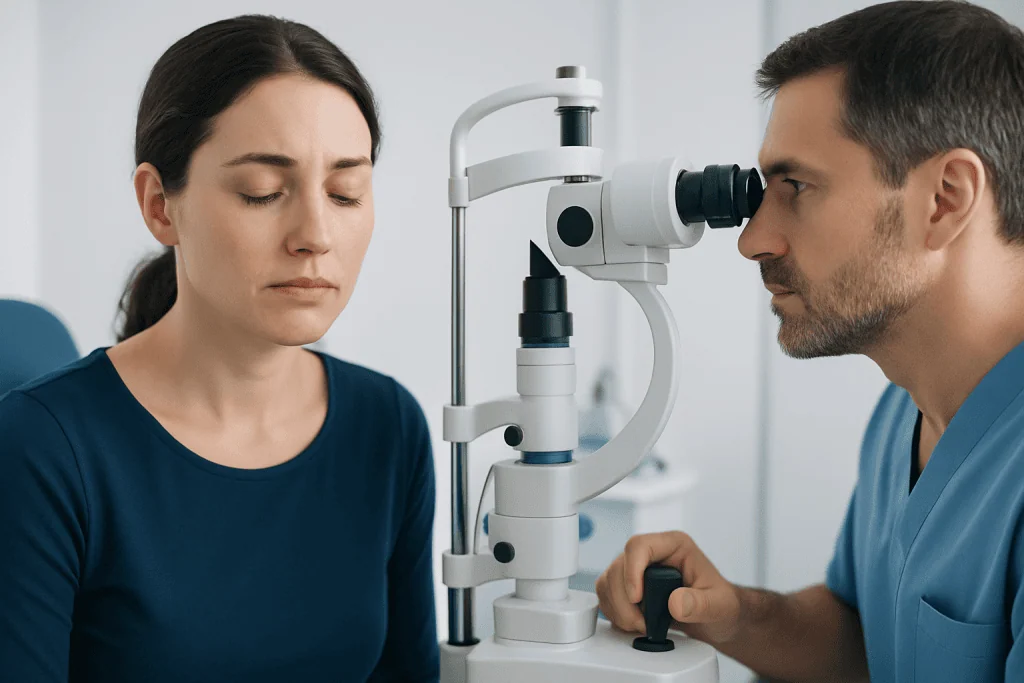
The main symptom is obvious: tears gather along the lower eyelid or run down the face. Some people notice this only outdoors, in cold weather, or when reading and using screens. Others have almost constant watering that interferes with driving, applying makeup, wearing contact lenses, or seeing clearly.
Epiphora may happen in one eye or both. It can come with a feeling of irritation, burning, grittiness, redness, crusting on the eyelids, sensitivity to light, or mucus discharge. Vision may blur temporarily because the tear film becomes unstable or because tears pool over the front of the eye.
Symptoms can offer clues to the cause. Watering with itching may suggest allergy. Watering with pain, marked redness, or light sensitivity can point to a more inflamed eye surface. Recurrent swelling near the inner corner of the eye may indicate a problem in the tear drainage system. When a baby has persistent tearing from early infancy, congenital blockage of the tear duct may be considered.
- Overflowing tears or constantly wet eyes
- Blurred vision that clears with blinking
- Redness, burning, or a gritty sensation
- Mucus or sticky discharge
- Swelling near the inner corner of the eye
- Symptoms triggered by wind, cold air, screens, or allergens
Why watery eyes happen: common causes and risk factors

Epiphora usually develops for one of two reasons: excess tear production or reduced tear drainage. Excess production often occurs when the eye is irritated. Dry eye is a good example. Even though the eye feels dry, it may respond by making a burst of watery reflex tears that do not lubricate well. Allergy, blepharitis, conjunctivitis, corneal irritation, contact lens problems, smoke, and foreign bodies can all trigger this response. Conditions such as dry eye are a frequent and sometimes overlooked cause.
Reduced drainage can happen if the puncta are too small, the drainage channels are narrowed, or the nasolacrimal duct is blocked. Age-related changes, chronic inflammation, previous infections, facial trauma, nasal surgery, or scarring may contribute. Eyelid position also matters. If the lower eyelid turns outward or inward, tears may not enter the drainage openings properly and the eye surface may also become irritated.
Risk factors vary with the underlying problem. Older age increases the chance of eyelid laxity and narrowing of drainage pathways. Allergies and chronic eyelid inflammation raise the risk of recurrent watering. Contact lens wear, prolonged screen time, and certain environments may worsen eye surface irritation. In infants, the most common cause is a membrane that has not fully opened at the end of the tear duct.
Less commonly, epiphora can relate to nasal or sinus disease, facial nerve weakness, medication side effects, or a mass affecting the tear drainage route. These causes are not the first assumption, but they are considered when symptoms are persistent, one-sided, or associated with swelling or repeated infections.
How doctors diagnose the cause
Evaluation begins with a careful history. A clinician will ask when the watering started, whether it affects one eye or both, what seems to trigger it, and whether there is pain, discharge, redness, itching, or changes in vision. These details help separate drainage problems from irritation-related tearing.
The eye and eyelids are then examined closely. The clinician checks the tear openings, eyelid position, blinking, and the health of the eye surface. Fluorescein dye may be used to look for dry spots, scratches, or irritation on the cornea. If blockage is suspected, tests may assess how well tears drain from the eye and whether fluid can pass through the lacrimal system.
Some people also need specialist assessment by an ophthalmologist, especially if symptoms recur, a drainage obstruction is likely, or another eye condition is possible. In selected cases, imaging or nasal examination may be used to understand where the blockage is located. The goal is not simply to confirm that the eye is watering, but to identify why it is happening so treatment can be matched appropriately.
Treatment options for epiphora
Treatment for epiphora depends entirely on the cause. If irritation is driving excess tearing, management may include preservative-free lubricating drops, treatment of eyelid inflammation, allergy control, improved contact lens habits, or removal of a foreign body. If infection is present, a doctor may recommend appropriate medicines after examining the eye. When the underlying trigger improves, watering often improves as well.
If tear drainage is blocked or narrowed, treatment may focus on restoring flow. In babies with congenital tear duct blockage, many cases improve over time with observation and guidance on lacrimal sac massage. In adults, procedures may be recommended when symptoms are persistent or infections recur. Depending on where the problem lies, options may include punctal procedures, stenting, or surgery to create a new drainage pathway such as dacryocystorhinostomy (DCR).
Eyelid abnormalities may need separate treatment because they can both prevent normal drainage and irritate the eye surface. Corrective oculoplastic surgery may be considered for eyelid malposition or laxity when conservative measures are not enough. If another eye surface disorder is present, that issue is treated directly as well rather than assuming the watering is only a tear duct problem.
Specialist eye care is sometimes important because watery eyes can overlap with conditions such as glaucoma treatments causing surface irritation, or other chronic eye diseases. In multidisciplinary settings, doctors may combine detailed eye examination with lacrimal and eyelid assessment to plan care that fits the person’s symptoms and anatomy.
Self-care and practical ways to reduce watering
Self-care can be helpful when epiphora is related to mild irritation, environmental exposure, or dry eye, but it should not replace medical evaluation if symptoms are significant or prolonged. The first step is to avoid rubbing the eyes, which can worsen irritation and stimulate more tearing. Gentle eyelid hygiene may help if crusting or blepharitis is present.
Using lubricating eye drops as advised by a clinician can support the tear film when dryness is contributing to reflex tearing. Managing screen use by blinking regularly, taking short breaks, and adjusting airflow from fans or car vents may also reduce symptoms. Outdoors, wraparound glasses can protect the eyes from wind and cold air.
It is also sensible to address triggers such as smoke, dust, cosmetics that irritate the eyelids, or poorly fitting contact lenses. People with allergies may benefit from allergen reduction strategies and medical advice on suitable treatment. If tears are overflowing because of a true blockage, however, self-care may provide only limited relief until the drainage issue is treated.
When to seek medical care
Medical care is advisable if epiphora lasts more than a short period, keeps returning, or affects daily activities. Assessment is especially important when watering is only on one side, as this pattern can sometimes suggest a drainage blockage or a structural problem that needs examination. A clinician can decide whether the cause is likely to be irritation, infection, eyelid malposition, or obstruction.
Prompt evaluation is important if watery eyes come with pain, increasing redness, sensitivity to light, reduced vision, swelling near the inner corner of the eye, or thick discharge. These features may indicate infection, corneal irritation, or another eye condition that should not be left untreated. Infants with persistent tearing should also be assessed, particularly if there is recurrent discharge or swelling.
Near the end of the care pathway, some people need input from ophthalmology, oculoplastics, and ear, nose, and throat specialists together, especially for complex lacrimal drainage problems. Acibadem International’s multidisciplinary specialists and JCI-accredited hospitals diagnose and treat epiphora and related eye conditions for international patients when specialist assessment is needed.
Frequently asked questions
Is epiphora the same as having watery eyes?
Yes. Epiphora is the medical term for excessive tearing or watery eyes. It describes a symptom, not a single disease, so the main question is what is causing the tears to overflow.
Can dry eyes really cause too many tears?
Yes, this is common. When the eye surface is dry or irritated, it may produce a surge of watery reflex tears. These tears do not always lubricate the eye well, so a person may feel both dryness and watering.
Does epiphora always mean a blocked tear duct?
No. A blocked tear duct is one important cause, but allergies, eyelid inflammation, dry eye, infection, corneal irritation, and eyelid position problems can also lead to epiphora. A proper eye examination helps distinguish among these possibilities.
How is epiphora treated in adults?
Treatment depends on the underlying cause. It may include lubricating drops, allergy or eyelid care, treatment for infection, or a procedure to open or bypass a blocked tear drainage pathway. Some people also need correction of eyelid position problems.
Do babies with epiphora need surgery?
Not always. Many infants with congenital tear duct blockage improve naturally during the first year of life. Doctors may recommend observation and massage first, while persistent or complicated cases may need a procedure.
When should someone worry about watery eyes?
Watery eyes should be checked if they are persistent, one-sided, recurrent, or interfere with daily life. Prompt medical review is important if there is pain, significant redness, swelling, discharge, or any change in vision.
This article is for general information only and is not a substitute for professional medical advice. Please consult a qualified doctor about your individual situation.
Explore treatments in Turkey — costs, top hospitals & a free quote
JCI-accredited · board-certified surgeons · reply within 24h
Add us as a Preferred Source to see more of our trusted health content across Google Search, AI Overviews and Discover.

More from the Health Library

Chances of Have Twins — Explained by Medical Evidence, Not Myths
Shoulder MRI: A Complete Medical Overview

Keto Gummies: What Patients Need to Know

Gag Reflex: What Patients Need to Know

Over the Counter Muscle Relaxer: An Evidence-Based Guide for Patients