Eye Piercing: What Patients Need to Know

Eye piercing most often refers to a piercing near the eye, especially the eyebrow, not the eyeball itself. Common concerns include redness, swelling, pain, discharge, allergic reactions, and migration or rejection of the jewelry.
Key Takeaways
- Eye piercing most often refers to a piercing near the eye, especially the eyebrow, not the eyeball itself.
- Common concerns include redness, swelling, pain, discharge, allergic reactions, and migration or rejection of the jewelry.
- Prompt medical evaluation is important if there are vision changes, severe pain, spreading redness, fever, or trauma to the eye.
- Careful hygiene, professional piercing technique, and avoiding unnecessary touching can lower the risk of complications.
- People with certain skin conditions, poor wound healing, or weakened immunity may need extra caution before getting a piercing.
Eye piercing usually means a piercing in the skin around the eye, most often the eyebrow, rather than a piercing through the eyeball itself. Patients should know that piercings in this area can heal well with proper care, but they also carry real risks such as infection, irritation, scarring, and accidental injury to the eye.
Overview: what eye piercing usually means
An eye piercing usually does not mean piercing the eyeball. In everyday use, it almost always refers to a piercing in the tissues around the eye, especially the eyebrow. Some people also use the phrase for other facial piercings close to the eye, but the medical concerns are similar: the skin barrier is broken, a foreign object is placed in the area, and healing takes time.
This matters because the tissues around the eye are delicate. Even when the piercing itself is not in the eye, nearby swelling, infection, bleeding, or accidental trauma can affect comfort and sometimes vision. Patients often focus on the cosmetic side, but from a health perspective, the key questions are safety, healing, and how to recognize a complication early.
Although many eyebrow and periocular piercings heal without major problems, they are not risk-free. The area is exposed to sweat, makeup, hair products, hands, and friction from clothing or towels. The close relationship to the eyelids and eye surface means even a skin problem can sometimes lead to irritation of the eye itself.
Possible risks and complications
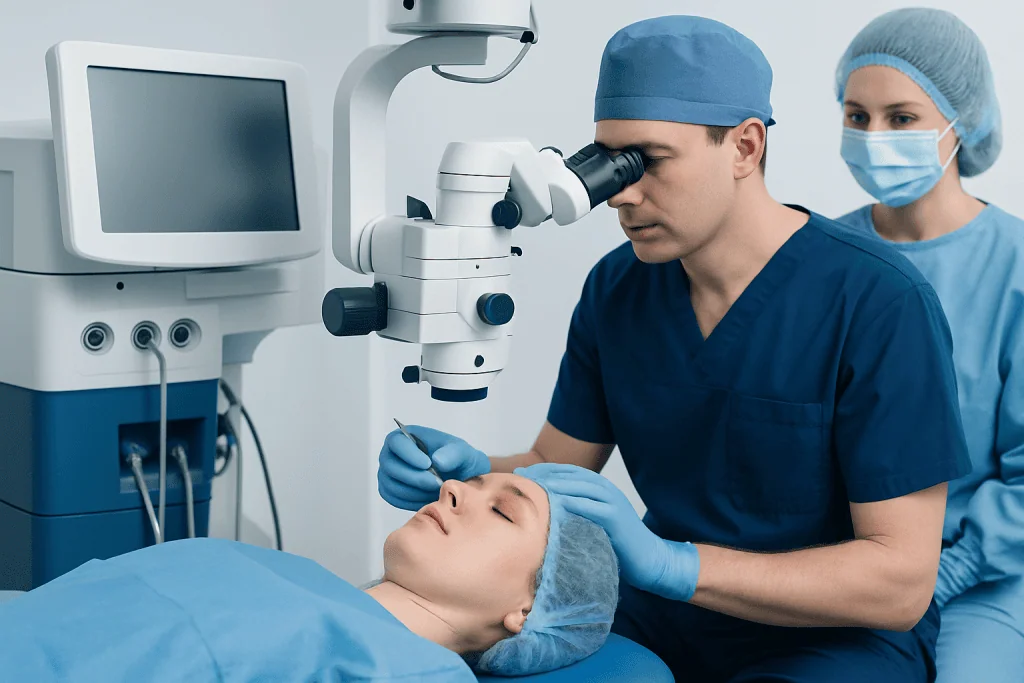
The most common risks of eye piercing include pain, swelling, bruising, minor bleeding, and delayed healing. These can be expected to some degree in the first days after a new piercing, but they should gradually improve. If symptoms worsen instead of improving, this may suggest a complication.
Infection is one of the main concerns. Bacteria can enter through the new piercing tract and cause increasing redness, warmth, tenderness, and discharge. In some cases, nearby eyelid tissues become inflamed. Patients may also notice a small bump, crusting, or discomfort when blinking. A more serious infection can spread into deeper tissues around the eye and needs urgent medical attention.
Other complications include allergic reaction to the metal, migration of the jewelry, and rejection, where the body gradually pushes the jewelry closer to the skin surface. Scarring and keloid formation can occur in people who are prone to them. Accidental snagging on clothing, hairbrushes, or hands may tear the tissue and cause bleeding or visible scarring.
There is also a practical eye-health risk: nearby inflammation can trigger tearing, light sensitivity, or a gritty sensation. If the eye becomes red or painful, doctors may check for problems such as conjunctivitis or corneal irritation. Rarely, blunt trauma from jewelry or impact to the area may contribute to more significant eye injury.
Symptoms that may be normal, and signs of a problem

Some mild symptoms are common after a new piercing. These include brief stinging during the procedure, mild swelling, slight redness, tenderness, and a small amount of clear or pale yellow crust as the site heals. These findings should slowly settle over days to weeks, even though full healing may take longer.
Patients should watch for warning signs that suggest infection or another complication. These include worsening pain, increasing swelling after the first few days, thick yellow or green discharge, a bad odor, expanding redness, fever, or a feeling that the jewelry is embedding into the skin. A rash or persistent itching can suggest a metal sensitivity.
Because of the location, any eye-related symptoms deserve extra attention. Blurred vision, double vision, marked light sensitivity, pain inside the eye, difficulty opening the eyelid, or blood in the white of the eye are not typical effects of a simple skin piercing. These symptoms call for prompt medical assessment, often by an eye specialist.
- More likely part of normal healing: mild soreness, slight redness, light crusting
- Needs review soon: increasing tenderness, pus, enlarging bump, jewelry shifting
- Needs urgent care: vision change, severe swelling, spreading redness, fever, eye pain after trauma
Who may be at higher risk
Not everyone has the same risk profile. People with diabetes, immune system problems, poor circulation, chronic skin disease, or a history of slow wound healing may be more likely to develop complications. A tendency to form keloids or thick scars also matters, especially in visible areas of the face.
Skin and eye conditions can add complexity. Patients with active dermatitis, acne in the area, eyelid inflammation, or recurrent eye infections may need to delay piercing until the condition is controlled. People who often rub their eyes because of allergies or dry eye may also find healing harder. If symptoms of irritation are already present, a doctor may evaluate for issues such as dry eye before or after the piercing.
Activity and lifestyle also play a role. Contact sports, frequent swimming, heavy use of makeup around the eyes, and jobs that expose the face to dust or chemicals can all interfere with healing. In addition, choosing unsterile settings or inexperienced piercers raises the risk of infection, poor placement, and tissue trauma.
How problems are diagnosed
Diagnosis starts with a medical history and physical examination. A clinician will ask when the piercing was done, what material the jewelry is made from, how the site has been cleaned, and whether symptoms are getting better or worse. They will also ask about fever, trauma, contact lens use, allergies, and vision changes.
On examination, the doctor checks the skin around the piercing for redness, swelling, warmth, drainage, embedded jewelry, migration, and scarring. Because the piercing is near the eye, they may also examine the eyelid and eye surface. If there is redness, tearing, or discomfort in the eye, an ophthalmic assessment may be needed to look for corneal injury, eyelid infection, or another nearby problem.
Tests are not always necessary, but they may be used if the problem is severe, recurrent, or not improving. A sample of discharge can sometimes help identify bacteria. If there is significant eye pain or visual disturbance, eye specialists may perform detailed examination and imaging when appropriate. In some cases, patients benefit from an eye examination to make sure the eye itself has not been affected.
Treatment and aftercare
Treatment depends on the problem. Mild irritation may improve with gentle hygiene, avoiding touching the area, and removing sources of friction. Patients should not use harsh cleansers, alcohol, or hydrogen peroxide unless specifically advised, because these can irritate tissue and delay healing. Makeup and facial products should be kept away from the site until it is more stable.
If there is infection, a doctor may recommend local care and, when needed, prescription treatment. Whether the jewelry should stay in place or be removed depends on the situation and should be decided by a qualified clinician, because premature removal can sometimes trap infection or worsen drainage. If the eye itself is involved, referral for ophthalmology care may be appropriate.
Migration, rejection, allergic reactions, and scarring need a different approach. Changing the jewelry material, removing poorly positioned jewelry, or treating scar tissue may be discussed. Patients should not try to force or rotate jewelry that seems stuck or embedded. In the uncommon event of significant trauma or deep tissue damage, specialist evaluation is important and may include management similar to care for an eye injury or surgical eye problem.
Near the end of the care pathway, some patients need coordinated input from dermatology, emergency medicine, and eye specialists. Acibadem International’s multidisciplinary specialists and JCI-accredited hospitals diagnose and treat eye-area infections, injuries, and related complications for international patients when advanced evaluation is needed.
Prevention and safer self-care
The safest approach begins before the piercing is done. Patients should choose a reputable professional who uses sterile technique, appropriate single-use equipment where required, and jewelry made from materials less likely to trigger allergy. The area should be carefully assessed for skin irritation, infection, or conditions that may interfere with healing.
After the procedure, regular hand washing and gentle cleaning are the basics of aftercare. Touching, twisting, or removing the jewelry too soon can injure the tract and introduce bacteria. Towels, pillowcases, cosmetics, and phones that touch the area should be kept clean. Swimming pools, hot tubs, and heavy cosmetic use near the site may increase irritation or contamination during early healing.
Patients should also protect the area from accidental snagging. Hair, hats, sports equipment, and clothing are common sources of trauma. If the eye becomes irritated, contact lenses may need to be paused until a doctor advises otherwise. People with ongoing tearing, redness, or itching may need treatment for underlying eye-surface conditions so the piercing can heal without repeated rubbing or contamination.
When to seek medical care
Medical advice should be sought if symptoms are not steadily improving, or if redness, swelling, pain, or discharge are increasing. The same is true if a lump develops, the jewelry appears to be migrating, the skin starts to thin over the jewelry, or there are signs of an allergic reaction such as persistent itching and rash.
Urgent medical care is important if there is fever, rapidly spreading redness, severe swelling of the eyelid, severe bleeding, trauma to the area, or any symptom involving the eye itself. Patients should not delay if they notice blurred vision, double vision, marked sensitivity to light, significant eye pain, or trouble moving the eyelid normally.
In general, it is better to ask early than to wait for a facial or eye problem to worsen. A clinician can help determine whether the issue is part of normal healing, a local skin complication, or a condition that needs prompt specialist treatment.
Frequently asked questions
Does eye piercing mean piercing the eyeball?
Usually no. In most cases, eye piercing refers to a piercing in the skin near the eye, especially the eyebrow. Piercing the eyeball itself is not a standard cosmetic practice and would carry extreme medical risk.
How long does an eye-area piercing take to heal?
Healing time varies depending on the exact location, the jewelry, and the person’s skin and general health. Initial soreness and swelling often improve within days to weeks, but full healing can take longer. A clinician or experienced piercer can give more specific guidance for the individual site.
How can someone tell if an eye piercing is infected?
Possible signs of infection include worsening redness, warmth, pain, swelling, thick discharge, bad odor, or fever. If the nearby eye becomes red, painful, or sensitive to light, medical assessment is important. Symptoms that are getting worse rather than better should not be ignored.
Should the jewelry be removed if there is a problem?
Not always. In some cases, removing jewelry too soon can worsen drainage problems or make the tract close around infected material. It is safest to have a clinician advise whether the jewelry should stay in place, be changed, or be removed.
Can an eye piercing affect vision?
A skin piercing near the eye should not normally change vision. However, swelling, infection, trauma, or irritation of the eye surface can sometimes cause blurred vision, tearing, or light sensitivity. Any vision change after a piercing should be checked promptly.
Who should be especially cautious before getting an eye piercing?
People with diabetes, weakened immunity, poor wound healing, active skin disease, or a history of keloid scars may have a higher risk of complications. Those with dry eye, allergies, or frequent eye rubbing may also find healing more difficult. A medical discussion beforehand can help clarify personal risk.
This article is for general information only and is not a substitute for professional medical advice. Please consult a qualified doctor about your individual situation.
Explore treatments in Turkey — costs, top hospitals & a free quote
JCI-accredited · board-certified surgeons · reply within 24h
Add us as a Preferred Source to see more of our trusted health content across Google Search, AI Overviews and Discover.

More from the Health Library

Vulva: What Patients Need to Know

Cottage Cheese and Eggs — Explained by Medical Evidence, Not Myths

Optic Nerve: An Evidence-Based Guide for Patients

Bacon Burger: An Evidence-Based Guide for Patients

Spirometry: A Complete Medical Overview