Eye Screening: How It Works, Results and What to Expect
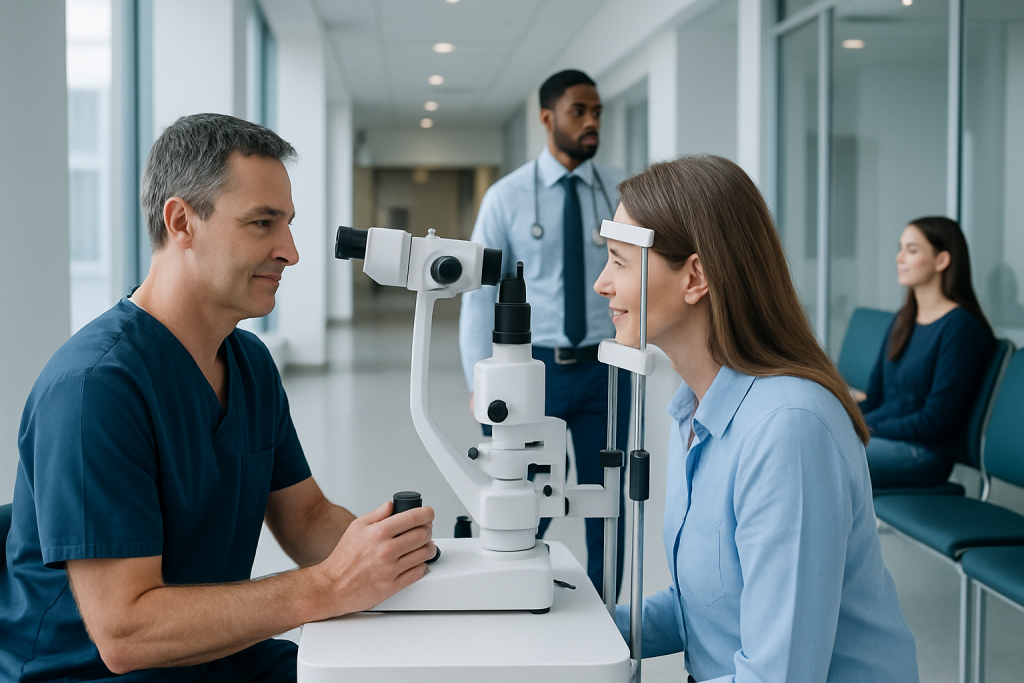
Eye screening may measure visual clarity, eye pressure, visual fields and the health of the retina and optic nerve. A screening result is not always a diagnosis; an abnormal finding often means that further assessment is needed.
Key Takeaways
- Eye screening may measure visual clarity, eye pressure, visual fields and the health of the retina and optic nerve.
- A screening result is not always a diagnosis; an abnormal finding often means that further assessment is needed.
- Dilating eye drops can temporarily blur near vision and increase light sensitivity, so driving may not be appropriate afterward.
- Regular eye care is particularly important for people with diabetes, glaucoma risk factors, high blood pressure or a family history of eye disease.
- Sudden vision loss, new flashes or many floaters, severe eye pain, or a curtain-like shadow needs urgent medical assessment.
Eye screening is a set of quick checks that assesses vision and may identify signs of eye disease before noticeable symptoms appear. The tests used, the need for dilating drops and the meaning of results depend on age, symptoms, health conditions and individual risk factors.
Eye screening explained: what it checks
Eye screening is a preventive assessment that checks how well a person sees and looks for signs of eye problems that may not yet cause symptoms. It can include a vision chart, questions about eye health and medical history, and tests that assess the front and back of the eye. A screening may be offered through a workplace, school, community program, primary care setting or eye clinic.
Eye screening tests are useful because some conditions can progress quietly. For example, changes related to diabetes, glaucoma and age-related retinal disease may be found before a person notices a major change in sight. Screening does not replace a complete medical assessment when symptoms are present.
The terms eye screening and eye exam are sometimes used interchangeably, but they are not identical. A screening is often a focused check designed to identify people who may need further evaluation. A comprehensive eye examination is more detailed and is performed by an optometrist or ophthalmologist to assess vision, eye structures and, when needed, diagnose and manage eye conditions.
Who should have an eye screening?
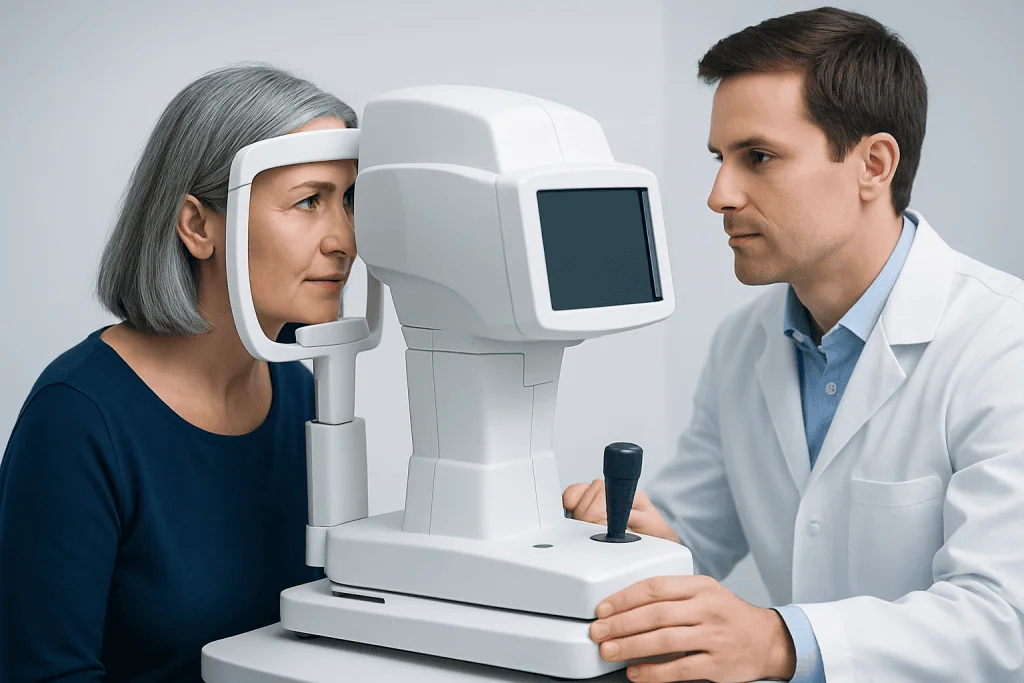
Most people benefit from periodic vision and eye-health checks, but the right schedule is individual. Children need age-appropriate vision checks because uncorrected problems can affect learning and visual development. Adults may need testing when they notice vision changes, require glasses or contact lenses, or have occupational or driving requirements.
More regular, comprehensive eye assessments may be recommended for people with diabetes, high blood pressure, previous eye injury or eye surgery, a strong family history of glaucoma, high short-sightedness, or long-term use of medicines that can affect the eyes. Pregnancy, autoimmune disease and certain neurological conditions may also change the type of eye care required.
People with diabetes should not wait for blurred vision before arranging retinal assessment. Diabetes can affect small blood vessels in the retina, sometimes without early symptoms. A clinician can advise on the appropriate timing of diabetic retinopathy assessment based on the person’s diabetes type, duration, glucose control and previous eye findings.
How an eye screening exam works: step by step
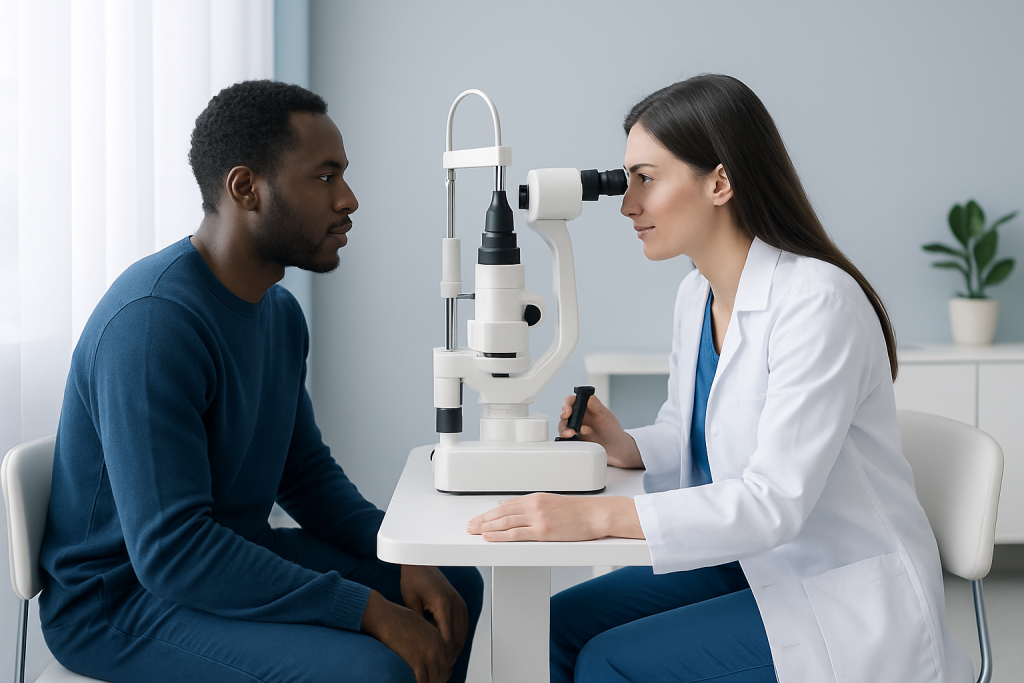
An eye screening exam usually begins with a short history. The clinician may ask about blurred vision, headaches, eye discomfort, flashes, floaters, previous eye problems, medicines and family history. Bringing current glasses, contact lens details and a list of medicines can help make the visit more useful.
Vision is commonly checked using letters, symbols or pictures at a set distance. Each eye is usually tested separately, with and without existing glasses where appropriate. The clinician may also assess near vision, eye movements, pupil responses and colour vision. If the findings suggest that glasses or contact lenses may help, a refraction test can estimate the lens power needed.
Additional tests may include tonometry to estimate eye pressure, a visual-field test to assess side vision, photographs of the retina, or optical coherence tomography (OCT), which creates detailed images of retinal layers and the optic nerve. These tests are usually painless. They help the eye-care professional decide whether a more detailed examination or follow-up is needed.
For a retinal assessment, dilating drops may be placed in the eyes to widen the pupils. This gives a clearer view of the retina and optic nerve. The drops can sting briefly and may cause temporary light sensitivity and blurred near vision. The appointment is commonly completed on the same day, though some results need later interpretation or comparison with previous tests.
What not to do before a vision test?
Before a routine vision test, it is generally best not to make avoidable changes that could temporarily affect sight. Do not wear contact lenses if the clinic has specifically asked that they be removed beforehand, especially if a corneal assessment or a detailed prescription measurement is planned. Instructions differ by test and lens type, so it is sensible to confirm with the clinic in advance.
A person should avoid arriving extremely tired if possible, as fatigue, dry eyes and reduced concentration can affect performance on vision-chart or visual-field testing. Alcohol or recreational drugs should be avoided before an appointment because they can affect alertness and visual function. Medicines should not be stopped unless the prescribing clinician says it is safe to do so.
It is helpful not to rely on eye drops marketed for redness relief immediately before the visit unless advised by a clinician. Artificial tears may be appropriate for some people with dryness, but the eye-care team should know which drops have been used. Patients should bring their current glasses, contact lenses and prescription information, rather than trying to memorize it.
Can an eye doctor tell how bad your vision is?
Yes. An eye doctor or optometrist can measure visual acuity, which describes how clearly a person sees at a specific distance, and can assess whether a refractive error such as short-sightedness, long-sightedness, astigmatism or age-related difficulty focusing up close is contributing to blurred vision. Refraction testing helps determine whether corrective lenses may improve clarity.
However, vision is more than a prescription. The clinician also considers contrast sensitivity, side vision, eye coordination, symptoms, the health of the cornea and lens, and the condition of the retina and optic nerve. Two people with a similar glasses prescription may experience vision differently because their eyes and visual needs are not the same.
If the test suggests a problem beyond refractive error, further tests may be needed. For example, reduced side vision or optic nerve changes can lead to evaluation for glaucoma, while distortion of central vision may require detailed retinal imaging. A result should therefore be interpreted in the context of the full assessment rather than as a single number.
How to read eye screening results?
An eye screening result may state that vision is within the expected range, that a person did not meet the screening threshold, or that further assessment is recommended. A result that indicates referral does not automatically mean there is a serious condition. It means the screening test has identified a finding that needs a more detailed check.
Visual acuity is often written as a fraction, such as 20/20 or 6/6, depending on the measurement system used. The first number represents the testing distance. The second number compares a person’s vision with a standard reference; a larger second number generally indicates less clarity at that distance. Results should be interpreted by the professional who performed the test because testing conditions and individual needs matter.
Eye pressure, retinal photographs, optic nerve images and visual-field results have their own reference ranges and patterns. A single slightly unusual measurement may need repeating rather than immediate treatment. Clinicians may compare results over time, as change can be more informative than one isolated eye screening result.
- Normal or pass: no concern identified by that screening method at that time.
- Borderline or inconclusive: the test may need repeating or reviewing with additional information.
- Referral advised: a comprehensive eye examination or specialist review is recommended.
- Urgent review: prompt assessment is needed because the finding or symptoms may require timely care.
Can you drive after retinal screening?
Whether a person can drive after retinal screening depends mainly on whether dilating drops were used and how their vision is affected. Retinal photographs without dilating drops do not usually prevent driving. However, if pupils are dilated, near vision may blur and bright light may feel uncomfortable for several hours.
Some people can still see adequately to drive after dilation, while others cannot. Because the effect is unpredictable and driving requirements vary, patients should not drive if their vision feels blurred, glare is troublesome or they do not feel safe. Arranging a companion, taxi or public transport is often the simplest plan when dilation may be needed.
People should follow the clinic’s instructions and wait until vision has returned to a level that is comfortable and safe for driving. Sunglasses can reduce light sensitivity outdoors, but they do not correct blurred vision. If vision remains significantly blurred longer than expected, the clinic should be contacted for advice.
Benefits, limitations, follow-up and when to seek medical care
The main benefit of eye screening is the opportunity to find vision problems and possible eye disease early, when monitoring, corrective lenses or treatment may help protect sight. Screening can also establish a baseline for future comparison. Most tests are non-invasive, quick and well tolerated, although dilation can temporarily affect vision and eye pressure testing or bright lights can cause brief discomfort.
Screening also has limitations. It may not detect every eye condition, and a normal result does not rule out a new problem that develops later. False-positive or uncertain results can occur, which is why follow-up testing is important. A comprehensive ophthalmology assessment may include specialised imaging and planning for treatments such as laser eye surgery when clinically appropriate for refractive needs, although this is not a treatment for all causes of reduced vision.
When to seek medical care: Urgent medical assessment is important for sudden loss or major reduction of vision, a curtain or shadow across vision, new flashing lights with a sudden increase in floaters, severe eye pain, marked redness with nausea, or an eye injury or chemical exposure. New persistent distortion, double vision, or steadily worsening vision should also be assessed promptly by an eye-care professional.
Acibadem International’s multidisciplinary specialists and JCI-accredited hospitals support international patients who need diagnostic assessment and treatment for eye conditions. The most appropriate next step after an abnormal screening depends on the result, symptoms and overall health, so patients should discuss their individual plan with a qualified clinician.
Frequently asked questions
How long does an eye screening take?
A basic vision screening may take only a few minutes. A more detailed eye screening exam, particularly one involving retinal imaging, visual-field testing or dilating drops, may take longer. The clinic can explain the expected appointment length when booking.
Is eye screening painful?
Most eye screening tests are painless. Bright lights, an air-puff pressure test or dilating drops may feel briefly uncomfortable, but they should not cause significant pain. Any ongoing pain after an eye test should be reported to a clinician.
How often should adults have an eye screening?
The appropriate interval depends on age, current vision, medical history and risk factors. People with diabetes, glaucoma risk, previous eye disease or symptoms may need more frequent checks. An optometrist or ophthalmologist can recommend a personalised schedule.
Do I need to bring my glasses to an eye screening?
Yes, it is helpful to bring current glasses and contact lenses, as well as any available prescription information. This allows the clinician to compare current correction with test findings. It can also help identify whether a prescription may have changed.
What happens if an eye screening finds a problem?
The person may be referred for a comprehensive eye examination, further imaging or repeat testing. Many abnormal screening findings are manageable, and some are caused by correctable refractive errors. The referral urgency depends on the type of finding and any symptoms.
Can eye screening detect diabetes?
An eye screening can identify retinal changes that may be associated with diabetes, but it does not diagnose diabetes on its own. Blood tests and assessment by a qualified clinician are used to diagnose diabetes. People with known diabetes need regular retinal monitoring even if their vision seems normal.
References
- American Academy of Ophthalmology
- National Eye Institute
- Centers for Disease Control and Prevention
- World Health Organization
- Royal College of Ophthalmologists
This article is for general information only and is not a substitute for professional medical advice. Please consult a qualified doctor about your individual situation.
Explore treatments in Turkey — costs, top hospitals & a free quote
JCI-accredited · board-certified surgeons · reply within 24h
Add us as a Preferred Source to see more of our trusted health content across Google Search, AI Overviews and Discover.
Check your numbers in seconds
BMI, calories, due date, blood pressure and 30+ more clinical calculators — free, instant, doctor-reviewed ranges.